Disclosure: As an Amazon Associate, ilcastellomenu.com earns from qualifying purchases. Prices and availability change; check Amazon for the latest.
Where to buy
Check the latest price, availability and delivery on Amazon. Orders are placed on Amazon.
- NETGEAR Nighthawk EAX15 AX1800 WiFi 6 Extender — Best Overall for Streaming. Check on Amazon
- TP-Link RE715X AX3000 WiFi 6 Range Extender — Best for Many-Device Streaming. Check on Amazon
- NETGEAR Nighthawk EX7700 AC2200 Tri-Band Mesh Extender — Best Tri-Band Streaming Pick. Check on Amazon
- TP-Link RE315 AC1200 WiFi Extender — Best Value Streaming Pick. Check on Amazon
- TP-Link RE600X AX1800 WiFi 6 Extender — Best Wired-Client Streaming Pick. Check on Amazon
- TP-Link RE815X AX5400 Tri-Band WiFi 6 Range Extender — Best Splurge for Streaming. Check on Amazon
Read the full guide ↓
Finding the best extenders for streaming is mostly a placement and matching exercise: the right extender, matched to your router’s standard and placed where it still hears a strong signal, fixes the dead zone; the wrong one, however expensive, repeats a weak signal and disappoints. Streaming is a stability test, not a speed contest. A 4K stream needs a steady, moderate flow of data, and it fails when the connection wobbles, not when the peak speed is merely average. That is why this lens favours WiFi 6 extenders with strong midway placement, tri-band options for homes where several TVs and calls compete, and ethernet ports so the main TV can be wired and removed from the wireless lottery altogether. If your streams buffer at 8pm, the fix is usually a cleaner 5 GHz path and less congestion, not a bigger number on a box.
This guide ranks six extenders for exactly that job, with badges that reflect a stable 5 GHz link and low congestion first, then an ethernet port for the main TV, then device capacity. Every linked pick below comes from a verified product pool, with specifications taken from manufacturer and retailer listings we checked. Where a cheaper or simpler option honestly beats a flagship for this lens, it ranks higher, and the trade-offs of every pick are stated in plain language. For background before you buy, Best Wifi Extenders For Fios and How To Update Firmware On A Wifi Extender are worth a read alongside this guide.
One expectation to set early: an extender repeats your existing network, so its ceiling is set by your router and your broadband plan. What a good extender changes is reach and stability in the rooms that currently fail. If your whole home is underserved rather than one or two zones, the honest answer may be a mesh system or a wired access point, and the buying guide below explains how to tell the difference for your floor plan.
In this guide
Quick Picks
| Badge | Pick | Why it stands out | Link |
|---|---|---|---|
| Best Overall for Streaming | NETGEAR Nighthawk EAX15 AX1800 WiFi 6 Extender | Balanced WiFi 6 AX1800 with a gigabit ethernet port | Check on Amazon |
| Best for Many-Device Streaming | TP-Link RE715X AX3000 WiFi 6 Range Extender | AX3000 WiFi 6 with 64-device capacity and EasyMesh | Check on Amazon |
| Best Tri-Band Streaming Pick | NETGEAR Nighthawk EX7700 AC2200 Tri-Band Mesh Extender | Tri-band mesh extender with a dedicated-band design and 45-device capacity | Check on Amazon |
| Best Value Streaming Pick | TP-Link RE315 AC1200 WiFi Extender | AC1200 step-up with ethernet and EasyMesh support | Check on Amazon |
| Best Wired-Client Streaming Pick | TP-Link RE600X AX1800 WiFi 6 Extender | WiFi 6 with gigabit ethernet, AP mode and OneMesh | Check on Amazon |
| Best Splurge for Streaming | TP-Link RE815X AX5400 Tri-Band WiFi 6 Range Extender | AX5400 tri-band flagship with 96-device capacity | Check on Amazon |
How These Picks Were Chosen
We started from a verified pool of extenders whose listings and specifications could be confirmed against manufacturer and retailer sources, and we excluded anything whose key specifications could not be verified. Products were then ranked for this specific lens, best extenders for streaming, rather than by a generic league table, which is why the order here differs from our other extender guides. The ranking weighs a stable 5 GHz link and low congestion first, then an ethernet port for the main TV, then device capacity, in that order, and it penalises hardware whose headline numbers do not survive contact with a real floor plan.
Three filters did most of the work. First, honesty of fit: a product only appears where its verified specifications genuinely serve this lens, so outdoor units appear in distance and RV contexts, not as filler in apartment lists. Second, verified specifications only: coverage, speed class, band setup, device capacity, ports and mesh systems are stated exactly as the listings support, and anything we could not verify is simply not claimed. Third, trade-off transparency: every pick carries three specific limitations, because an extender that is wrong for your house bought confidently is worse than a compromise bought knowingly. Readers comparing approaches should also see Best Wifi Extenders For Streaming and What Is A Wifi Extender.
What was rejected matters too. Single-band repeaters were excluded from every list here because giving up the 5 GHz band is a false economy for modern homes. Unbranded extenders with unverifiable specifications were excluded even where their marketing numbers looked larger. And products whose mesh claims depend on a router ecosystem are described as standard extenders when used outside that ecosystem, because that is what they are. The result is a shortlist of six that we can defend pick by pick for a household where evening streaming buffers, drops quality or fights with video calls and gaming.
The 6 Best Extenders For Streaming

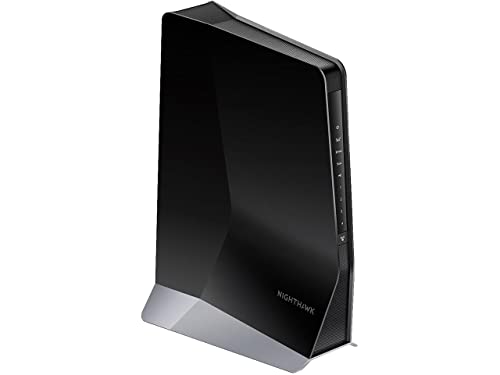
NETGEAR Nighthawk EAX15 AX1800 WiFi 6 Extender (Best Overall for Streaming)
For a household where evening streaming buffers, drops quality or fights with video calls and gaming, the NETGEAR Nighthawk EAX15 AX1800 WiFi 6 Extender earns its badge by matching the job rather than by winning a spec-sheet contest. Its verified headline specifications — combined speed class:: AX1800, up to 1.8 Gbps, device capacity:: up to 20 devices — put it in the right class for this job, and its design choices line up with what this lens actually demands rather than with a generic best-seller list. Check on Amazon
Strengths
- WiFi 6 AX1800 is a balanced step up: modern standard without paying flagship prices
- Gigabit ethernet port is ideal for wiring a TV, console or work PC into the extended zone
- Works with any router per the verified listing, so it is not locked to NETGEAR households
Trade-offs
- 1,500 sq ft rating is mid-pack, so very large or awkward homes may still need mesh instead
- 20-device capacity suits a normal home but not a device-dense smart property
- AX1800 will not saturate a multi-gigabit plan the way the AX6000 and AX5400 picks can
Key specs
- Wi-Fi standard: WiFi 6 (802.11ax)
- Combined speed class: AX1800, up to 1.8 Gbps
- Rated coverage: up to 1,500 sq ft
- Device capacity: up to 20 devices
- Ethernet port: 1 gigabit port
- Compatibility: works with any router
In daily use, expect the biggest gain exactly where the old network failed: the room that used to drop now simply works, and the gain is largest when the unit sits where it can still hear the router clearly. Keep the a stable 5 GHz link and low congestion first, then an ethernet port for the main TV, then device capacity in mind during placement and this pick rewards you; ignore placement and even this hardware cannot rescue a bad position.
Best for: most homes wanting WiFi 6 balance plus a wired port / Not suited for: very large homes needing mesh architecture

TP-Link RE715X AX3000 WiFi 6 Range Extender (Best for Many-Device Streaming)
The TP-Link RE715X AX3000 WiFi 6 Range Extender is the pick we would hand to a household where evening streaming buffers, drops quality or fights with video calls and gaming, because its particular mix of standard, coverage and features lines up with that problem. Its verified headline specifications — combined speed class:: AX3000 dual band, device capacity:: up to 64 devices — put it in the right class for this job, and its design choices line up with what this lens actually demands rather than with a generic best-seller list. Check on Amazon
Strengths
- AX3000 with 64-device capacity is built for the modern many-device household, not a single laptop
- 2,400 sq ft rating is among the strongest for a plug-in style extender here
- EasyMesh support keeps it from being locked to one router brand’s mesh system
Trade-offs
- Bigger performance headroom is wasted on a slow broadband plan or a WiFi 5-only router
- High device capacity does not fix a bad midway placement; the router link still governs speed
- App-led setup suits most people, but tinkerers get fewer manual controls than on some rivals
Key specs
- Wi-Fi standard: WiFi 6 (802.11ax)
- Combined speed class: AX3000 dual band
- Rated coverage: up to 2,400 sq ft
- Device capacity: up to 64 devices
- Ethernet port: yes
- Mesh support: EasyMesh
- Setup: app setup named in the verified listing
Used well, this unit turns a problem zone into an ordinary one, which is the real goal. It will not outperform a wired connection, and it will not fix a slow broadband plan, but within the honest limits of repeating a signal it does its job with the least fuss in its class. Recheck its position after any router move, because the pair works as a system.
Best for: many-device WiFi 6 homes and large floors / Not suited for: slow plans where AX3000 headroom goes unused
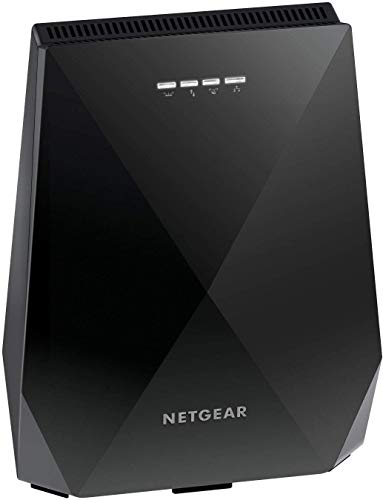
NETGEAR Nighthawk EX7700 AC2200 Tri-Band Mesh Extender (Best Tri-Band Streaming Pick)
Start with the problem this lens is really about: a household where evening streaming buffers, drops quality or fights with video calls and gaming. The NETGEAR Nighthawk EX7700 AC2200 Tri-Band Mesh Extender addresses it directly, which is why it holds this badge. Its verified headline specifications — combined speed class:: AC2200, up to 2,200 Mbps, rated coverage:: up to 2,300 sq ft — put it in the right class for this job, and its design choices line up with what this lens actually demands rather than with a generic best-seller list. Check on Amazon
Strengths
- Tri-band design can dedicate a band to the router link, which protects device speeds better than a basic dual-band repeater
- Mesh smart roaming is named in the verified listing, so phones can move between router and extender more gracefully
- 45-device capacity and 2,300 sq ft rating make it credible for a busy family floor
Trade-offs
- WiFi 5 rather than WiFi 6, so it does not add the newest standard to an older network
- Tri-band hardware costs more than simple dual-band plugs while offering no benefit in a tiny flat
- Its coverage rating still assumes a good midway placement, not a corner behind furniture
Key specs
- Wi-Fi standard: WiFi 5 (802.11ac)
- Combined speed class: AC2200, up to 2,200 Mbps
- Band setup: tri-band with mesh smart roaming
- Rated coverage: up to 2,300 sq ft
- Device capacity: up to 45 devices
The ownership experience is mostly about forgetting it exists. Set it up, update it, place it carefully once, and it should fade into the background while the dead zone stays fixed. If your household grows into more devices or a faster plan, this is also a sensible unit to keep as the secondary extender while a stronger model takes the main role.
Best for: busy family floors wanting tri-band backhaul and roaming on WiFi 5 / Not suited for: tiny flats, or homes ready to move fully to WiFi 6
TP-Link RE315 AC1200 WiFi Extender (Best Value Streaming Pick)
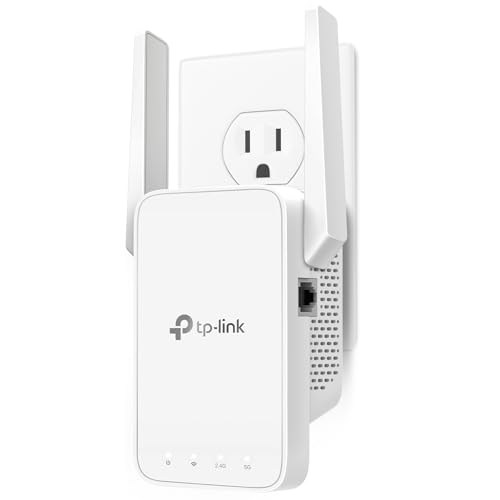
In a shortlist built around a stable 5 GHz link and low congestion first, then an ethernet port for the main TV, then device capacity, the TP-Link RE315 AC1200 WiFi Extender stands out as the natural answer for a household where evening streaming buffers, drops quality or fights with video calls and gaming. Its verified headline specifications — combined speed class:: AC1200, up to 1.2 Gbps, rated coverage:: up to 1,600 sq ft — put it in the right class for this job, and its design choices line up with what this lens actually demands rather than with a generic best-seller list. Check on Amazon
Strengths
- AC1200 is a sensible step above entry AC750 plugs for streaming and video calls
- EasyMesh compatibility widens its router pairing options beyond a single brand ecosystem
- Ethernet port plus 32-device rating make it a flexible spare-room and home-office pick
Trade-offs
- WiFi 5 standard means no WiFi 6 efficiency gains for crowded device lists
- 1,600 sq ft is a rating under good placement, not a promise through several solid walls
- It repeats your router’s signal, so a weak router position still limits the whole setup
Key specs
- Wi-Fi standard: WiFi 5 (802.11ac)
- Combined speed class: AC1200, up to 1.2 Gbps
- Band setup: dual band 5 GHz and 2.4 GHz
- Rated coverage: up to 1,600 sq ft
- Device capacity: up to 32 devices
- Ethernet port: one port
- Mesh support: EasyMesh compatible
Where this pick really earns its money is consistency: fewer dropouts at the hours that matter, steadier streams and calls, and less of the random slowness that makes people distrust their whole network. Pair it with a sensible channel setting on the router and the combination feels like a much larger upgrade than one box should deliver.
Best for: a sensible step up for streaming rooms and studies / Not suited for: homes wanting WiFi 6 efficiency for many devices

TP-Link RE600X AX1800 WiFi 6 Extender (Best Wired-Client Streaming Pick)
The case for the TP-Link RE600X AX1800 WiFi 6 Extender is practical rather than glamorous: it fits a household where evening streaming buffers, drops quality or fights with video calls and gaming without forcing compromises elsewhere. Its verified headline specifications — combined speed class:: AX1800 dual band, device capacity:: up to 30 devices — put it in the right class for this job, and its design choices line up with what this lens actually demands rather than with a generic best-seller list. Check on Amazon
Strengths
- AP mode is a real differentiator: run a cable to it and it stops being a repeater and becomes a proper access point
- Gigabit ethernet plus OneMesh gives both wired-client and mesh-router households a path
- 30-device WiFi 6 capacity fits a modern living room full of phones, TVs and smart speakers
Trade-offs
- 1,500 sq ft rating is modest next to the AX3000 and tri-band picks in this list
- OneMesh roaming benefits need a compatible TP-Link router to appear
- AP mode needs an ethernet run to the spot, which not every home can do neatly
Key specs
- Wi-Fi standard: WiFi 6 (802.11ax)
- Combined speed class: AX1800 dual band
- Rated coverage: up to 1,500 sq ft
- Device capacity: up to 30 devices
- Ethernet port: gigabit port
- Modes: repeater and access point (AP) mode
- Mesh support: TP-Link OneMesh
Treat this as a targeted fix and it performs like one. Aim it at the zone it was chosen for, wire anything critical into it where a port exists, and resist moving it into the dead room itself in a moment of tidiness. The hallway socket that looks worse on the floor plan is usually the one that performs better in real life.
Best for: homes that can use AP mode or OneMesh, plus a wired client / Not suited for: very large floor plans needing maximum coverage rating

TP-Link RE815X AX5400 Tri-Band WiFi 6 Range Extender (Best Splurge for Streaming)
Households dealing with a household where evening streaming buffers, drops quality or fights with video calls and gaming tend to overbuy or underbuy. The TP-Link RE815X AX5400 Tri-Band WiFi 6 Range Extender lands in the honest middle for this role, and in some homes beyond it. Its verified headline specifications — combined speed class:: AX5400 tri-band, rated coverage:: up to 2,800 sq ft — put it in the right class for this job, and its design choices line up with what this lens actually demands rather than with a generic best-seller list. Check on Amazon
Strengths
- Tri-band design with 96-device capacity is the heavy-duty option for very busy homes
- 2,800 sq ft is the highest indoor coverage rating in this pool
- 160 MHz channel support suits fast WiFi 6 clients that can actually use wide channels
Trade-offs
- Flagship capability is overkill for a small flat or a single streaming TV
- Tri-band repeating still depends on a well-placed dedicated backhaul; placement remains king
- Costs the most effort to justify: you need the devices, plan and floor area to use it
Key specs
- Wi-Fi standard: WiFi 6 (802.11ax)
- Combined speed class: AX5400 tri-band
- Channel width: 160 MHz channels supported
- Rated coverage: up to 2,800 sq ft
- Device capacity: up to 96 devices
- Ethernet port: yes
- Mesh support: TP-Link OneMesh
- Setup: app setup named in the verified listing
For households that share the network across work, school and entertainment at once, this pick’s headroom shows up as calm: the call stays clean while a stream runs and a console updates in the background. That calm is what the badge is really certifying, and it is why this model is ranked where it is for this lens.
Best for: very busy, large homes wanting tri-band WiFi 6 headroom / Not suited for: small homes or single-room fixes
Comparison Table
| Pick | Standard | Speed class | Rated coverage | Ethernet | Price |
|---|---|---|---|---|---|
| NETGEAR Nighthawk EAX15 AX1800 WiFi 6 Extender | WiFi 6 (802.11ax) | AX1800, up to 1.8 Gbps | up to 1,500 sq ft | Yes | Check price on Amazon |
| TP-Link RE715X AX3000 WiFi 6 Range Extender | WiFi 6 (802.11ax) | AX3000 dual band | up to 2,400 sq ft | Yes | Check price on Amazon |
| NETGEAR Nighthawk EX7700 AC2200 Tri-Band Mesh Extender | WiFi 5 (802.11ac) | AC2200, up to 2,200 Mbps | up to 2,300 sq ft | Not named in verified listing | Check price on Amazon |
| TP-Link RE315 AC1200 WiFi Extender | WiFi 5 (802.11ac) | AC1200, up to 1.2 Gbps | up to 1,600 sq ft | Yes | Check price on Amazon |
| TP-Link RE600X AX1800 WiFi 6 Extender | WiFi 6 (802.11ax) | AX1800 dual band | up to 1,500 sq ft | Yes | Check price on Amazon |
| TP-Link RE815X AX5400 Tri-Band WiFi 6 Range Extender | WiFi 6 (802.11ax) | AX5400 tri-band | up to 2,800 sq ft | Yes | Check price on Amazon |
Read the table as a fit chart rather than a league table. The right row is the one whose standard matches your router, whose coverage matches your floor plan, and whose features match a stable 5 GHz link and low congestion first, then an ethernet port for the main TV, then device capacity. A smaller row in the right place beats a flagship row in the wrong one, every time. See also Best Fastlane Configuration For Netgear Extenders.
How to Choose the Right WiFi Extender
Match the standard to your router
If your router is WiFi 5, a WiFi 5 extender is an honest match and a WiFi 6 extender still works, gaining you future-proofing rather than instant speed. If your router is WiFi 6, pairing it with a WiFi 5 extender throws away efficiency your devices could have used, especially with many devices active at once. Check the router’s box, app or admin page for its standard before ordering; it takes two minutes and decides the shortlist.
Speed class versus your plan
The extender’s speed class should sit comfortably at or above the real throughput you expect in the extended zone. A modest broadband plan is well served by AC1200 or AX1800 hardware. A fast fibre plan deserves AX3000 or tri-band hardware, because a repeating extender spends part of its capacity talking to the router. Buying far above your plan buys nothing; buying below it creates a bottleneck you will blame on the provider.
Bands and backhaul
Dual band is the sensible default: 2.4 GHz for reach, 5 GHz for speed. Tri-band adds a dedicated lane for the router link on supported models, which protects device speeds in busy homes at a higher price. Access point mode, where a cable feeds the extender, beats both and should be your first choice whenever a cable run is possible to the problem zone.
Coverage ratings and floor plans
Use coverage ratings to compare models, not to measure your home. Construction decides real reach: open-plan spaces behave kindly, while brick, concrete, plaster with metal lath and floor slabs all tax the signal heavily. For awkward construction, favour placement flexibility, tri-band options or the AP mode escape route over a bigger number on a box.
Ethernet ports and device capacity
An ethernet port turns the extender into a wired dock for the one device that matters most in the room, and it is worth prioritising for TVs, consoles, desktops and printers. Device capacity ratings matter in smart homes: count phones, TVs, speakers, bulbs, cameras and consoles honestly, then leave headroom, because the count grows every year.
Mesh ecosystems, honestly
OneMesh, AiMesh and EasyMesh are real conveniences, but only inside their own ecosystems or standards. A mesh extender paired with a matching router gives one network name and smoother roaming. The same unit on a different brand’s router is a standard extender with a separate extended network, which still works well, but buy it for its hardware merits in that case, not for roaming you will not receive.
For this lens specifically, the order of priorities is: a stable 5 GHz link and low congestion first, then an ethernet port for the main TV, then device capacity. Keep that order in front of you while comparing models and most wrong purchases become impossible. Readers still torn between categories will find Best Extenders For Plaster Walls and Best Cell Wifi Extenders For Rv useful.
How Do You Set Up and Get the Most From Your Extender?
- Survey first: walk from the router to the dead zone with a phone and note where the signal fades from strong to fair. Shortlist two or three sockets near that boundary.
- Place the extender at the best midway socket: raised, in the open, away from metal shelving, large appliances and thick obstruction where you can.
- Power it on and run the manufacturer’s setup, either the app flow or the push-button pairing, connecting it to your router’s network name with the router’s password.
- If the model creates a separate extended network name, connect a test device to it explicitly; if it is a mesh pairing, confirm the single network name appears and roaming is enabled.
- Test in the dead zone on the real device and the real task: the call, the stream, the scanner, the console. Test at the hour the problem used to happen.
- If results disappoint, move the extender one socket closer to the router and retest before moving it closer to the dead zone. A stronger router link fixes more than proximity to the problem room.
- Wire any critical fixed device into the extender’s ethernet port if it has one, and confirm that device now reports a wired connection.
- Update the extender’s firmware, set a strong admin password, and note the model, version and winning socket location for future you.
- Recheck after a week of real use, including an evening peak, and only then fix the position permanently or tidy cables.
Troubleshooting quick list
- Problem: the extended network appears but has no internet → fix: move the extender closer to the router; it has lost its upstream link.
- Problem: devices cling to the weak router signal → fix: use a mesh pairing with roaming, or connect the device to the extended network name manually and forget the main one in that room.
- Problem: fast at midday, slow in the evening → fix: this is congestion; try the router’s automatic channel selection, prefer 5 GHz for nearby devices, or step up to WiFi 6 hardware.
- Problem: the extender keeps disconnecting → fix: check firmware, ventilation and the socket itself, then try a different midway location before replacing the unit.
Common Mistakes
- Placing the extender inside the dead zone, where it receives the same weak signal as the devices it is meant to rescue.
- Buying by coverage rating alone and ignoring construction materials, floor slabs and the router’s own position.
- Pairing a fast broadband plan with the cheapest speed class and creating a permanent bottleneck.
- Expecting mesh roaming from an extender whose mesh system does not match the router brand or standard.
- Leaving default passwords and old firmware in place on a device that sits on your home network permanently.
- Lens-specific: Chasing the highest speed class while leaving the extender in a weak-signal spot. A mid-range extender in a strong position streams better than a flagship in a dead corner.
Every one of these mistakes is cheap to avoid and expensive to diagnose later, because each produces the same vague symptom of ‘the Wi-Fi is still bad’ while hiding a different cause. Work through placement, matching and firmware in that order and you will fix most extender disappointments without spending anything. More background sits in Best Wifi Extenders For Fios.
Deeper Consideration: Placement, Bands and Ownership
Security settings deserve a minute during setup. Use the strongest encryption your router and extender both support, keep the extended network protected with a real password, and disable any push-button pairing mode after setup if the model allows it, since convenience features left permanently on are the ones that get abused. Guest devices and smart-home gadgets are good candidates for a separate guest network where the router offers one, keeping the main network for the devices that hold your files and accounts. An extender faithfully repeats whatever security posture the main network has, good or bad.
Sometimes the honest answer is that an extender is the wrong tool. A house with ethernet cabling, or coax that can carry a network adapter, or a floor plan that defeats every midway point, may be better served by a wired access point or a full mesh system with a dedicated backhaul. Extenders win on price, simplicity and single-room focus. They lose when the job is whole-property architecture. This guide recommends extenders where they genuinely fit and says so where the better answer is a different category, because a returned product and a frustrated reader help nobody.
Firmware is the unglamorous half of extender ownership. Manufacturers patch security issues, fix roaming behaviour and improve compatibility through firmware updates, and an extender that never gets updated slowly becomes the weakest link in a home network. After setup, open the management app or web page, note the current firmware version, and enable automatic updates if the option exists. While you are there, change any default admin password, set the extended network to a strong password of its own if it uses a separate name, and record the extender’s exact model and version somewhere you will find it in two years.
Band choice deserves more thought than it usually gets. The 2.4 GHz band travels further and passes through obstacles more willingly, which makes it the workhorse for distant rooms and smart devices that sip data. The 5 GHz band is faster and less crowded but fades sooner, so it rewards shorter, cleaner paths. A good dual-band extender lets each device use the band that suits its distance, and a good setup leaves that choice automatic rather than forcing every gadget onto one lane. When you test after setup, test on both bands before judging the result.
Powerline and MoCA alternatives deserve a mention in any honest extender guide. Sending the network over the house’s own wiring can beat a wireless hop in homes where walls defeat radio but the wiring is modern and on one circuit. The trade-offs are real: wiring quality varies, speeds vary, and some homes split circuits in ways that break the path. Where a cable run is possible, though, feeding an extender in access point mode over ethernet remains the gold standard: the extender stops repeating and starts originating, and the dead zone gets something close to router-quality service.
Roaming behaviour explains many extender complaints that sound like speed problems. A phone that clings to the router’s fading signal while standing next to the extender is not suffering from a slow extender; it is suffering from sticky client behaviour. Mesh-style extenders and routers that support smart roaming nudge devices across at the right moment, which is why the same hardware can feel transformed when its mesh mode is actually active. If your setup uses a separate extended network name, expect manual switching on some devices, and consider that trade-off honestly when choosing between a plain extender and a mesh pairing.
Channel congestion is the invisible tax on urban and suburban Wi-Fi. Neighbouring networks crowd the same channels, and extenders inherit whatever congestion exists at their location. Modern WiFi 6 hardware handles crowded air more gracefully than WiFi 5, and automatic channel selection in the router helps more than most people expect. If your extender supports it, run its channel analysis or simply test performance at different times of day before blaming the hardware. An extender that flies at midday and crawls at eight in the evening is telling you about congestion, not about a faulty unit.
Coverage ratings on boxes are laboratory numbers, measured in open conditions that no real house reproduces. Treat them as a relative ranking between models rather than a promise about your floor plan. A rating jump from one model to the next tells you the second unit has more radio capability, more antennas or a stronger design; it does not tell you it will reach a specific bedroom in a specific house. Building materials, floor construction and the router’s own position routinely matter more than the difference between two neighbouring models on a shelf, which is why this guide weighs placement guidance as heavily as hardware.
Ethernet ports on extenders are quietly the most valuable feature in this category. Wiring a television, console, desktop or printer into the extender removes that device from the wireless contest entirely: it gets the extender’s best possible throughput with none of the interference, retries or band politics of a wireless client. In homes where one room matters more than the rest, an extender chosen mainly for its port, placed well and cabled to the desk or TV stand, regularly outperforms a more expensive wireless-only flagship placed carelessly. Count the ports you need before you buy, because most models offer exactly one.
Renters and anyone forbidden from drilling should know that extenders are among the friendliest network upgrades available: no cabling through walls, no landlord permission, and full portability when you move. The wall-mounted designs in this guide use included mounting materials and suit visible spots, while plug-in units leave no trace at all. If you move house, the extender moves with you and the placement survey simply gets repeated in the new floor plan. That portability is a genuine part of the value calculation against built-in infrastructure like ceiling access points on long cable runs.
Temperature and ventilation sound like server-room concerns, but plug-in extenders live in hallways, behind furniture and inside warm corners, and a unit that runs hot in a blocked corner can throttle or misbehave. Leave the vents of any extender clear, avoid stacking it against radiators or in direct sun on a windowsill, and give outdoor units the shade and drip-loop cable sense their manuals describe. Small physical kindnesses like these are the difference between an extender that runs untouched for years and one that needs rebooting every fortnight.
Signal indicators are more useful than most owners realise. Many extenders carry a simple light or app readout that reports how well the unit hears the router, and that readout is the fastest placement tool you own. A unit reporting a weak link will never deliver strong results no matter how close it sits to your devices, while a unit reporting a strong link in a slightly less convenient socket usually wins in real use. During setup week, treat that indicator as the referee: try the candidate sockets, note which one reports the healthiest link, and only then run your real-world tests on the winning spot.
Finally, keep the receipt-level details: which model you bought, which socket won, which firmware it runs, and which network name the extended side uses. Extender problems often surface a year later, after a router replacement or an internet provider change, and the household member doing the troubleshooting is usually working from memory. Two minutes of notes turns that future repair from archaeology into a checklist. When a router is replaced, expect to pair the extender again from scratch; building that expectation in now prevents a confusing evening later.
The extended network name question splits households. A separate name ending in a suffix makes it obvious which network a device is using, which helps troubleshooting, but it also means phones may stay on the main network until it nearly dies. A single shared name, whether through mesh pairing or manual configuration on some models, feels seamless but can hide which unit a struggling device is attached to. Neither choice is wrong; the right one depends on whether your household values visibility or invisibility. Pick deliberately during setup rather than inheriting whatever the default happens to be.
Gaming and video calls expose extender weakness faster than browsing does, because they care about latency and jitter, not just throughput. A repeating hop adds a small delay, and a congested or weak link adds a variable one, which is the kind players actually feel. If the extended zone hosts a console or a work-from-home desk, prioritise the strongest possible router link, prefer 5 GHz or a wired connection into the extender’s port, and judge the setup by an evening of real play or real calls rather than by a download test. The picks with ethernet ports exist in these lists largely for this reader.
Weather and seasons matter for the outdoor picks and, surprisingly, for indoor ones too. Foliage in full leaf absorbs more signal than bare winter branches, so a yard link that works in January deserves a retest in June. Indoors, a house full of guests at a holiday gathering is a different network from the same house empty on a Tuesday, both in device count and in bodies absorbing signal. Judge any extender by its worst realistic week, not its best afternoon, and leave headroom in capacity and placement for the days the house is full.
Final Recommendation
For most readers of this guide, the NETGEAR Nighthawk EAX15 AX1800 WiFi 6 Extender is the answer: it leads on a stable 5 GHz link and low congestion first, then an ethernet port for the main TV, then device capacity, and it does so without forcing the compromises that cheaper or more extreme options carry. If your situation is narrower than the general case, the TP-Link RE715X AX3000 WiFi 6 Range Extender is the strongest alternative in its specific role, and the TP-Link RE315 AC1200 WiFi Extender covers the simpler end of this lens honestly. Whichever you choose, spend as much care on the midway placement as on the model itself; in extender buying, position is half the product.
Buy once, place carefully, update the firmware, and test at the hour that used to fail. Do those four things and the dead zone that sent you searching for the best extenders for streaming should simply stop being a topic in your house.
Frequently Asked Questions
How much speed does an extender need for 4K streaming?
A single 4K stream uses a modest, steady slice of bandwidth; the challenge is consistency. A dual-band extender with a strong router link handles several streams comfortably. Wire the main TV into the extender’s ethernet port if it has one for the most reliable result.
Will an extender slow down my internet?
A repeating extender adds a hop and shares airtime, so some overhead is normal. A well-placed, well-matched extender keeps the loss small, and a tri-band model or AP mode reduces it further. A badly placed or under-classed extender is where the horror stories come from.
Where exactly should I place the extender?
Midway between router and dead zone, at a point where the router’s signal is still strong on your phone, raised and in the open. The stairwell, landing or hallway socket usually beats a socket inside the problem room.
Extender or mesh system: which do I need?
One or two dead zones in an otherwise good network is extender territory. A whole property with weak coverage in most rooms, or a wish for seamless roaming everywhere, is mesh territory. The price and setup effort differ accordingly.
Can I use two extenders?
Yes, but avoid chaining one extender off another’s extended network where you can; each hop compounds overhead. Two extenders each linked directly to the router, on opposite sides of the home, behave far better.
Do extenders work with any internet provider?
Yes. Extenders repeat the Wi-Fi your router or gateway broadcasts, regardless of which provider supplies the connection. Provider-specific pods and apps are conveniences, not requirements.