The best lightweight mirrorless cameras comparison starts with a simple question: how light can a proper camera be before it stops feeling like a proper camera? The eight cameras below answer it in different ways, from Canon's R100 and R50 to Sony's a6400, Fujifilm's X-T30 III, Nikon's Z 30, Panasonic's G100 and the full-frame LUMIX S9. Every one is a mirrorless camera with an interchangeable lens, every one is described by its maker as compact or lightweight, and every one is light enough to carry all day without noticing the weight.
This is a comparison, so the guide compares as it goes: the two Canon APS-C cameras against each other, the Sony a6400 against the Fujifilm X-T30 III, the Nikon Z 30 against the Panasonic G100, and the two full-frame cameras, the Canon RP and the LUMIX S9, against the smaller-sensor cameras that surround them. The comparison table at the top of the guide lays out the standout detail of each camera, and the sections at the end put the closest rivals head to head, so the buyer can see the trade-offs rather than reading eight separate reviews.
Lightweight here means the camera and its kit lens together, because a light body with a heavy lens is not a light camera. The kit lenses in this guide run from 12-32mm to 24-105mm, and the guide names the lens of each pick, because the lens decides the size of the whole package as much as the body does. A camera that is light enough to carry is a camera that gets used, and that is the point of this guide: the best camera is the one that is actually in the bag.
In this guide
Quick picks: best lightweight mirrorless cameras comparison
| # | Product | Where to buy |
|---|---|---|
| 1 | Canon EOS R100 Mirrorless Camera, RF-S 18-45mm Lens Kit | Check on Amazon |
| 2 | Canon EOS RP Mirrorless Camera, RF 24-105mm Lens Kit | Check on Amazon |
| 3 | Sony Alpha a6400 Mirrorless Camera, 16-50mm Lens | Check on Amazon |
| 4 | Canon EOS R50 Mirrorless Camera, RF-S 18-45mm Lens Kit | Check on Amazon |
| 5 | FUJIFILM X-T30 III Mirrorless Camera, XC 13-33mm Lens Kit, Black | Check on Amazon |
| 6 | Nikon Z 30 Mirrorless Camera, 16-50mm Zoom Lens | Check on Amazon |
| 7 | Panasonic LUMIX G100 Mirrorless Camera, 12-32mm Lens | Check on Amazon |
| 8 | LUMIX S9 Mirrorless Camera, 18-40mm Lens, Green | Check on Amazon |
How the picks were chosen
The picks were chosen from the site's own product search, looking only at genuine lightweight mirrorless cameras sold as a body with a kit lens, or as a body on its own where the listing states it: a named model, a named lens where one is included, and a maker that describes the camera as compact or lightweight. A listing was dropped if it was a bundle that added memory cards and bags to the same camera, a different colour of a model already picked, or a camera that was not mirrorless. Several bundle listings of the same model were counted once, because a bundle is one camera, not two.
Sensor size was checked first, because it decides the size of the whole camera: a Micro Four Thirds camera is smaller than an APS-C camera, and an APS-C camera is smaller than a full-frame camera, for the same kind of lens. The picks here cover all three, and the guide names the sensor size where the listing states it, so the buyer can see the trade-off between size and sensor. The kit lens came next, because a compact zoom keeps the whole package small, while a long zoom does not.
Finally, each camera was checked for the practical things that decide whether a light camera stays light: the flip screen for vlogging, the autofocus for moving subjects, the 4K video for creators, and the Wi-Fi and Bluetooth for sharing photographs. The eight picks below cover all of those, in different combinations, and the guide notes which camera does each thing best, so the buyer can spend on the feature that matters most to them and skip the ones that do not.
Quick comparison
| Product | Standout detail |
|---|---|
| Canon EOS R100 Mirrorless Camera, RF-S 18-45mm Lens Kit | Canon R100, 24.1MP APS-C, 4K, beginner |
| Canon EOS RP Mirrorless Camera, RF 24-105mm Lens Kit | Canon RP, full-frame, 24-105mm kit |
| Sony Alpha a6400 Mirrorless Camera, 16-50mm Lens | Sony a6400, eye AF, 4K, flip screen |
| Canon EOS R50 Mirrorless Camera, RF-S 18-45mm Lens Kit | Canon R50, 24.2MP APS-C, 4K, vlogging |
| FUJIFILM X-T30 III Mirrorless Camera, XC 13-33mm Lens Kit, Black | Fujifilm X-T30 III, XC 13-33mm, dials |
| Nikon Z 30 Mirrorless Camera, 16-50mm Zoom Lens | Nikon Z 30, most compact Nikon, 16-50mm |
| Panasonic LUMIX G100 Mirrorless Camera, 12-32mm Lens | Panasonic G100, Micro Four Thirds, 5-axis IS |
| LUMIX S9 Mirrorless Camera, 18-40mm Lens, Green | LUMIX S9, full-frame compact, 18-40mm |

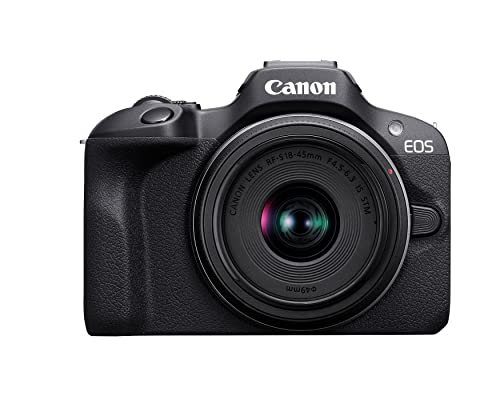
1. Canon EOS R100 Mirrorless Camera, RF-S 18-45mm Lens Kit
Key specs
Canon EOS R100 mirrorless camera, RF-S 18-45mm F4.5-6.3 IS STM lens kit, 24.1 megapixel CMOS APS-C sensor, 4K video, Wi-Fi and Bluetooth, for beginner photographers and creators, digital camera.
Strengths
- The 24.1-megapixel APS-C sensor gives detailed photographs in a small, light body.
- The RF-S 18-45mm kit lens covers wide angle to short telephoto in one compact zoom.
- 4K video with Wi-Fi and Bluetooth suits a beginner who photographs and films.
Trade-offs
- The kit lens is a slow variable-aperture zoom, so it needs good light for the best results.
- The R100 is a beginner camera, so it has fewer direct controls than the R50 or the X-T30 III.
- The small body means a small grip, which a buyer with large hands should check.
Who it fits
A beginner who wants the lightest Canon mirrorless camera with a kit lens.
Best for: Learning photography and filming, in a camera that is easy to carry.
Not suited for: Buyers who want many direct controls, who should take the X-T30 III pick.
In daily use
Fit the RF-S 18-45mm lens and leave it on for everyday use, because it covers the range most beginners need. Use the Wi-Fi to send photographs to a phone, and the Bluetooth to keep the connection ready, so sharing a photograph takes seconds rather than minutes.
The Canon EOS R100 is the beginner pick in this guide: the lightest Canon mirrorless camera with a kit lens.
Check price on Amazon: Canon EOS R100 Mirrorless Camera, RF-S 18-45mm Lens Kit

2. Canon EOS RP Mirrorless Camera, RF 24-105mm Lens Kit
Key specs
Canon EOS RP mirrorless camera, RF 24-105mm lens F4-7.1 IS STM lens kit, full-frame interchangeable lens camera, compact and lightweight for travelling and vlogging.
Strengths
- The full-frame sensor gives the largest sensor in this guide at a compact size.
- The RF 24-105mm kit lens covers wide angle to telephoto in one lens.
- The compact and lightweight body suits travelling and vlogging.
Trade-offs
- The kit lens is a slow variable-aperture zoom, so it needs good light.
- A full-frame camera with a full-frame lens is heavier than the APS-C picks, even when the body is compact.
- The RP is an older full-frame model, so it has fewer video features than the R50.
Who it fits
A buyer who wants a full-frame sensor in a compact body, for travel and vlogging.
Best for: Travel photography where a full-frame sensor matters.
Not suited for: Buyers who want the lightest camera here, who should take the R100 or the Z 30.
In daily use
Use the RF 24-105mm lens as the only lens for a trip, because it covers the range from landscapes to portraits without a lens change. The full-frame sensor rewards good light, so shoot in the open where possible, and keep the camera in a small bag rather than a large one.
The Canon EOS RP is the full-frame pick: the largest sensor in a compact Canon body.
Check price on Amazon: Canon EOS RP Mirrorless Camera, RF 24-105mm Lens Kit

3. Sony Alpha a6400 Mirrorless Camera, 16-50mm Lens
Key specs
Sony Alpha a6400 mirrorless camera, compact APS-C interchangeable lens digital camera with real-time eye autofocus, 4K video, flip screen and 16-50mm lens, E-mount compatible cameras, ILCE-6400L/B, black.
Strengths
- The real-time eye autofocus tracks people and animals, which suits portraits and family photographs.
- The flip screen suits vlogging and self-portraits.
- 4K video and the compact APS-C body suit a creator who photographs and films.
Trade-offs
- The 16-50mm kit lens is a compact power zoom, so it is convenient rather than fast.
- The small body means a small grip, which a buyer with large hands should check.
- The a6400 is an older Sony model, so its menu is more complex than the newer cameras here.
Who it fits
A buyer who wants Sony's eye autofocus in a compact camera, for people and video.
Best for: Portraits, family photographs and vlogging with reliable autofocus.
Not suited for: Buyers who want the simplest menu, who should take the Canon R100 pick.
In daily use
Set the eye autofocus to track the nearest eye, and let the camera do the focusing while the photographer composes the shot. The flip screen makes vlogging simple, and the 16-50mm lens covers the range from wide angle to portrait in one compact zoom.
The Sony Alpha a6400 is the autofocus pick: the camera with real-time eye autofocus.
Check price on Amazon: Sony Alpha a6400 Mirrorless Camera, 16-50mm Lens

4. Canon EOS R50 Mirrorless Camera, RF-S 18-45mm Lens Kit
Key specs
Canon EOS R50 mirrorless camera, RF-S 18-45mm F4.5-6.3 IS STM lens kit, 24.2 megapixel CMOS APS-C sensor, 4K video, vlogging, content creation, photography, digital camera, black.
Strengths
- The 24.2-megapixel APS-C sensor gives detailed photographs and 4K video in a light body.
- The RF-S 18-45mm kit lens covers wide angle to short telephoto in one compact zoom.
- The vlogging and content-creation features suit a creator who films as well as photographs.
Trade-offs
- The kit lens is a slow variable-aperture zoom, so it needs good light for the best results.
- The R50 costs more than the R100 for a similar sensor, so the extra features have to matter.
- The small body means a small grip, which a buyer with large hands should check.
Who it fits
A creator who wants a light Canon camera for photography and vlogging.
Best for: Vlogging and content creation with a light camera.
Not suited for: Buyers who want the cheapest Canon here, who should take the R100 pick.
In daily use
Use the R50 for video as well as stills, because its 4K video and vlogging features are the reason to choose it over the R100. The RF-S 18-45mm lens covers the everyday range, and the camera's Wi-Fi sends photographs to a phone for sharing.
The Canon EOS R50 is the creator pick: the light Canon for photography and vlogging.
Check price on Amazon: Canon EOS R50 Mirrorless Camera, RF-S 18-45mm Lens Kit
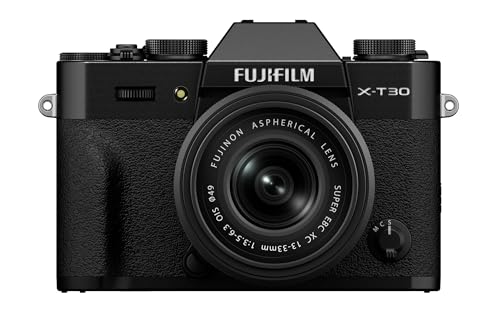
5. FUJIFILM X-T30 III Mirrorless Camera, XC 13-33mm Lens Kit, Black
Key specs
FUJIFILM X-T30 III mirrorless camera body, with XC 13-33mm lens kit, black.
Strengths
- The XC 13-33mm kit lens is a compact wide zoom that keeps the whole package small.
- The X-T30 III is a compact Fujifilm body with direct dials for the main settings.
- The black finish and the classic shape suit a photographer who likes a traditional camera.
Trade-offs
- The listing states no sensor size or resolution, so the buyer should check the listing for the details.
- The XC lens is a compact kit lens, so it is convenient rather than fast.
- The camera is a newer model, so there are fewer long-term reports on it than on the a6400.
Who it fits
A buyer who wants a compact Fujifilm camera with direct dials and a wide kit zoom.
Best for: Street photography and travel with a traditional camera.
Not suited for: Buyers who want the full specification in the listing, who should take a Canon pick.
In daily use
Use the direct dials to set the exposure without menus, because that is the point of the X-T30 III. The XC 13-33mm lens covers wide angle to normal in a compact zoom, so leave it on for everyday use and change lenses only when the shot demands it.
The FUJIFILM X-T30 III is the traditional pick: the compact Fujifilm with direct dials.
Check price on Amazon: FUJIFILM X-T30 III Mirrorless Camera, XC 13-33mm Lens Kit, Black

6. Nikon Z 30 Mirrorless Camera, 16-50mm Zoom Lens
Key specs
Nikon Z 30 with wide-angle zoom lens, our most compact, lightweight mirrorless stills and video camera with 16-50mm zoom lens, Nikon USA model.
Strengths
- Nikon describes it as its most compact and lightweight mirrorless camera, which is the heart of this guide.
- The 16-50mm zoom lens covers wide angle to short telephoto in a compact lens.
- The stills and video design suits a creator who does both.
Trade-offs
- The listing states no sensor size or resolution, so the buyer should check the listing for the details.
- The small body means a small grip, which a buyer with large hands should check.
- The Z 30 has no viewfinder, so the screen is the only way to compose.
Who it fits
A buyer who wants Nikon's most compact mirrorless camera, for stills and video.
Best for: Travel and vlogging with the lightest Nikon here.
Not suited for: Buyers who want a viewfinder, who should take the a6400 or the X-T30 III pick.
In daily use
Compose on the screen, because the Z 30 has no viewfinder, and use the 16-50mm lens as the everyday zoom. The camera is at its best as a travel camera, small enough to carry all day and ready for both stills and video.
The Nikon Z 30 is the lightest Nikon pick: Nikon's most compact mirrorless camera.
Check price on Amazon: Nikon Z 30 Mirrorless Camera, 16-50mm Zoom Lens

7. Panasonic LUMIX G100 Mirrorless Camera, 12-32mm Lens
Key specs
Panasonic LUMIX G100 4K mirrorless camera for photo and video, built-in microphone with tracking, Micro Four Thirds interchangeable lens system, 12-32mm lens, 5-axis hybrid image stabilisation, DC-G100DKK9, black.
Strengths
- The Micro Four Thirds system makes the whole camera smaller than the APS-C picks.
- The 5-axis hybrid image stabilisation steadies video and stills.
- The built-in microphone with tracking suits vlogging without extra gear.
Trade-offs
- The smaller sensor means less light gathering than the APS-C and full-frame picks.
- The 12-32mm kit lens is a compact zoom, so it is convenient rather than fast.
- The G100 is a vlogging-first camera, so a stills-only buyer may prefer another pick.
Who it fits
A vlogger who wants the smallest camera here, with stabilisation and a tracking microphone.
Best for: Vlogging and travel video with a small camera.
Not suited for: Buyers who want the largest sensor, who should take the RP or the S9 pick.
In daily use
Let the 5-axis stabilisation do its work when walking and filming, and use the built-in microphone with tracking for voice, because it is designed to follow the speaker. The 12-32mm lens covers wide angle to normal, so leave it on for everyday use.
The Panasonic LUMIX G100 is the smallest pick: the Micro Four Thirds camera for vlogging.
Check price on Amazon: Panasonic LUMIX G100 Mirrorless Camera, 12-32mm Lens

8. LUMIX S9 Mirrorless Camera, 18-40mm Lens, Green
Key specs
LUMIX S9 mirrorless digital full-frame compact travel camera, compact digital camera for social media and travel with a full-frame, mirrorless design and 18-40mm lens, green, DC-S9NG9.
Strengths
- The full-frame sensor in a compact travel body is the most ambitious combination in this guide.
- The 18-40mm lens covers wide angle to normal in a compact zoom.
- The social-media and travel design suits a creator who shares photographs on the move.
Trade-offs
- A full-frame camera is heavier than the smaller-sensor picks, even in a compact body.
- The green finish is a style choice, and it will not suit every buyer.
- The S9 is a travel-first camera, so a buyer who wants many direct controls should look at the X-T30 III.
Who it fits
A traveller who wants a full-frame sensor in the most compact body here, for social media and travel.
Best for: Travel photography with a full-frame sensor in a small camera.
Not suited for: Buyers who want the lightest camera here, who should take the Z 30 or the G100.
In daily use
Carry the S9 as the only camera on a trip, because its full-frame sensor and compact body are the reason to choose it. The 18-40mm lens covers the everyday range, and the green finish makes the camera easy to spot in a bag.
The LUMIX S9 is the travel full-frame pick: a full-frame sensor in a compact travel camera.
Check price on Amazon: LUMIX S9 Mirrorless Camera, 18-40mm Lens, Green
Buying guide: best lightweight mirrorless cameras comparison
Sensor size: Micro Four Thirds, APS-C or full-frame
The sensor size decides the size of the whole camera, and the picks here cover all three. Micro Four Thirds, on the G100, is the smallest, and it makes the smallest camera and the smallest lenses. APS-C, on the R100, R50 and a6400, is the middle size, and it balances image quality with a compact body. Full-frame, on the RP and the S9, is the largest sensor, and it gives the most light gathering at the cost of a bigger body and bigger lenses. The buyer should choose the sensor that matches the bag: a small bag wants Micro Four Thirds or APS-C, while a buyer who accepts a bigger bag gets the full-frame advantage.
The kit lens matters as much as the body
A light body with a heavy lens is not a light camera, and the kit lenses in this guide run from 12-32mm to 24-105mm. A compact zoom like the 16-50mm or the 18-45mm keeps the whole package small, while a 24-105mm lens covers more range at the cost of size. The buyer should think of the body and the lens together, because the camera that is carried is the body plus the lens, not the body alone. A second lens can always be added later, but the kit lens is the lens that will be used most.
Autofocus: eye detection and tracking
Autofocus decides whether a moving subject stays sharp, and the Sony a6400's real-time eye autofocus is the standout here, tracking people and animals by the eye. The Canon cameras offer their own autofocus for people and video, and the Panasonic G100 offers tracking for its microphone and its focus. A buyer who photographs people, children or pets should put autofocus first, because a camera that misses focus misses the photograph, however good its sensor is.
Video: 4K, stabilisation and the flip screen
Most cameras here offer 4K video, and the differences are in the details: the G100 has 5-axis hybrid stabilisation for steady walking shots, the a6400 and the R50 have flip screens for vlogging, and the Z 30 and the S9 are designed for stills and video together. A buyer who films should check the stabilisation and the screen before the sensor, because a shaky video with a good sensor is still a shaky video. A microphone input, where fitted, is worth more than a megapixel for a vlogger.
Viewfinder or screen only
Most cameras here have a viewfinder, but the Nikon Z 30 does not, so its screen is the only way to compose. A viewfinder helps in bright sunlight, where a screen is hard to see, and it steadies the camera against the face. A screen-only camera is smaller and simpler, and it suits a buyer who composes on the screen anyway. The buyer should decide which they use before ordering, because it cannot be added later.
Wi-Fi, Bluetooth and sharing
A light camera is often a travel camera, and sharing photographs matters as much as taking them. The Canon cameras offer Wi-Fi and Bluetooth for sending photographs to a phone, and the LUMIX S9 is designed for social media and travel. A buyer who shares photographs on the move should check the connection before the sensor, because a camera whose photographs stay on the card is a camera whose photographs are never seen.
Weight in the hand, not on the page
The weight that matters is the weight in the hand, with the kit lens fitted, carried all day. A camera that is light on paper but heavy with its lens is not a light camera, and the guide judges each pick as a whole package. The buyer should hold the camera with its lens before a long trip, because a camera that is comfortable for an hour may not be comfortable for a day, and the best camera is the one that is actually in the bag.
What lightweight does not mean
Lightweight does not mean weak, and none of the cameras here is a toy. They are all interchangeable-lens mirrorless cameras with real sensors and real lenses, and they all take photographs that a phone cannot match. What lightweight means is a smaller sensor, a smaller body and a smaller lens, chosen together, and the trade-off is real: less light gathering, fewer direct controls, and a smaller grip. The buyer who accepts those trade-offs gets a camera that is carried everywhere, and that is worth more than a heavier camera that stays at home.
Usage and care
Charge the battery fully before a day out, and carry a spare, because a light camera has a small battery and a day of photographs and video will use it. Fit the kit lens and leave it on for everyday use, because changing lenses in the field lets dust onto the sensor, and the kit lens covers the range most days need. Set the camera to save photographs to a phone over Wi-Fi at the end of the day, so the card is backed up before the next morning.
Clean the lens with a blower first, then a microfibre cloth, and never wipe a dusty lens dry, because grit scratches the coating. Keep the sensor clean by changing lenses with the camera pointing down, and never touch the sensor itself. Store the camera in a small padded bag with the lens attached, because a camera that is ready to use is a camera that gets used, and a camera in pieces in a large bag is often left behind.
Update the camera's software when the maker releases a new version, because the updates improve autofocus and fix bugs. Keep the memory card fast enough for 4K video, because a slow card will stop a recording, and carry a spare card as well as a spare battery. A camera looked after this way lasts years longer than one that is left dusty in a drawer with a flat battery.
Common mistakes
The most common mistake is buying on sensor size alone: a full-frame camera with a heavy lens is not a light camera, and a Micro Four Thirds camera with a compact lens may be the better travel companion. Judge the camera as a whole package, body plus lens, and carry it for a day before deciding, because the weight in the hand matters more than the number on the page.
The second mistake is buying a bundle instead of a camera. Several listings for the cameras in this guide add memory cards, bags and filters to the same camera, and the bundle is one camera, not two. Buy the camera and the lens, and add the accessories separately, because the bundle's extras are often the cheapest versions, and the buyer ends up replacing them anyway.
The third mistake is ignoring the grip. A small camera with a small grip is uncomfortable for a large hand, and a buyer who does not check the grip will discover it on the first long day. Hold the camera before a trip, and if the fingers have nowhere to rest, add a small grip or choose a bigger body, because a camera that hurts to hold is a camera that stays in the bag.
Canon R100 against Canon R50
The R100 and the R50 share a 24-megapixel APS-C sensor and the same RF-S 18-45mm kit lens, so the difference is in the features, not the photographs. The R50 adds vlogging and content-creation features, a better screen and more video options, while the R100 is the simpler, cheaper camera. A beginner who wants the cheapest way into Canon mirrorless should take the R100, and a creator who films as well as photographs should take the R50. The photographs from the two are close enough that the choice is about video, not stills.
Sony a6400 against Fujifilm X-T30 III
The a6400 and the X-T30 III are the two enthusiast cameras in this guide, and they differ in philosophy: the Sony offers real-time eye autofocus and a flip screen, while the Fujifilm offers direct dials and a traditional shape. A buyer who photographs people should take the Sony, because its autofocus is the best here. A buyer who likes to set the exposure by hand should take the Fujifilm, because its dials make it a pleasure. Both are compact, both take good photographs, and the choice is about how the photographer likes to work.
Nikon Z 30 against Panasonic G100
The Z 30 and the G100 are the two smallest cameras here, and both are made for creators who do stills and video. The Z 30 is Nikon's most compact mirrorless camera, with a 16-50mm zoom, while the G100 is a Micro Four Thirds camera with 5-axis stabilisation and a tracking microphone. A buyer who wants the smallest Nikon should take the Z 30, and a buyer who wants the steadiest video should take the G100. Both fit in a small bag, and both are ready for a day of filming.
Full-frame against the rest
The RP and the S9 are the two full-frame cameras here, and they show the trade-off clearly: a larger sensor in a compact body, at the cost of a bigger lens and a heavier package. A buyer who wants the most light gathering and the shallowest depth of field should take one of them, with the RP for a Canon user and the S9 for a traveller. A buyer who wants the lightest camera should take an APS-C or Micro Four Thirds pick instead, because the full-frame advantage is real, but so is the weight.
Final recommendation
If one camera has to win this guide, it is the Canon EOS R50, because it is the light camera that does the most: a 24.2-megapixel APS-C sensor, 4K video, vlogging features, and the RF-S 18-45mm kit lens, in a body that is easy to carry all day. The Nikon Z 30 is the pick for buyers who want the lightest Nikon, and the Canon RP is the pick for buyers who want a full-frame sensor in a compact body.
For most buyers, the choice comes down to three questions. Is the camera for stills, video, or both? Stills alone points to the R100 or the X-T30 III, video points to the G100 or the R50, both points to the Z 30 or the S9. How big is the bag? A small bag points to the G100 or the Z 30, a bigger bag opens the RP and the S9. Which system is already owned? A Canon lens points to the R100, R50 or RP, a Sony lens points to the a6400. Answer those three, and the right camera in this guide picks itself.
Whatever camera is chosen, hold it with its kit lens before a long trip, charge a spare battery, and carry the camera in a small bag that is ready to use. A lightweight mirrorless camera bought carefully is a camera that is carried everywhere, and the eight cameras in this guide are all cameras that can do that, in different sizes and sensor sizes, for different photographers.
Frequently asked questions
What is the lightest mirrorless camera?
The lightest mirrorless cameras in this guide are the Nikon Z 30, which Nikon describes as its most compact and lightweight mirrorless camera, and the Panasonic G100, which uses the small Micro Four Thirds system. Both are light with their kit lenses fitted, and both fit in a small bag, which is the test that matters for a travel camera.
Is APS-C or full-frame better for travel?
APS-C is better for travel when the bag is small, because the body and the lenses are smaller and lighter, while full-frame is better when the buyer accepts a bigger bag for more light gathering. The RP and the S9 in this guide show that a full-frame camera can be compact, but their lenses are still bigger than the APS-C and Micro Four Thirds lenses here.
Do I need a viewfinder on a mirrorless camera?
A viewfinder helps in bright sunlight, where a screen is hard to see, and it steadies the camera against the face. The Nikon Z 30 has no viewfinder, so its screen is the only way to compose, which suits a buyer who composes on the screen anyway. Most cameras in this guide have a viewfinder, and the buyer should decide which they use before ordering.
What is the best lightweight mirrorless camera for vlogging?
The best lightweight mirrorless camera for vlogging in this guide is the Canon EOS R50, with 4K video and vlogging features, or the Panasonic G100, with 5-axis stabilisation and a tracking microphone. Both have flip screens and compact kit lenses, and the choice is between the Canon's larger sensor and the Panasonic's steadier video.
Can a lightweight mirrorless camera take good photographs?
Yes, a lightweight mirrorless camera takes photographs that a phone cannot match, because it has a larger sensor and an interchangeable lens. The cameras in this guide have sensors from Micro Four Thirds to full-frame, and all of them take detailed photographs in good light. Lightweight means a smaller body and lens, not a weaker camera.
Should I buy a camera with a kit lens or body only?
A camera with a kit lens is the better buy for most people, because the kit lens covers the everyday range and the whole package is designed to be light together. A body-only camera suits a buyer who already owns lenses, and none of the picks in this guide is sold as a body only without a lens option. Buy the kit, and add a second lens later when the photography demands it.
More from ilcastellomenu.com
Best entry level mirrorless cameras: mirrorless cameras for beginners
Best mirrorless cameras with image stabilization: stabilized mirrorless cameras
Best micro SD cards for mirrorless camera: memory cards for mirrorless cameras