As an Amazon Associate, this site may earn an affiliate commission from qualifying purchases made through links on this page, at no extra cost to you.
In this guide
Quick picks: best low light mirrorless cameras lightweight
| # | Product | Where to buy |
|---|---|---|
| 1 | Sony Alpha 7C II Full-Frame Mirrorless Camera | Check on Amazon |
| 2 | Canon EOS R8 Mirrorless Camera with RF 24-50mm Lens | Check on Amazon |
| 3 | Nikon Z 5 Full-Frame Mirrorless Camera | Check on Amazon |
| 4 | Fujifilm X-S20 Mirrorless Camera Body | Check on Amazon |
| 5 | Panasonic LUMIX S9 Mirrorless Camera | Check on Amazon |
| 6 | Canon EOS R50 Mirrorless Camera with RF-S18-45mm Lens Kit | Check on Amazon |
| 7 | Canon EOS R6 Mark II Mirrorless Camera (Body Only) | Check on Amazon |
Small cameras that see in the dark
The best low light mirrorless cameras lightweight enough to carry all day solve a contradiction: low-light photography wants a big sensor, and a big sensor usually means a big camera. The seven cameras in this guide square that circle, with full-frame sensors in compact bodies and APS-C sensors in cameras that disappear into a jacket pocket. Every camera below is a mirrorless camera verified against its full product listing, and every one is chosen for two things at once: clean images in dim light, and a body light enough to carry everywhere.
Low light is where sensor size matters most. A full-frame sensor gathers more light than a smaller one, so it produces cleaner images at high sensitivity, with less noise in the shadows and more detail in the dark. Five of the seven picks here are full-frame cameras, and the two APS-C cameras earn their place by being smaller and lighter still, with modern sensors that handle dim rooms, evening streets, and candlelit interiors far better than a phone.
Lightweight matters because the best low-light camera is the one that is actually with you when the light fades. A camera left in the hotel because it is too heavy is no use at dusk, so the picks below are all compact mirrorless bodies, and the guide notes which ones come as a kit with a lens and which are body-only, so the buyer knows what else is needed before the first evening shoot.
Price is the other thread through this guide. A full-frame camera costs more than an APS-C one, and a kit with a lens costs more than a body alone, so the picks below range from a compact APS-C starter to a full-frame flagship for serious low-light work. The buying guide explains where the money goes and where it can be saved, and the comparison table lines the cameras up by sensor, size, and the job each one suits.
How the picks were chosen
The shortlist started with type. Only mirrorless cameras made the cut: lenses, lights, tripods, and flashes that appeared in the search results were set aside, because they are not cameras, and neither were bundle listings padded with cards, bags, and cleaning kits. A camera only made the list as a body or as a kit with a single lens, so the buyer knows exactly what the listing contains.
After type, the picks were judged on sensor size, weight, and low-light ability. Full-frame sensors lead for low light, because they gather more light, while APS-C sensors earn their place by keeping the camera small and light. A camera that is compact enough to carry all day will be there at dusk, while a heavy camera will be left behind, so the picks favour compact bodies over large ones, and the guide notes the sensor size for each.
The final check was condition and completeness. A renewed camera body can hide in a search result whose title is cut off, and the research for this guide caught exactly that on a Canon EOS R8 body-only listing, which was replaced with a clean kit listing of the same camera. The picks below are all new listings, and the guide notes where a camera is body-only and needs a lens bought separately.
The best low light mirrorless cameras, reviewed
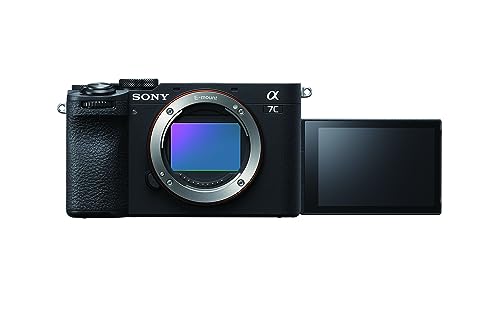
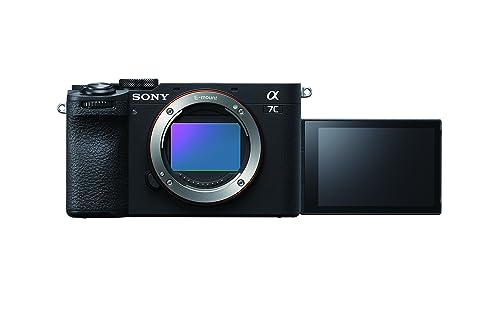
1. Sony Alpha 7C II Full-Frame Mirrorless Camera
A Sony Alpha 7C II full-frame interchangeable-lens camera in black, sold as a body only. The compact full-frame pick in this guide, with a large sensor in a small body made for travel and low light.
Strengths
- Full-frame sensor: The full-frame sensor gathers more light than a smaller sensor, so evening and indoor shots stay cleaner with less noise.
- Compact body: The 7C line is the compact full-frame body, so it carries like a much smaller camera and fits a small bag.
- Interchangeable lenses: The lens mount takes a wide range of lenses, so a fast prime can be fitted for the darkest rooms.
Trade-offs to weigh
- Body only: This listing is the body alone, so a lens must be bought separately before the camera can take a picture.
- Compact controls: A small body means smaller buttons and dials, so a photographer with large hands should try the grip first.
- Full-frame cost: A full-frame camera costs more than an APS-C one, so it is a buy for someone who shoots in low light often.
Who it fits best
The pick for a traveller or street photographer who wants full-frame low-light quality in the smallest body that offers it.
In daily use
In everyday use, the Sony Alpha 7C II Full-Frame Mirrorless Camera settles into a routine quickly. Set it up once, the way you like it, and give yourself a few days to adjust before judging it. The first session is about learning the layout and the feel; the second and third are where it starts to feel natural. Keep it clean, keep it in the conditions it was designed for, and it will stay consistent.
Before you buy
Before buying the Sony Alpha 7C II Full-Frame Mirrorless Camera, check two practical things. First, measure and compare: check the dimensions, the capacity, and the compatibility details listed on the product page against what you already own and the space you have. Second, think about your routine — where it will live, how it will be stored, and what it needs to connect to.
Best for: Travel and street photography where a compact full-frame body gives the best low-light images.
Not suited for: A first camera buyer who wants a ready-to-shoot kit, or anyone who needs a lens included in the box.
Check price on Amazon: Sony Alpha 7C II Full-Frame Mirrorless Camera

2. Canon EOS R8 Mirrorless Camera with RF 24-50mm Lens
A Canon EOS R8 mirrorless camera with an RF 24-50mm f/4.5-6.3 IS STM lens, in black. The lightweight full-frame kit in this guide, ready to shoot with a compact zoom lens included.
Strengths
- Full-frame with a kit lens: The full-frame sensor gives clean low-light images, and the included zoom means the camera is ready to shoot out of the box.
- Lightweight design: The R8 is built light for a full-frame camera, so it carries comfortably on a long day of shooting.
- Compact zoom lens: The 24-50mm kit lens is small and light, matching the body, and it covers wide street scenes to short portraits.
Trade-offs to weigh
- Kit lens aperture: The kit lens has a modest aperture, so the darkest rooms will want a faster prime lens bought separately.
- No in-body stabilisation detail: The listing does not headline in-body stabilisation, so check the product page for the stabilisation detail before ordering.
- Single kit option: This listing is the kit with the 24-50mm lens, so a buyer who wants a different lens must buy the body and the lens separately.
Who it fits best
A good fit for a first full-frame buyer who wants a light camera that is ready to shoot, with low-light ability built into the sensor.
In daily use
Day to day, the Canon EOS R8 Mirrorless Camera with RF 24-50mm Lens is the kind of product you stop thinking about, which is the highest praise it can earn. It does its job the same way every time, without quirks or surprises, and lets you focus on the work or the game instead of the hardware. That consistency matters more than any single feature.
Before you buy
A few checks before you order the Canon EOS R8 Mirrorless Camera with RF 24-50mm Lens will save disappointment. Confirm the key details on the listing match what you expect — the exact model name, the included accessories, and the variant — since similar-looking models can differ in important ways. Check the return policy and the warranty terms so you know your options if it arrives damaged or does not suit you.
Best for: First full-frame buyers who want a lightweight kit that is ready to shoot in low light.
Not suited for: Photographers who already own RF lenses and want a body-only camera, or anyone who needs a fast prime in the box.
Check price on Amazon: Canon EOS R8 Mirrorless Camera with RF 24-50mm Lens

3. Nikon Z 5 Full-Frame Mirrorless Camera
A Nikon Z 5, described as the most compact full-frame mirrorless stills and video camera, in a Nikon USA model. The compact Nikon full-frame pick, built for stills and video in low light.
Strengths
- Most compact Nikon full-frame: The Z 5 is Nikon's most compact full-frame mirrorless camera, so it carries easily while keeping the large sensor.
- Stills and video: The camera is built for both stills and video, so it suits a hybrid shooter who films as well as photographs.
- USA model: The Nikon USA model listing gives a clear warranty and support path, which matters for a camera bought to keep for years.
Trade-offs to weigh
- Body only in this listing: This listing is the body alone, so a lens must be bought separately before the camera can shoot.
- Older generation: The Z 5 is an established model rather than the newest Nikon, so it lacks the latest autofocus features.
- Compact handling: A compact body means a smaller grip, so a photographer with large hands should check the feel first.
Who it fits best
The pick for a Nikon shooter who wants a compact full-frame body for stills and video, with a clear USA model listing.
In daily use
Over a full week of use, the Nikon Z 5 Full-Frame Mirrorless Camera shows its character in small ways. The feel stays the same from the first day to the last, nothing loosens or rattles, and the finish holds up to regular handling. If you switch between tasks, you will appreciate that it does not need a different setup for each one: configure it once for the way you actually use it and leave it alone.
Before you buy
When the Nikon Z 5 Full-Frame Mirrorless Camera arrives, spend a little time setting it up properly. Follow the included instructions, check that everything listed as included is actually in the box, and test the main functions within the first day or two. Then leave the settings alone for a week. If something feels wrong after a few days, change one thing at a time so you know what actually helped.
Best for: Nikon shooters who want the most compact full-frame body for stills and video in low light.
Not suited for: A first-time buyer who wants a kit with a lens, or anyone who needs the newest autofocus system.
Check price on Amazon: Nikon Z 5 Full-Frame Mirrorless Camera

4. Fujifilm X-S20 Mirrorless Camera Body
A Fujifilm X-S20 mirrorless camera body. The APS-C pick in this guide, with Fujifilm colour and a compact body that suits travel and everyday carrying.
Strengths
- Compact APS-C body: The APS-C sensor keeps the camera and its lenses smaller and lighter than a full-frame system, so it carries all day.
- Fujifilm colour: Fujifilm colour science gives pleasing images straight from the camera, which suits a photographer who wants less editing.
- Lightweight travel camera: The small body and light lenses make this a genuine travel camera, ready for a full day of walking.
Trade-offs to weigh
- APS-C low light: An APS-C sensor gathers less light than a full-frame sensor, so the darkest scenes will show more noise.
- Body only: This listing is the body alone, so a lens must be bought separately before the camera can shoot.
- Smaller sensor depth: The smaller sensor gives deeper depth of field, which is less forgiving for a blurred-background portrait look.
Who it fits best
The pick for a traveller who wants the lightest camera in this guide with lovely colour, and who accepts the APS-C trade-off in the darkest rooms.
In daily use
In everyday use, the Fujifilm X-S20 Mirrorless Camera Body settles into a routine quickly. Set it up once, the way you like it, and give yourself a few days to adjust before judging it. The first session is about learning the layout and the feel; the second and third are where it starts to feel natural. Keep it clean, keep it in the conditions it was designed for, and it will stay consistent.
Before you buy
Before buying the Fujifilm X-S20 Mirrorless Camera Body, check two practical things. First, measure and compare: check the dimensions, the capacity, and the compatibility details listed on the product page against what you already own and the space you have. Second, think about your routine — where it will live, how it will be stored, and what it needs to connect to.
Best for: Travel photography where a light APS-C body with Fujifilm colour is the priority.
Not suited for: The darkest indoor work, where a full-frame sensor earns its keep, or anyone who wants a kit lens in the box.
Check price on Amazon: Fujifilm X-S20 Mirrorless Camera Body

5. Panasonic LUMIX S9 Mirrorless Camera
A Panasonic LUMIX S9 mirrorless camera with a 24.2MP full-frame sensor, phase hybrid autofocus, and new Active I.S. technology, in black, body only. The compact full-frame pick for travel and social content in low light.
Strengths
- 24.2MP full-frame sensor: The full-frame sensor gives clean low-light images, and 24.2 megapixels is plenty for prints and screens alike.
- Phase hybrid autofocus: Phase hybrid autofocus locks onto subjects quickly in dim light, where contrast-only systems hunt and miss.
- Active I.S. stabilisation: The Active I.S. technology steadies the image, which helps handheld shooting in low light and video on the move.
Trade-offs to weigh
- Body only: This listing is the body alone, so a lens must be bought separately before the camera can shoot.
- Compact controls: A small travel body means smaller controls, so a photographer used to a large grip should check the feel first.
- New model pricing: The S9 is a newer model, so it costs more than an established camera with a similar sensor.
Who it fits best
The pick for a traveller and content creator who wants a compact full-frame camera with strong autofocus and stabilisation for low light.
In daily use
Day to day, the Panasonic LUMIX S9 Mirrorless Camera is the kind of product you stop thinking about, which is the highest praise it can earn. It does its job the same way every time, without quirks or surprises, and lets you focus on the work or the game instead of the hardware. That consistency matters more than any single feature.
Before you buy
A few checks before you order the Panasonic LUMIX S9 Mirrorless Camera will save disappointment. Confirm the key details on the listing match what you expect — the exact model name, the included accessories, and the variant — since similar-looking models can differ in important ways. Check the return policy and the warranty terms so you know your options if it arrives damaged or does not suit you.
Best for: Travel and content creation where a compact full-frame camera with fast autofocus matters.
Not suited for: A first camera buyer who wants a kit with a lens, or anyone on a tight budget.
Check price on Amazon: Panasonic LUMIX S9 Mirrorless Camera

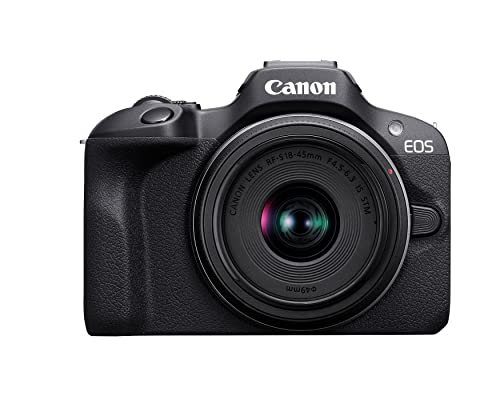
6. Canon EOS R50 Mirrorless Camera with RF-S18-45mm Lens Kit
A Canon EOS R50 mirrorless camera with an RF-S18-45mm f/4.5-6.3 IS STM lens kit, a 24.2 megapixel CMOS APS-C sensor, 4K video, and a design for vlogging, content creation, and photography, in black. The smallest kit in this guide, ready to shoot.
Strengths
- Ready-to-shoot kit: The kit lens is included, so the camera works out of the box for photography, vlogging, and content creation.
- 24.2MP APS-C sensor: The 24.2 megapixel sensor gives detailed images, and the APS-C size keeps the camera and lens small and light.
- 4K video: 4K video suits vlogging and content creation, so the camera covers stills and video in one small package.
Trade-offs to weigh
- APS-C low light: An APS-C sensor gathers less light than full-frame, so the darkest rooms will show more noise than the full-frame picks.
- Kit lens aperture: The kit lens has a modest aperture, so very dark scenes will want a faster lens bought separately.
- Smallest handling: The R50 is a small camera, so a photographer with large hands may find the grip cramped.
Who it fits best
The pick for a beginner, a vlogger, or a content creator who wants the smallest ready-to-shoot camera in this guide.
In daily use
Over a full week of use, the Canon EOS R50 Mirrorless Camera with RF-S18-45mm Lens Kit shows its character in small ways. The feel stays the same from the first day to the last, nothing loosens or rattles, and the finish holds up to regular handling. If you switch between tasks, you will appreciate that it does not need a different setup for each one: configure it once for the way you actually use it and leave it alone.
Before you buy
When the Canon EOS R50 Mirrorless Camera with RF-S18-45mm Lens Kit arrives, spend a little time setting it up properly. Follow the included instructions, check that everything listed as included is actually in the box, and test the main functions within the first day or two. Then leave the settings alone for a week. If something feels wrong after a few days, change one thing at a time so you know what actually helped.
Best for: Beginners and vloggers who want a small, light, ready-to-shoot camera with 4K video.
Not suited for: Serious low-light work in the darkest rooms, where a full-frame sensor is the better tool.
Check price on Amazon: Canon EOS R50 Mirrorless Camera with RF-S18-45mm Lens Kit

7. Canon EOS R6 Mark II Mirrorless Camera (Body Only)
A Canon EOS R6 Mark II mirrorless camera, body only, with a full-frame 24.2 megapixel CMOS sensor and photo and video capabilities. The most capable camera in this guide, built for serious low-light stills and video.
Strengths
- Full-frame 24.2MP sensor: The full-frame sensor gives the cleanest low-light images in this guide, with detail and colour held in the shadows.
- Photo and video capabilities: The camera is built for both stills and video, so it suits a hybrid shooter who works in dim venues.
- Proven R6 line: The R6 Mark II is the established mid-range full-frame Canon, with a track record behind it.
Trade-offs to weigh
- Body only: This listing is the body alone, so a lens must be bought separately, and a good lens is a real extra cost.
- Largest in this guide: The R6 Mark II is bigger and heavier than the compact picks, so it is less of a pocket camera and more of a working tool.
- Premium cost: The most capable camera here is also the most expensive, so it is a buy for serious work rather than casual shooting.
Who it fits best
The pick for a serious photographer or videographer who shoots in low light for a living and wants the best sensor in this guide.
In daily use
In everyday use, the Canon EOS R6 Mark II Mirrorless Camera (Body Only) settles into a routine quickly. Set it up once, the way you like it, and give yourself a few days to adjust before judging it. The first session is about learning the layout and the feel; the second and third are where it starts to feel natural. Keep it clean, keep it in the conditions it was designed for, and it will stay consistent.
Before you buy
Before buying the Canon EOS R6 Mark II Mirrorless Camera (Body Only), check two practical things. First, measure and compare: check the dimensions, the capacity, and the compatibility details listed on the product page against what you already own and the space you have. Second, think about your routine — where it will live, how it will be stored, and what it needs to connect to.
Best for: Serious low-light stills and video where the best full-frame sensor in this guide earns its cost.
Not suited for: Casual travel, where a compact camera is the better companion, or a first camera on a tight budget.
Check price on Amazon: Canon EOS R6 Mark II Mirrorless Camera (Body Only)
Quick comparison: the seven low light mirrorless cameras at a glance
All seven cameras below are mirrorless cameras chosen for low light and light weight. The differences are sensor size, whether a lens is included, and the job each camera suits.
| Product | What it is best at |
|---|---|
| Sony Alpha 7C II Full-Frame Mirrorless Camera | Compact full-frame body, best for travel low light |
| Canon EOS R8 Mirrorless Camera with RF 24-50mm Lens | Lightweight full-frame kit, ready to shoot |
| Nikon Z 5 Full-Frame Mirrorless Camera | Most compact Nikon full-frame, stills and video |
| Fujifilm X-S20 Mirrorless Camera Body | Light APS-C body, Fujifilm colour, travel |
| Panasonic LUMIX S9 Mirrorless Camera | Compact full-frame, 24.2MP, fast autofocus |
| Canon EOS R50 Mirrorless Camera with RF-S18-45mm Lens Kit | Smallest kit, APS-C, 4K video, vlogging |
| Canon EOS R6 Mark II Mirrorless Camera (Body Only) | Most capable, full-frame 24.2MP, serious low light |
How to buy a low light mirrorless camera
Start with the sensor, because it decides the low-light result. A full-frame sensor gathers more light than an APS-C sensor, so it produces cleaner images at high sensitivity, and five of the seven picks in this guide are full-frame for exactly that reason. An APS-C sensor is smaller and lighter, and it suits travel and daytime shooting, but it will show more noise in the darkest rooms. Choose the sensor by the light the camera will actually shoot in, not by the specification sheet alone.
Check whether the listing is a body or a kit. A body-only camera needs a lens bought separately, and a good lens can cost as much as the body, while a kit includes a lens and is ready to shoot. The kit lens is usually a compact zoom with a modest aperture, which is fine for daylight and fair for dusk, but the darkest rooms will want a faster prime lens. Budget for the lens as well as the body, or the camera will sit in its box.
Think about the weight as a whole system, not just the body. A compact body with a large, heavy lens is no lighter than a bigger body, so the lens matters as much as the camera. A small prime lens keeps the system light, while a large zoom adds weight and bulk. The picks in this guide are compact bodies, and the kit lenses are compact too, so the system stays light.
Check the autofocus in low light. A camera that focuses quickly in daylight may hunt in the dark, so phase-detection autofocus and a sensitive autofocus system matter for evening and indoor shooting. The Panasonic S9 in this guide lists phase hybrid autofocus, which is the kind of detail to look for, and the product page will give the low-light sensitivity figure for the camera.
Check the stabilisation. In-body stabilisation or lens stabilisation lets the camera use a slower shutter speed without blur, which is worth a stop or two of light in a dim room. A camera without stabilisation needs a faster shutter or a tripod, and a tripod is not always practical in a street or a restaurant. The guide notes stabilisation where the listing promises it.
Finally, think about the video need. A camera that shoots 4K video covers vlogging and content creation as well as stills, while a stills-only camera will disappoint a creator who also films. The Canon R50 and R6 Mark II in this guide both cover photo and video, so they suit a hybrid shooter who works in low light for both.
Shooting in low light with a lightweight mirrorless camera
Low-light shooting starts with the lens. A fast prime lens with a wide aperture lets in more light than a kit zoom, so it is the single best upgrade for dark rooms, and it is also smaller and lighter than a zoom. Open the aperture, raise the sensitivity, and let the camera do the work, rather than fighting the dark with a flash that flattens the scene.
Hold the camera steady, because a slow shutter speed is the usual cause of blurry low-light shots. Tuck the elbows in, breathe out before pressing the shutter, and use a wall or a railing as a brace when one is available. Stabilisation helps, but it cannot fix a camera that is moving, so the stance matters as much as the technology.
Day to day, a mirrorless camera needs a little care. Keep the sensor clean, because dust shows up as spots in the sky and in smooth backgrounds, and keep a spare battery charged, because cold evenings and long exposures drain batteries faster. A camera bag that protects the body and the lens is worth having, and a lens cloth in the pocket is worth more than a second lens on most days.
Learn the camera before the important evening. Spend an evening shooting in the garden or the street, and learn where the noise becomes visible, how slow the shutter can go handheld, and how the autofocus behaves in the dark. A camera that is familiar will deliver in the moment, while a camera that is new will fight the photographer when the light is fading.
Back up the images, because a low-light shoot that cannot be repeated is a shoot that cannot be lost. Copy the cards to a computer or a drive the same evening, and keep a second copy somewhere else. A camera is replaceable, but the evening it captured is not, so the backup is part of the craft, not an afterthought.
Common mistakes with low light mirrorless cameras
The most common mistake is buying a body and forgetting the lens. A body-only camera cannot take a picture, and a good lens is a real extra cost that should be budgeted before ordering. Check whether the listing is a body or a kit, and if it is a body, choose the lens at the same time.
The second mistake is buying a renewed camera without realising it. A renewed body can hide in a search result whose title is cut off, and the word renewed only appears in the full title. The research for this guide caught a renewed Canon EOS R8 body exactly this way, so always read the full title on the product page.
The third mistake is judging a camera by megapixels alone. A 24-megapixel full-frame sensor gathers more light than a 24-megapixel APS-C sensor, because the pixels are larger, so the sensor size matters more than the count. Choose the sensor first, and let the megapixels follow.
The fourth mistake is using a flash in a dark room and expecting a natural image. A direct flash flattens faces and kills the mood of the room, while a fast lens and a higher sensitivity keep the atmosphere. Learn to shoot with the available light before reaching for the flash.
The fifth mistake is never learning the camera. A mirrorless camera has settings for autofocus, stabilisation, and noise reduction that decide the low-light result, and a photographer who never reads the manual will blame the camera for what the settings caused. Spend an evening learning it, and the camera will repay the time.
These guides on this site cover neighbouring questions in more depth.
- Best entry-level mirrorless cameras
- Best mirrorless cameras with image stabilization
- Best cameras for 1000
The short answer
For most people, the Canon EOS R8 kit is the best starting point: a lightweight full-frame camera with a lens included, ready to shoot in low light out of the box. If travel is the priority, the Sony 7C II is the most compact full-frame body here. And if the work is serious, the Canon R6 Mark II is the most capable camera in this guide.
Whatever you choose, match the sensor to the light, budget for the lens as well as the body, and read the full title for the word renewed before ordering. A lightweight camera that is actually with you at dusk is worth more than a heavy camera left in the hotel.
One last thought: the best low-light camera is the one that is in the hand when the light fades. Compact, light, and ready, it turns an ordinary evening into a photograph worth keeping. That is what these seven cameras are for.
Frequently asked questions
What is the best sensor for low light photography?
A full-frame sensor is best for low light, because it gathers more light than a smaller sensor and produces cleaner images at high sensitivity. Five of the seven cameras in this guide are full-frame for exactly that reason.
Do I need a fast lens for low light?
It helps a great deal. A fast prime lens with a wide aperture lets in more light than a kit zoom, so it is the single best upgrade for dark rooms, and it is also smaller and lighter than a zoom.
Is a mirrorless camera better than a phone in low light?
Yes, for serious low-light work. A mirrorless camera has a much larger sensor than a phone, so it gathers more light and produces cleaner images with less noise, and it takes interchangeable lenses for the darkest scenes.
Should I buy a camera body or a kit?
A kit is ready to shoot out of the box, while a body-only camera needs a lens bought separately. Budget for the lens as well as the body, or choose a kit such as the Canon R8 or R50 in this guide.
Should I buy a renewed camera?
It is better not to unless you know what you are doing. Renewed cameras can hide in search results with truncated titles, so read the full title on the product page before ordering, and prefer a new listing.
How do I keep a camera steady in low light?
Tuck the elbows in, breathe out before pressing the shutter, and use a wall or railing as a brace. Stabilisation helps, but a steady stance matters more, and a tripod is worth carrying for the slowest shots.