The best binoculars for bowhunting are the binoculars that work in the half-light of dawn and dusk, when the deer move and the light is thin: a 10×42 or a 12×50 with bright optics, a wide field of view, and a body that survives rain, cold and a fall from the treestand. A bowhunter shoots at close range, often under forty yards, so the binoculars are not for judging a distant animal but for finding it: spotting an ear in the brush, a leg behind a tree, or the flick of a tail in the shadows, before the bow is ever drawn.
This guide covers eight binoculars from the brands bowhunters actually carry: Vortex, Bushnell, Nikon and Leupold. Every one is a genuine hunting binocular, and every one states its magnification, its objective size and its weatherproofing in its listing. There are 10×42 models, which are the standard for bowhunting, a 12×50 for the hunter who wants more reach, and camo models that disappear in the woods, because a bowhunter's binoculars should not shine in the sun.
The first thing to understand is the numbers: 10×42 means ten times magnification with a 42mm objective lens, and it is the size most bowhunters choose, because it balances brightness, field of view and weight. A 12×50 sees further but shows a narrower field and shakes more in the hand, and an 8×42 shows a wider field but less detail. The second thing is the light: dawn and dusk are when bowhunting happens, and the binoculars must gather enough light to show a deer in the shadows. What follows is what each binocular does well, where it falls short, and who should carry it.
In this guide
Quick picks: best binoculars for bowhunting
| # | Product | Where to buy |
|---|---|---|
| 1 | Vortex Triumph HD 10×42 Binoculars | Check on Amazon |
| 2 | Vortex Crossfire HD 10×42 Binoculars | Check on Amazon |
| 3 | Vortex Diamondback HD 10×42 Binoculars | Check on Amazon |
| 4 | Vortex Viper HD Roof Prism Binoculars 12×50 | Check on Amazon |
| 5 | Bushnell PowerView 10×50 Porro Prism Instafocus Binoculars | Check on Amazon |
| 6 | Bushnell Engage X 10x42mm Binoculars | Check on Amazon |
| 7 | Nikon PROSTAFF P3 10×42 Binocular | Check on Amazon |
| 8 | Leupold BX-4 Pro Guide HD Binoculars 10x50mm Gen 2 | Check on Amazon |
How the picks were chosen
The picks were chosen from the site's own product search, looking only at genuine hunting binoculars with a named brand, a stated magnification and objective size, and stated weatherproofing. A listing was dropped if it was a generic no-name binocular with no brand, a toy or compact binocular with no hunting purpose, a monocular, or a different size of a model already picked.
Magnification was checked first, because it decides what the hunter can see. The 10×42 is the standard for bowhunting, and five of the eight picks here are 10×42, because it is the size that works for most hunters in most woods. The 12×50 picks are for the hunter who glassed open country or wants more detail at distance, and the guide says plainly which is which, so the buyer can match the binoculars to the ground they hunt.
Finally, each binocular was checked against the way a bowhunter actually uses it: carried on a harness in the woods, raised quickly when game appears, and used in rain, cold and low light. The Vortex picks include a GlassPak harness, the Bushnell picks have camo patterns and EXO Barrier coatings, and the Leupold pick is a Pro Guide model built for the field. The guide names the harness, the coating and the camo for each pick, because those details matter in the woods.
Quick comparison
| Product | Standout detail |
|---|---|
| Vortex Triumph HD 10×42 Binoculars | Vortex Triumph HD, value 10×42 |
| Vortex Crossfire HD 10×42 Binoculars | Vortex Crossfire HD, mid-range |
| Vortex Diamondback HD 10×42 Binoculars | Vortex Diamondback HD, brighter glass |
| Vortex Viper HD Roof Prism Binoculars 12×50 | Vortex Viper HD 12×50, long reach |
| Bushnell PowerView 10×50 Porro Prism Instafocus Binoculars | Bushnell PowerView, camo 10×50 |
| Bushnell Engage X 10x42mm Binoculars | Bushnell Engage X, light camo |
| Nikon PROSTAFF P3 10×42 Binocular | Nikon PROSTAFF P3, wide field |
| Leupold BX-4 Pro Guide HD Binoculars 10x50mm Gen 2 | Leupold BX-4 Pro Guide, top glass |

1. Vortex Triumph HD 10×42 Binoculars
Key specs
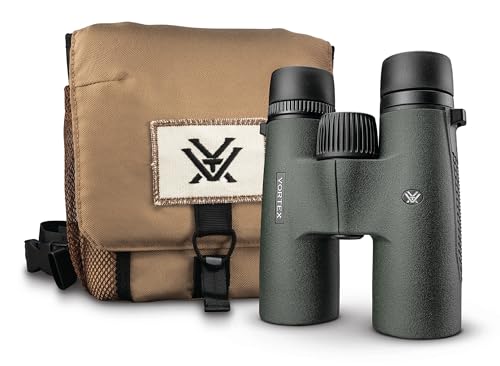
Vortex Triumph HD 10×42 binoculars, HD optics, tripod adaptable, waterproof, fogproof, shockproof, included GlassPak harness, unlimited unconditional warranty.
Strengths
- The 10×42 size is the standard for bowhunting, with a good balance of brightness and field.
- The HD optics give a clear, bright picture in the half-light of dawn and dusk.
- The included GlassPak harness carries the binoculars comfortably all day.
Trade-offs
- The Triumph is Vortex's entry HD model, so the glass is good rather than the best Vortex sells.
- The 10×42 size is heavier than a compact, and it needs a harness for all-day carry.
- There is no camo pattern, so the black body can shine in the sun.
Who it fits
A bowhunter who wants the standard 10×42 at the best value, with a harness included.
Best for: Bowhunting in the woods, at dawn and dusk, on a budget.
Not suited for: Hunters who want the best glass Vortex sells, or a camo body.
In daily use
Carry the Triumph on the GlassPak harness, not around the neck, because a harness spreads the weight and keeps the binoculars against the chest, where they do not swing and catch on branches. Raise them slowly when game appears, because a fast movement is what a deer sees, and the 10×42 magnification will show the ear in the brush before the bow is drawn.
The Vortex Triumph HD 10×42 is the value pick: the standard bowhunting binocular at the best cost.
Check price on Amazon: Vortex Triumph HD 10×42 Binoculars

2. Vortex Crossfire HD 10×42 Binoculars
Key specs
Vortex Crossfire HD 10×42 binoculars, HD optics, tripod adaptable, waterproof, fogproof, shockproof, included GlassPak harness, unlimited unconditional warranty.
Strengths
- The Crossfire HD is the proven mid-range Vortex, with HD optics that suit low light.
- The 10×42 size gives a wide field, which matters when game appears close.
- The included GlassPak harness is the same as on the Triumph, and it works all day.
Trade-offs
- It is a step up from the Triumph, so it costs more for a similar size.
- The glass is good but not as bright as the Diamondback or the Viper.
- There is no camo pattern on this model.
Who it fits
A bowhunter who wants a proven mid-range Vortex 10×42, with a harness.
Best for: Bowhunting in the woods, for a hunter who wants a step up from the entry model.
Not suited for: Hunters who want the brightest glass, or a camo body.
In daily use
Use the Crossfire HD as the all-day binocular: on the harness in the morning, raised slowly when the light is thin, and wiped clean at the end of the day. The HD optics gather enough light for the dawn and dusk hours, which is when the deer move, and the waterproofing means the rain does not end the hunt.
The Vortex Crossfire HD 10×42 is the mid-range pick: the proven Vortex for the serious bowhunter.
Check price on Amazon: Vortex Crossfire HD 10×42 Binoculars

3. Vortex Diamondback HD 10×42 Binoculars
Key specs
Vortex Diamondback HD 10×42 binoculars, 250th Anniversary, HD optics, tripod adaptable, waterproof, fogproof, shockproof, included GlassPak, unlimited unconditional warranty.
Strengths
- The Diamondback HD is a step up in glass from the Crossfire, with a brighter picture in low light.
- The 10×42 size is the standard, and the 250th Anniversary model marks the line's history.
- The included GlassPak harness carries the binoculars comfortably.
Trade-offs
- It costs more than the Crossfire for a similar size and weight.
- The anniversary marking is cosmetic, and it does not change the optics.
- There is no camo pattern on this model.
Who it fits
A bowhunter who wants brighter glass than the Crossfire, in the standard 10×42.
Best for: Bowhunting at dawn and dusk, where the brighter glass shows.
Not suited for: Hunters who want the cheapest Vortex, or a camo body.
In daily use
Glass with the Diamondback HD at first and last light, because that is where the brighter glass earns its cost: the deer in the shadows at dawn, and the last legal minutes at dusk, are the moments that decide a hunt, and the Diamondback shows them more clearly than the cheaper models. Keep the lenses clean, because a dirty lens wastes the better glass.
The Vortex Diamondback HD 10×42 is the brighter-glass pick: the step up for low light.
Check price on Amazon: Vortex Diamondback HD 10×42 Binoculars

4. Vortex Viper HD Roof Prism Binoculars 12×50
Key specs
Vortex Viper HD roof prism binoculars 12×50, HD optics, XR lens coatings, tripod adaptable, locking diopter, included GlassPak, unlimited unconditional warranty.
Strengths
- The 12×50 size sees further than any 10×42 here, for judging game at distance.
- The XR lens coatings give a bright, clear picture with good colour.
- The locking diopter holds the focus setting, so it does not drift in the field.
Trade-offs
- The 12×50 is heavier and shows a narrower field than a 10×42.
- The higher magnification shakes more in the hand, and a tripod helps.
- It costs more than the 10×42 Vortex picks.
Who it fits
A bowhunter who hunts open country and needs more reach than a 10×42.
Best for: Open country and long glassing sessions, from a stand or a tripod.
Not suited for: Hunters in thick woods, who should buy a 10×42 instead.
In daily use
Use the Viper HD 12×50 where the country is open: glassing a field, a ridge or a clearing, where the extra magnification shows the detail a 10×42 would miss. Rest the elbows on the knees or use the tripod adapter, because 12x magnification shakes in the hand, and a steady view is worth more than a bigger number. In thick woods, leave it at home and carry a 10×42.
The Vortex Viper HD 12×50 is the long-reach pick: the binocular for open country.
Check price on Amazon: Vortex Viper HD Roof Prism Binoculars 12×50

5. Bushnell PowerView 10×50 Porro Prism Instafocus Binoculars
Key specs
Bushnell PowerView 10×50 Porro Prism Instafocus binoculars, Realtree AP Camo, InstaFocus system for fast focusing, BK-7 multi-coated optics, ideal for hunting, birding, hiking and outdoor adventures.
Strengths
- The Realtree AP Camo pattern disappears in the woods, which matters for a bowhunter.
- The 10×50 size gathers more light than a 10×42, for dawn and dusk.
- The InstaFocus system focuses fast, which suits game that appears suddenly.
Trade-offs
- The Porro prism design is bulkier than the roof prism models here.
- The BK-7 optics are good but not as bright as the HD models.
- The PowerView is an older design, and the build is simpler than the Vortex picks.
Who it fits
A bowhunter who wants camo and a big objective lens, at a low cost.
Best for: Bowhunting in the woods, where camo and light gathering matter.
Not suited for: Hunters who want the brightest HD glass, or a compact roof prism.
In daily use
Carry the PowerView on a harness, because the Porro prism body is bulkier than a roof prism and it swings more on a neck strap. The Realtree camo is the reason to buy it: in the woods, a black binocular shines in the sun, and a camo one does not, and a deer notices the shine before it notices the hunter. Use the InstaFocus lever for fast focus when game appears suddenly.
The Bushnell PowerView 10×50 is the camo pick: the Realtree binocular for the woods.
Check price on Amazon: Bushnell PowerView 10×50 Porro Prism Instafocus Binoculars

6. Bushnell Engage X 10x42mm Binoculars
Key specs
Bushnell Engage X 10x42mm binoculars, Realtree Edge Camo, IPX7 waterproof, lightweight, exclusive EXO Barrier for all-weather clarity, fully multi-coated optics.
Strengths
- The Realtree Edge Camo pattern and the lightweight body suit a bowhunter who walks far.
- The IPX7 waterproofing survives rain and a drop in a stream.
- The EXO Barrier coating repels water and dirt, so the lenses stay clear.
Trade-offs
- The Engage X is a mid-range Bushnell, so the glass is good rather than the best.
- The 10×42 size is standard, so it does not reach as far as a 12×50.
- The lightweight body feels less solid than the Vortex picks.
Who it fits
A bowhunter who walks far and wants a light, camo, waterproof 10×42.
Best for: Still hunting and long walks, in rain and wet woods.
Not suited for: Hunters who want the brightest glass, or a 12×50 for open country.
In daily use
Use the Engage X for the hunts that involve walking: the lightweight body and the camo pattern are made for still hunting, where the hunter moves slowly through the woods and the binoculars are raised often. The EXO Barrier coating is the feature that earns its keep in the rain, because water beads off the lenses instead of blurring them, and the IPX7 rating means a fall in a stream is not the end of the hunt.
The Bushnell Engage X 10×42 is the walking pick: the light, camo, waterproof binocular for the still hunter.
Check price on Amazon: Bushnell Engage X 10x42mm Binoculars

7. Nikon PROSTAFF P3 10×42 Binocular
Key specs
Nikon PROSTAFF P3 10×42 binocular, waterproof, fogproof, rubber-armored full-size binocular, wide field of view and long eye relief, official Nikon USA model.
Strengths
- The wide field of view helps find game quickly, which suits a bowhunter.
- The long eye relief suits hunters who wear glasses.
- The rubber armour protects the binoculars from knocks and drops.
Trade-offs
- The PROSTAFF P3 is Nikon's entry hunting binocular, so the glass is good rather than the best.
- There is no camo pattern and no harness included.
- The 10×42 size is standard, so it does not reach as far as a 12×50.
Who it fits
A bowhunter who wears glasses and wants a wide field, at a good cost.
Best for: Bowhunting in the woods, for a hunter who wears glasses.
Not suited for: Hunters who want camo, a harness, or a 12×50.
In daily use
Set the eye relief for glasses before the hunt, because the PROSTAFF P3's long eye relief is its best feature for a hunter who wears them, and it only works when the eyecups are set right. The wide field of view is the reason to choose it: game appears at the edge of the view, and a wide field shows it before a narrow one does. The rubber armour is there for the drops that happen in the woods.
The Nikon PROSTAFF P3 10×42 is the glasses pick: the wide-field binocular for the hunter who wears glasses.
Check price on Amazon: Nikon PROSTAFF P3 10×42 Binocular

8. Leupold BX-4 Pro Guide HD Binoculars 10x50mm Gen 2
Key specs
Leupold BX-4 Pro Guide HD binoculars, 10x50mm Gen 2, model 184762.
Strengths
- The 10×50 size gathers more light than a 10×42, for the dawn and dusk hours.
- The Pro Guide HD is Leupold's professional hunting line, built for the field.
- The Gen 2 model is the current version, with Leupold's latest coatings.
Trade-offs
- It is the most expensive binocular in this guide.
- The 10×50 size is heavier than a 10×42, and it needs a harness.
- There is no camo pattern on this model.
Who it fits
A bowhunter who wants the best glass in this guide, for low light.
Best for: Bowhunting at dawn and dusk, where the light is thinnest.
Not suited for: Hunters on a budget, who should buy the Vortex Triumph.
In daily use
Carry the BX-4 Pro Guide HD on a harness, because the 10×50 size is heavy for a neck strap, and use it at first and last light, where the larger objective lens and the HD glass show their worth. The Pro Guide line is built for guides who use binoculars every day, so the build is tough, the focus is smooth, and the picture stays bright when the light is almost gone. It is the most expensive pick here, and it is the one for the hunter who wants the best.
The Leupold BX-4 Pro Guide HD 10×50 is the top pick: the best glass for the bowhunter who wants the best.
Check price on Amazon: Leupold BX-4 Pro Guide HD Binoculars 10x50mm Gen 2
Buying guide: best binoculars for bowhunting
10×42 is the standard, and here is why
A 10×42 binocular magnifies ten times with a 42mm objective lens, and it is the size most bowhunters choose, because it balances brightness, field of view and weight. A 10×42 gathers enough light for dawn and dusk, shows a wide enough field to find game close by, and is light enough to carry all day. Five of the eight picks in this guide are 10×42, because it is the size that works for most hunters in most woods.
12×50 for open country, 8×42 for thick woods
A 12×50 sees further, which suits open country, a field, a ridge or a clearing, where the game is far away. A 12×50 also shows a narrower field and shakes more in the hand, so it needs a tripod or a steady rest. An 8×42 shows a wider field and shakes less, which suits thick woods, where the game is close and the field of view matters more than the reach. Match the magnification to the ground, not to the biggest number.
Low light is when bowhunting happens
Deer move at dawn and dusk, when the light is thin, and the binoculars must gather enough of it to show a deer in the shadows. A larger objective lens gathers more light, which is why the 10×50 picks in this guide suit low light better than a 10×42, and why HD glass matters. Test binoculars at dawn, not at noon, because a binocular that looks good in bright light may fail in the half-light when it matters.
Waterproof and fogproof are not optional
A bowhunter's binoculars get wet: rain, dew, sweat and breath. Waterproof means the binoculars survive rain and a drop in a stream, and fogproof means the lenses do not cloud when the temperature changes. Every binocular in this guide is waterproof and fogproof, and the Bushnell Engage X is IPX7 rated, which means it survives immersion. Check the rating before buying, because a binocular that fogs at dawn is a binocular that cannot be used.
Camo: it matters more than it looks
A black binocular shines in the sun, and a deer notices the shine before it notices the hunter. A camo pattern, like the Realtree AP on the Bushnell PowerView and the Realtree Edge on the Engage X, breaks up the shape and the shine. Camo is not a fashion choice for a bowhunter: it is part of staying unseen, and it matters most in the open, where there is nothing between the hunter and the game.
The harness: carry them right
Binoculars carried on a neck strap swing, catch on branches, and tire the neck by midday. A harness, like the GlassPak included with the Vortex picks, spreads the weight across the shoulders and keeps the binoculars against the chest, where they are quiet and ready. A harness costs little and it is the single biggest comfort upgrade for a bowhunter, after the binoculars themselves.
Eye relief: for hunters who wear glasses
Eye relief is the distance the eye can sit from the lens and still see the full picture, and it matters most for hunters who wear glasses. The Nikon PROSTAFF P3 in this guide has long eye relief, which means a hunter in glasses can see the whole field without pressing the binoculars to the lenses. Set the eyecups for glasses before the hunt, and the picture will be full and clear.
Glassing: how to look properly
Glassing is the skill of looking through binoculars properly: scan slowly, in overlapping strips, from near to far, and stop on anything that does not look like the woods. Look for parts, not whole animals: an ear, a leg, a tail, a horizontal line in vertical trees. Glass for a few minutes, then put the binoculars down and look with the eyes, because tired eyes miss what fresh eyes see. The binoculars are a tool, and the skill is in how they are used.
Usage and care
Carry the binoculars on a harness, not around the neck, and keep the lens caps on until they are needed, because a scratched lens is a ruined binocular. Raise them slowly when game appears, because a fast movement is what a deer sees. Clean the lenses with a lens cloth, not a shirt, because a shirt carries grit that scratches the coatings.
Store the binoculars in a dry place, with the caps on, and do not leave them in a hot car, because heat damages the seals and the coatings. Check the focus and the diopter before the hunt, and set the diopter for the eyes, because a binocular that is out of focus for one eye gives a headache by midday. If the binoculars get wet, dry them before putting them away, and do not store them wet.
Use the tripod adapter on the Vortex picks for long glassing sessions, because a steady view shows more than a shaking one, and the eyes tire less. Rest the elbows on the knees when glassing without a tripod, and breathe slowly, because the shake comes from the body, not the hands. A steady binocular is a clear binocular, and a clear binocular is a deer seen.
Common mistakes
The most common mistake is buying too much magnification: a 12×50 or a 15×56 for thick woods, where the game is close and the field of view matters more than the reach. The hunter sees a narrow slice of the woods, misses the deer at the edge, and blames the binoculars. Buy the magnification for the ground, and the 10×42 is right for most bowhunting.
The second mistake is carrying the binoculars on a neck strap: they swing, they catch on branches, they tire the neck, and they are never ready when game appears. A harness costs little and it changes the hunt, because the binoculars are against the chest, quiet and ready, and the neck does not ache by midday.
The third mistake is never cleaning the lenses: a dirty lens in low light scatters the little light there is, and the picture turns hazy. Clean the lenses with a proper cloth before the hunt, and keep the caps on when the binoculars are not in use, because the coatings are the most delicate part of the binoculars and the easiest to ruin.
Binoculars for the treestand
A treestand hunter sits still for hours, and the binoculars are raised often to check the woods. A 10×42 on a harness is the right size, because it is light enough to carry up the tree and bright enough for the dawn hours. Keep the lens caps on until the binoculars are needed, because the dew settles on the lenses in the stand, and a cap keeps them dry. Glass slowly, in strips, and the deer will appear in the binoculars before it appears to the eye.
Binoculars for still hunting
A still hunter walks slowly through the woods, stopping often to glass, and the binoculars must be light, quiet and quick to raise. The Bushnell Engage X is the pick for that job, because it is lightweight, camo and waterproof, and the 10×42 size gives a wide field for game that appears close. Walk a few steps, stop, glass, and walk again, because the deer is seen while standing still, not while walking.
Binoculars for open country
An open-country bowhunter glassed fields, ridges and clearings, where the game is far away and the magnification matters. The Vortex Viper HD 12×50 is the pick for that job, with a tripod adapter for steady glassing, and the Leupold BX-4 Pro Guide HD 10×50 is the alternative, with a larger objective lens for low light. Glass from a steady rest, scan in strips, and the game will appear in the binoculars long before it is close enough to stalk.
Binoculars for a first bowhunter
A first bowhunter needs a simple, tough, affordable binocular, and the Vortex Triumph HD 10×42 is the pick: the standard size, a harness included, and a warranty that covers the mistakes a first hunter makes. Learn to glass properly, learn to carry them on a harness, and learn to clean the lenses, and the binoculars will last for years. The best glass can wait until the skill is proven.
Binoculars for low light
Low light is the hardest test of a binocular, because the deer move at dawn and dusk when the light is thin. A larger objective lens gathers more light, which is why the 10×50 picks in this guide suit low light better than a 10×42, and HD glass with good coatings gathers more still. The Leupold BX-4 Pro Guide HD 10×50 is the best in this guide for low light, and the Vortex Diamondback HD 10×42 is the best of the standard size. Test binoculars at dawn, not at noon, because the picture at noon tells nothing about the picture at first light.
Final recommendation
If one binocular has to win this guide, it is the Vortex Diamondback HD 10×42, because it is the brightest glass in the standard size, at a cost a bowhunter can justify. The Vortex Triumph HD is the best value, the Leupold BX-4 Pro Guide HD is the best glass, and the Bushnell Engage X is the best for walking.
For most bowhunters, the choice comes down to the ground and the light. Thick woods point to a 10×42: the Triumph, the Crossfire, the Diamondback, the Engage X or the PROSTAFF P3. Open country points to a 12×50: the Viper HD. Low light points to a 10×50: the PowerView or the BX-4 Pro Guide. A hunter who wears glasses should buy the Nikon PROSTAFF P3, and a hunter who walks far should buy the Bushnell Engage X.
Whatever binocular is chosen, carry it on a harness, keep the lenses clean, and glass slowly at dawn and dusk. A binocular is the bowhunter's eyes in the woods, and the hunter who sees the deer first is the hunter who gets the shot. Buy the binocular for the ground, learn to use it properly, and it will serve for years.
Frequently asked questions
What is the best magnification for bowhunting binoculars?
A 10×42 is the best magnification for most bowhunting, because it balances brightness, field of view and weight. A 12×50 sees further and suits open country, and an 8×42 shows a wider field and suits thick woods. For most bowhunters, 10×42 is the right choice.
Are 12×50 binoculars too much for bowhunting?
Not for open country, where the game is far away and the extra magnification shows detail a 10×42 would miss. In thick woods, a 12×50 shows too narrow a field and shakes too much in the hand. Match the magnification to the ground: 12×50 for open country, 10×42 for the woods.
Do I need camo binoculars for bowhunting?
Camo helps, because a black binocular shines in the sun and a deer notices the shine. The Bushnell PowerView and Engage X in this guide have Realtree camo patterns that break up the shape. Camo is not essential, but it is a real advantage in the open, where there is nothing between the hunter and the game.
What does waterproof and fogproof mean?
Waterproof means the binoculars survive rain and immersion, and fogproof means the lenses do not cloud when the temperature changes. Every binocular in this guide is waterproof and fogproof, and the Bushnell Engage X is IPX7 rated. Check the rating before buying, because a binocular that fogs at dawn cannot be used.
Should I carry binoculars on a harness or a neck strap?
On a harness, because it spreads the weight across the shoulders, keeps the binoculars against the chest, and stops them swinging and catching on branches. A neck strap tires the neck by midday and leaves the binoculars swinging. The Vortex picks in this guide include a GlassPak harness.
What is eye relief, and why does it matter?
Eye relief is the distance the eye can sit from the lens and still see the full picture. It matters most for hunters who wear glasses, because they need long eye relief to see the whole field. The Nikon PROSTAFF P3 in this guide has long eye relief, which suits a hunter in glasses.
How do I clean binocular lenses?
Use a lens cloth, not a shirt, because a shirt carries grit that scratches the coatings. Blow the dust off first, then wipe gently in a circle, and keep the lens caps on when the binoculars are not in use. Never use paper towels or household cleaner on the lenses.
Is the Leupold BX-4 Pro Guide HD worth the cost?
For a hunter who wants the best glass in this guide, yes: the 10×50 size gathers more light than a 10×42, and the Pro Guide HD line is built for daily professional use. For a hunter on a budget, the Vortex Triumph HD gives the standard 10×42 at a much lower cost, and the difference shows mainly at dawn and dusk.
What is the difference between Porro prism and roof prism binoculars?
A Porro prism binocular, like the Bushnell PowerView, has the classic wide shape with the objective lenses set apart, which gives good depth but a bulkier body. A roof prism binocular, like the Vortex and Leupold picks, has a straight, slim shape that is easier to carry and to hold. Roof prisms cost more to make well, which is why the roof prism models in this guide cost more than the Porro prism PowerView, and why most hunters now carry roof prisms.
More from ilcastellomenu.com
All-around binoculars: more binocular picks