The best all around binoculars are the ones that do everything well enough that they become the pair that leaves the house. A specialist pair can be sharper for one job and useless for another, but an all-rounder has to handle a morning of birding, an afternoon at a game, and a walk on a trail without feeling like the wrong tool for any of them. The eight pairs in this guide are all in the sizes that define the all-round category: 8×42 and 10×42, with waterproof bodies, coated glass, and a weight that can be carried all day.
Magnification is the first choice, and it is simpler than it looks. An 8×42 pair gives a wider view and a steadier image, which makes it easier to find a bird in a tree and to hold the view steady without a tripod. A 10×42 pair brings the subject closer, which suits open country, sports and distant wildlife, at the cost of a narrower view and a little more shake. Most buyers who own only one pair are happiest with 8×42, and this guide includes both so the choice is a real one.
The brands here are the names that have sold binoculars for decades: Nikon, Vortex, Celestron and Bushnell. Their all-round pairs share the same recipe, a 42mm objective lens that gathers enough light for dawn and dusk, fully multi-coated glass, a waterproof and fogproof body, and a rubber armour coating that survives being knocked around. The differences are in the details, and the notes below say what each pair does best.
In this guide
Quick picks: best all around binoculars
| # | Product | Where to buy |
|---|---|---|
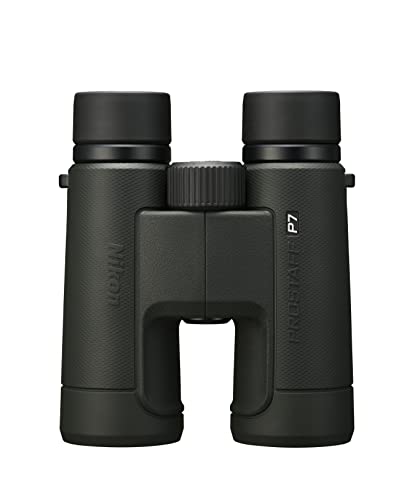
| 1 | Nikon PROSTAFF P7 10×42 Binocular | Check on Amazon |
| 2 | Vortex Optics Diamondback 10×42 Roof Prism Binocular | Check on Amazon |
| 3 | Celestron Nature DX 8×42 Waterproof Binoculars | Check on Amazon |
| 4 | Vortex Crossfire HD 10×42 Binoculars | Check on Amazon |
| 5 | Bushnell H2O 10×42 Waterproof Binoculars | Check on Amazon |
| 6 | Nikon Monarch M7 8×42 Binoculars | Check on Amazon |
| 7 | Vortex Crossfire HD 8×42 Binoculars | Check on Amazon |
| 8 | Celestron Nature DX 10×42 Waterproof Binoculars | Check on Amazon |
How the picks were chosen
The picks were chosen from the site's own product search, looking only at complete binoculars from named brands in 8×42 and 10×42. A listing was dropped if it was for a monocular, a spotting scope, a toy, or an accessory such as a harness or a case. The remaining pairs were sorted by magnification and brand, so the guide covers the two sizes that matter with a real choice in each.
Glass and build were the second test. Every pick below is a roof-prism design with fully multi-coated lenses and a waterproof, fogproof body, because those are the minimum requirements for a pair that will be used outdoors in all weather. A pair that fogs up on a cold morning or lets water in during rain is not an all-rounder, whatever its price.
Finally, each pair was checked for the way it will be carried. An all-round binocular has to be light enough to hang around the neck for hours, and the 8×42 and 10×42 pairs here are all in that range. The notes below say which pairs suit glasses wearers, which suit small hands, and which are the best value for a first pair.
Quick comparison
| Product | Standout detail |
|---|---|
| Nikon PROSTAFF P7 10×42 Binocular | Nikon PROSTAFF P7 10×42, waterproof, oil and water repellent coating |
| Vortex Optics Diamondback 10×42 Roof Prism Binocular | Vortex Diamondback 10×42, roof prism, HD optics |
| Celestron Nature DX 8×42 Waterproof Binoculars | Celestron Nature DX 8×42, phase-coated BaK-4 prisms |
| Vortex Crossfire HD 10×42 Binoculars | Vortex Crossfire HD 10×42, HD optics, tripod adaptable |
| Bushnell H2O 10×42 Waterproof Binoculars | Bushnell H2O 10×42, waterproof, fully multi-coated |
| Nikon Monarch M7 8×42 Binoculars | Nikon Monarch M7 8×42, ED glass, wide view |
| Vortex Crossfire HD 8×42 Binoculars | Vortex Crossfire HD 8×42, HD optics, waterproof |
| Celestron Nature DX 10×42 Waterproof Binoculars | Celestron Nature DX 10×42, phase-coated, waterproof |

1. Nikon PROSTAFF P7 10×42 Binocular
Key specs
10×42 roof-prism binocular, waterproof and fogproof, rubber-armoured, oil and water repellent coating.
Strengths
- The 10x magnification brings distant birds and wildlife close enough to identify.
- The oil and water repellent coating keeps the lenses clear in rain and drizzle.
- Nikon's PROSTAFF line is a proven all-round design with a comfortable, balanced feel.
Trade-offs
- 10x magnification shows more hand shake than 8x, so the view needs a steady hold.
- The field of view is narrower than an 8×42 pair, which makes finding a fast-moving bird harder.
- At 10x, the exit pupil is smaller, so the view is dimmer in very low light.
Who it fits
A birdwatcher or hiker who wants the closer view of 10x and mostly uses the pair in open country.
Best for: Open-country birding, wildlife watching and distant viewing.
Not suited for: Dense woodland birding, where a wider 8x view finds birds faster.
In daily use
Hang the pair around the neck, adjust the eyecups for glasses or bare eyes, and the P7 is ready in seconds. The focus wheel turns smoothly with one finger, and the coating shrugs off a light shower without a wipe.
The PROSTAFF P7 is the 10x pick of the guide, and it earns the place with a coating and a build that hold up in real weather.
Before you buy
Before buying the Nikon PROSTAFF P7 10×42 Binocular, check the eye relief if glasses are worn. Twist the eyecups down and check that the whole view is visible with glasses on, because a pair with short eye relief will show only the centre of the view.
Check price on Amazon: Nikon PROSTAFF P7 10×42 Binocular
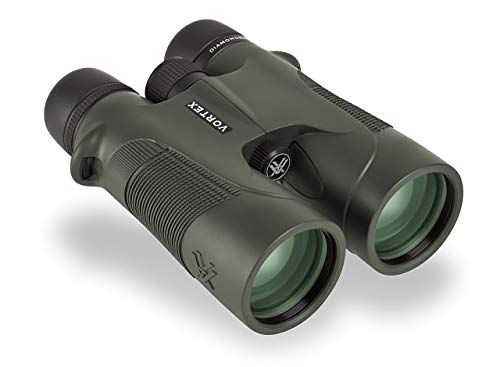
2. Vortex Optics Diamondback 10×42 Roof Prism Binocular
Key specs
10×42 roof-prism binocular, Diamondback, for wildlife and hunting.
Strengths
- The Diamondback is Vortex's long-running mid-range pair, with a reputation for durability.
- The 10×42 size suits open ground, where the extra reach matters.
- The roof-prism design keeps the pair compact for its magnification.
Trade-offs
- The view is good rather than outstanding, and the Monarch M7 below is sharper at the edges.
- 10x magnification needs a steady hand, and the pair is at its best braced or on a tripod.
- The older Diamondback design lacks the newest coatings of the HD version.
Who it fits
A hunter or wildlife watcher who wants a tough 10×42 pair at a sensible cost.
Best for: Hunting, wildlife watching and open-country viewing.
Not suited for: A first pair for a child or a small-handed user, where an 8×42 is easier to hold steady.
In daily use
The Diamondback is the workhorse of the guide: it goes out in all weather, gets knocked around, and keeps working. Rinse off mud, dry the lenses with a cloth, and it is ready for the next morning.
A proven pair at a fair cost, and the one to choose when toughness matters more than the last bit of sharpness.
Before you buy
A few checks before you order the Vortex Optics Diamondback 10×42 Roof Prism Binocular will save a return. Confirm the magnification and objective size on the listing, 8×42 or 10×42, since similar-looking pairs differ in both. Check the weight as well, because a pair carried all day should be light enough to hang around the neck for hours.
Check price on Amazon: Vortex Optics Diamondback 10×42 Roof Prism Binocular

3. Celestron Nature DX 8×42 Waterproof Binoculars
Key specs
8×42 waterproof binocular, phase-coated BaK-4 prisms, fully multi-coated, for bird watching and outdoors.
Strengths
- The 8x magnification gives a wide, steady view that is easy to hold all day.
- Phase-coated BaK-4 prisms keep the image bright and contrasty for the cost.
- The waterproof body and rubber armour suit a pair that is carried everywhere.
Trade-offs
- The view is not as sharp at the edges as the more expensive Nikon and Vortex pairs.
- The focus wheel is slower than some rivals, which matters for fast-moving birds.
- The eye relief is tight for some glasses wearers.
Who it fits
A first-time buyer who wants a capable all-round pair without spending a lot.
Best for: Bird watching, hiking and general outdoor use on a budget.
Not suited for: Low-light dawn and dusk work, where a larger objective or better glass helps.
In daily use
The Nature DX is the pair to hand to a beginner: wide view, steady image, and nothing fussy about the setup. Adjust the eyecups once, set the diopter once, and the pair is ready for every walk after that.
The value pick of the guide, and the best way into birding for the money.
Before you buy
When the Celestron Nature DX 8×42 Waterproof Binoculars arrives, set it up once before the first outing. Adjust the eyecups, set the diopter for the difference between the eyes, and focus on a distant object. After that the pair is ready in seconds, every time it leaves the house.
Check price on Amazon: Celestron Nature DX 8×42 Waterproof Binoculars

4. Vortex Crossfire HD 10×42 Binoculars
Key specs
10×42 binocular, Crossfire HD, HD optics, tripod adaptable, waterproof, fogproof, shockproof.
Strengths
- HD optics give a clearer, brighter view than the standard Crossfire at a small extra cost.
- The tripod adapter thread means the pair can be mounted for long, steady viewing.
- The waterproof, fogproof and shockproof body is built for rough outdoor use.
Trade-offs
- 10x magnification is harder to hold steady than 8x, especially for a first-time user.
- The field of view is narrower than the 8×42 Crossfire, so finding a bird takes longer.
- The pair is heavier than the Celestron 8×42, which matters on a long walk.
Who it fits
A buyer who wants the closer 10x view with better glass than the entry level, at a fair cost.
Best for: Wildlife watching, sports and open-country viewing where reach matters.
Not suited for: Woodland birding, where the wider 8x view is more useful.
In daily use
The Crossfire HD is the pair for a long day in the field: the HD glass stays bright into the evening, and the tripod thread turns it into a steady viewing station at a viewpoint or a hide.
A strong mid-range 10×42, and the best balance of glass and cost in the guide.
Before you buy
Before buying the Vortex Crossfire HD 10×42 Binoculars, check the eye relief if glasses are worn. Twist the eyecups down and check that the whole view is visible with glasses on, because a pair with short eye relief will show only the centre of the view.
Check price on Amazon: Vortex Crossfire HD 10×42 Binoculars

5. Bushnell H2O 10×42 Waterproof Binoculars
Key specs
10×42 waterproof binocular, fully multi-coated lenses, non-slip rubber, anti-fog, for hunting and birdwatching.
Strengths
- The H2O is built for wet conditions, with a waterproof body and anti-fog glass.
- The non-slip rubber armour grips well in rain and with wet hands.
- Fully multi-coated lenses keep the view bright for the cost.
Trade-offs
- The image is not as sharp as the Nikon or Vortex pairs in this guide.
- The 10x magnification shows shake, and the pair is best used braced.
- The eye relief is modest for glasses wearers.
Who it fits
A boater, angler or hunter who needs a pair that can get wet without worry.
Best for: Boating, fishing, hunting and any wet-weather use.
Not suited for: Fine detail birding at dawn, where sharper glass earns its cost.
In daily use
The H2O is the pair for the boat and the shore: it can be splashed, rained on and wiped dry, and the non-slip armour means it stays in the hand when everything else is wet.
The wet-weather pick, and the most forgiving pair in the guide when conditions turn bad.
Before you buy
A few checks before you order the Bushnell H2O 10×42 Waterproof Binoculars will save a return. Confirm the magnification and objective size on the listing, 8×42 or 10×42, since similar-looking pairs differ in both. Check the weight as well, because a pair carried all day should be light enough to hang around the neck for hours.
Check price on Amazon: Bushnell H2O 10×42 Waterproof Binoculars

6. Nikon Monarch M7 8×42 Binoculars
Key specs
8×42 binocular, Monarch M7, ED glass, multilayer coatings, wide view, waterproof and fogproof.
Strengths
- ED glass gives a sharp, true-colour view with little fringing at the edges.
- The wide field of view makes finding birds fast, which is the point of an 8x pair.
- The lightweight body is easy to carry all day, and the focus is smooth and precise.
Trade-offs
- The Monarch M7 costs more than the entry-level pairs in this guide.
- The 8x magnification brings birds less close than a 10x pair in open country.
- The lens caps are easy to lose in the field, as with most pairs in this class.
Who it fits
A serious birdwatcher who wants the sharpest all-round view in this guide.
Best for: Birding, wildlife watching and any viewing where sharpness matters.
Not suited for: A buyer on a tight budget, where the Celestron Nature DX does the job for less.
In daily use
The Monarch M7 is the pair that makes a beginner understand what good glass does: the bird is sharp across the whole view, the colours are true, and the wide field means the bird is found before it flies away.
The sharpest pair in the guide, and the one to buy when the budget stretches to it.
Before you buy
When the Nikon Monarch M7 8×42 Binoculars arrives, set it up once before the first outing. Adjust the eyecups, set the diopter for the difference between the eyes, and focus on a distant object. After that the pair is ready in seconds, every time it leaves the house.
Check price on Amazon: Nikon Monarch M7 8×42 Binoculars
7. Vortex Crossfire HD 8×42 Binoculars
Key specs
8×42 binocular, Crossfire HD, HD optics, tripod adaptable, waterproof, fogproof, shockproof.
Strengths
- The 8x magnification gives the widest, steadiest view of any Vortex pair here.
- HD optics lift the brightness and clarity above the standard Crossfire.
- The tough, waterproof body is built for years of outdoor use.
Trade-offs
- The view is not quite as sharp as the Monarch M7, which costs more.
- The pair is a little bulky for a small-handed user.
- The lens covers are loose-fitting and can fall off in a bag.
Who it fits
A buyer who wants a tough, wide-view 8×42 pair with good glass at a fair cost.
Best for: Birding, hiking and general wildlife watching, especially in woodland.
Not suited for: Open-country viewing where a 10x pair brings distant animals closer.
In daily use
The Crossfire HD 8×42 is the easy pair: wide view, steady image, and a body that does not mind being knocked around. It is the pair to reach for on any walk, because it never feels like the wrong choice.
The best all-round 8×42 in the guide for buyers who want toughness as well as a good view.
Before you buy
Before buying the Vortex Crossfire HD 8×42 Binoculars, check the eye relief if glasses are worn. Twist the eyecups down and check that the whole view is visible with glasses on, because a pair with short eye relief will show only the centre of the view.
Check price on Amazon: Vortex Crossfire HD 8×42 Binoculars

8. Celestron Nature DX 10×42 Waterproof Binoculars
Key specs
10×42 waterproof binocular, phase-coated roof prism, for birding and hiking.
Strengths
- The 10x magnification brings distant subjects closer at a low cost.
- Phase-coated prisms keep the image bright for the price.
- The waterproof body and rubber armour suit a pair carried on the trail.
Trade-offs
- 10x magnification shows shake, and the narrow field makes finding birds harder.
- The edge sharpness is not as good as the more expensive pairs here.
- The focus wheel takes more turns than some rivals, which slows fast focusing.
Who it fits
A budget buyer who wants the closer view of 10x without spending much.
Best for: Hiking, sports and distant viewing on a budget.
Not suited for: Woodland birding, where the 8×42 Nature DX is the better Celestron.
In daily use
The 10×42 Nature DX is the budget way to a closer view: it is light, it is waterproof, and it brings a distant bird or a player on the far side of the field close enough to see properly.
The low-cost 10x pick, and a good second pair for a household that already owns an 8×42.
Before you buy
A few checks before you order the Celestron Nature DX 10×42 Waterproof Binoculars will save a return. Confirm the magnification and objective size on the listing, 8×42 or 10×42, since similar-looking pairs differ in both. Check the weight as well, because a pair carried all day should be light enough to hang around the neck for hours.
Check price on Amazon: Celestron Nature DX 10×42 Waterproof Binoculars
Buying guide: best all around binoculars
8x or 10x: choose by where you look
Choose 8×42 if the viewing is in woodland, gardens or anywhere the subject is close and moving, because the wider view finds it faster and the image is steadier. Choose 10×42 if the viewing is in open country, at sea, or at a sports ground, where the subject is far away and the extra reach matters more than the wider view.
Objective size and low light
The 42 in 8×42 is the diameter of the front lens in millimetres, and it decides how much light the pair gathers. A 42mm objective is the all-round size: bright enough for dawn and dusk, and light enough to carry. Smaller objectives are lighter but dimmer at low light, and larger ones are brighter but heavier.
Waterproof and fogproof matter
A pair that is not waterproof will fog inside on a cold morning and let water in during rain. Every pick in this guide is waterproof and fogproof, which means the tubes are sealed and filled with dry gas. Check the listing for those words before buying any binocular.
Eye relief for glasses wearers
Eye relief is the distance the eye can sit from the eyepiece and still see the whole view. Glasses wearers need long eye relief, around 15mm or more, and twist-up eyecups that adjust. The Nikon and Vortex pairs here are the most forgiving for glasses, while the budget pairs are tighter.
Try the focus and the fit
The focus wheel should turn smoothly with one finger, and the pair should balance in the hands without tipping forward. If possible, hold the pair before buying, or buy from a seller with a fair return policy, because a binocular that does not fit the hands will not be used.
Coatings and prisms, in plain language
Fully multi-coated means every glass surface has a coating that lets more light through, which makes the image brighter. Phase-coated prisms are a finer detail that improves contrast in roof-prism designs. ED glass, found in the Monarch M7, reduces colour fringing at the edges of the view. None of these need to be understood in depth, but a pair that lists them is a pair built for real viewing.
Usage and care
A binocular lasts longest when it is stored in its case, in a dry place, with the lens caps on. Clean the lenses only with a soft lens cloth or a blower, never with a shirt sleeve or a paper tissue, which can scratch the coating. If the pair gets wet, wipe the body dry and let it air before putting it away. Keep the strap attached, because most dropped binoculars are dropped while being carried, not while being used.
Set the pair up once and it stays set up. Adjust the eyecups for glasses or bare eyes, set the diopter for the difference between the two eyes, and focus with the centre wheel. After that, the pair is ready in seconds on every outing. Keep the neck strap short enough that the pair does not swing while walking, and use a harness on long days if the neck gets tired.
Rain, fog and salt air are the three conditions that damage a binocular fastest. After rain, wipe the body dry and let the pair air before putting it away, because moisture trapped in the case invites fungus on the glass. In fog, the lenses will mist, and they should be wiped with a soft cloth rather than a sleeve. Near the sea, salt spray should be wiped off the lenses and the body after every outing, because salt corrodes metal and damages coatings. A pair used in these conditions and cared for afterwards will last far longer than one that is put away wet.
Common mistakes
The most common mistake is buying too much magnification, usually 12x or more, which is impossible to hold steady without a tripod. The second is buying a pair that is not waterproof, which fogs on the first cold morning. The third is choosing by price alone and ending with a pair whose glass is dim at dusk, when the best viewing happens. The fourth is cleaning the lenses with a rough cloth, which scratches the coating and dulls the view permanently.
Another mistake is leaving the pair in a hot car, which can damage the seals and the coatings over time, and storing it in a damp bag, which invites fungus on the glass. Keep the pair dry, keep the caps on, and carry it in its case when it is not around the neck.
Another mistake is buying a zoom binocular, which promises several magnifications in one pair. Zoom binoculars are heavier, dimmer, and less sharp than a fixed-magnification pair at the same price, and the zoom mechanism is a weak point that fails over time. A fixed 8×42 or 10×42 pair is a better buy in every way. And do not share a diopter setting: the diopter corrects for the difference between one person's eyes, and another person using the same pair should set it again for their own eyes.
Binoculars for glasses wearers
Glasses wearers need a binocular with long eye relief, which is the distance the eye can sit from the eyepiece and still see the whole view. The number to look for is around 15mm or more, and the eyecups should twist up and down, so they can be set low for glasses and high for bare eyes. The Nikon Monarch M7 and the Vortex pairs in this guide are the most forgiving for glasses, because their eye relief is generous and their eyecups adjust smoothly. A pair with short eye relief will show only the centre of the view when worn with glasses, which is frustrating and tiring. If glasses are worn, the eye relief figure matters as much as the magnification, and it should be checked on the listing before ordering. The diopter adjustment, which corrects for the difference between the two eyes, should also be set with glasses on, so the view is sharp for both eyes at once.
Carrying a binocular all day
A binocular that is carried all day needs a strap that works and a case that protects it. The neck strap supplied with most pairs is adequate for short walks, but a harness, which spreads the weight across the shoulders, is far more comfortable on a long day. The strap should be short enough that the pair does not swing while walking, and long enough that the pair can be raised to the eyes quickly. When the pair is not around the neck, it should be in its case, with the lens caps on, because most damage happens in a bag rather than in use. A pair left loose in a bag with keys and other hard objects will be scratched, and a pair left in a hot car will have its seals and coatings damaged over time. Carry it on the body or in its case, and it will last for years.
Spotting scopes, monoculars and binoculars
A binocular is not the only optic for watching wildlife, and the alternatives suit different jobs. A spotting scope gives far more magnification than any binocular, and it is the right tool for a distant bird on open water, but it needs a tripod and it shows only one eye's view. A monocular is smaller and lighter than a binocular, and it fits in a pocket, but it is tiring to use for long periods because only one eye sees. A binocular is the middle ground: two eyes, a wide view, and no tripod needed. For an all-round watcher, the binocular is the right choice, and a spotting scope can be added later for the distant birds that a binocular cannot reach.
Buying a first pair for a child
A child's first binocular should be light, tough and easy to focus, and an 8×32 or 8×42 pair is the right size. A heavy 10×42 pair will be too big for small hands and too hard to hold steady, and a toy binocular will be so dim that the child loses interest. The Celestron Nature DX 8×42 in this guide is a good first pair for an older child, because it is light, it is waterproof, and it shows a bright, wide view. Set the eyecups and the diopter for the child, show them how to focus, and let them find the first bird themselves. A child who finds a bird with their own binocular will remember it.
Final recommendation
For most buyers, the Nikon Monarch M7 8×42 is the best all-round binocular in this guide: sharp, wide, light and waterproof, and the pair most likely to be used every day. If the budget is tighter, the Celestron Nature DX 8×42 does the same job for much less, and the Vortex Crossfire HD 8×42 is the tough middle ground. For open country and distant viewing, the Nikon PROSTAFF P7 10×42 and the Vortex Crossfire HD 10×42 bring the subject closer. Choose 8x for woodland and general use, 10x for open ground, and buy the best glass the budget allows.
If only one pair is bought, make it an 8×42, because the wide, steady view is the one that gets used most. A binocular that is easy to hold and quick to focus is a binocular that leaves the house, and the pairs in this guide are all built for that.
The pair that leaves the house is the right pair. An 8×42 that is carried every day will show more birds than a 10×42 that stays in a drawer because it is heavy or hard to hold steady. Buy the pair that fits the hands, the eyes and the budget, carry it on every walk, and the birds will be there.
Frequently asked questions
What does 8×42 mean on a binocular?
The first number is the magnification, so 8x makes the subject look eight times closer. The second number is the diameter of the front lens in millimetres, and 42mm gathers enough light for dawn and dusk while keeping the pair light enough to carry all day.
Is 8×42 or 10×42 better for birding?
For most birding, 8×42 is better, because the wider view finds birds faster and the image is steadier without a tripod. 10×42 is better in open country and for distant birds, where the extra reach matters. Most birders who own one pair own an 8×42.
Do I need waterproof binoculars?
Yes, for any outdoor use. A waterproof and fogproof pair will not fog inside on a cold morning and will not let water in during rain. A pair without sealing is only suitable for dry, indoor use, which is not what an all-round binocular is for.
Can I wear glasses with binoculars?
Yes, if the pair has long eye relief and twist-up eyecups. Twist the eyecups down for glasses and up for bare eyes, and the whole view should be visible. The Nikon and Vortex pairs in this guide are the most forgiving for glasses wearers.
How do I clean binocular lenses?
Use a blower to remove dust, then a soft lens cloth in a gentle circular motion. Never use a shirt sleeve, a paper tissue or household cleaner, which can scratch the coating. Keep the lens caps on when the pair is not in use.
What is the exit pupil, and why does it matter?
The exit pupil is the diameter of the beam of light leaving the eyepiece, and it is found by dividing the objective size by the magnification: a 8×42 pair has an exit pupil of about 5.25mm, and a 10×42 pair has one of about 4.2mm. A larger exit pupil gives a brighter view in low light, because more light reaches the eye. In daylight the pupil of the eye is small, so the difference is hard to see, but at dawn and dusk a larger exit pupil makes the view noticeably brighter.
Can I use binoculars at night?
A standard 8×42 or 10×42 binocular gathers some light at dusk, but it cannot see in true darkness. For night viewing, a larger objective, such as 50mm or more, gathers more light, and a dedicated night-vision device is needed for real darkness. The pairs in this guide are for daylight, dawn and dusk, and they are at their best in the first and last hours of light.
What is the difference between roof prism and Porro prism binoculars?
A roof-prism binocular has straight barrels, which makes it compact and easy to carry, and every pair in this guide is a roof-prism design. A Porro-prism binocular has offset barrels, which give a wider view and a little more depth, but the pair is larger and heavier. For an all-round pair that is carried all day, the roof prism is the better choice, because it packs smaller and balances better in the hand.