Disclosure: As an Amazon Associate, ilcastellomenu.com earns from qualifying purchases. Prices and availability change; check Amazon for the latest.
Where to buy
Check the latest price, availability and delivery on Amazon. Orders are placed on Amazon.
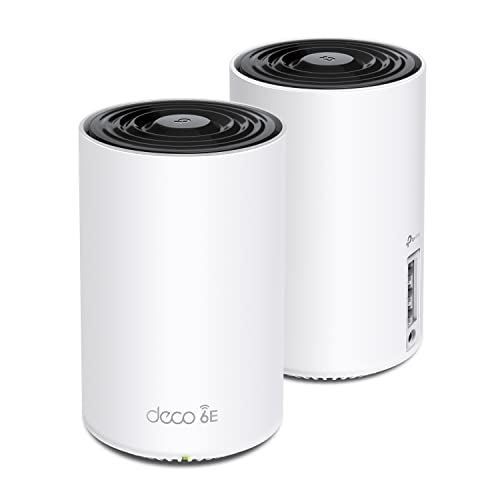
- TP-Link Deco XE75 (2-pack) — Check on Amazon
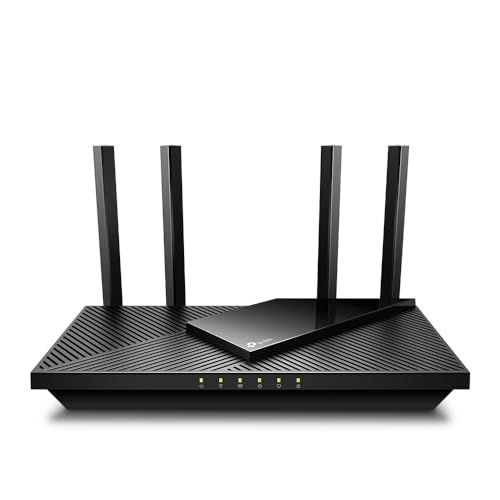
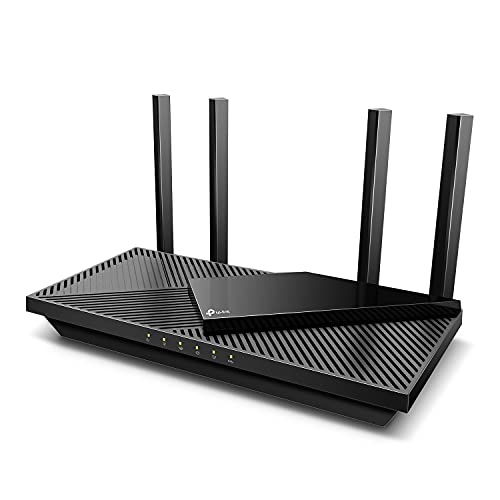
- TP-Link Archer AXE75 (AXE5400) — Check on Amazon
- TP-Link Archer AX55 (AX3000) — Check on Amazon
- Amazon eero Pro 6E — Check on Amazon
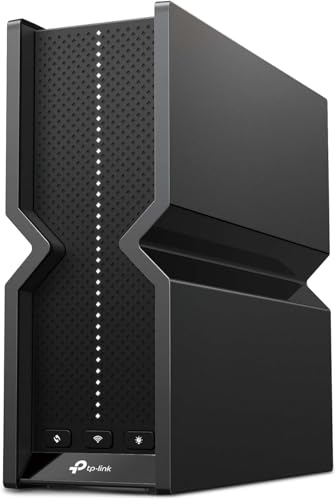
- TP-Link Archer BE550 (BE9300) — Check on Amazon
- TP-Link Archer AX21 (AX1800) — Check on Amazon
Read the full guide ↓
Finding the best routers for home streaming is less about chasing the biggest number on a box and more about matching a router to the way your home actually uses the internet. This guide is written for homes where several TVs and tablets stream at the same time, and every pick below was chosen for that job first — headline speed second. The six routers here span sensible budgets and premium tiers, but they share the things that decide whether a network feels good: stable firmware, enough processing power for a busy evening, and Wi-Fi that reaches the rooms where you actually sit.
A single HD stream needs only a few megabits and even 4K needs modest bandwidth by modern standards: streaming problems are usually about weak signal at the TV and airtime contention, not raw router speed.
Below you will find the quick picks up front, then a full review of each router with its strengths, trade-offs and key specifications, a side-by-side comparison table, a buying guide that explains the deciding specs in plain language, and step-by-step setup help. If you are also weighing up neighbouring questions, our guides to Best Routers For Home Office and Best Wifi Routers For Home Use cover adjacent ground, and the plain-language explainer Wifi 6 Vs Wifi 6e is worth five minutes before you spend anything.
In this guide
Quick Picks
| Badge | Pick | Why it stands out | Link |
|---|---|---|---|
| Best Wi-Fi 6E Mesh | TP-Link Deco XE75 (2-pack) | Tri-band Wi-Fi 6E mesh that can use 6 GHz as a clean backhaul or fast lane. | Check on Amazon |
| Best Wi-Fi 6E Value | TP-Link Archer AXE75 (AXE5400) | A clean 6 GHz band and a 2.5G WAN port at a price well below flagship Wi-Fi 7. | Check on Amazon |
| Best Value | TP-Link Archer AX55 (AX3000) | AX3000 capacity, HomeShield security and built-in VPN support in one mid-priced box. | Check on Amazon |
| Best Set-and-Forget Mesh | Amazon eero Pro 6E | Mesh coverage with automatic updates and an app anyone can run. | Check on Amazon |
| Best Wi-Fi 7 Pick | TP-Link Archer BE550 (BE9300) | Wi-Fi 7 with Multi-Link Operation and an all-2.5G port set for multi-gig homes. | Check on Amazon |
| Best Budget | TP-Link Archer AX21 (AX1800) | Wi-Fi 6 essentials, EasyMesh growth path and a genuinely simple setup at the entry tier. | Check on Amazon |
How These Picks Were Chosen
Every router in this guide comes from a verified pool of current models whose specifications were checked against manufacturer listings, and each one was assessed against the specific demands of homes where several TVs and tablets stream at the same time. The criteria, in the order they were weighted, were: connection stability under mixed load, because a router that feels fast at noon and falls over at 8 p.m. has failed its only job; honest fit for the lens of this guide, since a brilliant gaming router can still be the wrong answer for a coverage problem; port selection and wired options; processor headroom for features like QoS and VPN; security and update policy; and how painful the thing is to set up and live with.
Plenty of routers were rejected along the way. Older Wi-Fi 5 models were excluded unless nothing else made sense, because their multi-device handling is a generation behind. Routers with gigabit WAN ports were marked down wherever the lens involves fast plans, since the port silently caps the connection. Models whose makers have stopped shipping firmware updates were dropped entirely, however good their hardware once was. And anything that could not be verified against a live manufacturer or retailer source — specification, feature or existence — was left out rather than guessed at.
One more note on method: this guide deliberately leaves prices and scores out. Both move constantly, so each pick links to Amazon for the current position instead. What does not change is the engineering — bands, ports, processors and firmware policy — and that is what the reviews below concentrate on. Readers comparing across our coverage may also find Best Routers For Large Homes and Best Routers For Beginners useful counterpoints to this lens.
The 6 Best Routers For Home Streaming
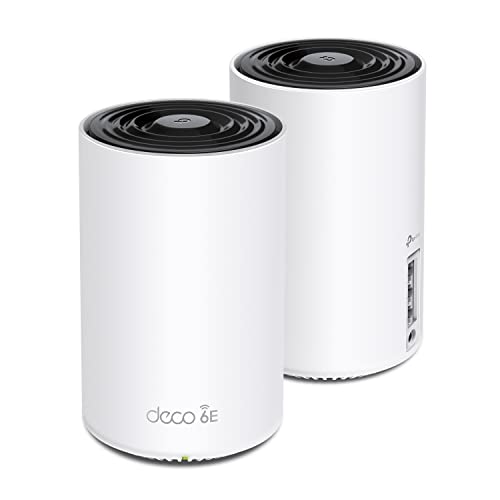
TP-Link Deco XE75 (2-pack) (Best Wi-Fi 6E Mesh)
The TP-Link Deco XE75 (2-pack) earns its Best Wi-Fi 6E Mesh badge for homes where several TVs and tablets stream at the same time because it gets the fundamentals of this particular job right rather than merely posting a big specification. Tri-band Wi-Fi 6E mesh that can use 6 GHz as a clean backhaul or fast lane. For this lens, that combination matters more than any single benchmark: it is the difference between a router that reviews well and a router that quietly fixes the problem you actually have. You can check the TP-Link Deco XE75 (2-pack) on Amazon for current availability while you read.
Strengths
- The 6 GHz band can serve as a clean backhaul or a fast lane for Wi-Fi 6E devices
- Mesh coverage plus tri-band capacity suits larger homes with heavy streaming and gaming at once
- Roaming between rooms is seamless, which matters for calls and VR that move around the house
Trade-offs
- Gigabit ports cap wired backhaul and internet plans at gigabit speeds
- Fewer advanced routing controls than a standalone enthusiast router
- Two nodes may still leave very large or masonry-heavy homes with weak corners
Key specs
- Wi-Fi 6E mesh, AXE5400 tri-band with 6 GHz band
- 2-pack covers up to 5,500 sq. ft.
- AI-driven mesh with a dedicated backhaul option
- WPA3 security
- Gigabit ports on each unit
- App-based setup and management
In practice that shows up as boring reliability: the film starts at full quality, stays there through the evening peak, and the second TV in the bedroom can run its own stream without either picture collapsing into a blurry fallback. For a streaming household, that absence of drama is the entire point of the purchase.
Set-up is representative of its class: a guided app or web wizard, a firmware check during installation, and sensible defaults that most owners should still personalise — your own network name, a long unique password, and automatic updates switched on. Owners who like to go further will find the advanced pages rewarding in proportion to how much control this model offers, and the buying guide below explains which of those settings are worth touching first for this kind of household.
Best for: homes where several TVs and tablets stream at the same time who want best wi-fi 6e mesh performance without fuss / Not suited for: buyers whose needs sit at the opposite extreme of this guide’s lens, or who need a feature this model plainly does not offer

TP-Link Archer AXE75 (AXE5400) (Best Wi-Fi 6E Value)
The TP-Link Archer AXE75 (AXE5400) earns its Best Wi-Fi 6E Value badge for homes where several TVs and tablets stream at the same time because it gets the fundamentals of this particular job right rather than merely posting a big specification. A clean 6 GHz band and a 2.5G WAN port at a price well below flagship Wi-Fi 7. For this lens, that combination matters more than any single benchmark: it is the difference between a router that reviews well and a router that quietly fixes the problem you actually have. You can check the TP-Link Archer AXE75 (AXE5400) on Amazon for current availability while you read.
Strengths
- The 6 GHz band is a clean, uncongested lane for Wi-Fi 6E laptops, phones and VR headsets
- A 2.5G WAN port means gigabit-plus cable and fibre plans are not bottlenecked at the router
- Tri-band design lets you park smart-home gear on 2.4 GHz and keep 5 GHz and 6 GHz for demanding devices
Trade-offs
- Only Wi-Fi 6E and Wi-Fi 7 clients can use the 6 GHz band; older devices see a dual-band router
- 6 GHz range is shorter than 5 GHz, so placement matters more
- OneMesh range extenders cost extra if you later need mesh coverage
Key specs
- Wi-Fi 6E, AXE5400 tri-band including the 6 GHz band
- 2.5 Gbps WAN port
- 160 MHz channels on 5 GHz
- OneMesh compatible
- VPN support and WPA3
- Dual-core CPU
The test that matters is 8 p.m., when the whole street is online and two screens in the house are pulling different shows. A router that handles that hour without breaking a sweat will feel fast every hour, and this one is built for exactly that kind of contention.
Set-up is representative of its class: a guided app or web wizard, a firmware check during installation, and sensible defaults that most owners should still personalise — your own network name, a long unique password, and automatic updates switched on. Owners who like to go further will find the advanced pages rewarding in proportion to how much control this model offers, and the buying guide below explains which of those settings are worth touching first for this kind of household.
Best for: homes where several TVs and tablets stream at the same time who want best wi-fi 6e value performance without fuss / Not suited for: buyers whose needs sit at the opposite extreme of this guide’s lens, or who need a feature this model plainly does not offer
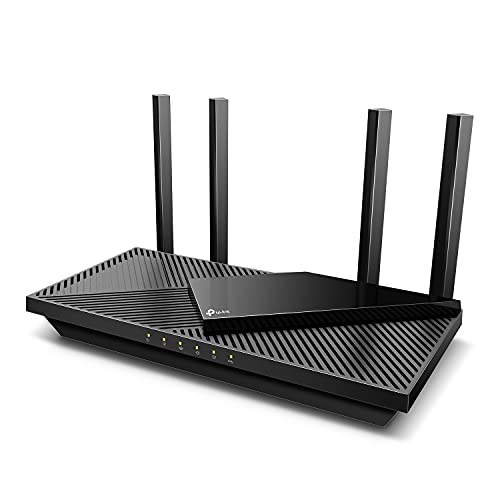
TP-Link Archer AX55 (AX3000) (Best Value)
The TP-Link Archer AX55 (AX3000) earns its Best Value badge for homes where several TVs and tablets stream at the same time because it gets the fundamentals of this particular job right rather than merely posting a big specification. AX3000 capacity, HomeShield security and built-in VPN support in one mid-priced box. For this lens, that combination matters more than any single benchmark: it is the difference between a router that reviews well and a router that quietly fixes the problem you actually have. You can check the TP-Link Archer AX55 (AX3000) on Amazon for current availability while you read.
Strengths
- A clear step up in 5 GHz capacity over AX1800 models, which is where most streaming and gaming devices live
- Built-in VPN client and server support covers whole-home VPN use without flashing firmware
- HomeShield adds parental controls and basic network security in the box
Trade-offs
- Still dual-band, so there is no dedicated band to separate heavy traffic the way tri-band models can
- The fuller HomeShield Pro features sit behind a subscription
- Gigabit ports only, which caps multi-gig internet plans
Key specs
- Wi-Fi 6, AX3000 dual-band (574 Mbps + 2,402 Mbps)
- OFDMA and MU-MIMO
- HomeShield security suite built in
- VPN client and server support
- USB 3.0 port
- EasyMesh compatible
In practice that shows up as boring reliability: the film starts at full quality, stays there through the evening peak, and the second TV in the bedroom can run its own stream without either picture collapsing into a blurry fallback. For a streaming household, that absence of drama is the entire point of the purchase.
Set-up is representative of its class: a guided app or web wizard, a firmware check during installation, and sensible defaults that most owners should still personalise — your own network name, a long unique password, and automatic updates switched on. Owners who like to go further will find the advanced pages rewarding in proportion to how much control this model offers, and the buying guide below explains which of those settings are worth touching first for this kind of household.
Best for: homes where several TVs and tablets stream at the same time who want best value performance without fuss / Not suited for: buyers whose needs sit at the opposite extreme of this guide’s lens, or who need a feature this model plainly does not offer

Amazon eero Pro 6E (Best Set-and-Forget Mesh)
The Amazon eero Pro 6E earns its Best Set-and-Forget Mesh badge for homes where several TVs and tablets stream at the same time because it gets the fundamentals of this particular job right rather than merely posting a big specification. Mesh coverage with automatic updates and an app anyone can run. For this lens, that combination matters more than any single benchmark: it is the difference between a router that reviews well and a router that quietly fixes the problem you actually have. You can check the Amazon eero Pro 6E on Amazon for current availability while you read.
Strengths
- Mesh design spreads coverage evenly through larger or awkwardly shaped homes where a single router fades
- The app-driven setup and automatic updates suit owners who never want to log into an admin page
- Supports fast internet plans and a large device count, so it scales with a growing smart home
Trade-offs
- Advanced controls like detailed QoS, custom DNS and port-level tinkering are limited compared with traditional routers
- Some features sit behind the optional eero Plus subscription
- Only a small number of Ethernet ports per unit, so wired-heavy setups need a switch
Key specs
- Mesh Wi-Fi 6E, tri-band
- Supports internet plans up to 2.5 Gbps
- Covers up to 2,000 sq. ft. per unit
- Connects 100+ devices
- 2.5 GbE port
- Automatic updates and app-based management
In practice that shows up as boring reliability: the film starts at full quality, stays there through the evening peak, and the second TV in the bedroom can run its own stream without either picture collapsing into a blurry fallback. For a streaming household, that absence of drama is the entire point of the purchase.
Set-up is representative of its class: a guided app or web wizard, a firmware check during installation, and sensible defaults that most owners should still personalise — your own network name, a long unique password, and automatic updates switched on. Owners who like to go further will find the advanced pages rewarding in proportion to how much control this model offers, and the buying guide below explains which of those settings are worth touching first for this kind of household.
Best for: homes where several TVs and tablets stream at the same time who want best set-and-forget mesh performance without fuss / Not suited for: buyers whose needs sit at the opposite extreme of this guide’s lens, or who need a feature this model plainly does not offer

TP-Link Archer BE550 (BE9300) (Best Wi-Fi 7 Pick)
The TP-Link Archer BE550 (BE9300) earns its Best Wi-Fi 7 Pick badge for homes where several TVs and tablets stream at the same time because it gets the fundamentals of this particular job right rather than merely posting a big specification. Wi-Fi 7 with Multi-Link Operation and an all-2.5G port set for multi-gig homes. For this lens, that combination matters more than any single benchmark: it is the difference between a router that reviews well and a router that quietly fixes the problem you actually have. You can check the TP-Link Archer BE550 (BE9300) on Amazon for current availability while you read.
Strengths
- Wi-Fi 7 features like Multi-Link Operation help compatible devices hold lower, steadier latency
- All-2.5G ports remove the wired bottleneck for multi-gig plans and fast local transfers
- Tri-band capacity handles a crowded mix of streaming, gaming and smart-home devices
Trade-offs
- You only get Wi-Fi 7 benefits with Wi-Fi 7 clients; older devices connect at their own standards
- Internal antennas give a cleaner look but less aim adjustment than external designs
- Premium pricing is hard to justify for small flats on slower internet plans
Key specs
- Wi-Fi 7, BE9300 tri-band, 6-stream
- Full 2.5G port set (WAN and LAN)
- 6 internal antennas
- Coverage up to 2,000 sq. ft.
- EasyMesh expansion supported
- VPN client and server support
The test that matters is 8 p.m., when the whole street is online and two screens in the house are pulling different shows. A router that handles that hour without breaking a sweat will feel fast every hour, and this one is built for exactly that kind of contention.
Set-up is representative of its class: a guided app or web wizard, a firmware check during installation, and sensible defaults that most owners should still personalise — your own network name, a long unique password, and automatic updates switched on. Owners who like to go further will find the advanced pages rewarding in proportion to how much control this model offers, and the buying guide below explains which of those settings are worth touching first for this kind of household.
Best for: homes where several TVs and tablets stream at the same time who want best wi-fi 7 pick performance without fuss / Not suited for: buyers whose needs sit at the opposite extreme of this guide’s lens, or who need a feature this model plainly does not offer

TP-Link Archer AX21 (AX1800) (Best Budget)
The TP-Link Archer AX21 (AX1800) earns its Best Budget badge for homes where several TVs and tablets stream at the same time because it gets the fundamentals of this particular job right rather than merely posting a big specification. Wi-Fi 6 essentials, EasyMesh growth path and a genuinely simple setup at the entry tier. For this lens, that combination matters more than any single benchmark: it is the difference between a router that reviews well and a router that quietly fixes the problem you actually have. You can check the TP-Link Archer AX21 (AX1800) on Amazon for current availability while you read.
Strengths
- Wi-Fi 6 features like OFDMA and MU-MIMO at an entry tier, so several devices share airtime more fairly than older Wi-Fi 5 routers
- EasyMesh support means it can grow into a mesh setup later instead of being replaced outright
- Setup through the Tether app is quick and the interface stays understandable for non-technical owners
Trade-offs
- AX1800 class throughput is fine for one or two streams but is the first to saturate under a house full of 4K streams
- No 2.5G port, so internet plans faster than gigabit cannot be passed through at full speed
- No USB port for shared storage or printer duties
Key specs
- Wi-Fi 6, AX1800 dual-band (574 Mbps on 2.4 GHz + 1,201 Mbps on 5 GHz)
- 4 external antennas
- Gigabit WAN and LAN ports
- EasyMesh compatible for later expansion
- OFDMA and MU-MIMO for busy households
- WPA3 security
In practice that shows up as boring reliability: the film starts at full quality, stays there through the evening peak, and the second TV in the bedroom can run its own stream without either picture collapsing into a blurry fallback. For a streaming household, that absence of drama is the entire point of the purchase.
Set-up is representative of its class: a guided app or web wizard, a firmware check during installation, and sensible defaults that most owners should still personalise — your own network name, a long unique password, and automatic updates switched on. Owners who like to go further will find the advanced pages rewarding in proportion to how much control this model offers, and the buying guide below explains which of those settings are worth touching first for this kind of household.
Best for: homes where several TVs and tablets stream at the same time who want best budget performance without fuss / Not suited for: buyers whose needs sit at the opposite extreme of this guide’s lens, or who need a feature this model plainly does not offer
Comparison Table
| Pick | Wi-Fi | Ports highlight | Standout feature | Price |
|---|---|---|---|---|
| TP-Link Deco XE75 (2-pack) | Wi-Fi 6E mesh, AXE5400 tri-band with 6 GHz band | Gigabit ports on each unit | Tri-band Wi-Fi 6E mesh that can use 6 GHz as a clean backhaul or fast lane. | Check price on Amazon |
| TP-Link Archer AXE75 (AXE5400) | Wi-Fi 6E, AXE5400 tri-band including the 6 GHz band | 2.5 Gbps WAN port | A clean 6 GHz band and a 2.5G WAN port at a price well below flagship Wi-Fi 7. | Check price on Amazon |
| TP-Link Archer AX55 (AX3000) | Wi-Fi 6, AX3000 dual-band (574 Mbps + 2,402 Mbps) | VPN client and server support | AX3000 capacity | Check price on Amazon |
| Amazon eero Pro 6E | Mesh Wi-Fi 6E, tri-band | Supports internet plans up to 2.5 Gbps | Mesh coverage with automatic updates and an app anyone can run. | Check price on Amazon |
| TP-Link Archer BE550 (BE9300) | Wi-Fi 7, BE9300 tri-band, 6-stream | Full 2.5G port set (WAN and LAN) | Wi-Fi 7 with Multi-Link Operation and an all-2.5G port set for multi-gig homes. | Check price on Amazon |
| TP-Link Archer AX21 (AX1800) | Wi-Fi 6, AX1800 dual-band (574 Mbps on 2.4 GHz + 1,201 Mbps on 5 GHz) | Gigabit WAN and LAN ports | Wi-Fi 6 essentials | Check price on Amazon |
How to Choose the Right Router
Specifications sheets are written to sell routers, not to explain them, so this section translates the deciding specs into plain language for homes where several TVs and tablets stream at the same time. Read it before the product pages and the marketing vocabulary loses its power: you will know which numbers describe your problem and which describe somebody else’s.
Ports: the wired side still matters
Ethernet ports decide more than people expect. A single gigabit port caps any wired device at gigabit no matter how fast the Wi-Fi is, and the WAN port caps your whole internet connection: pair a 2.5 Gbps plan with a gigabit WAN port and you have donated the difference to nobody. Multi-gig 2.5G ports on the picks above future-proof fast plans and make wired backhaul, NAS transfers and gaming PCs properly quick. Count your wired devices — TV, console, desktop, streaming box — and make sure the router (plus a cheap switch if needed) can host them all without swapping cables.
QoS and traffic prioritisation
Quality of Service decides whose packets go first when the connection is full. Good implementations — the gaming and adaptive QoS modes on several picks here — automatically favour latency-sensitive traffic like games and calls over bulk downloads. For most households, simply enabling the automatic mode is enough; manual per-device rules are for households that know exactly which device matters. Be honest about your bottleneck: QoS on the router can only manage traffic up to your plan’s real speed, so set its bandwidth values slightly below your measured speeds for the fairest results.
Security, updates and parental controls
A router is your home’s front door, so its security model matters for years. Look for WPA3 support, automatic firmware updates, and a vendor with a track record of patching older models. Built-in suites such as TP-Link’s HomeShield, ASUS AiProtection and NETGEAR Armor add malicious-site blocking and device monitoring; some features are free for life, others need a subscription, and the _SOURCES notes for each article flag which is which. Parental controls vary from simple pause buttons to full content filtering, so parents should check the specific model rather than the brand.
Coverage and antennas versus mesh
Square-foot ratings are measured in friendly, open conditions; real homes subtract range for every brick wall, chimney breast and floor slab. A powerful standalone router is the right answer for a flat or a small house where it can sit centrally. For long, multi-storey or masonry-heavy homes, mesh systems win by putting a node near the dead zone instead of shouting from the hallway. Antenna count matters less than placement: a mid-tier router on top of a bookshelf in the middle of the home will beat a flagship trapped in a corner cabinet behind the TV.
Wi-Fi standard and speed class
The headline class — AX1800, AX3000, AXE5400, BE9300 — describes the combined theoretical throughput of every band added together, a number no single device will ever see. What it usefully tells you is the router’s generation and capacity tier. Wi-Fi 6 (802.11ax) brought OFDMA and better multi-device handling; Wi-Fi 6E added the wide, clean 6 GHz band; Wi-Fi 7 adds Multi-Link Operation and even wider channels. Match the class to your household size and plan speed rather than chasing the biggest number: a two-person flat on a modest plan gains nothing from a flagship class, while a busy family home on gigabit fibre can genuinely use the headroom.
Mesh compatibility and growing the system later
Standalone routers increasingly speak mesh: TP-Link’s EasyMesh and OneMesh, ASUS AiMesh and similar systems let a router become the hub of a bigger network when you move or your needs grow. Buying into a system with that escape hatch protects the purchase: instead of replacing the router when a dead zone appears in the new extension, you add a compatible node or extender. The trade-off is management style — mesh kits are app-led and simple, traditional routers offer deeper web controls — so choose based on how much you enjoy tinkering.
Think about the five-year view before choosing a tier. A router is infrastructure: it will outlive several phones and at least one laptop. Buying one generation ahead — Wi-Fi 6E when your first 6E device is a year away, or Wi-Fi 7 for a house that will hold it for half a decade — is often cheaper than two mid-life replacements. The counterweight is that early-generation hardware costs the most exactly when you can use it least. The picks in this guide are ordered so the top choices make sense today, with the future-proof options clearly badged rather than quietly assumed.
Think about the five-year view before choosing a tier. A router is infrastructure: it will outlive several phones and at least one laptop. Buying one generation ahead — Wi-Fi 6E when your first 6E device is a year away, or Wi-Fi 7 for a house that will hold it for half a decade — is often cheaper than two mid-life replacements. The counterweight is that early-generation hardware costs the most exactly when you can use it least. The picks in this guide are ordered so the top choices make sense today, with the future-proof options clearly badged rather than quietly assumed.
How Do You Set Up and Get the Best From Your New Router?
Installation is a half-hour job if you follow the order below, and most of the performance people pay for is won or lost in these steps rather than in the hardware itself.
- Unbox and place the router centrally, elevated and in the open — on a shelf rather than the floor, away from thick walls, metal appliances and the back of the TV cabinet.
- Connect the modem or ONT to the router’s WAN port with the supplied Ethernet cable, then power the modem up first, wait for its lights to settle, and power the router up second.
- Join the temporary Wi-Fi name printed on the router’s label (or scan its QR code) and open the vendor app or the setup address shown in the quick-start guide.
- Run the setup wizard: confirm your connection type (most homes use automatic/DHCP; some fibre and DSL services need PPPoE details from your provider), then set your own network name and a long, unique password.
- Let the router check for and install the latest firmware before you change anything else, and turn on automatic updates so future patches land without you.
- Choose band settings deliberately: keep a single combined network name if you like simplicity, or split 2.4 GHz and 5 GHz (and 6 GHz where present) into separate names if you want to pin devices to specific bands.
- Place demanding devices well: streamers and consoles near the router or wired in, smart-home gadgets on 2.4 GHz, and laptops and phones on 5 GHz or 6 GHz.
- Enable the security basics: WPA3 or WPA2/WPA3 mixed mode, the built-in firewall, guest network for visitors and IoT gadgets you do not fully trust.
- Walk the house with your phone and check the signal in the rooms that matter; nudge the router a metre or two, or plan a mesh node, for any room that still struggles.
- Save a backup of your settings from the admin interface once everything works, so a future reset or replacement takes minutes instead of an evening.
Once the network is live, spend ten minutes on maintenance habits that pay off for years: leave automatic firmware updates enabled, reboot the router on the rare occasion speeds feel wrong rather than weekly out of superstition, and revisit your channel and band settings after any big change — a new neighbour’s network, a house extension, a faster plan. If a wired speed test at the modem ever disagrees with what you pay for, read How To Restart A Router and How To Update Firmware On A Router before assuming the router has failed, and keep How To Secure A Router in mind as your annual checklist.
- Problem: fast near the router, slow in one room → fix: move the router toward that room or add a mesh node there; distance and walls, not the internet plan, are almost always the cause.
- Problem: speeds drop every evening → fix: check for a neighbour-heavy channel in the app and switch bands, enable QoS, and test wired to confirm whether the plan itself is congested.
- Problem: a smart device will not join the network → fix: temporarily use the 2.4 GHz band or a separate IoT network name, and make sure the password has no characters the device’s setup app mishandles.
- Problem: VPN or game traffic misbehaves after setup → fix: check NAT and UPnP settings, avoid double NAT by putting any provider gateway into bridge mode, and reboot in modem-then-router order.
- Problem: the router needs frequent reboots → fix: update the firmware, give the unit ventilation space, and check whether one failing device is flooding it with reconnect requests.
Common Mistakes
Forgetting the wired option entirely. The most reliable Wi-Fi upgrade is often a cable: wiring the TV, console or desktop removes your heaviest devices from the air entirely and improves things for everything left wireless.
Judging Wi-Fi by one speed test next to the router. A test at arm’s length measures the best case you will never use. Test where you actually sit — the desk, the sofa, the bed — and at the busiest hour, and judge the router on those numbers.
Leaving the router where the installer put it. Routers end up in corners, cupboards and behind TVs because that is where the line enters the house. Five minutes with an extension cable and a central shelf often improves real coverage more than a model upgrade would.
Keeping the provider gateway and the new router both routing. Two routers in series create double NAT, which breaks game consoles, VPNs and port forwarding in confusing ways. Put the provider box in bridge mode, or run the new router as the only router, and most mystery problems vanish.
Splitting bands without a reason, or never splitting them. Combined band steering is convenient but occasionally parks a device on the wrong band; fully split networks give control but multiply names to manage. Pick deliberately based on your devices instead of accepting whichever default annoys you first.
It is worth understanding what OFDMA and MU-MIMO actually do, because they explain most of the real-world gap between Wi-Fi generations. Older routers served one device at a time per channel, rapidly taking turns; in a house with forty devices, those turns become queues. OFDMA lets a router slice one transmission into sub-channels for several devices at once, which is devastatingly effective for the small, constant chatter of smart-home gear and calls. MU-MIMO beams simultaneous streams to multiple devices on the bigger bands. Neither raises a single laptop’s top speed much — both stop a busy house from feeling busy.
Channel width is the other quiet lever. A 160 MHz channel on 5 GHz or 6 GHz can double throughput to a compatible device, but it also occupies more of the band and is more exposed to neighbours doing the same. In dense apartment blocks, a well-chosen 80 MHz channel often delivers steadier real performance than a fragile 160 MHz one. Good routers make this an automatic decision; if yours offers manual control, test both widths in your worst room at your busiest hour and keep whichever is steadier, not whichever wins one heroic speed test.
Latency deserves its own paragraph because it is the number gamers and callers actually feel, and it is barely related to the speed class on the box. Latency under load — sometimes called bufferbloat — is what happens when a big download fills the router’s queues and small, urgent packets wait behind it. Modern QoS, especially the flow-queueing based modes in current firmware, exists precisely to keep that waiting near zero. If your connection feels fast on tests but sluggish in calls whenever someone downloads, that is a queueing problem, and it is fixable in settings before it is fixable with money.
Final Recommendation
For most readers, the answer is the TP-Link Deco XE75 (2-pack) — our Best Wi-Fi 6E Mesh pick — because it fits the needs of homes where several TVs and tablets stream at the same time with the least compromise and the least babysitting afterwards. If your situation leans harder in one direction, the TP-Link Archer AXE75 (AXE5400) (Best Wi-Fi 6E Value) is the natural alternative, while the TP-Link Archer AX55 (AX3000) (Best Value) covers the remaining common case in this category better than anything else we verified. Whichever you choose, buy the placement and the setup as carefully as the box: central position, current firmware, wired connections for the devices that matter most. Do those three things and any router on this page will feel like a bigger upgrade than its specification suggests.
Frequently Asked Questions
How many devices can these routers really handle?
The device counts in the specifications are connection counts, and modern Wi-Fi 6 and 7 routers genuinely hold a hundred or more mostly-idle smart devices. What matters more is how many devices are active at once: a dozen simultaneously streaming, gaming and calling is a real load, and that is where the stronger processors and extra bands in the top picks earn their place.
Do I need to replace my modem as well?
Only if the modem itself is the bottleneck or the wrong type for your service. Cable users on older DOCSIS 3.0 modems moving to gigabit tiers benefit from DOCSIS 3.1; fibre users keep the provider’s ONT and simply connect a new router by Ethernet. If your current speeds wired into the modem match your plan, the modem is fine and the router is the upgrade.
Should I use one network name or separate names per band?
Start with one combined name and let band steering work; it is simpler and modern routers steer well. Split the bands only if a specific device keeps landing on the wrong band — a VR headset that needs a guaranteed 5 or 6 GHz connection, or smart gadgets that only set up on 2.4 GHz. Several picks here also offer a dedicated IoT network, which is the tidiest middle path.
Will a new router make my internet plan faster?
It cannot exceed your plan, but it can stop wasting it. Older routers lose speed to weak processors, gigabit bottlenecks in the wrong place and Wi-Fi standards your devices have outgrown. If a wired test at the modem already shows less than you pay for, that is a provider conversation, not a router purchase.
Where is the best place to put a router?
Central, high and in the open: on a shelf near the middle of the home beats a corner cupboard every time. Keep it away from thick masonry, large metal objects, fish tanks and microwave ovens, and give mesh nodes line-of-sight-ish positions halfway between the main unit and the dead zone rather than inside the dead zone itself.