Disclosure: As an Amazon Associate, ilcastellomenu.com earns from qualifying purchases. Prices and availability change; check Amazon for the latest.
Where to buy
Shopping for the best sound cards for windows 7 64 bit? Check the latest price, availability and delivery on Amazon. Orders are placed on Amazon.
- ASUS Xonar SE — Check on Amazon
- Creative Sound Blaster Audigy Fx V2 — Check on Amazon
- Creative Sound Blaster Z SE — Check on Amazon
- Creative Sound Blaster Play! 3 — Check on Amazon
- Creative Sound Blaster G3 — Check on Amazon
- Creative Sound Blaster X4 — Check on Amazon
Read the full guide ↓
Finding the best sound cards for windows 7 64 bit means matching the hardware to one job: get dependable sound from a Windows 7 64-bit machine without pretending modern driver support still exists. This guide is written for owners of older but still-working Windows machines, and it ranks six options by how well they do that job in the real world — at a real desk, with real headphones, speakers and microphones — rather than by the length of their feature lists.
Windows 7 64-bit is a legacy platform now, and honesty matters more than hype: manufacturers have largely ended new driver development for it, so any card bought for a Windows 7 machine must be checked against the manufacturer’s archived driver pages before purchase. The picks below favour hardware with a long driver history, and the buying guide explains the safer external-USB fallback if a driver cannot be confirmed.
Every pick below earns a distinct badge, carries honest trade-offs alongside its strengths, and is judged on verified specifications only. Where a product is discussed without an Amazon link, it is labelled prose-only and the reason is stated, because a shortlist you can trust is worth more than a longer one padded with guesses. If you are still deciding what a sound device can and cannot do for your setup, start with What Does A Sound Card Do and Sound Card Vs Onboard Audio before spending anything.
In this guide
Quick Picks
| Badge | Pick | Why it stands out | Link |
|---|---|---|---|
| Best Legacy Internal Pick | ASUS Xonar SE | A true internal card keeps the desk completely clear and gives analogue 5.1 speaker systems a direct, tidy connection inside the PC. | Check on Amazon |
| Best Modern Card to Check First | Creative Sound Blaster Audigy Fx V2 | It is the sensible modern replacement for ageing onboard audio in a desktop: hi-res playback, discrete 5.1 for speakers and headset support in one slot. | Check on Amazon |
| Best Internal with ASIO | Creative Sound Blaster Z SE | ASIO support makes this one of the few gaming-bred internal cards that also behaves properly in a DAW, with low-latency monitoring for recording and production work. | Check on Amazon |
| Best Plug-and-Play Adapter | Creative Sound Blaster Play! 3 | It is the classic rescue device: when a laptop's audio jack dies, crackles or hums, this restores clean headset audio in under a minute with no drivers. | Check on Amazon |
| Best for Older Gaming Rigs | Creative Sound Blaster G3 | GameVoice Mix is genuinely useful in team games: balancing game sound against voice chat from the device itself is faster than digging through software menus mid-match. | Check on Amazon |
| Best External Upgrade Path | Creative Sound Blaster X4 | Discrete 7.1 analogue output is the headline: this is one of the few external units that can genuinely feed a multi-channel powered-speaker system, not just virtualise surround in headphones. | Check on Amazon |
How These Picks Were Chosen
The shortlist started from the wider market for this category and was cut by one test: does this product genuinely help someone get dependable sound from a Windows 7 64-bit machine without pretending modern driver support still exists? Products that failed that test — however impressive their packaging — were rejected. Generic USB dongles with no meaningful advantage over onboard audio were rejected, as were discontinued internal cards whose drivers have been abandoned, and premium products whose price buys styling rather than capability relevant to this lens.
Surviving products were compared on the criteria that decide satisfaction for owners of older but still-working Windows machines: the quality and honesty of their input and output stages, verified playback and recording specifications, driver and operating-system support, the physical controls a user touches daily, and how gracefully each device fits the desk it will live on. Specifications quoted in this guide come from manufacturer listings and reputable retailer specifications; where a figure could not be verified, it was left out rather than repeated from roundups. Readers comparing philosophies may also find Sound Card Vs Dac and Internal Vs External Sound Card useful before choosing a form factor.
Badges were assigned after the comparison, not before it: each badge names the buyer for whom that product is the correct answer, and the Final Recommendation restates those matches so you can buy by badge with confidence. Price was treated as tier framing only — this guide never prints a fixed price for a specific product, because prices change; use the Amazon links to see the current figure for any pick you are considering.
The 6 Best Sound Cards For Windows 7 64 Bit
ASUS Xonar SE (Best Legacy Internal Pick)
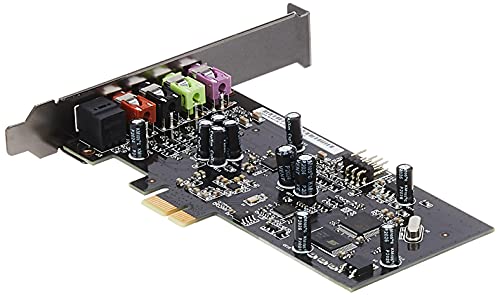
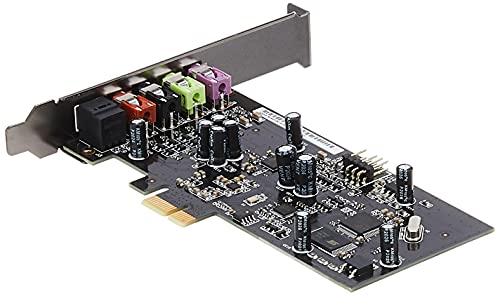
The ASUS Xonar SE earns its badge — Best Legacy Internal Pick — because it approaches the job of helping you get dependable sound from a Windows 7 64-bit machine without pretending modern driver support still exists with a clear sense of priorities. It is an internal pcie sound card from ASUS, and in a category full of products trying to be everything at once, its focus is its strength: the features it has are the ones this lens actually rewards, implemented properly rather than listed hopefully.
In daily use, what owners of this class of device notice first is not a specification but an absence: the absence of hiss between tracks, of fumbling through menus for a control that should be a knob, of a microphone path that makes colleagues ask you to repeat yourself. That day-to-day polish is what separates a badge winner from a product that merely shares its headline numbers, and it is why this model sits in this position on the list rather than further down it. For readers still weighing the wider category, How To Choose A Sound Card walks through the same decision from first principles.
Strengths
- A true internal card keeps the desk completely clear and gives analogue 5.1 speaker systems a direct, tidy connection inside the PC.
- The 116 dB SNR rating is a clear step up from typical onboard audio, which matters most on quiet music, film dialogue and late-night low-volume listening.
- Because it lives inside the case, there are no extra USB cables, no extra box to knock off the desk and nothing to unplug when the PC moves.
Trade-offs
- You need a free PCIe slot and a desktop case; laptop owners and mini-PC users cannot use it at all.
- Analogue 5.1 is its ceiling, so buyers planning a 7.1 speaker layout should look at a 7.1-capable alternative instead.
- Internal cards sit inside an electrically noisy case, so careful cable routing away from the graphics card is part of getting the best from it.
- Form: internal PCIe sound card
- Channels: 5.1 surround output
- Playback: 192 kHz/24-bit hi-res audio
- Signal-to-noise ratio: 116 dB SNR (manufacturer rating)
- Compatibility note: listed with Windows 10 compatibility
Consider how this pick behaves across a realistic week for owners of older but still-working Windows machines. On the first day it has to install without drama and present itself correctly to the operating system and your main applications. By midweek it has to survive the unglamorous work — long sessions, device switching, a call dropped into the middle of focused listening — without clicks, dropouts or settings that wander. By the weekend it should have disappeared into the routine entirely, which is the highest compliment desktop audio can earn: you stop thinking about the sound device and start thinking about the sound.
It also has to coexist with the rest of a real setup. Desks accumulate hubs, chargers, monitors with their own audio ambitions and operating systems that love reassigning default devices after updates. A well-behaved device reappears where you left it, keeps its levels, and does not demand its companion software for basic dignity. Judged on that standard — competence sustained over months rather than fireworks on day one — the ASUS Xonar SE justifies its badge, provided its trade-offs above genuinely do not touch your use case.
Best for: buyers who want legacy internal pick and value the strengths listed above in everyday use / Not suited for: buyers whose needs match this pick’s trade-offs — a different badge winner in this guide will fit you better

Creative Sound Blaster Audigy Fx V2 (Best Modern Card to Check First)
The Creative Sound Blaster Audigy Fx V2 earns its badge — Best Modern Card to Check First — because it approaches the job of helping you get dependable sound from a Windows 7 64-bit machine without pretending modern driver support still exists with a clear sense of priorities. It is an internal pci-e sound card from Creative, and in a category full of products trying to be everything at once, its focus is its strength: the features it has are the ones this lens actually rewards, implemented properly rather than listed hopefully.
In daily use, what owners of this class of device notice first is not a specification but an absence: the absence of hiss between tracks, of fumbling through menus for a control that should be a knob, of a microphone path that makes colleagues ask you to repeat yourself. That day-to-day polish is what separates a badge winner from a product that merely shares its headline numbers, and it is why this model sits in this position on the list rather than further down it. For readers still weighing the wider category, How To Choose A Sound Card walks through the same decision from first principles.
Strengths
- It is the sensible modern replacement for ageing onboard audio in a desktop: hi-res playback, discrete 5.1 for speakers and headset support in one slot.
- Scout Mode and the SmartComms Kit cover the two things desktop users ask for most — clearer game cues and cleaner voice on calls — without external boxes.
- The upgradable design is a thoughtful touch in a category where most budget cards are entirely fixed at purchase.
Trade-offs
- It sits below the Z SE in refinement; buyers chasing the quietest background for critical listening should compare the higher-tier card carefully.
- A free PCI-e slot and a Windows desktop are required, so it is not an option for laptops or consoles.
- Microphone quality is call-grade rather than recording-grade; creators need an interface with a real preamp for published audio.
- Form: internal PCI-e sound card, upgradable design
- Playback: hi-res audio support (manufacturer positioning)
- Surround: 5.1 discrete and virtual surround
- Gaming feature: Scout Mode
- Voice features: SmartComms Kit for PC calls
Consider how this pick behaves across a realistic week for owners of older but still-working Windows machines. On the first day it has to install without drama and present itself correctly to the operating system and your main applications. By midweek it has to survive the unglamorous work — long sessions, device switching, a call dropped into the middle of focused listening — without clicks, dropouts or settings that wander. By the weekend it should have disappeared into the routine entirely, which is the highest compliment desktop audio can earn: you stop thinking about the sound device and start thinking about the sound.
It also has to coexist with the rest of a real setup. Desks accumulate hubs, chargers, monitors with their own audio ambitions and operating systems that love reassigning default devices after updates. A well-behaved device reappears where you left it, keeps its levels, and does not demand its companion software for basic dignity. Judged on that standard — competence sustained over months rather than fireworks on day one — the Creative Sound Blaster Audigy Fx V2 justifies its badge, provided its trade-offs above genuinely do not touch your use case.
Best for: buyers who want modern card to check first and value the strengths listed above in everyday use / Not suited for: buyers whose needs match this pick’s trade-offs — a different badge winner in this guide will fit you better
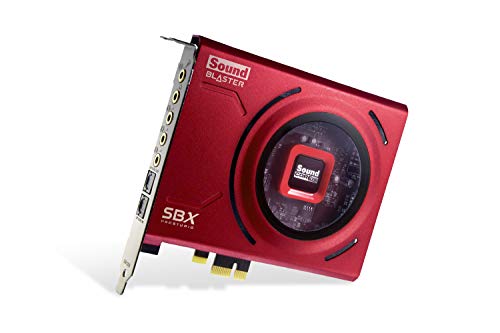
Creative Sound Blaster Z SE (Best Internal with ASIO)
The Creative Sound Blaster Z SE earns its badge — Best Internal with ASIO — because it approaches the job of helping you get dependable sound from a Windows 7 64-bit machine without pretending modern driver support still exists with a clear sense of priorities. It is an internal pcie sound card / dac from Creative, and in a category full of products trying to be everything at once, its focus is its strength: the features it has are the ones this lens actually rewards, implemented properly rather than listed hopefully.
In daily use, what owners of this class of device notice first is not a specification but an absence: the absence of hiss between tracks, of fumbling through menus for a control that should be a knob, of a microphone path that makes colleagues ask you to repeat yourself. That day-to-day polish is what separates a badge winner from a product that merely shares its headline numbers, and it is why this model sits in this position on the list rather than further down it. For readers still weighing the wider category, How To Choose A Sound Card walks through the same decision from first principles.
Strengths
- ASIO support makes this one of the few gaming-bred internal cards that also behaves properly in a DAW, with low-latency monitoring for recording and production work.
- The headphone amplifier is rated for headphones up to 600 ohms, so high-impedance audiophile headphones are driven properly rather than merely made audible.
- Discrete 5.1 analogue output plus virtual 7.1 for headphones covers both speaker and headset gaming from a single slot.
Trade-offs
- It needs a desktop with a free PCI-e slot and will not suit laptops, consoles or compact mini-PCs.
- The software suite is Windows-centred; Mac and Linux users should choose a class-compliant USB option instead.
- Its microphone processing is aimed at gaming chat, so podcasters and singers will still get better results from a dedicated interface with a proper preamp.
- Form: internal PCI-e sound card and DAC
- Playback: 24-bit/192 kHz
- Signal-to-noise ratio: 116 dB SNR (manufacturer rating)
- Driver support: ASIO support listed
- Headphone amp: supports headphones up to 600 ohms
- Surround: discrete 5.1 and virtual 7.1, with Dolby Digital Live support
Consider how this pick behaves across a realistic week for owners of older but still-working Windows machines. On the first day it has to install without drama and present itself correctly to the operating system and your main applications. By midweek it has to survive the unglamorous work — long sessions, device switching, a call dropped into the middle of focused listening — without clicks, dropouts or settings that wander. By the weekend it should have disappeared into the routine entirely, which is the highest compliment desktop audio can earn: you stop thinking about the sound device and start thinking about the sound.
It also has to coexist with the rest of a real setup. Desks accumulate hubs, chargers, monitors with their own audio ambitions and operating systems that love reassigning default devices after updates. A well-behaved device reappears where you left it, keeps its levels, and does not demand its companion software for basic dignity. Judged on that standard — competence sustained over months rather than fireworks on day one — the Creative Sound Blaster Z SE justifies its badge, provided its trade-offs above genuinely do not touch your use case.
Best for: buyers who want internal with asio and value the strengths listed above in everyday use / Not suited for: buyers whose needs match this pick’s trade-offs — a different badge winner in this guide will fit you better

Creative Sound Blaster Play! 3 (Best Plug-and-Play Adapter)
The Creative Sound Blaster Play! 3 earns its badge — Best Plug-and-Play Adapter — because it approaches the job of helping you get dependable sound from a Windows 7 64-bit machine without pretending modern driver support still exists with a clear sense of priorities. It is an external usb sound adapter from Creative, and in a category full of products trying to be everything at once, its focus is its strength: the features it has are the ones this lens actually rewards, implemented properly rather than listed hopefully.
In daily use, what owners of this class of device notice first is not a specification but an absence: the absence of hiss between tracks, of fumbling through menus for a control that should be a knob, of a microphone path that makes colleagues ask you to repeat yourself. That day-to-day polish is what separates a badge winner from a product that merely shares its headline numbers, and it is why this model sits in this position on the list rather than further down it. For readers still weighing the wider category, How To Choose A Sound Card walks through the same decision from first principles.
Strengths
- It is the classic rescue device: when a laptop’s audio jack dies, crackles or hums, this restores clean headset audio in under a minute with no drivers.
- 24-bit/96 kHz playback is a real step up from tired onboard outputs for everyday music, video calls and casual gaming.
- Its tiny size and bus power make it the one pick here that genuinely lives in a laptop bag full-time.
Trade-offs
- Headphone power is modest; it improves ordinary headsets rather than driving demanding audiophile headphones.
- No line-in, optical or surround outputs means it cannot become the centre of a larger audio system.
- Call and playback quality are good for its class, but recordists and critical listeners will outgrow it quickly.
- Form: external USB sound adapter / USB DAC
- Playback: 24-bit/96 kHz
- Setup: plug-and-play, no drivers required
- Platforms: Windows and Mac
- Connections: headset/headphone and microphone via 3.5 mm
Consider how this pick behaves across a realistic week for owners of older but still-working Windows machines. On the first day it has to install without drama and present itself correctly to the operating system and your main applications. By midweek it has to survive the unglamorous work — long sessions, device switching, a call dropped into the middle of focused listening — without clicks, dropouts or settings that wander. By the weekend it should have disappeared into the routine entirely, which is the highest compliment desktop audio can earn: you stop thinking about the sound device and start thinking about the sound.
It also has to coexist with the rest of a real setup. Desks accumulate hubs, chargers, monitors with their own audio ambitions and operating systems that love reassigning default devices after updates. A well-behaved device reappears where you left it, keeps its levels, and does not demand its companion software for basic dignity. Judged on that standard — competence sustained over months rather than fireworks on day one — the Creative Sound Blaster Play! 3 justifies its badge, provided its trade-offs above genuinely do not touch your use case.
Best for: buyers who want plug-and-play adapter and value the strengths listed above in everyday use / Not suited for: buyers whose needs match this pick’s trade-offs — a different badge winner in this guide will fit you better
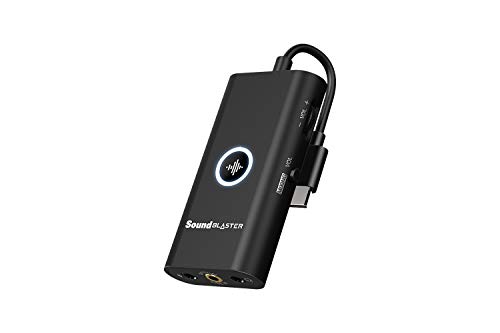
Creative Sound Blaster G3 (Best for Older Gaming Rigs)
The Creative Sound Blaster G3 earns its badge — Best for Older Gaming Rigs — because it approaches the job of helping you get dependable sound from a Windows 7 64-bit machine without pretending modern driver support still exists with a clear sense of priorities. It is an external usb-c dac / amp from Creative, and in a category full of products trying to be everything at once, its focus is its strength: the features it has are the ones this lens actually rewards, implemented properly rather than listed hopefully.
In daily use, what owners of this class of device notice first is not a specification but an absence: the absence of hiss between tracks, of fumbling through menus for a control that should be a knob, of a microphone path that makes colleagues ask you to repeat yourself. That day-to-day polish is what separates a badge winner from a product that merely shares its headline numbers, and it is why this model sits in this position on the list rather than further down it. For readers still weighing the wider category, how to choose a sound card walks through the same decision from first principles.
Strengths
- GameVoice Mix is genuinely useful in team games: balancing game sound against voice chat from the device itself is faster than digging through software menus mid-match.
- It is small enough to live in a controller cable run or a laptop bag, making it the easiest pick here to move between a console and a PC.
- Plug-and-play behaviour means it works as a quick rescue when a headset jack fails or a console controller output sounds thin and noisy.
Trade-offs
- It is a gaming convenience device first; it does not offer the hi-res playback ceiling or headphone power of the larger Creative units.
- There are no analogue surround speaker outputs, so it cannot anchor a 5.1 or 7.1 speaker system.
- Serious recording is out of scope: headset microphones only, with no line-in or instrument input for external sources.
- Form: external USB-C DAC and amplifier
- Feature: GameVoice Mix for game and chat audio balance
- Controls: microphone and volume control on the unit
- Compatibility: PS4, Nintendo Switch and PC/Mac class devices
- Setup: plug-and-play USB audio
Consider how this pick behaves across a realistic week for owners of older but still-working Windows machines. On the first day it has to install without drama and present itself correctly to the operating system and your main applications. By midweek it has to survive the unglamorous work — long sessions, device switching, a call dropped into the middle of focused listening — without clicks, dropouts or settings that wander. By the weekend it should have disappeared into the routine entirely, which is the highest compliment desktop audio can earn: you stop thinking about the sound device and start thinking about the sound.
It also has to coexist with the rest of a real setup. Desks accumulate hubs, chargers, monitors with their own audio ambitions and operating systems that love reassigning default devices after updates. A well-behaved device reappears where you left it, keeps its levels, and does not demand its companion software for basic dignity. Judged on that standard — competence sustained over months rather than fireworks on day one — the Creative Sound Blaster G3 justifies its badge, provided its trade-offs above genuinely do not touch your use case.
Best for: buyers who want for older gaming rigs and value the strengths listed above in everyday use / Not suited for: buyers whose needs match this pick’s trade-offs — a different badge winner in this guide will fit you better

Creative Sound Blaster X4 (Best External Upgrade Path)
The Creative Sound Blaster X4 earns its badge — Best External Upgrade Path — because it approaches the job of helping you get dependable sound from a Windows 7 64-bit machine without pretending modern driver support still exists with a clear sense of priorities. It is an external usb dac / amp from Creative, and in a category full of products trying to be everything at once, its focus is its strength: the features it has are the ones this lens actually rewards, implemented properly rather than listed hopefully.
In daily use, what owners of this class of device notice first is not a specification but an absence: the absence of hiss between tracks, of fumbling through menus for a control that should be a knob, of a microphone path that makes colleagues ask you to repeat yourself. That day-to-day polish is what separates a badge winner from a product that merely shares its headline numbers, and it is why this model sits in this position on the list rather than further down it. For readers still weighing the wider category, how to choose a sound card walks through the same decision from first principles.
Strengths
- Discrete 7.1 analogue output is the headline: this is one of the few external units that can genuinely feed a multi-channel powered-speaker system, not just virtualise surround in headphones.
- Optical-in as well as optical-out makes it a real hub — a console or TV can come in while speakers, headphones and a headset all stay connected.
- Super X-Fi headphone processing gives film and game audio an out-of-head spaciousness that plain stereo DACs do not attempt.
Trade-offs
- It is a desktop hub with a desktop footprint; travellers and laptop minimalists will find the smaller dongle-style options easier to live with.
- There is no XLR microphone input or studio preamp, so recording work still belongs to a proper audio interface.
- Mac users get playback without the full Windows software suite, so feature-by-feature parity should not be assumed.
- Form: external USB DAC and amp sound card
- Playback: hi-res 24-bit/192 kHz
- Signal-to-noise ratio: 114 dB (retailer specification listing)
- Surround: up to 7.1 discrete surround plus Super X-Fi headphone processing
- Connections: optical-in, optical-out, line-in, microphone-in and headset-in
- Platforms: PC and Mac
Consider how this pick behaves across a realistic week for owners of older but still-working Windows machines. On the first day it has to install without drama and present itself correctly to the operating system and your main applications. By midweek it has to survive the unglamorous work — long sessions, device switching, a call dropped into the middle of focused listening — without clicks, dropouts or settings that wander. By the weekend it should have disappeared into the routine entirely, which is the highest compliment desktop audio can earn: you stop thinking about the sound device and start thinking about the sound.
It also has to coexist with the rest of a real setup. Desks accumulate hubs, chargers, monitors with their own audio ambitions and operating systems that love reassigning default devices after updates. A well-behaved device reappears where you left it, keeps its levels, and does not demand its companion software for basic dignity. Judged on that standard — competence sustained over months rather than fireworks on day one — the Creative Sound Blaster X4 justifies its badge, provided its trade-offs above genuinely do not touch your use case.
Best for: buyers who want external upgrade path and value the strengths listed above in everyday use / Not suited for: buyers whose needs match this pick’s trade-offs — a different badge winner in this guide will fit you better
Comparison Table
The table below compresses the verified essentials. Use it to eliminate picks on form factor and headline capability, then read the full review of the survivors — the trade-off lists are where the real differences live.
| Pick | Badge | Form | Headline specification | Price |
|---|---|---|---|---|
| ASUS Xonar SE | Best Legacy Internal Pick | Internal PCIe sound card | Channels: 5.1 surround output | Check price on Amazon |
| Creative Sound Blaster Audigy Fx V2 | Best Modern Card to Check First | Internal PCI-e sound card | Playback: hi-res audio support (manufacturer positioning) | Check price on Amazon |
| Creative Sound Blaster Z SE | Best Internal with ASIO | Internal PCIe sound card / DAC | Playback: 24-bit/192 kHz | Check price on Amazon |
| Creative Sound Blaster Play! 3 | Best Plug-and-Play Adapter | External USB sound adapter | Playback: 24-bit/96 kHz | Check price on Amazon |
| Creative Sound Blaster G3 | Best for Older Gaming Rigs | External USB-C DAC / amp | Feature: GameVoice Mix for game and chat audio balance | Check price on Amazon |
| Creative Sound Blaster X4 | Best External Upgrade Path | External USB DAC / amp | Playback: hi-res 24-bit/192 kHz | Check price on Amazon |
How to Choose the Right Sound Card
Start with the job, not the product. The single most reliable question in this category is brutally simple: what will you connect, and in which direction does the audio travel? Playback to headphones, playback to speakers, capture from a microphone, capture from a line-level source and two-way communication are different jobs that reward different hardware. A buyer who can state their job in one sentence — the sentence this guide opened with, to get dependable sound from a Windows 7 64-bit machine without pretending modern driver support still exists — can eliminate two-thirds of the market immediately, including several products in this very shortlist that are excellent at other jobs.
Inputs decide recording; outputs decide playback. If anything must be captured, the input stage is the product: a microphone needs a preamp with clean gain, an instrument needs an appropriate high-impedance input, and a mixer, radio or phono stage needs a line input that will not be processed like a voice. If nothing must be captured, spend the same money on the output stage instead — conversion quality, a silent background and a headphone amplifier matched to your headphones’ impedance and sensitivity. Confusing these two budgets is the most expensive mistake in the category, and it is why best sound cards for recording and the playback guides in this series sometimes recommend entirely different hardware at the same tier.
Form factor is a lifestyle decision. Internal PCIe cards keep a desktop tidy and can offer analogue multi-channel outputs at keen tiers, but they live and die with one machine and sit inside an electrically busy case. External USB devices cost a little desk space and repay it with portability, desk-level controls and a life across several computers. Laptop owners, Mac owners and console players have no real choice — external is the only road — while a fixed desktop studio can honestly choose either. The comparison at internal vs external sound card explores the trade in more depth.
Read specifications like an engineer, not a collector. Signal-to-noise ratio and dynamic range describe how quiet the background can be; sample-rate ceilings describe compatibility, not quality; headphone ratings describe which loads the amplifier was designed for, while real output power describes how loudly and cleanly it can drive them. Prefer a modest set of verified figures from the manufacturer over a long list repeated across roundups, and treat any specification you cannot trace to a maker or reputable retailer as decoration.
Budget in tiers, and buy the capability, not the refinement. The budget tier fixes faults — dead jacks, hiss, unusable microphone inputs. The mid tier adds capabilities: real preamps, discrete surround, balanced outputs, serious headphone power. The upper tier refines: better converters, better metering, better build. Moving up for a capability your setup will use is money well spent; moving up for a refinement your headphones or speakers cannot reveal is not. Whichever tier you choose, check the current price on Amazon rather than trusting any figure printed in any guide, including the tier framing in this keyword itself.
How Do You Set Up a Sound Card on Windows 7 64-Bit?
Setup is where good hardware is either confirmed or squandered. Work through these steps in order the first time; afterwards, most of them collapse into a thirty-second routine you will barely notice.
- Before buying, download the exact 64-bit Windows 7 driver for the model from the manufacturer’s archive and keep the installer somewhere safe; if no such driver exists, choose a plug-and-play USB adapter instead.
- Disable driver-signature surprises by using only the manufacturer’s own package, installed as administrator, with the card fitted or the USB device connected exactly as the instructions specify.
- In Device Manager, confirm the device appears without warning marks, then set it as default in the Sound control panel for playback and recording.
- Set a conservative sample rate (44.1 or 48 kHz) and disable exclusive-mode conflicts in the advanced properties if older applications crackle.
- Record the working driver version and settings; on a legacy system, the ability to recreate a working setup is worth more than any future update.
- Keep expectations matched to the platform: security and software support for Windows 7 have ended, so isolate the machine sensibly if it stays in service.
Troubleshooting quick list
- Problem: no sound after installing → the OS or app is still using the old default device; set the new device in both places and restart the app.
- Problem: crackles or dropouts → a sample-rate mismatch or an overloaded USB hub; match rates everywhere and connect directly to the computer.
- Problem: hum that follows the graphics load → a ground/routing issue; re-route cables, change the USB port, and keep audio leads away from power supplies.
- Problem: microphone too quiet or distorted → gain is set at the wrong stage; set it at the device preamp first and keep software gain near neutral.
- Problem: device vanishes after sleep → a USB power-management quirk; try another port and disable selective suspend for that device where your OS allows.
When something still misbehaves after those checks, the guides at how to test a sound card and how to set up a sound card go deeper, and how to fix sound card not detected covers the specific case of a device the system refuses to see at all.
Common Mistakes
- Buying first and hunting for a Windows 7 64-bit driver afterwards. On a legacy platform the driver check comes before the purchase, always.
- Trusting driver-download sites instead of the manufacturer’s archive, which is how legacy machines acquire malware alongside their audio drivers.
- Assuming a card that worked on Windows 7 will be equally happy after an in-place OS upgrade, or the reverse; re-verify at every platform change.
- Leaving a legacy machine fully exposed on a network because ‘it only runs the audio software’. Old platforms need more network caution, not less.
- Discarding the working driver installer once things work. On legacy systems, that file is irreplaceable infrastructure.
Think of the purchase as a chain decision rather than a product decision. The sound device, the headphones or speakers, and the source material each cap the result, and money spent raising the lowest cap outperforms money spent gilding the highest one. That is why this guide keeps asking what you will actually connect — the honest answer to that question is the buying guide.
Final Recommendation
Buy by badge and you will buy well: ASUS Xonar SE is Best Legacy Internal Pick; Creative Sound Blaster Audigy Fx V2 is Best Modern Card to Check First; Creative Sound Blaster Z SE is Best Internal with ASIO; Creative Sound Blaster Play! 3 is Best Plug-and-Play Adapter; Creative Sound Blaster G3 is Best for Older Gaming Rigs; Creative Sound Blaster X4 is Best External Upgrade Path. If one sentence must carry the whole guide, it is this — match the device to the job of helping you get dependable sound from a Windows 7 64-bit machine without pretending modern driver support still exists, verify the current price on Amazon, and let the trade-off lists, not the marketing, have the last word. Readers cross-shopping the wider category will find natural next steps in best sound cards for music production and best external sound cards for music production, which apply the same standards to neighbouring use cases.
Frequently Asked Questions
Can I still buy a sound card that works on Windows 7 64-bit?
Yes, but verify before buying: the manufacturer must offer a 64-bit Windows 7 driver, ideally archived on their own site. Plug-and-play USB adapters that need no driver are the lowest-risk route.
Why does a card list Windows 10 support but not Windows 7?
Driver development follows supported operating systems. Absence from the list does not prove incompatibility, but it means you are on your own — hence checking for an archived driver first.
Is it safe to keep using Windows 7?
Microsoft ended support, so the platform receives no security updates. If the machine must stay, keep it off sensitive accounts, be conservative with networking, and treat it as an appliance rather than a general computer.
Will these devices work if I later upgrade to Windows 10 or 11?
The current USB picks generally will, which is one reason they are recommended as the upgrade path. Internal cards should be re-verified against the new OS before the upgrade, not after.
Where should I get legacy drivers?
Only from the manufacturer’s own support archive. Third-party driver sites are a well-documented malware channel, especially for legacy hardware searches.