Disclosure: As an Amazon Associate, ilcastellomenu.com earns from qualifying purchases. Links on this page are affiliate links; they cost you nothing extra. Prices and availability change often, so check the current Amazon listing before you buy.
This guide to how to clean office chair mat walks through the job in the order that avoids the common mistakes: preparation first, the main steps in sequence, then the checks that tell you the setup is genuinely finished. Whether this is your first attempt at how to clean office chair mat or a redo of a setup that never felt right, the steps below assume ordinary household tools, a clear hour of unhurried time, and a willingness to adjust twice rather than force things once.
Key Takeaways
- Preparation decides the outcome: clear the surface, gather everything first, and never start with the heavy lifting.
- Work in the order given, checking each stage before moving on, because later steps assume the earlier ones are right.
- Small adjustments after a day of real use are part of the process, not a sign the setup failed.
- Safety steps are written into the sequence where they belong, including pinch points, heavy units and trip hazards.
In this guide
What You Need
Required: a vacuum or a stiff hand brush, a bucket of warm water, mild dish soap, two soft cloths or a non-scratch sponge, and a dry towel. Optional: a plastic scraper for dried-on spots, a squeegee for large mats, and an old toothbrush for the bevelled edge where grit collects. Nothing stronger is needed for routine cleaning, and anything harsher — solvents, bleach, abrasive pads — risks clouding or embrittling the mat, so leave those in the cupboard.
Let the mat dry completely and flat before it goes back under the chair, since a damp underside can hold moisture against wood floors and encourage musty smells. Work in sections, rinsing the cloth often, because spreading grey water across the whole mat just moves the film around. Keep solvent cleaners, bleach and abrasive pads away unless the maker explicitly allows them, as they can cloud clear mats and embrittle the surface. Clean the chair casters while the mat is up, since hair and grit packed into the wheels will redeposit dirt onto your clean mat within days. Start every clean by rolling the chair away and lifting the mat out if you can, because cleaning around the casters leaves the dirtiest ring exactly where the wheels sit. Warm water with a small amount of mild dish soap is the workhorse solution for the common mat materials, applied with a soft cloth or a non-scratch sponge.
Most chair mat grime is ordinary household dust, skin oils and tracked-in grit, and it responds to patience and mild cleaning rather than harsh chemicals. A mat stored rolled for a long time may resist lying flat; resting it in a warm room with weight spread across the curled edges usually persuades it back. Shake or vacuum the mat outside first, since loose grit dragged under a cloth will scratch the surface you are trying to save. Never fold a rigid mat to move or store it, because a sharp crease can whiten or crack the material; roll it loosely or carry it flat.
Safety and Before You Start
Roll the chair well away and give yourself a clear, dry area to work in, because a wet mat on a hard floor is slippery underfoot until it dries. If the mat is large or rigid, move it with a helper or carry it flat rather than dragging it across the floor it protects. Check the floor beneath before washing anything: moisture trapped under a mat on wood deserves a wipe and a dry first, and any grit under the mat should be swept up before it is ground back in.
Carpet wants the opposite: a mat with gripper teeth on the underside sized for the pile, so the chair’s weight anchors the mat instead of skating it across the room. Put a hard-floor mat on carpet and the casters’ point loads will crack it over time, starting with hairline fractures around the wheels you use most. Chair casters themselves play a part, since hard plastic wheels concentrate load and chew soft mats, while softer roller-style wheels spread the weight kindly. A mat that curls at the edges is more than an annoyance, because a lifted edge under a rolling caster is a genuine trip and stumble hazard. The single most important decision with an office chair mat is matching the mat to the floor under it, because a mat that suits one surface can fail quickly on another. Hard floors such as wood, laminate, tile and vinyl want a smooth-backed mat that grips gently, protects the finish and stays flat without adhesive. Measure the roll zone, not just the chair: you need coverage everywhere the casters travel during a normal day, including the push-back when you stand up.
Carpet wants the opposite: a mat with gripper teeth on the underside sized for the pile, so the chair’s weight anchors the mat instead of skating it across the room. Put a hard-floor mat on carpet and the casters’ point loads will crack it over time, starting with hairline fractures around the wheels you use most. Chair casters themselves play a part, since hard plastic wheels concentrate load and chew soft mats, while softer roller-style wheels spread the weight kindly. A mat that curls at the edges is more than an annoyance, because a lifted edge under a rolling caster is a genuine trip and stumble hazard. The single most important decision with an office chair mat is matching the mat to the floor under it, because a mat that suits one surface can fail quickly on another. Hard floors such as wood, laminate, tile and vinyl want a smooth-backed mat that grips gently, protects the finish and stays flat without adhesive.
How To Clean Office Chair Mat, Step by Step
Step 1: Lift the Mat and Clear the Loose Dirt
Take the mat up if you reasonably can, carry it flat to a bath, shower or outdoor spot, and shake or brush off the loose grit. Follow with a vacuum across both sides. This dry stage matters more than any soap: grit left in place gets dragged under your cloth in the next step and scratches the surface you are trying to restore, and the underside grit is what has been quietly defeating the mat’s grip.
Step 2: Wash the Top Surface
Fill the bucket with warm water and a small amount of mild dish soap, then wash the top in sections with a soft cloth or non-scratch sponge, rinsing the cloth often. Work the caster traffic zone longest, since that is where skin oils and ground-in dirt build the grey film. For dried spots, lay a warm wet cloth over them for a few minutes to soften them rather than scrubbing harder, and use the plastic scraper gently if a spot refuses to lift.
Step 3: Wash the Underside
Turn the mat over and wash the underside the same way, because this side decides whether the mat grips or wanders. On carpet mats, work the brush between the gripper teeth where dust and hair pack in. Rinse both sides with clean water until no soap film remains; leftover soap dries tacky, attracts dirt faster than before, and can make a hard-floor mat feel oddly sticky under the casters.
Step 4: Dry It Flat and Completely
Towel off the worst of the water, then leave the mat flat — not folded, not draped — until both sides are fully dry. A mat put back damp traps moisture against wood floors, dulls its own grip and can develop a musty smell in the pile beneath it. Warm room air speeds the job; direct harsh heat is unnecessary and unkind to the material. Use the drying time to clean the floor beneath properly.
Step 5: Clean the Casters Before the Mat Goes Back
Turn the chair over or tilt it safely and pick the hair, thread and grit out of every caster, wiping the wheels clean. This step is the difference between a mat that stays clean for weeks and one that looks dirty again by Friday, because filthy wheels redeposit everything you just removed. Spin each wheel to confirm it runs freely before the chair goes back into service.
Step 6: Replace, Flatten and Check the Grip
Lay the mat back in position, walk its edges down, and roll the chair across it in every direction you normally travel. The mat should stay put, lie flat and let the chair roll without climbing or catching. If an edge still curls, rest flat weight across it overnight rather than bending it backwards, which can whiten or crack the material.
Most chair mat grime is ordinary household dust, skin oils and tracked-in grit, and it responds to patience and mild cleaning rather than harsh chemicals. Shake or vacuum the mat outside first, since loose grit dragged under a cloth will scratch the surface you are trying to save. Keep solvent cleaners, bleach and abrasive pads away unless the maker explicitly allows them, as they can cloud clear mats and embrittle the surface. Clean the chair casters while the mat is up, since hair and grit packed into the wheels will redeposit dirt onto your clean mat within days. A mat stored rolled for a long time may resist lying flat; resting it in a warm room with weight spread across the curled edges usually persuades it back. Let the mat dry completely and flat before it goes back under the chair, since a damp underside can hold moisture against wood floors and encourage musty smells. Never fold a rigid mat to move or store it, because a sharp crease can whiten or crack the material; roll it loosely or carry it flat.
Most chair mat grime is ordinary household dust, skin oils and tracked-in grit, and it responds to patience and mild cleaning rather than harsh chemicals. Shake or vacuum the mat outside first, since loose grit dragged under a cloth will scratch the surface you are trying to save. Keep solvent cleaners, bleach and abrasive pads away unless the maker explicitly allows them, as they can cloud clear mats and embrittle the surface. Clean the chair casters while the mat is up, since hair and grit packed into the wheels will redeposit dirt onto your clean mat within days. A mat stored rolled for a long time may resist lying flat; resting it in a warm room with weight spread across the curled edges usually persuades it back. Let the mat dry completely and flat before it goes back under the chair, since a damp underside can hold moisture against wood floors and encourage musty smells.
Troubleshooting and Common Mistakes
Work in sections, rinsing the cloth often, because spreading grey water across the whole mat just moves the film around. Clean the chair casters while the mat is up, since hair and grit packed into the wheels will redeposit dirt onto your clean mat within days. Shake or vacuum the mat outside first, since loose grit dragged under a cloth will scratch the surface you are trying to save. Never fold a rigid mat to move or store it, because a sharp crease can whiten or crack the material; roll it loosely or carry it flat. Most chair mat grime is ordinary household dust, skin oils and tracked-in grit, and it responds to patience and mild cleaning rather than harsh chemicals. Keep solvent cleaners, bleach and abrasive pads away unless the maker explicitly allows them, as they can cloud clear mats and embrittle the surface. Start every clean by rolling the chair away and lifting the mat out if you can, because cleaning around the casters leaves the dirtiest ring exactly where the wheels sit. A mat stored rolled for a long time may resist lying flat; resting it in a warm room with weight spread across the curled edges usually persuades it back.
Work in sections, rinsing the cloth often, because spreading grey water across the whole mat just moves the film around. Clean the chair casters while the mat is up, since hair and grit packed into the wheels will redeposit dirt onto your clean mat within days. Shake or vacuum the mat outside first, since loose grit dragged under a cloth will scratch the surface you are trying to save. Never fold a rigid mat to move or store it, because a sharp crease can whiten or crack the material; roll it loosely or carry it flat. Most chair mat grime is ordinary household dust, skin oils and tracked-in grit, and it responds to patience and mild cleaning rather than harsh chemicals. Keep solvent cleaners, bleach and abrasive pads away unless the maker explicitly allows them, as they can cloud clear mats and embrittle the surface. Start every clean by rolling the chair away and lifting the mat out if you can, because cleaning around the casters leaves the dirtiest ring exactly where the wheels sit. A mat stored rolled for a long time may resist lying flat; resting it in a warm room with weight spread across the curled edges usually persuades it back. Owners usually notice this most during the first fortnight of daily use, when habits are still forming.
The recurring mistakes are using solvent or abrasive cleaners that cloud the surface, putting the mat back damp, folding a rigid mat for storage so it creases, and cleaning the mat while ignoring the casters that dirty it. A mat that slides straight after cleaning usually has soap residue underneath; rinse and dry it again. A mat that will not lie flat after long storage needs warmth, time and distributed weight, not force.
A mat that curls at the edges is more than an annoyance, because a lifted edge under a rolling caster is a genuine trip and stumble hazard. Hard floors such as wood, laminate, tile and vinyl want a smooth-backed mat that grips gently, protects the finish and stays flat without adhesive. Put a carpet mat with aggressive teeth on a hard floor and it can scratch the finish while still sliding, the worst of both worlds. The single most important decision with an office chair mat is matching the mat to the floor under it, because a mat that suits one surface can fail quickly on another. Sliding is the other safety failure: a mat that creeps across the floor can carry the chair with it, so grip on the underside matters as much as glide on top. Chair casters themselves play a part, since hard plastic wheels concentrate load and chew soft mats, while softer roller-style wheels spread the weight kindly. Put a hard-floor mat on carpet and the casters’ point loads will crack it over time, starting with hairline fractures around the wheels you use most. Low-pile commercial carpet is forgiving and suits most carpet mats, while deep plush pile needs a mat genuinely rated for thick carpet or the chair will feel like it is rolling through sand.
Maintenance and Keeping It Clean Longer
Thickness is a balance: too thin and the mat flexes and cracks under point loads, too thick and its edge becomes a speed bump the chair has to climb. On carpet, the mat’s real job is preventing the slow crater that forms under a chair, where compressed pile and caster dents make rolling harder every month. A good chair mat disappears into the day: the chair rolls where you push it, stops where you stop, and never asks you to tug a wheel out of a dent. Texture on the top surface is subtle but real: a light texture keeps the chair from feeling skittish, while a glass-smooth surface can feel almost too free. In a shared or multi-purpose room, a mat also defines the work zone visually, which helps a desk corner feel like a place rather than a pile. On hard floors, the job is protection first, because grit trapped under a caster works like sandpaper and leaves pale tracks across wood and laminate. Noise changes too, and a mat often quiets the rumble of casters on hard floors enough that downstairs neighbours notice the difference. Clear mats keep the floor visible, which suits rooms where the mat is a guest rather than a feature, while opaque mats hide wear and read as part of the furniture.
Thickness is a balance: too thin and the mat flexes and cracks under point loads, too thick and its edge becomes a speed bump the chair has to climb. On carpet, the mat’s real job is preventing the slow crater that forms under a chair, where compressed pile and caster dents make rolling harder every month. A good chair mat disappears into the day: the chair rolls where you push it, stops where you stop, and never asks you to tug a wheel out of a dent. Texture on the top surface is subtle but real: a light texture keeps the chair from feeling skittish, while a glass-smooth surface can feel almost too free. In a shared or multi-purpose room, a mat also defines the work zone visually, which helps a desk corner feel like a place rather than a pile. On hard floors, the job is protection first, because grit trapped under a caster works like sandpaper and leaves pale tracks across wood and laminate.
Between deep cleans, a weekly vacuum of the top surface stops grit being ground in, and lifting the mat monthly to sweep beneath it keeps the underside honest. Shoes-off habits at the desk, or a quick wipe of the wheels in muddy weather, stretch the interval between washes considerably. Treat the deep clean in this guide as a seasonal rhythm rather than an emergency response and the mat will look and behave like new for far longer.
Gear for This Guide
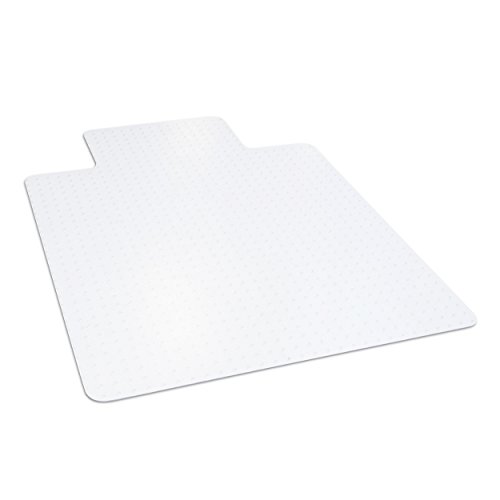
OFM Office Chair Mat
The OFM Office Chair Mat is a long-standing name in this unglamorous category, built around the idea that a mat should be chosen for the floor first and the chair second. OFM offers versions shaped for hard floors and for carpet, and that split is exactly the right way to shop: the smooth-backed hard-floor version protects wood and laminate while staying put, and the carpet version carries the gripper underside that keeps it anchored in the pile. The material feels firm under the casters, which is what you want, since a mat that flexes under each wheel is a mat working towards cracking.
Treat OFM as a dependable mid-tier staple rather than a design object. The edges, the clarity of the material and the unrolling behaviour are all competent rather than delightful, and a new mat may need a day or two of patience before it lies perfectly flat. For a home office that needs the floor protected and the chair rolling freely without drama, it is the sort of purchase you make once and then forget about, which is the highest praise a chair mat can earn.
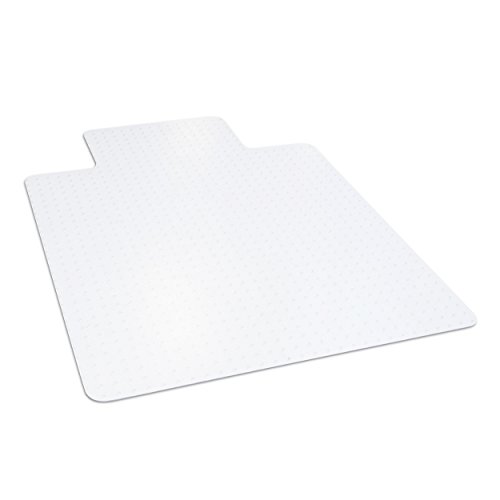
Dimex Office Chair Mat
The Dimex Office Chair Mat represents the value end of the category done sensibly, from a maker whose background is in edging and floor products for offices. The mats are light, easy to position and easy to replace, and for low-pile carpet and hard floors in a home office they cover the core duties: casters roll, floors are shielded, and the work zone looks intentional. Dimex is a sensible entry-tier pick for a first home office, a student room or a temporary setup that still deserves better than bare floor.
The trade-offs of the tier are durability expectations and edge behaviour: a lighter mat asks to be matched carefully to its floor, checked for curl as the seasons change, and replaced sooner than a heavy premium mat under a heavy chair used all day. None of that is a failure; it is the honest arithmetic of a budget mat. Buy the right floor version, keep heavy point loads sensible, and it will do its quiet job well.
Seasonal Deep-Clean Notes
Never fold a rigid mat to move or store it, because a sharp crease can whiten or crack the material; roll it loosely or carry it flat. Warm water with a small amount of mild dish soap is the workhorse solution for the common mat materials, applied with a soft cloth or a non-scratch sponge. Shake or vacuum the mat outside first, since loose grit dragged under a cloth will scratch the surface you are trying to save. A bevelled or ramped edge is worth seeking out, since rolling on and off the mat happens dozens of times a day and a square edge fights you every time. On hard floors, the job is protection first, because grit trapped under a caster works like sandpaper and leaves pale tracks across wood and laminate. A mat stored rolled for a long time may resist lying flat; resting it in a warm room with weight spread across the curled edges usually persuades it back. Work in sections, rinsing the cloth often, because spreading grey water across the whole mat just moves the film around.
A good chair mat disappears into the day: the chair rolls where you push it, stops where you stop, and never asks you to tug a wheel out of a dent. In a shared or multi-purpose room, a mat also defines the work zone visually, which helps a desk corner feel like a place rather than a pile. Noise changes too, and a mat often quiets the rumble of casters on hard floors enough that downstairs neighbours notice the difference. Thickness is a balance: too thin and the mat flexes and cracks under point loads, too thick and its edge becomes a speed bump the chair has to climb. Texture on the top surface is subtle but real: a light texture keeps the chair from feeling skittish, while a glass-smooth surface can feel almost too free. Start every clean by rolling the chair away and lifting the mat out if you can, because cleaning around the casters leaves the dirtiest ring exactly where the wheels sit.
Most chair mat grime is ordinary household dust, skin oils and tracked-in grit, and it responds to patience and mild cleaning rather than harsh chemicals. Keep solvent cleaners, bleach and abrasive pads away unless the maker explicitly allows them, as they can cloud clear mats and embrittle the surface. Let the mat dry completely and flat before it goes back under the chair, since a damp underside can hold moisture against wood floors and encourage musty smells. Clear mats keep the floor visible, which suits rooms where the mat is a guest rather than a feature, while opaque mats hide wear and read as part of the furniture. On carpet, the mat’s real job is preventing the slow crater that forms under a chair, where compressed pile and caster dents make rolling harder every month. Clean the chair casters while the mat is up, since hair and grit packed into the wheels will redeposit dirt onto your clean mat within days.
Keeping the Whole Chair Zone Clean
The single most important decision with an office chair mat is matching the mat to the floor under it, because a mat that suits one surface can fail quickly on another. A mat that curls at the edges is more than an annoyance, because a lifted edge under a rolling caster is a genuine trip and stumble hazard. Put a hard-floor mat on carpet and the casters’ point loads will crack it over time, starting with hairline fractures around the wheels you use most. Chair casters themselves play a part, since hard plastic wheels concentrate load and chew soft mats, while softer roller-style wheels spread the weight kindly. Hard floors such as wood, laminate, tile and vinyl want a smooth-backed mat that grips gently, protects the finish and stays flat without adhesive. Keep the things you touch hourly within easy reach and let the rarely used gear live further away, which keeps the working zone calm. Put a carpet mat with aggressive teeth on a hard floor and it can scratch the finish while still sliding, the worst of both worlds.
Light matters as much as furniture: a screen facing a bright window will fight glare no matter how good the stand or converter beneath it is. Measure the roll zone, not just the chair: you need coverage everywhere the casters travel during a normal day, including the push-back when you stand up. Low-pile commercial carpet is forgiving and suits most carpet mats, while deep plush pile needs a mat genuinely rated for thick carpet or the chair will feel like it is rolling through sand. Sliding is the other safety failure: a mat that creeps across the floor can carry the chair with it, so grip on the underside matters as much as glide on top. Work through changes one at a time and live with each for a day, because adjusting everything at once leaves you unable to tell what actually helped. Small setups benefit most from gear that folds, slides or stacks, because the desk has to return to being a table at the end of the day. Carpet wants the opposite: a mat with gripper teeth on the underside sized for the pile, so the chair’s weight anchors the mat instead of skating it across the room. Comfort at a desk is mostly about neutral, unstrained positions you can hold without thinking, not about any single perfect measurement.
The single most important decision with an office chair mat is matching the mat to the floor under it, because a mat that suits one surface can fail quickly on another. A mat that curls at the edges is more than an annoyance, because a lifted edge under a rolling caster is a genuine trip and stumble hazard. Put a hard-floor mat on carpet and the casters’ point loads will crack it over time, starting with hairline fractures around the wheels you use most. Chair casters themselves play a part, since hard plastic wheels concentrate load and chew soft mats, while softer roller-style wheels spread the weight kindly. Hard floors such as wood, laminate, tile and vinyl want a smooth-backed mat that grips gently, protects the finish and stays flat without adhesive. Keep the things you touch hourly within easy reach and let the rarely used gear live further away, which keeps the working zone calm.
Stain and Mark Troubleshooting
Put a hard-floor mat on carpet and the casters’ point loads will crack it over time, starting with hairline fractures around the wheels you use most. Work in sections, rinsing the cloth often, because spreading grey water across the whole mat just moves the film around. Sliding is the other safety failure: a mat that creeps across the floor can carry the chair with it, so grip on the underside matters as much as glide on top. Hard floors such as wood, laminate, tile and vinyl want a smooth-backed mat that grips gently, protects the finish and stays flat without adhesive. Start every clean by rolling the chair away and lifting the mat out if you can, because cleaning around the casters leaves the dirtiest ring exactly where the wheels sit. Chair casters themselves play a part, since hard plastic wheels concentrate load and chew soft mats, while softer roller-style wheels spread the weight kindly.
Measure the roll zone, not just the chair: you need coverage everywhere the casters travel during a normal day, including the push-back when you stand up. A mat that curls at the edges is more than an annoyance, because a lifted edge under a rolling caster is a genuine trip and stumble hazard. Warm water with a small amount of mild dish soap is the workhorse solution for the common mat materials, applied with a soft cloth or a non-scratch sponge. Clean the chair casters while the mat is up, since hair and grit packed into the wheels will redeposit dirt onto your clean mat within days. Most chair mat grime is ordinary household dust, skin oils and tracked-in grit, and it responds to patience and mild cleaning rather than harsh chemicals. Put a carpet mat with aggressive teeth on a hard floor and it can scratch the finish while still sliding, the worst of both worlds. Let the mat dry completely and flat before it goes back under the chair, since a damp underside can hold moisture against wood floors and encourage musty smells.
Carpet wants the opposite: a mat with gripper teeth on the underside sized for the pile, so the chair’s weight anchors the mat instead of skating it across the room. The single most important decision with an office chair mat is matching the mat to the floor under it, because a mat that suits one surface can fail quickly on another. A mat stored rolled for a long time may resist lying flat; resting it in a warm room with weight spread across the curled edges usually persuades it back. Never fold a rigid mat to move or store it, because a sharp crease can whiten or crack the material; roll it loosely or carry it flat. Shake or vacuum the mat outside first, since loose grit dragged under a cloth will scratch the surface you are trying to save. Low-pile commercial carpet is forgiving and suits most carpet mats, while deep plush pile needs a mat genuinely rated for thick carpet or the chair will feel like it is rolling through sand.
When Cleaning Is Not Enough
The single most important decision with an office chair mat is matching the mat to the floor under it, because a mat that suits one surface can fail quickly on another. On hard floors, the job is protection first, because grit trapped under a caster works like sandpaper and leaves pale tracks across wood and laminate. Hard floors such as wood, laminate, tile and vinyl want a smooth-backed mat that grips gently, protects the finish and stays flat without adhesive. In a shared or multi-purpose room, a mat also defines the work zone visually, which helps a desk corner feel like a place rather than a pile. Sliding is the other safety failure: a mat that creeps across the floor can carry the chair with it, so grip on the underside matters as much as glide on top. On carpet, the mat’s real job is preventing the slow crater that forms under a chair, where compressed pile and caster dents make rolling harder every month. Put a carpet mat with aggressive teeth on a hard floor and it can scratch the finish while still sliding, the worst of both worlds.
Low-pile commercial carpet is forgiving and suits most carpet mats, while deep plush pile needs a mat genuinely rated for thick carpet or the chair will feel like it is rolling through sand. Noise changes too, and a mat often quiets the rumble of casters on hard floors enough that downstairs neighbours notice the difference. A good chair mat disappears into the day: the chair rolls where you push it, stops where you stop, and never asks you to tug a wheel out of a dent. Carpet wants the opposite: a mat with gripper teeth on the underside sized for the pile, so the chair’s weight anchors the mat instead of skating it across the room. Clear mats keep the floor visible, which suits rooms where the mat is a guest rather than a feature, while opaque mats hide wear and read as part of the furniture. A mat that curls at the edges is more than an annoyance, because a lifted edge under a rolling caster is a genuine trip and stumble hazard. Texture on the top surface is subtle but real: a light texture keeps the chair from feeling skittish, while a glass-smooth surface can feel almost too free. Measure the roll zone, not just the chair: you need coverage everywhere the casters travel during a normal day, including the push-back when you stand up.
Put a hard-floor mat on carpet and the casters’ point loads will crack it over time, starting with hairline fractures around the wheels you use most. Thickness is a balance: too thin and the mat flexes and cracks under point loads, too thick and its edge becomes a speed bump the chair has to climb. A bevelled or ramped edge is worth seeking out, since rolling on and off the mat happens dozens of times a day and a square edge fights you every time. Chair casters themselves play a part, since hard plastic wheels concentrate load and chew soft mats, while softer roller-style wheels spread the weight kindly.
Protecting the Floor During Every Clean
Hard floors such as wood, laminate, tile and vinyl want a smooth-backed mat that grips gently, protects the finish and stays flat without adhesive. Start every clean by rolling the chair away and lifting the mat out if you can, because cleaning around the casters leaves the dirtiest ring exactly where the wheels sit. The single most important decision with an office chair mat is matching the mat to the floor under it, because a mat that suits one surface can fail quickly on another. Measure the roll zone, not just the chair: you need coverage everywhere the casters travel during a normal day, including the push-back when you stand up. Warm water with a small amount of mild dish soap is the workhorse solution for the common mat materials, applied with a soft cloth or a non-scratch sponge. Carpet wants the opposite: a mat with gripper teeth on the underside sized for the pile, so the chair’s weight anchors the mat instead of skating it across the room. Most chair mat grime is ordinary household dust, skin oils and tracked-in grit, and it responds to patience and mild cleaning rather than harsh chemicals.
Never fold a rigid mat to move or store it, because a sharp crease can whiten or crack the material; roll it loosely or carry it flat. Let the mat dry completely and flat before it goes back under the chair, since a damp underside can hold moisture against wood floors and encourage musty smells. Work in sections, rinsing the cloth often, because spreading grey water across the whole mat just moves the film around. Keep solvent cleaners, bleach and abrasive pads away unless the maker explicitly allows them, as they can cloud clear mats and embrittle the surface. Low-pile commercial carpet is forgiving and suits most carpet mats, while deep plush pile needs a mat genuinely rated for thick carpet or the chair will feel like it is rolling through sand. Shake or vacuum the mat outside first, since loose grit dragged under a cloth will scratch the surface you are trying to save.
Chair casters themselves play a part, since hard plastic wheels concentrate load and chew soft mats, while softer roller-style wheels spread the weight kindly. A mat stored rolled for a long time may resist lying flat; resting it in a warm room with weight spread across the curled edges usually persuades it back. A mat that curls at the edges is more than an annoyance, because a lifted edge under a rolling caster is a genuine trip and stumble hazard. Clean the chair casters while the mat is up, since hair and grit packed into the wheels will redeposit dirt onto your clean mat within days. Put a carpet mat with aggressive teeth on a hard floor and it can scratch the finish while still sliding, the worst of both worlds. Put a hard-floor mat on carpet and the casters’ point loads will crack it over time, starting with hairline fractures around the wheels you use most. Sliding is the other safety failure: a mat that creeps across the floor can carry the chair with it, so grip on the underside matters as much as glide on top.
A Practical Troubleshooting Sequence for Common Snags
Know when the problem is not technique
Some failures are the product telling you something: a part at the end of its life, a consumable past its best, or a task beyond the model’s design limits. If the same failure survives correct setup, fresh consumables and careful settings, stop refining your technique and inspect the hardware, or check whether the job needs a heavier-duty office chair mat than the one you own. Recognising that boundary is a skill in itself. Persisting with technique fixes for a hardware problem is how an afternoon disappears, and how a basically sound product earns an unfair reputation.
Teach the second user
In a workspace that gets packed away and rebuilt more often than it stays in place, you may not be the only person who operates the office chair mat, and a technique that lives only in your head is a fragile one. Once your process is stable, walk the other user through it once, then let them run it while you watch for the step where your instructions were ambiguous. Their mistakes are diagnostic gold: they show exactly which step depends on tacit knowledge you have not written down. Fix the written version, not just the user, and the whole household’s results become as consistent as your own.
Diagnose before you adjust
When a office chair mat task goes wrong, the temptation is to change three things at once and hope. Resist it. Work through the likely causes in order of probability — setup, materials or media, settings, then the hardware itself — and change one variable at a time, noting what each change does. In a workspace that gets packed away and rebuilt more often than it stays in place, most failures trace back to the first two categories, which are free to fix. This ordered approach feels slower for ten minutes and saves hours across the life of the product, because you build a personal map of cause and effect instead of a pile of superstitions.
The recovery sequence for a job gone wrong
Mid-task failures with a office chair mat follow a pattern worth memorising: stop safely, preserve whatever state you can, identify the earliest point where things diverged, and restart from the step before that point rather than from the beginning. Rushing a restart from zero wastes materials and often repeats the same error at the same step. If the failure damaged a consumable or a wear part, replace it before retrying; a compromised part makes the next attempt fail in a new, confusing way that sends your troubleshooting in the wrong direction entirely.
Your future self, mid-task on a busy day, is the person this check is really for.
Keep the notes with the product’s paperwork; they become the baseline every later adjustment is judged against.
Write the conclusion of that check down before you order, so the decision survives contact with a tempting listing.
Frequently Asked Questions
Can I put a chair mat in the dishwasher or washing machine?
No. Chair mats are far too large and rigid for appliances, and heat cycles can warp them permanently. The bath, shower or a flat outdoor spot with a bucket and cloth does the job properly. Small, thin, flexible mats sometimes tolerate a shower rinse, but the wash-by-hand method in this guide suits every mat in the category and risks nothing.
What cleaner is safe for a clear mat?
Warm water with a small amount of mild dish soap, applied with a soft cloth, is the safe standard. Keep solvents, bleach, ammonia-heavy sprays and abrasive pads away unless the maker explicitly allows them, because they can cloud clear material and make the surface brittle. Rinse thoroughly, since dried soap film attracts dirt and defeats the clean within days.
How do I remove the grey film in the caster zone?
That film is ground-in dirt and skin oils, and it yields to patience: soften it with a warm wet cloth laid over the area, then wash in sections with mild soap, rinsing the cloth often so you are not spreading the film around. Repeat rather than scrubbing harder. If the film survives two patient passes, it may be fine surface scratching rather than dirt, which cleaning cannot reverse.
My mat curls after cleaning. What should I do?
Dry it flat in a warm room with weight spread evenly across the curled edge — books along a board work well — and give it overnight rather than an hour. Never fold it the opposite way to force it, which can whiten or crack the material. Persistent curl in an old mat is a sign the material is tired and replacement is approaching.
How often should I deep-clean a chair mat?
Every month or two suits most home offices, sooner in muddy seasons or homes with pets, and always alongside a caster clean. The underside matters as much as the top: once dust film builds there, grip fades and the mat starts to wander. A weekly vacuum between deep cleans keeps the schedule easy.
Can cleaning fix a mat that slides?
Often, yes, if the cause is the usual one: a film of dust and soap residue on the underside or a dirty floor beneath. Wash and rinse both, dry everything completely, and test. If a clean mat on a clean floor still creeps, the mat is mismatched to the surface — a smooth mat on carpet, for instance — and no amount of cleaning will substitute for the right design.