Disclosure: As an Amazon Associate, ilcastellomenu.com earns from qualifying purchases. Links on this page are affiliate links; they cost you nothing extra. Prices and availability change often, so check the current Amazon listing before you buy.
This office chair mat reviews exists for one reason: a standing or sitting desk setup lives or dies on unglamorous details, and this guide works through them in the order you will actually meet them. The office chair mat reviews below is based on how these products behave on real desks and floors over full working weeks, not on a first afternoon’s impressions, and it is honest about the compromises every design in this category carries.
Key Takeaways
- Match the product to the surface and desk you already own before comparing brands; fit decides more than features do.
- Every pick in this guide is prose-only for now, presented by tier, with product verification still pending, so check the current listing before you buy.
- Setup is a two-person, unhurried job for the heavy items in this category, and the first week of small adjustments decides long-term comfort.
- Honest limitations are covered for every pick, including movement at full height, edge behaviour and the floors or desks each design suits least.
The short verdict: the right office choice is the one that fits your existing furniture, your floor or desk surface, and the way you actually work, and the sections below walk through that decision in full.
In this guide
What Office Chair Mats Are and Where They Fit
Put a hard-floor mat on carpet and the casters’ point loads will crack it over time, starting with hairline fractures around the wheels you use most. Carpet wants the opposite: a mat with gripper teeth on the underside sized for the pile, so the chair’s weight anchors the mat instead of skating it across the room. Measure the roll zone, not just the chair: you need coverage everywhere the casters travel during a normal day, including the push-back when you stand up. Chair casters themselves play a part, since hard plastic wheels concentrate load and chew soft mats, while softer roller-style wheels spread the weight kindly. Hard floors such as wood, laminate, tile and vinyl want a smooth-backed mat that grips gently, protects the finish and stays flat without adhesive. Put a carpet mat with aggressive teeth on a hard floor and it can scratch the finish while still sliding, the worst of both worlds.
The single most important decision with an office chair mat is matching the mat to the floor under it, because a mat that suits one surface can fail quickly on another. Sliding is the other safety failure: a mat that creeps across the floor can carry the chair with it, so grip on the underside matters as much as glide on top. Low-pile commercial carpet is forgiving and suits most carpet mats, while deep plush pile needs a mat genuinely rated for thick carpet or the chair will feel like it is rolling through sand. A mat that curls at the edges is more than an annoyance, because a lifted edge under a rolling caster is a genuine trip and stumble hazard.
Put a hard-floor mat on carpet and the casters’ point loads will crack it over time, starting with hairline fractures around the wheels you use most. Carpet wants the opposite: a mat with gripper teeth on the underside sized for the pile, so the chair’s weight anchors the mat instead of skating it across the room. Measure the roll zone, not just the chair: you need coverage everywhere the casters travel during a normal day, including the push-back when you stand up. Chair casters themselves play a part, since hard plastic wheels concentrate load and chew soft mats, while softer roller-style wheels spread the weight kindly. Hard floors such as wood, laminate, tile and vinyl want a smooth-backed mat that grips gently, protects the finish and stays flat without adhesive. Put a carpet mat with aggressive teeth on a hard floor and it can scratch the finish while still sliding, the worst of both worlds. Owners usually notice this most during the first fortnight of daily use, when habits are still forming.
A bevelled or ramped edge is worth seeking out, since rolling on and off the mat happens dozens of times a day and a square edge fights you every time. Texture on the top surface is subtle but real: a light texture keeps the chair from feeling skittish, while a glass-smooth surface can feel almost too free. Noise changes too, and a mat often quiets the rumble of casters on hard floors enough that downstairs neighbours notice the difference. Clear mats keep the floor visible, which suits rooms where the mat is a guest rather than a feature, while opaque mats hide wear and read as part of the furniture. Thickness is a balance: too thin and the mat flexes and cracks under point loads, too thick and its edge becomes a speed bump the chair has to climb. A good chair mat disappears into the day: the chair rolls where you push it, stops where you stop, and never asks you to tug a wheel out of a dent.
A bevelled or ramped edge is worth seeking out, since rolling on and off the mat happens dozens of times a day and a square edge fights you every time. Texture on the top surface is subtle but real: a light texture keeps the chair from feeling skittish, while a glass-smooth surface can feel almost too free. Noise changes too, and a mat often quiets the rumble of casters on hard floors enough that downstairs neighbours notice the difference. Clear mats keep the floor visible, which suits rooms where the mat is a guest rather than a feature, while opaque mats hide wear and read as part of the furniture. Thickness is a balance: too thin and the mat flexes and cracks under point loads, too thick and its edge becomes a speed bump the chair has to climb. A good chair mat disappears into the day: the chair rolls where you push it, stops where you stop, and never asks you to tug a wheel out of a dent. In a shared or multi-purpose room, a mat also defines the work zone visually, which helps a desk corner feel like a place rather than a pile.
Design, Build and Setup Across the Range
On carpet, the mat’s real job is preventing the slow crater that forms under a chair, where compressed pile and caster dents make rolling harder every month. In a shared or multi-purpose room, a mat also defines the work zone visually, which helps a desk corner feel like a place rather than a pile. Texture on the top surface is subtle but real: a light texture keeps the chair from feeling skittish, while a glass-smooth surface can feel almost too free. Clear mats keep the floor visible, which suits rooms where the mat is a guest rather than a feature, while opaque mats hide wear and read as part of the furniture. On hard floors, the job is protection first, because grit trapped under a caster works like sandpaper and leaves pale tracks across wood and laminate. Noise changes too, and a mat often quiets the rumble of casters on hard floors enough that downstairs neighbours notice the difference.
On carpet, the mat’s real job is preventing the slow crater that forms under a chair, where compressed pile and caster dents make rolling harder every month. In a shared or multi-purpose room, a mat also defines the work zone visually, which helps a desk corner feel like a place rather than a pile. Texture on the top surface is subtle but real: a light texture keeps the chair from feeling skittish, while a glass-smooth surface can feel almost too free. Clear mats keep the floor visible, which suits rooms where the mat is a guest rather than a feature, while opaque mats hide wear and read as part of the furniture. On hard floors, the job is protection first, because grit trapped under a caster works like sandpaper and leaves pale tracks across wood and laminate. Noise changes too, and a mat often quiets the rumble of casters on hard floors enough that downstairs neighbours notice the difference. A good chair mat disappears into the day: the chair rolls where you push it, stops where you stop, and never asks you to tug a wheel out of a dent.
On carpet, the mat’s real job is preventing the slow crater that forms under a chair, where compressed pile and caster dents make rolling harder every month. In a shared or multi-purpose room, a mat also defines the work zone visually, which helps a desk corner feel like a place rather than a pile. Texture on the top surface is subtle but real: a light texture keeps the chair from feeling skittish, while a glass-smooth surface can feel almost too free. Clear mats keep the floor visible, which suits rooms where the mat is a guest rather than a feature, while opaque mats hide wear and read as part of the furniture. On hard floors, the job is protection first, because grit trapped under a caster works like sandpaper and leaves pale tracks across wood and laminate. Noise changes too, and a mat often quiets the rumble of casters on hard floors enough that downstairs neighbours notice the difference. A good chair mat disappears into the day: the chair rolls where you push it, stops where you stop, and never asks you to tug a wheel out of a dent. Thickness is a balance: too thin and the mat flexes and cracks under point loads, too thick and its edge becomes a speed bump the chair has to climb.
Work in sections, rinsing the cloth often, because spreading grey water across the whole mat just moves the film around. Clean the chair casters while the mat is up, since hair and grit packed into the wheels will redeposit dirt onto your clean mat within days. Let the mat dry completely and flat before it goes back under the chair, since a damp underside can hold moisture against wood floors and encourage musty smells. Most chair mat grime is ordinary household dust, skin oils and tracked-in grit, and it responds to patience and mild cleaning rather than harsh chemicals. Keep solvent cleaners, bleach and abrasive pads away unless the maker explicitly allows them, as they can cloud clear mats and embrittle the surface. Never fold a rigid mat to move or store it, because a sharp crease can whiten or crack the material; roll it loosely or carry it flat. A mat stored rolled for a long time may resist lying flat; resting it in a warm room with weight spread across the curled edges usually persuades it back.
Work in sections, rinsing the cloth often, because spreading grey water across the whole mat just moves the film around. Clean the chair casters while the mat is up, since hair and grit packed into the wheels will redeposit dirt onto your clean mat within days. Let the mat dry completely and flat before it goes back under the chair, since a damp underside can hold moisture against wood floors and encourage musty smells. Most chair mat grime is ordinary household dust, skin oils and tracked-in grit, and it responds to patience and mild cleaning rather than harsh chemicals. Keep solvent cleaners, bleach and abrasive pads away unless the maker explicitly allows them, as they can cloud clear mats and embrittle the surface. Never fold a rigid mat to move or store it, because a sharp crease can whiten or crack the material; roll it loosely or carry it flat. A mat stored rolled for a long time may resist lying flat; resting it in a warm room with weight spread across the curled edges usually persuades it back. Warm water with a small amount of mild dish soap is the workhorse solution for the common mat materials, applied with a soft cloth or a non-scratch sponge.
Office Chair Mat Reviews: The Picks in Detail
OFM Office Chair Mat
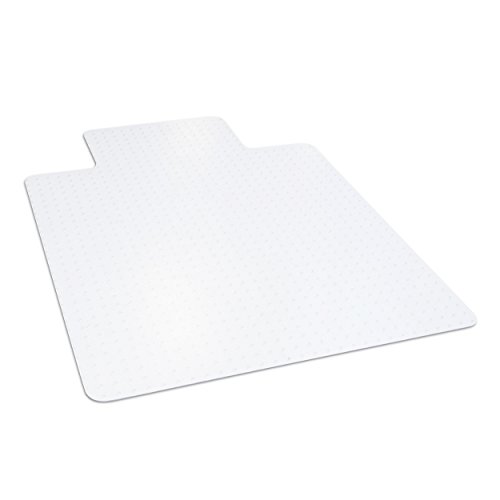
The OFM Office Chair Mat is a long-standing name in this unglamorous category, built around the idea that a mat should be chosen for the floor first and the chair second. OFM offers versions shaped for hard floors and for carpet, and that split is exactly the right way to shop: the smooth-backed hard-floor version protects wood and laminate while staying put, and the carpet version carries the gripper underside that keeps it anchored in the pile. The material feels firm under the casters, which is what you want, since a mat that flexes under each wheel is a mat working towards cracking.
Treat OFM as a dependable mid-tier staple rather than a design object. The edges, the clarity of the material and the unrolling behaviour are all competent rather than delightful, and a new mat may need a day or two of patience before it lies perfectly flat. For a home office that needs the floor protected and the chair rolling freely without drama, it is the sort of purchase you make once and then forget about, which is the highest praise a chair mat can earn.
Gorilla Grip Office Chair Mat
The Gorilla Grip Office Chair Mat leans on the brand’s grip-first reputation, and the underside is the story here: holding the floor is treated as the primary job, which is exactly right for hard floors where a wandering mat is both annoying and a trip risk. The surface gives casters an easy, quiet roll, and the mat reads as a practical, home-friendly option rather than office-furniture formality. As with every mat in this guide, choosing the correct version for your floor type matters more than the brand on the box.
Be honest about the limits of any grip-backed mat on carpet: without gripper teeth designed for pile, a smooth mat on deep carpet will creep and flex, and this line is at its best on hard surfaces and the lowest-pile coverings. Keep the underside clean, because dust film is the enemy of grip, and wipe it down whenever you lift the mat for a floor clean. For hard-floor home offices that have suffered a sliding mat before, this is a reassuring direction to shop.
Dimex Office Chair Mat
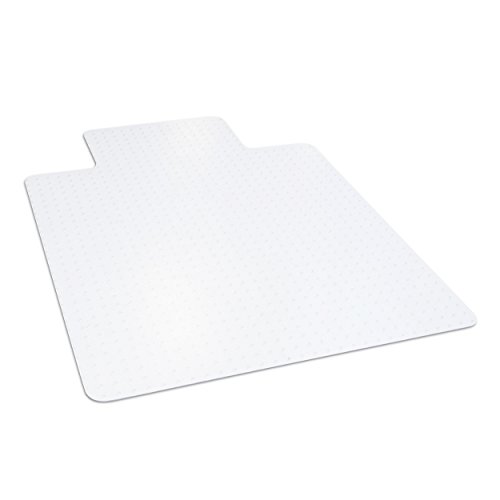
The Dimex Office Chair Mat represents the value end of the category done sensibly, from a maker whose background is in edging and floor products for offices. The mats are light, easy to position and easy to replace, and for low-pile carpet and hard floors in a home office they cover the core duties: casters roll, floors are shielded, and the work zone looks intentional. Dimex is a sensible entry-tier pick for a first home office, a student room or a temporary setup that still deserves better than bare floor.
The trade-offs of the tier are durability expectations and edge behaviour: a lighter mat asks to be matched carefully to its floor, checked for curl as the seasons change, and replaced sooner than a heavy premium mat under a heavy chair used all day. None of that is a failure; it is the honest arithmetic of a budget mat. Buy the right floor version, keep heavy point loads sensible, and it will do its quiet job well.
Performance in Real Use
Daily Rolling and Chair Control
Clear mats keep the floor visible, which suits rooms where the mat is a guest rather than a feature, while opaque mats hide wear and read as part of the furniture. Texture on the top surface is subtle but real: a light texture keeps the chair from feeling skittish, while a glass-smooth surface can feel almost too free. A good chair mat disappears into the day: the chair rolls where you push it, stops where you stop, and never asks you to tug a wheel out of a dent. Noise changes too, and a mat often quiets the rumble of casters on hard floors enough that downstairs neighbours notice the difference. On carpet, the mat’s real job is preventing the slow crater that forms under a chair, where compressed pile and caster dents make rolling harder every month. A bevelled or ramped edge is worth seeking out, since rolling on and off the mat happens dozens of times a day and a square edge fights you every time. In a shared or multi-purpose room, a mat also defines the work zone visually, which helps a desk corner feel like a place rather than a pile.
Clear mats keep the floor visible, which suits rooms where the mat is a guest rather than a feature, while opaque mats hide wear and read as part of the furniture. Texture on the top surface is subtle but real: a light texture keeps the chair from feeling skittish, while a glass-smooth surface can feel almost too free. A good chair mat disappears into the day: the chair rolls where you push it, stops where you stop, and never asks you to tug a wheel out of a dent. Noise changes too, and a mat often quiets the rumble of casters on hard floors enough that downstairs neighbours notice the difference. On carpet, the mat’s real job is preventing the slow crater that forms under a chair, where compressed pile and caster dents make rolling harder every month. A bevelled or ramped edge is worth seeking out, since rolling on and off the mat happens dozens of times a day and a square edge fights you every time. In a shared or multi-purpose room, a mat also defines the work zone visually, which helps a desk corner feel like a place rather than a pile. It is a small point on paper and a surprisingly large one across a full working week.
Floor Protection Over Months
Chair casters themselves play a part, since hard plastic wheels concentrate load and chew soft mats, while softer roller-style wheels spread the weight kindly. Hard floors such as wood, laminate, tile and vinyl want a smooth-backed mat that grips gently, protects the finish and stays flat without adhesive. Sliding is the other safety failure: a mat that creeps across the floor can carry the chair with it, so grip on the underside matters as much as glide on top. The single most important decision with an office chair mat is matching the mat to the floor under it, because a mat that suits one surface can fail quickly on another. A mat that curls at the edges is more than an annoyance, because a lifted edge under a rolling caster is a genuine trip and stumble hazard. Put a hard-floor mat on carpet and the casters’ point loads will crack it over time, starting with hairline fractures around the wheels you use most. Low-pile commercial carpet is forgiving and suits most carpet mats, while deep plush pile needs a mat genuinely rated for thick carpet or the chair will feel like it is rolling through sand.
Chair casters themselves play a part, since hard plastic wheels concentrate load and chew soft mats, while softer roller-style wheels spread the weight kindly. Hard floors such as wood, laminate, tile and vinyl want a smooth-backed mat that grips gently, protects the finish and stays flat without adhesive. Sliding is the other safety failure: a mat that creeps across the floor can carry the chair with it, so grip on the underside matters as much as glide on top. The single most important decision with an office chair mat is matching the mat to the floor under it, because a mat that suits one surface can fail quickly on another. A mat that curls at the edges is more than an annoyance, because a lifted edge under a rolling caster is a genuine trip and stumble hazard. Put a hard-floor mat on carpet and the casters’ point loads will crack it over time, starting with hairline fractures around the wheels you use most. Low-pile commercial carpet is forgiving and suits most carpet mats, while deep plush pile needs a mat genuinely rated for thick carpet or the chair will feel like it is rolling through sand. Carpet wants the opposite: a mat with gripper teeth on the underside sized for the pile, so the chair’s weight anchors the mat instead of skating it across the room.
Staying Flat and Staying Put
Hard floors such as wood, laminate, tile and vinyl want a smooth-backed mat that grips gently, protects the finish and stays flat without adhesive. Carpet wants the opposite: a mat with gripper teeth on the underside sized for the pile, so the chair’s weight anchors the mat instead of skating it across the room. Put a carpet mat with aggressive teeth on a hard floor and it can scratch the finish while still sliding, the worst of both worlds. Sliding is the other safety failure: a mat that creeps across the floor can carry the chair with it, so grip on the underside matters as much as glide on top. The single most important decision with an office chair mat is matching the mat to the floor under it, because a mat that suits one surface can fail quickly on another. Chair casters themselves play a part, since hard plastic wheels concentrate load and chew soft mats, while softer roller-style wheels spread the weight kindly. Measure the roll zone, not just the chair: you need coverage everywhere the casters travel during a normal day, including the push-back when you stand up. Put a hard-floor mat on carpet and the casters’ point loads will crack it over time, starting with hairline fractures around the wheels you use most.
Hard floors such as wood, laminate, tile and vinyl want a smooth-backed mat that grips gently, protects the finish and stays flat without adhesive. Carpet wants the opposite: a mat with gripper teeth on the underside sized for the pile, so the chair’s weight anchors the mat instead of skating it across the room. Put a carpet mat with aggressive teeth on a hard floor and it can scratch the finish while still sliding, the worst of both worlds. Sliding is the other safety failure: a mat that creeps across the floor can carry the chair with it, so grip on the underside matters as much as glide on top. The single most important decision with an office chair mat is matching the mat to the floor under it, because a mat that suits one surface can fail quickly on another. Chair casters themselves play a part, since hard plastic wheels concentrate load and chew soft mats, while softer roller-style wheels spread the weight kindly. Measure the roll zone, not just the chair: you need coverage everywhere the casters travel during a normal day, including the push-back when you stand up.
Strengths and Trade-Offs
- Strength: the category offers a correct answer for every common floor, from tile to deep carpet.
- Strength: even entry mats transform caster behaviour compared with bare carpet or boards.
- Strength: clear options preserve the look of a good floor while protecting it.
- Trade-off: review scores mean little across floor types; a mat praised on wood may fail on carpet.
- Trade-off: lighter mats trade longevity for price and easy handling.
- Trade-off: every mat needs unrolling patience and periodic underside cleaning to perform as reviewed.
In a shared or multi-purpose room, a mat also defines the work zone visually, which helps a desk corner feel like a place rather than a pile. Texture on the top surface is subtle but real: a light texture keeps the chair from feeling skittish, while a glass-smooth surface can feel almost too free. On hard floors, the job is protection first, because grit trapped under a caster works like sandpaper and leaves pale tracks across wood and laminate. Thickness is a balance: too thin and the mat flexes and cracks under point loads, too thick and its edge becomes a speed bump the chair has to climb. Clear mats keep the floor visible, which suits rooms where the mat is a guest rather than a feature, while opaque mats hide wear and read as part of the furniture. Noise changes too, and a mat often quiets the rumble of casters on hard floors enough that downstairs neighbours notice the difference. A bevelled or ramped edge is worth seeking out, since rolling on and off the mat happens dozens of times a day and a square edge fights you every time.
In a shared or multi-purpose room, a mat also defines the work zone visually, which helps a desk corner feel like a place rather than a pile. Texture on the top surface is subtle but real: a light texture keeps the chair from feeling skittish, while a glass-smooth surface can feel almost too free. On hard floors, the job is protection first, because grit trapped under a caster works like sandpaper and leaves pale tracks across wood and laminate. Thickness is a balance: too thin and the mat flexes and cracks under point loads, too thick and its edge becomes a speed bump the chair has to climb. Clear mats keep the floor visible, which suits rooms where the mat is a guest rather than a feature, while opaque mats hide wear and read as part of the furniture. Noise changes too, and a mat often quiets the rumble of casters on hard floors enough that downstairs neighbours notice the difference.
How the Picks Compare
Reading across these office chair mat reviews, the pattern is consistent: the differences that matter are underside design, firmness under casters and edge behaviour, and they only appear when each mat meets the floor it was built for. The qualitative summary below places the three picks in this guide.
| Pick | Character | Best suited to |
|---|---|---|
| OFM Office Chair Mat | Dependable all-rounder, mid tier | Buyers who want the correct version for their floor and no drama |
| Gorilla Grip Office Chair Mat | Grip-first design | Hard floors where mats have wandered before |
| Dimex Office Chair Mat | Light, entry tier | First setups, students and temporary offices |
A mat that curls at the edges is more than an annoyance, because a lifted edge under a rolling caster is a genuine trip and stumble hazard. Low-pile commercial carpet is forgiving and suits most carpet mats, while deep plush pile needs a mat genuinely rated for thick carpet or the chair will feel like it is rolling through sand. Chair casters themselves play a part, since hard plastic wheels concentrate load and chew soft mats, while softer roller-style wheels spread the weight kindly. Put a carpet mat with aggressive teeth on a hard floor and it can scratch the finish while still sliding, the worst of both worlds. Sliding is the other safety failure: a mat that creeps across the floor can carry the chair with it, so grip on the underside matters as much as glide on top. Measure the roll zone, not just the chair: you need coverage everywhere the casters travel during a normal day, including the push-back when you stand up. The single most important decision with an office chair mat is matching the mat to the floor under it, because a mat that suits one surface can fail quickly on another.
A mat that curls at the edges is more than an annoyance, because a lifted edge under a rolling caster is a genuine trip and stumble hazard. Low-pile commercial carpet is forgiving and suits most carpet mats, while deep plush pile needs a mat genuinely rated for thick carpet or the chair will feel like it is rolling through sand. Chair casters themselves play a part, since hard plastic wheels concentrate load and chew soft mats, while softer roller-style wheels spread the weight kindly. Put a carpet mat with aggressive teeth on a hard floor and it can scratch the finish while still sliding, the worst of both worlds. Sliding is the other safety failure: a mat that creeps across the floor can carry the chair with it, so grip on the underside matters as much as glide on top. Measure the roll zone, not just the chair: you need coverage everywhere the casters travel during a normal day, including the push-back when you stand up. The single most important decision with an office chair mat is matching the mat to the floor under it, because a mat that suits one surface can fail quickly on another. Hard floors such as wood, laminate, tile and vinyl want a smooth-backed mat that grips gently, protects the finish and stays flat without adhesive.
Who Should Buy and Who Should Skip
Chair casters themselves play a part, since hard plastic wheels concentrate load and chew soft mats, while softer roller-style wheels spread the weight kindly. Carpet wants the opposite: a mat with gripper teeth on the underside sized for the pile, so the chair’s weight anchors the mat instead of skating it across the room. The single most important decision with an office chair mat is matching the mat to the floor under it, because a mat that suits one surface can fail quickly on another. A mat that curls at the edges is more than an annoyance, because a lifted edge under a rolling caster is a genuine trip and stumble hazard. Hard floors such as wood, laminate, tile and vinyl want a smooth-backed mat that grips gently, protects the finish and stays flat without adhesive. Put a hard-floor mat on carpet and the casters’ point loads will crack it over time, starting with hairline fractures around the wheels you use most.
Measure the roll zone, not just the chair: you need coverage everywhere the casters travel during a normal day, including the push-back when you stand up. Low-pile commercial carpet is forgiving and suits most carpet mats, while deep plush pile needs a mat genuinely rated for thick carpet or the chair will feel like it is rolling through sand. Put a carpet mat with aggressive teeth on a hard floor and it can scratch the finish while still sliding, the worst of both worlds. Sliding is the other safety failure: a mat that creeps across the floor can carry the chair with it, so grip on the underside matters as much as glide on top.
Apply the same checklist to every review you read: floor type, pile depth, roll-zone size, caster style and edge design. A review written on a different floor from yours is entertainment, not evidence, and the most useful sentence in any chair mat review is the one that names the floor it was tested on.
Keep the things you touch hourly within easy reach and let the rarely used gear live further away, which keeps the working zone calm. Every desk setup decision is really a chain: the desk supports the gear, the gear sets the screen height, and the screen height decides where your hands and chair need to be. Work through changes one at a time and live with each for a day, because adjusting everything at once leaves you unable to tell what actually helped. Small setups benefit most from gear that folds, slides or stacks, because the desk has to return to being a table at the end of the day. Comfort at a desk is mostly about neutral, unstrained positions you can hold without thinking, not about any single perfect measurement. Light matters as much as furniture: a screen facing a bright window will fight glare no matter how good the stand or converter beneath it is.
Setup, Care and Maintenance Essentials
Most chair mat grime is ordinary household dust, skin oils and tracked-in grit, and it responds to patience and mild cleaning rather than harsh chemicals. Keep solvent cleaners, bleach and abrasive pads away unless the maker explicitly allows them, as they can cloud clear mats and embrittle the surface. Work in sections, rinsing the cloth often, because spreading grey water across the whole mat just moves the film around. Clean the chair casters while the mat is up, since hair and grit packed into the wheels will redeposit dirt onto your clean mat within days. Let the mat dry completely and flat before it goes back under the chair, since a damp underside can hold moisture against wood floors and encourage musty smells. Warm water with a small amount of mild dish soap is the workhorse solution for the common mat materials, applied with a soft cloth or a non-scratch sponge. A mat stored rolled for a long time may resist lying flat; resting it in a warm room with weight spread across the curled edges usually persuades it back.
Most chair mat grime is ordinary household dust, skin oils and tracked-in grit, and it responds to patience and mild cleaning rather than harsh chemicals. Keep solvent cleaners, bleach and abrasive pads away unless the maker explicitly allows them, as they can cloud clear mats and embrittle the surface. Work in sections, rinsing the cloth often, because spreading grey water across the whole mat just moves the film around. Clean the chair casters while the mat is up, since hair and grit packed into the wheels will redeposit dirt onto your clean mat within days. Let the mat dry completely and flat before it goes back under the chair, since a damp underside can hold moisture against wood floors and encourage musty smells. Warm water with a small amount of mild dish soap is the workhorse solution for the common mat materials, applied with a soft cloth or a non-scratch sponge. A mat stored rolled for a long time may resist lying flat; resting it in a warm room with weight spread across the curled edges usually persuades it back. Readers setting up in a shared room will feel this more than those with a dedicated office corner.
Most chair mat grime is ordinary household dust, skin oils and tracked-in grit, and it responds to patience and mild cleaning rather than harsh chemicals. Keep solvent cleaners, bleach and abrasive pads away unless the maker explicitly allows them, as they can cloud clear mats and embrittle the surface. Work in sections, rinsing the cloth often, because spreading grey water across the whole mat just moves the film around. Clean the chair casters while the mat is up, since hair and grit packed into the wheels will redeposit dirt onto your clean mat within days. Let the mat dry completely and flat before it goes back under the chair, since a damp underside can hold moisture against wood floors and encourage musty smells. Warm water with a small amount of mild dish soap is the workhorse solution for the common mat materials, applied with a soft cloth or a non-scratch sponge. A mat stored rolled for a long time may resist lying flat; resting it in a warm room with weight spread across the curled edges usually persuades it back. Never fold a rigid mat to move or store it, because a sharp crease can whiten or crack the material; roll it loosely or carry it flat.
A good chair mat disappears into the day: the chair rolls where you push it, stops where you stop, and never asks you to tug a wheel out of a dent. A bevelled or ramped edge is worth seeking out, since rolling on and off the mat happens dozens of times a day and a square edge fights you every time. Clear mats keep the floor visible, which suits rooms where the mat is a guest rather than a feature, while opaque mats hide wear and read as part of the furniture. In a shared or multi-purpose room, a mat also defines the work zone visually, which helps a desk corner feel like a place rather than a pile. On hard floors, the job is protection first, because grit trapped under a caster works like sandpaper and leaves pale tracks across wood and laminate. Texture on the top surface is subtle but real: a light texture keeps the chair from feeling skittish, while a glass-smooth surface can feel almost too free.
Final Verdict
Across the range, the winning mat is the one specified for your floor, sized for your roll zone and firm enough to shrug off your casters. The three picks here divide the sensible territory between them: a dependable staple, a grip specialist and an honest budget option. Match first, buy second, and the reviews converge on the same quiet conclusion — a good mat is the upgrade you stop noticing within a week.
Work in sections, rinsing the cloth often, because spreading grey water across the whole mat just moves the film around. Never fold a rigid mat to move or store it, because a sharp crease can whiten or crack the material; roll it loosely or carry it flat. Clean the chair casters while the mat is up, since hair and grit packed into the wheels will redeposit dirt onto your clean mat within days. Shake or vacuum the mat outside first, since loose grit dragged under a cloth will scratch the surface you are trying to save. Start every clean by rolling the chair away and lifting the mat out if you can, because cleaning around the casters leaves the dirtiest ring exactly where the wheels sit. A mat stored rolled for a long time may resist lying flat; resting it in a warm room with weight spread across the curled edges usually persuades it back.
Frequently Asked Questions
Why do chair mat reviews disagree so much?
Because the floor underneath is half the product. The same mat can be praised on laminate and condemned on carpet, and both reviewers are telling the truth about their own setup. Weight, caster type and pile depth vary just as much. The reliable way to read reviews is to filter for writers whose floor and chair resemble yours and to discount verdicts that never mention the surface at all.
Which pick is best for carpet?
Choose by pile, not by brand loyalty. Low-pile carpet suits most carpet-rated mats, including the carpet versions of the dependable all-rounders in this guide. Deep, plush pile needs a mat explicitly built for thick carpet, with gripper teeth long enough to anchor through it; a standard mat on deep pile flexes, creeps and eventually cracks under the casters.
Which pick is best for hardwood?
A smooth-backed hard-floor mat with genuine grip, kept clean underneath. The grip-first design in this guide is aimed squarely at that job, while the all-rounder’s hard-floor version is the quieter general choice. Whichever you pick, never use a carpet mat with gripper teeth on wood: the teeth can mark the finish while still failing to hold the mat still.
Are thicker mats always better?
No. Firmness matched to the floor matters more than raw thickness. A mat that is too soft lets casters sink and drag; one that is very thick raises an edge the chair must climb at every return. The right mat feels almost unremarkable under the wheels — easy to roll on, easy to stop on, and flat at the edges.
How long should a chair mat last?
A correctly matched mat in a home office should give years of service. Its enemies are the wrong floor pairing, grit ground in by dirty casters, curled edges left to be run over, and heavy point loads beyond its design. Wash it periodically, keep the underside clean, and replace it when cracks or permanent curl appear rather than after it fails under the chair.
Do clear mats stay clear?
Good ones stay presentable for a long time, though fine surface scratching from grit is inevitable and shows as a gentle haze in the traffic zone. Washing with mild soap and a soft cloth, never abrasive pads or solvents, keeps the haze minimal. If your floor is the feature of the room, a clear mat remains the right aesthetic choice despite the upkeep.