Disclosure: As an Amazon Associate, ilcastellomenu.com earns from qualifying purchases. Prices and availability change; check Amazon for the latest.
Where to buy
Shopping for the best computer case for ssds? Check the latest price, availability and delivery on Amazon. Orders are placed on Amazon.
- Fractal Design Node 804 — Best Overall for a Storage Build. Prose-only pick: a micro-ATX cube case designed around NAS and home-server storage, positioned in the value tier of its class; check current listings on Amazon.
- Fractal Design Define 7 — Best Full-Size Alternative. Prose-only pick: a full-tower PC case with extensive 2.5-inch and 3.5-inch mounting, positioned in the value tier of its class; check current listings on Amazon.
- Lian Li Lancool 216 — Best for Gaming-Plus-Storage. Prose-only pick: a mid-tower airflow case with flexible 2.5-inch mounting behind the motherboard tray, positioned in the value tier of its class; check current listings on Amazon.
- SilverStone CS381 — Best Hot-Swap DIY Case. Prose-only pick: a micro-ATX NAS case with hot-swap 3.5-inch bays and 2.5-inch support, positioned in the value tier of its class; check current listings on Amazon.
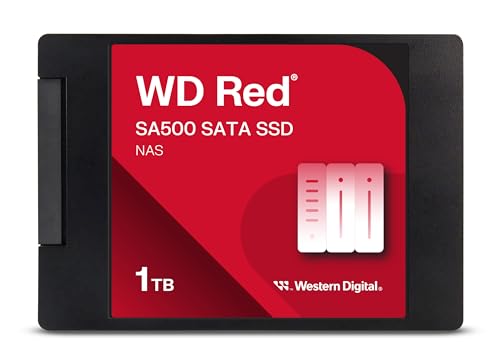
- WD Red SA500 1TB — Best Always-On Drive Pick. Check on Amazon
- WD Red SN700 1TB — Best NAS Cache Pick. Check on Amazon
Read the full guide ↓
Finding the best computer case for ssds is less about chasing the biggest number on a box and more about matching a drive to the machine, the workload and the budget in front of you. This guide does exactly that: six picks, each with a clear badge and an honest account of its strengths and trade-offs, followed by the buying knowledge and setup steps that decide whether the drive you buy performs the way the reviews promise.
Where the shorter keyword invites any drive-friendly case, this one is answered as a storage-computer brief: a machine whose case is chosen around its drives — a home server, a NAS replacement, a workstation with a real array. The picks therefore favour NAS-shaped and hot-swap chassis, paired with the always-on and cache drives from the verified pool that such a computer exists to house.
A storage computer is a system decision: case bays, a motherboard or HBA with enough ports, a NAS or server operating system, and networking fast enough to deserve SSDs. Decide the drive count and the redundancy plan first, then let the case follow — buying a big case first and inventing a use for its bays is the expensive order. All chassis here are prose-only picks; the linked drives are pool-verified.
In this guide
Quick Picks
| Badge | Pick | Why it stands out | Link |
|---|---|---|---|
| Best Overall for a Storage Build | Fractal Design Node 804 | The most complete answer to this lens, balancing speed, endurance and fit | Prose-only — see review |
| Best Full-Size Alternative | Fractal Design Define 7 | The pick most readers should land on once price tier and role are weighed | Prose-only — see review |
| Best for Gaming-Plus-Storage | Lian Li Lancool 216 | Chosen for a specific strength the others cannot match in this use case | Prose-only — see review |
| Best Hot-Swap DIY Case | SilverStone CS381 | The premium or specialist option, worth it when its one big advantage matters | Prose-only — see review |
| Best Always-On Drive Pick | WD Red SA500 1TB | The flexible alternative that solves the problem from a different angle | Check on Amazon |
| Best NAS Cache Pick | WD Red SN700 1TB | The deliberate final option — narrower, but exactly right for its reader | Check on Amazon |
How These Picks Were Chosen
Every product in this guide had to pass the same filter, applied in the order a careful buyer would apply it. First, fitness for this exact lens — best computer case for ssds is a specific brief, and drives that could not honestly serve it were excluded however decorated they are elsewhere. Second, verified identity: linked picks come from a pool whose product identities were cross-checked against Amazon’s own catalogue data, so the name on the review is the product on the listing. Third, evidence over marketing: specifications quoted in this guide are limited to what the manufacturer or listing actually states.
Interface honesty mattered: we rejected recommending drives whose speed the target machine’s ports or slots cannot deliver, and said so in the reviews.
Value was judged per role, not per gigabyte in the abstract — the best library drive and the best boot drive are different answers, and the badges reflect that.
Firmware maturity and brand support counted: storage is a five-year relationship, and update tooling, warranty handling and dashboard software are part of the product.
Anything with a fixed price printed in an article goes stale, so — as everywhere in this guide — prices are left to the live Amazon listing, and picks are ranked on merit within their tier.
Sequential speed was weighed, but never alone: a drive’s headline figure is measured in perfect conditions on an empty drive, so we gave equal weight to sustained behaviour once caches fill and drives warm up.
What was rejected matters too. Drives were dropped for this lens when their interface could not be used by the target machines, when their endurance class contradicted the workload, when a heatsink or form factor made fit a gamble, and when a product’s only argument was a headline speed the lens could never reach. The survivors are not the six fastest drives in the world; they are the six that make sense here — including, where the pool runs honestly thin, clearly-labelled prose-only alternatives that carry no affiliate link at all. You may also find How To Choose An Ssd and Nvme Vs Sata Ssd useful background before deciding.
The 6 Best Computer Case for SSDs
Fractal Design Node 804 (Best Overall for a Storage Build)
The Fractal Design Node 804 earns its badge — Best Overall for a Storage Build — by being the right shape of answer for this job. The Node 804 has been a default answer for home NAS builders for years because its whole layout is a storage argument: drives in their own cooled chamber, a motherboard chamber beside them, and room for a proper set of SATA devices without a server rack. In a shortlist built around best computer case for ssds, it is the pick whose compromises point away from what this lens cares about, and whose strengths land exactly on it.
This is a prose-only pick: it is recommended on its merits as a micro-ATX cube case designed around NAS and home-server storage, and it carries no affiliate link in this guide. Search the model name on Amazon to see current listings from reputable sellers.
Strengths
- Dual-chamber layout separates drives from the hot components, which suits 24/7 storage
- Hanging drive cages make dense SATA SSD and hard-drive sets practical in a small footprint
- A home-server favourite precisely because storage, not styling, drove the design
Trade-offs
- Cube shape does not suit every desk or rack shelf
- Cable management in a dense drive build takes patience
- Still a DIY case: you supply board, PSU and any controller yourself
Key specs
- Form factor class: micro-ATX cube
- Design target: NAS and home server builds
- Use class: multi-bay home storage case
The Node 804 has been a default answer for home NAS builders for years because its whole layout is a storage argument: drives in their own cooled chamber, a motherboard chamber beside them, and room for a proper set of SATA devices without a server rack. Filled with 2.5-inch SSDs on adapters or native mounts, it becomes a compact all-flash or hybrid home server.
The second-drive effect is worth planning for. Many buyers discover that the smartest storage layout is not one heroic drive but a partnership: something fast and modest for the operating system and current work, something capacious and cheaper for the library behind it. This guide’s mix of flagship, value and portable picks is designed to be combined that way, and the buying-guide section explains how to split your own budget across the partnership instead of spending it all on one badge.
Best for: DIY NAS and home-server builders who want many drives in a compact cube / Not suited for: Rackmount installs or full-ATX gaming builds
Fractal Design Define 7 (Best Full-Size Alternative)
The Fractal Design Define 7 earns its badge — Best Full-Size Alternative — by being the right shape of answer for this job. The Define 7 is the case builders reach for when the drive count outgrows a normal tower. In a shortlist built around best computer case for ssds, it is the pick whose compromises point away from what this lens cares about, and whose strengths land exactly on it.
This is a prose-only pick: it is recommended on its merits as a full-tower PC case with extensive 2.5-inch and 3.5-inch mounting, and it carries no affiliate link in this guide. Search the model name on Amazon to see current listings from reputable sellers.
Strengths
- Exceptionally generous drive mounting for a mainstream tower, including behind-tray 2.5-inch positions
- Sound-damped panels suit always-on storage machines in living spaces
- Modular interior reconfigures between airflow and storage layouts
Trade-offs
- Large and heavy; overkill for a single-NVMe gaming build
- Storage layout trades some GPU length and airflow, so plan the configuration before building
- No hot-swap backplane; drives are cabled individually
Key specs
- Form factor class: E-ATX / ATX full tower
- Drive support: multiple 2.5-inch and 3.5-inch mounts (verify exact count for revision)
- Use class: storage-heavy desktop and workstation case
The Define 7 is the case builders reach for when the drive count outgrows a normal tower. Its modular interior can be arranged around storage — trays and mounts for a stack of 2.5-inch SSDs plus larger bays — while the damping keeps an always-on machine civilised. For SSDs specifically, the behind-tray 2.5-inch mounts keep SATA drives tidy and out of the airflow path.
The second-drive effect is worth planning for. Many buyers discover that the smartest storage layout is not one heroic drive but a partnership: something fast and modest for the operating system and current work, something capacious and cheaper for the library behind it. This guide’s mix of flagship, value and portable picks is designed to be combined that way, and the buying-guide section explains how to split your own budget across the partnership instead of spending it all on one badge.
Best for: Builders housing many SATA SSDs and hard drives in one quiet tower / Not suited for: Compact desk builds or hot-swap server duty
Lian Li Lancool 216 (Best for Gaming-Plus-Storage)
The Lian Li Lancool 216 earns its badge — Best for Gaming-Plus-Storage — by being the right shape of answer for this job. Most modern builds hold their SSDs on the motherboard as M.2 sticks, and the case’s job becomes airflow and a tidy home for one or two SATA drives. In a shortlist built around best computer case for ssds, it is the pick whose compromises point away from what this lens cares about, and whose strengths land exactly on it.
This is a prose-only pick: it is recommended on its merits as a mid-tower airflow case with flexible 2.5-inch mounting behind the motherboard tray, and it carries no affiliate link in this guide. Search the model name on Amazon to see current listings from reputable sellers.
Strengths
- Airflow-first design keeps M.2 drives on the board cooler by feeding the whole case properly
- Behind-tray 2.5-inch mounts give SATA SSDs a clean home without using front bays
- Modern front I/O and cable routing suit mixed NVMe-plus-SATA layouts
Trade-offs
- Fewer total drive positions than storage-first towers
- Airflow focus means more fan noise than a damped case at full speed
- Large GPUs and radiators compete for the same interior space as drive cages
Key specs
- Form factor class: ATX mid tower
- Drive support: 2.5-inch mounts behind tray plus bay options (verify for revision)
- Use class: gaming and general desktop case with SSD room
Most modern builds hold their SSDs on the motherboard as M.2 sticks, and the case’s job becomes airflow and a tidy home for one or two SATA drives. The Lancool 216 does that job well: strong stock airflow that indirectly cools board-mounted NVMe drives, and sensible 2.5-inch mounting for the SATA library drive behind the tray.
There is a useful thought experiment before buying any drive on this page: picture the day it is ninety percent full. SSDs are not spinning disks; as they fill, their spare area shrinks, write behaviour changes and the easy speed of the empty-drive benchmarks disappears. Drives with stronger controllers and better NAND manage that crowded state gracefully. Planning capacity with that day in mind — buying the size that leaves you breathing room — is the single cheapest performance upgrade available, and it costs nothing but honesty at the buying stage.
Best for: Gaming and general builds mixing M.2 drives with a SATA SSD or two / Not suited for: Many-drive NAS-style builds
SilverStone CS381 (Best Hot-Swap DIY Case)
The SilverStone CS381 earns its badge — Best Hot-Swap DIY Case — by being the right shape of answer for this job. The CS381 answers the DIY version of the server question: a compact chassis whose front is a row of hot-swap bays, ready for a set of SATA drives, with internal room for 2.5-inch SSDs as boot or cache devices. In a shortlist built around best computer case for ssds, it is the pick whose compromises point away from what this lens cares about, and whose strengths land exactly on it.
This is a prose-only pick: it is recommended on its merits as a micro-ATX NAS case with hot-swap 3.5-inch bays and 2.5-inch support, and it carries no affiliate link in this guide. Search the model name on Amazon to see current listings from reputable sellers.
Strengths
- Hot-swap front bays in a compact DIY chassis — server behaviour without a rack
- Lockable front and storage-first layout suit a machine that holds real data
- Takes standard micro-ATX parts, so the build stays repairable and upgradeable
Trade-offs
- Premium case pricing before any drives or board are bought
- Cooling a fully populated chassis needs deliberate fan planning
- Compact interior makes a dense build fiddly for first-timers
Key specs
- Form factor class: micro-ATX NAS chassis
- Bay class: hot-swap front bays plus internal 2.5-inch positions
- Use class: DIY compact NAS and home server
The CS381 answers the DIY version of the server question: a compact chassis whose front is a row of hot-swap bays, ready for a set of SATA drives, with internal room for 2.5-inch SSDs as boot or cache devices. Paired with a small HBA and a NAS operating system, it is a genuinely server-shaped machine built from ordinary parts.
One underappreciated virtue in a storage drive is boring predictability. Firmware that behaves the same on the hundredth write as the first, a controller that does not surprise you with latency spikes, compatibility that never needs a forum thread — these are the qualities professionals quietly pay for. Several picks in this guide earned their places on exactly that basis: not the fastest on any single axis, but the ones least likely to become a story you tell about the day your storage let you down.
Best for: DIY home-server builders who want hot-swap bays in a compact chassis / Not suited for: Budget builds or turnkey-appliance buyers

WD Red SA500 1TB (Best Always-On Drive Pick)
The WD Red SA500 1TB earns its badge — Best Always-On Drive Pick — by being the right shape of answer for this job. The SA500 exists for the machines that never get switched off. In a shortlist built around best computer case for ssds, it is the pick whose compromises point away from what this lens cares about, and whose strengths land exactly on it.
See the current listing for the WD Red SA500 1TB on Amazon for live availability and delivery options.
Strengths
- Built and rated for always-on NAS duty, so its endurance and error handling suit drives that never sleep
- Ideal cache or boot volume inside a NAS where SATA bays are what the chassis offers
- Predictable sustained-write behaviour matters more in a RAID set than a short burst peak, and that is its design brief
Trade-offs
- You pay for NAS validation you may never use in an ordinary desktop
- Same SATA speed ceiling as any 2.5-inch drive; no help for single-drive throughput
- In a simple one-drive PC, a mainstream desktop SATA SSD usually makes more financial sense
Key specs
- Capacity: 1TB (this listing)
- Interface: SATA III 6 Gb/s, 2.5-inch/7mm (from API title)
- Sequential read: up to 560 MB/s (from API title)
- NAND: 3D TLC NAND (from API title)
- Design target: NAS and always-on workloads (WD Red family)
- Use class: NAS bays, always-on desktops, cache drives
The SA500 exists for the machines that never get switched off. Inside a NAS, a drive’s job is unglamorous: hold a cache, absorb logs and metadata writes, survive rebuilds, and do it for years. WD rates and tunes the Red line for that 24/7 pattern, with firmware behaviour aimed at arrays rather than benchmarks. For a home server, a small-business file box or a RAID set of SATA SSDs, that tuning is worth more than a few extra megabytes per second on a spec sheet. In a normal desktop it still works perfectly well — it is simply a specialist being used as a generalist, and the price usually reflects the specialism.
One underappreciated virtue in a storage drive is boring predictability. Firmware that behaves the same on the hundredth write as the first, a controller that does not surprise you with latency spikes, compatibility that never needs a forum thread — these are the qualities professionals quietly pay for. Several picks in this guide earned their places on exactly that basis: not the fastest on any single axis, but the ones least likely to become a story you tell about the day your storage let you down.
Best for: NAS owners and always-on home servers needing a 1TB SATA SSD rated for continuous duty and array use / Not suited for: Bargain hunters building a basic desktop, who get the same speed from cheaper mainstream SATA drives

WD Red SN700 1TB (Best NAS Cache Pick)
The WD Red SN700 1TB earns its badge — Best NAS Cache Pick — by being the right shape of answer for this job. NAS caching is one of the cruellest jobs in storage: the drive absorbs a constant drizzle of metadata, thumbnails, database writes and VM churn, forever. In a shortlist built around best computer case for ssds, it is the pick whose compromises point away from what this lens cares about, and whose strengths land exactly on it.
See the current listing for the WD Red SN700 1TB on Amazon for live availability and delivery options.
Strengths
- Purpose-built as NAS cache: endurance and firmware behaviour aimed at relentless small writes, day and night
- Gen3 interface matches the M.2 cache slots found in most NAS units, which rarely offer Gen4
- Far more durable under cache duty than a desktop gaming drive pressed into the same job
Trade-offs
- Gen3 speed looks dated on a gaming spec sheet, even though cache work rarely needs more
- NAS pricing buys endurance features a normal desktop user will never exercise
- Not a PS5 candidate and not a headline gaming drive; it is a specialist
Key specs
- Capacity: 1TB (this listing)
- Interface: Gen3 PCIe NVMe, M.2 2280 (from API title)
- Sequential read: up to 3,430 MB/s (from API title)
- Design target: NAS devices (from API title)
- Family: WD Red, tuned for always-on and caching workloads
- Use class: NAS NVMe cache bays, home servers
NAS caching is one of the cruellest jobs in storage: the drive absorbs a constant drizzle of metadata, thumbnails, database writes and VM churn, forever. Desktop drives die young in that role because their endurance ratings assume a few hours of mixed use a day. The SN700 is WD’s answer — a Red-family NVMe stick with the endurance and always-on tuning the job demands, in the Gen3 M.2 format that NAS cache bays actually use. In a home server or small-business NAS it quietly makes everything feel snappier: directory listings, photo libraries, Docker containers. Judge it on TBW and duty cycle, not on benchmark glamour.
Compatibility checks take ten minutes and save ten days. Slot generation, physical length, keying, heatsink clearance, BIOS support, the wattage and ports on the machine in question — none of it is exciting, and all of it decides whether the drive in the parcel is an upgrade or a return label. The per-lens compatibility notes in this guide cover the checks that matter for this specific use case; run through them before ordering, not after opening the box.
Best for: NAS and home-server owners adding an NVMe cache or always-on volume that must survive constant writes / Not suited for: Gamers and desktop builders, who get more speed per pound from mainstream Gen4 drives
Comparison Table
| Pick | Badge | Type | Interface | Capacity | Price |
|---|---|---|---|---|---|
| Fractal Design Node 804 | Best Overall for a Storage Build | Use class: multi-bay home storage case | Design target: NAS and home server builds | Form factor class: micro-ATX cube | Check price on Amazon |
| Fractal Design Define 7 | Best Full-Size Alternative | Use class: storage-heavy desktop and workstation case | Drive support: multiple 2.5-inch and 3.5-inch mounts (verify exact count for revision) | Form factor class: E-ATX / ATX full tower | Check price on Amazon |
| Lian Li Lancool 216 | Best for Gaming-Plus-Storage | Use class: gaming and general desktop case with SSD room | Drive support: 2.5-inch mounts behind tray plus bay options (verify for revision) | Form factor class: ATX mid tower | Check price on Amazon |
| SilverStone CS381 | Best Hot-Swap DIY Case | Use class: DIY compact NAS and home server | Bay class: hot-swap front bays plus internal 2.5-inch positions | Form factor class: micro-ATX NAS chassis | Check price on Amazon |
| WD Red SA500 1TB | Best Always-On Drive Pick | 2.5-inch 7mm | SATA III 6 Gb/s | 1TB | Check price on Amazon |
| WD Red SN700 1TB | Best NAS Cache Pick | M.2 2280 | NVMe PCIe Gen3 | 1TB | Check price on Amazon |
Read the table as a map of roles rather than a league table. The interface column tells you which machines each drive can serve at all; the type column tells you where it physically lives; and the badge column remains the fastest summary of why each drive is here. Background reading in Ssd Form Factors Explained and Dram Vs Dramless Ssd will make every row easier to judge.
How to Choose the Right SSD
A buying guide for best computer case for ssds has to start from the machine, not the market. The sections below take each deciding factor in turn — interface, fit, NAND and cache design, endurance, cooling and capacity — and translate it into the plain-language version you can apply to any drive, including ones that launch after this guide was written.
Capacity planning
Operating systems, applications and caches grow quietly, games and media libraries grow loudly. As a working rule, buy so that your expected library occupies no more than about seventy percent of the drive on day one. That headroom is not waste: it is the spare area the controller uses to keep the drive fast and healthy for years, and it postpones the day you are deleting something you love to install something new.
Interface first, because it sets the ceiling
SATA, NVMe over PCIe, and USB look similar in a product photo and behave nothing alike. SATA III tops out around 560 MB/s in the real world. NVMe drives speak directly to the CPU over PCIe lanes: Gen3 reaches roughly 3,500 MB/s, Gen4 roughly 7,400 MB/s, and each generation needs a slot wired for it. USB portables inherit the port’s ceiling — 10 Gbps on most machines, 20 Gbps on a lucky few. Decide which interfaces your machine genuinely offers before comparing any drives, because no drive outruns its connection.
Form factor and fit
M.2 2280 — 22 mm wide, 80 mm long — is the standard internal stick for desktops and most laptops; shorter 2230 and 2242 sizes serve compact devices, and 2.5-inch SATA drives serve bays and older machines. Check length, keying and heatsink clearance against your machine’s manual. On consoles the rules are published and strict. Ten minutes with a manual and a ruler is the cheapest insurance in this entire purchase.
NAND, DRAM and what they do to real work
TLC NAND is the mainstream sweet spot of endurance and price; QLC packs more bits per cell, costs less per terabyte and gives up sustained-write speed and rated endurance to do it — fine for read-heavy libraries, weaker for scratch duty. A DRAM cache helps a drive keep its map of where everything lives, which shows up as consistency under mixed loads; DRAM-less designs borrow system memory (HMB) and have closed much of the gap for everyday work, while still trailing under the heaviest sustained writes.
Endurance: read the TBW line
Terabytes written (TBW) is the drive’s warranted write lifetime, and it is the spec that separates roles. A few hundred terabytes is plenty for a gaming or office life. Four-figure TBW ratings belong to drives built for scratch disks, caches and always-on duty. Be honest about your writing life — most people wildly overestimate it — but if your work genuinely writes all day, endurance is not the place to economise.
Cooling is a performance feature
Every fast NVMe drive throttles when it overheats; the only question is whether your machine lets it get there. Motherboard M.2 shields, factory heatsinks and plain airflow all count as cooling. Consoles mandate a heatsink for expansion drives. Laptops usually cannot fit one, which is why efficient mid-tier drives often beat flagships in thin machines over long jobs. Buy the drive your cooling can feed.
Finally, match the tier to the job with clear eyes. A boot and applications drive rewards the flagship tier every single day. A library drive rewards capacity and value. A scratch, cache or always-on drive rewards endurance above all. Most disappointed SSD buyers did not buy a bad drive; they bought a good drive for the wrong one of those three jobs. The badges in this guide exist to keep that from happening here — and if your use case spans two jobs, Best Ssds For Pc and How To Check The Health Of An Ssd cover the wider picture.
How Do You Build a Storage Computer Around SSDs?
Setup decides whether a good drive performs like one. Work through these steps in order; they assume no special tools beyond a suitable screwdriver and the machine’s own manual, and they apply to whichever pick above you chose.
- Once running, check for a firmware update from the drive maker’s support tool, enable TRIM (it is on by default in modern systems), and confirm the drive is running at its expected link speed.
- Finish with a realistic test: copy a large folder, launch your heaviest application or game, and watch temperatures under a sustained load before you declare the upgrade done.
- Before touching hardware, back up anything on the machine you cannot replace, and note your current drive’s health with a SMART utility so you have a baseline to compare against.
- Confirm the exact parts: the drive, any heatsink or shield, the correct screw and standoff for the slot, and a screwdriver that fits — M.2 screws are small and unforgiving of the wrong bit.
- Power the machine fully down. For a console or laptop, unplug it and, where the design allows, hold the power button for a few seconds to drain residual charge.
- Ground yourself by touching a metal part of the chassis, then open the machine and locate the slot or bay using the manual’s diagram rather than guesswork.
- Fit the drive at a shallow angle (for M.2) until the connector seats fully, then lower it onto the standoff and secure the screw snugly — firm, never forced. For a 2.5-inch drive, connect data and power leads fully home.
- Apply or refit any heatsink, shield or thermal pad exactly as the manual describes; a pad left with its protective film on is a classic silent failure.
- Close the machine, boot into the BIOS or UEFI once to confirm the new drive is detected at its expected capacity, then boot the operating system.
- Initialise and format a brand-new secondary drive in the operating system’s disk management tool; for a new boot drive, install the operating system or clone the old drive with the maker’s migration software.
Troubleshooting quick list
- Problem: A console rejects the drive → fix: Recheck the published requirements — generation, speed class, physical size and heatsink — and let the console format the drive itself rather than pre-formatting it on a PC.
- Problem: The new drive does not appear at all → fix: Reseat it, confirm the slot supports NVMe rather than SATA-only (or the reverse), check the BIOS storage mode, and update the BIOS if the drive is newer than the board.
- Problem: The drive appears but at the wrong speed → fix: Check which slot it is in — secondary slots are often a generation slower or chipset-fed — and confirm the link width and generation in the maker’s dashboard tool.
- Problem: Speeds start fast and collapse on long copies → fix: That is cache exhaustion or thermal throttling: check heatsink contact and airflow first, then remember that value drives genuinely sustain less than flagships.
Two habits protect the work afterwards. Keep the drive’s firmware current with the maker’s own tool, checking a couple of times a year, and glance at its health figures at the same interval — How Long Do Ssds Last explains what the numbers mean. And keep the old drive, untouched, until the new setup has survived a fortnight of real use.
Real-World Notes Before You Buy
Thermals deserve a paragraph of their own because they quietly decide real performance. An NVMe drive is a small, hot computer in its own right, and inside a sealed console, a thin laptop or a case where the graphics card exhausts straight onto the M.2 slot, it will protect itself by slowing down. Heatsinks, motherboard shields and simple airflow are not accessories for enthusiasts; they are how a flagship drive stays a flagship drive twenty minutes into a heavy job instead of becoming an ordinary one.
One underappreciated virtue in a storage drive is boring predictability. Firmware that behaves the same on the hundredth write as the first, a controller that does not surprise you with latency spikes, compatibility that never needs a forum thread — these are the qualities professionals quietly pay for. Several picks in this guide earned their places on exactly that basis: not the fastest on any single axis, but the ones least likely to become a story you tell about the day your storage let you down.
Compatibility checks take ten minutes and save ten days. Slot generation, physical length, keying, heatsink clearance, BIOS support, the wattage and ports on the machine in question — none of it is exciting, and all of it decides whether the drive in the parcel is an upgrade or a return label. The per-lens compatibility notes in this guide cover the checks that matter for this specific use case; run through them before ordering, not after opening the box.
Real-world storage pain is rarely about peak speed. It is the progress bar that crawls during the last ten percent of a huge install, the timeline that stutters only when the cache fills, the laptop that throttles its drive because the chassis cannot shed heat. Every pick in this guide was weighed against those failure moments, because a drive that avoids them is worth more than a drive that wins a synthetic race by a nose and then fades when the work gets long.
Consider a concrete week in this drive’s life. Monday starts with a cold boot and a dozen applications autostarting; the drive that handles thousands of small reads without hesitation makes the machine feel awake instantly, while a lesser drive turns the same routine into a kettle-watching exercise. Midweek brings the heavy work — a large download, a patch, a library re-index — and by Friday the drive has absorbed the kind of mixed, unglamorous workload that spec sheets never model. Judging storage on that week, rather than on a single benchmark run, is how you end up with a drive you still like in year three.
There is a useful thought experiment before buying any drive on this page: picture the day it is ninety percent full. SSDs are not spinning disks; as they fill, their spare area shrinks, write behaviour changes and the easy speed of the empty-drive benchmarks disappears. Drives with stronger controllers and better NAND manage that crowded state gracefully. Planning capacity with that day in mind — buying the size that leaves you breathing room — is the single cheapest performance upgrade available, and it costs nothing but honesty at the buying stage.
Endurance ratings sound abstract until you translate them. A drive’s terabytes-written figure is its odometer limit for warranty purposes, and different lives consume it at wildly different rates: a games library might write a few terabytes a month, a video scratch drive can do that in a day, and a NAS cache never stops. Matching the drive’s rated endurance to your actual writing life is the difference between a drive that is retired on your schedule and one that retires itself on its own.
The second-drive effect is worth planning for. Many buyers discover that the smartest storage layout is not one heroic drive but a partnership: something fast and modest for the operating system and current work, something capacious and cheaper for the library behind it. This guide’s mix of flagship, value and portable picks is designed to be combined that way, and the buying-guide section explains how to split your own budget across the partnership instead of spending it all on one badge.
Common Mistakes
Trusting a marketplace bargain blindly. Counterfeit and mislabelled SSDs cluster at the too-cheap end of every marketplace. Buy from reputable storefronts and verify a new drive’s true capacity on day one.
Buying by headline speed alone. The biggest number on the box is a best-case figure on an empty drive. Buy for sustained behaviour, endurance and fit, and let the headline come last.
Filling the drive to the brim. SSDs need free space for wear levelling and cache. A drive kept above ninety percent full slows down and ages faster; leave a fifth empty as a rule.
Ignoring the slot or port generation. A Gen4 drive in a Gen3 slot, or a 20 Gbps portable on a 10 Gbps port, delivers the slower standard’s speed. Check the machine before blaming the drive.
Skipping the heatsink question. Flagship NVMe drives and PS5 expansion both assume real cooling. A missing heatsink is not a saving; it is a throttle scheduled for later.
Forgetting the backup because the drive feels reliable. SSDs fail less often than hard drives but more suddenly. Anything irreplaceable needs a second copy somewhere else, full stop.
Final Recommendation
If you read nothing else: for most people answering the question of best computer case for ssds, start with the Fractal Design Node 804 (Best Overall for a Storage Build) — it is the most complete fit for the brief. Choose the Fractal Design Define 7 (Best Full-Size Alternative) when its particular strength matches your machine or your budget more closely. The SilverStone CS381 (Best Hot-Swap DIY Case) is the deliberate upgrade path, and the WD Red SA500 1TB (Best Always-On Drive Pick) is the flexible alternative when the standard route does not fit your setup. Whichever you choose, run the compatibility checks in this guide first, keep a fifth of the drive empty, and back up anything irreplaceable — the drive is only ever one part of a storage system that works.
Storage is one of the few upgrades whose benefit you feel in the first minute and keep feeling for years. Choose for the machine and the workload you actually have, and any of the six picks above will repay the decision daily. For neighbouring questions, see Gen 4 Vs Gen 5 Ssd.
Frequently Asked Questions
Do SSDs need a special case?
No — SSDs need mounting points and, for M.2 drives, a motherboard slot rather than a bay at all. A ‘case for SSDs’ really means a case with enough 2.5-inch mounts or cages for the SATA drives you plan, plus airflow that keeps board-mounted M.2 drives cool.
How do I mount a 2.5-inch SSD with no spare bay?
Most cases hide mounts behind the motherboard tray or on the PSU shroud. Failing that, a 3.5-inch adapter bracket or a multi-bay cage solves it properly; avoid loose drives resting on cables, however tempting.
Does case airflow really affect SSD speed?
For M.2 NVMe drives, yes: they sit on the motherboard in the case’s airflow, and a hot case — especially one where the GPU exhausts over the M.2 slot — throttles them. SATA drives are far less sensitive.
Can one case hold both NVMe and SATA SSDs?
Almost every modern build does exactly that: M.2 sticks on the board for speed, 2.5-inch SATA drives on mounts for bulk. The case’s job is simply to provide the mounts and the cable room.
What matters more for many drives: bays or ports?
Ports, in the end. Bays hold drives, but each SATA drive also needs a data port and power; beyond the motherboard’s ports you need an HBA or controller, which belongs in the budget from the start.


