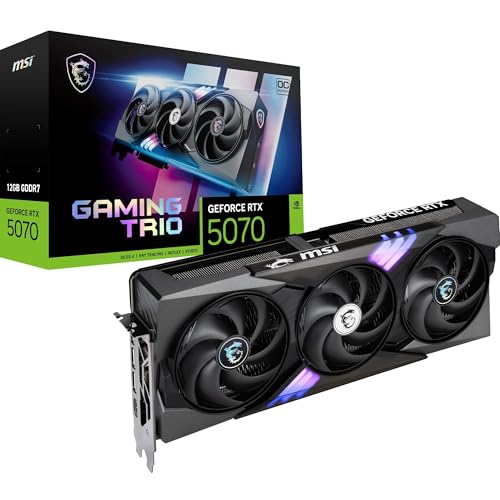
Disclosure: As an Amazon Associate, ilcastellomenu.com earns from qualifying purchases. Links on this page are affiliate links; they cost you nothing extra. Prices and availability change often, so check the current Amazon listing before you buy.
Every watt a graphics card consumes becomes heat, and the card’s TDP figure is the size of that promise. Gpu tdp cooling requirements is the discipline of matching the promise to the machinery that must keep it: the cooler on the card, the air in the case, and the exhaust that carries the heat out of the room’s smallest climate. Get the match right and the card is quiet, fast and long-lived. Get it wrong and you own the entire symptom catalogue of this series, throttling, fan roar, cooked memory and summer crashes, on hardware that was never faulty, merely mismatched. This guide explains what TDP does and does not measure, how much cooler a given TDP class honestly needs, how case airflow multiplies or divides the card cooler’s work, and the planning rules that keep a build’s thermals boring for its whole life. It is written for buyers choosing cards and cases together, and for owners wondering whether their case can survive the upgrade they are contemplating.
Gpu Tdp Cooling Requirements: What TDP Actually Promises
TDP, thermal design power, is the figure the card’s maker designs the cooling and power delivery around: the sustained heat output the cooler must shed, indefinitely, in a reasonable environment, while the card performs as specified. Three clarifications turn the number from trivia into a tool. First, TDP is a sustained figure, not a peak: real cards draw brief transients well above it, which the power supply must survive but the cooler can average away, because metal has thermal mass and a millisecond spike does not move it. Second, TDP is a design target, not a measurement of your card: the same processor ships at different TDPs in different models, set by the maker’s choices about clocks and power limits, which is why why cards slow down at their power limit is really a story about TDP being enforced. Third, the cooler’s job is defined against an assumed environment, a case that feeds it air at a reasonable temperature; the finest cooler ever bolted to a card cannot keep its promise in a sealed, pre-heated box, which is why this guide treats card and case as one system. The CPU world speaks the same language with its own dialects, compared in CPU TDP figures in the 65W and 105W classes, and builders fluent in one dialect should note the other is similar but not identical in its honesty.
In this guide
The Cooler Itself: Mass, Fins, Pipes and Fans
A card cooler is a heat-moving machine with four working parts, and each scales with TDP. The cold plate and heat pipes gather heat from the processor, the memory and the power stages; their number, diameter and contact quality decide how fast heat leaves the silicon. The fin stack is the radiator, and its area is the single best predictor of cooling capacity, which is why thickness, the subject of how thick a card is and what fits, tracks TDP so faithfully across the market. The fans move air through the fins, and their size and count decide how much noise that movement costs, since a large fan at low speed moves the air of a small fan screaming. The shroud and backplate are not decoration: they direct the air and, on many designs, carry heat from the board’s rear components. Judge any card’s cooler against its TDP with those four in mind and the market’s pattern becomes legible: modest-TDP cards wear slim two-fan coolers because they can, flagship-TDP cards wear triple-fan bricks because they must, and the occasional card that pairs a high TDP with a visibly slight cooler is making a promise its owners will spend fan noise keeping. The two great architectures for arranging all this are compared in axial and blower cooler designs compared, and their difference matters most exactly here, at the boundary between what the card sheds into the case and what it exhausts directly.
| Card class (indicative TDP band) | Typical cooler | Case airflow expectation |
| Entry and efficient mainstream | Single or dual fan, slim, often under two slots | Any honest case airflow suffices |
| Performance mainstream | Dual fan, two to two-and-a-half slots | At least one intake and one exhaust, unobstructed |
| High performance | Large dual or triple fan, two-and-a-half to three slots | Directed intake toward the card; exhaust that keeps pace |
| Flagship | Triple fan brick, three slots, heavy backplate | Planned airflow: strong intake, strong exhaust, room to breathe on every side |
Read the table as a matching exercise rather than a ranking. Its rows are all respectable machines when their expectations are met, and all miserable when they are not. The flagship row in a sealed designer case with one tired exhaust fan will throttle through every summer, while the entry row in the same case lives a blameless life, because the case, not the card, was the binding constraint all along.
The Case Is Half the Cooler
The card’s cooler does not shed heat into the abstract; it sheds heat into the case’s air, and the case must then shed that air into the room. Case airflow is therefore the card cooler’s power supply, and its failures are the commonest cause of the overheating story told in overheating symptoms and fixes. The requirements scale with total system heat, graphics card plus processor plus everything else, and they are about exchange, not merely movement: a case full of fans recirculating the same warm air in beautiful patterns is a convection oven with good lighting. What a high-TDP build needs is a path: cool air entering low and at the front, passing the card and the processor’s cooler, and leaving high and at the rear, with the total intake and exhaust capacity matched to the heat being generated along the way. Mesh fronts and honest vents beat solid glass for this work by margins that show up in every temperature reading, and the power-supply shroud, that tidy floor of the modern case, is part of the path’s design, either feeding the card from below or walling it off, depending on its vents. When you plan an upgrade to a higher-TDP card, audit the path with the new total in mind, and budget the fans or the case the path requires as part of the card’s true price, alongside the supply capacity that choosing a power supply for a high-end GPU insists on.
Memory and Power Stages: The Cooling TDP Forgets to Mention
The headline TDP describes the processor’s heat, but the cooler’s hardest jobs are often the supporting cast. The memory subsystem on fast cards generates serious heat of its own and is cooled, on many designs, through pads into a shared plate, as an afterthought to the processor’s cold plate; the failure mode when that afterthought is insufficient is the whole subject of memory junction overheating. The power stages, the components that convert the supply’s delivery into the processor’s precise voltages, run hot in proportion to the current they handle, and their cooling is the least visible and least reviewed part of any design. When you compare two cards of the same TDP, prefer the one whose reviews show the whole board’s temperatures, memory and power stages included, treated with respect. A cooler that wins the headline number while abandoning the supporting cast has not met the card’s cooling requirements; it has met its marketing requirements, and the difference arrives in year two, on a summer evening, in a game you have owned all along.
Planning Rules for a Build That Stays Boring
Distilled, the discipline is five rules. One: choose the card and the case in the same sitting, with the card’s TDP and dimensions open beside the case’s airflow and clearance pages. Two: give the cooler its air, a real gap in front of its fans and a case path that exchanges, not recirculates. Three: match the case’s exchange capacity to the system’s total heat, present and plausibly upgraded, because the next card will be hotter. Four: respect the supporting cast, favouring designs whose memory and power cooling review well. Five: verify in the first week, with a long session in a warm room, logging core and memory temperatures and clock behaviour, so that a mismatch is discovered while returns are easy rather than in the first summer, when it becomes a project. Boring thermals are not an accident that happens to lucky builders; they are a specification that disciplined builders write in advance.
Noise Is a Cooling Specification Too
Every cooling conversation that ignores noise is incomplete, because the cheapest way to cool anything is to move more air faster, and the bill arrives in decibels. The relationship is brutally nonlinear: the last few degrees of temperature are the most expensive in noise, which is why two cards of identical TDP can live at the same temperature with one whispering and one shouting, the difference being fin area and fan diameter bought in advance. When you plan a build’s cooling, plan its acoustic budget in the same sitting: where the machine lives, how far the listener sits, whether the room is shared, and what the fans will sound like at the equilibrium of a long session rather than in a thirty-second demonstration. A build cooled to silence at seventy-five degrees is better engineering than the same build cooled to noise at sixty-five, because the hardware’s limits are nowhere near either figure and the human’s limits are the ones actually being managed. This is also the honest frame for fan curves: a curve is a treaty between temperature and noise, renegotiated per household, and the stock curve is merely the manufacturer’s guess at your household. Treat noise as a first-class requirement and the rest of the cooling plan falls into its proper proportions.
The room itself is the final stage of every cooling system, a fact builds ignore until a summer in a small, sunlit office teaches it. A high-TDP system is a space heater of several hundred watts, and a room that cannot shed that heat raises its own temperature through a long session, raising the case’s intake temperature with it, in a slow feedback loop that no fan curve can outrun. Ventilation of the room, unglamorous as it sounds, is a legitimate line item in a flagship build’s cooling budget.
Transients, Thermal Mass and Why Coolers Are Heavy
The cooler’s weight, the property that drives the sag this series discusses elsewhere, is not vanity; it is thermal mass, and thermal mass is time. A heavy fin stack warms slowly, which smooths the card’s response to the workload’s spikes: the burst of heat from a menu opening or a scene change is absorbed by metal that barely notices, and the fans are spared the constant hunting that makes a light cooler sound nervous. Sustained load is the fin area’s examination, but transient behaviour is the mass’s, and a well-designed cooler passes both. This is the physical reason the brick era arrived with the high-TDP era, and it reframes the thickness conversation: the cooler is not big despite the card’s power but because of it, sized by engineers solving for equilibrium and calm at a specified wattage. When you handle a flagship card and marvel at its weight, you are holding its cooling requirements made literal.
Liquid Cooling and the Requirements It Rewrites
Liquid cooling does not repeal this guide; it relocates it. A water block collapses the card’s thickness and moves its heat into a loop, where the radiator becomes the fin stack and the case’s airflow must now serve the radiator instead of the card. The requirements reappear in new dress: radiator area scales with total loop heat exactly as fin area did, the room still receives every watt, and the memory and power stages still need their share of the block’s attention, with the same afterthought risk in miniature. The genuine gains are concentration and quiet: heat can be carried to the case’s best-ventilated surface and shed through large, slow fans. The genuine costs are complexity, maintenance and a new failure catalogue. For the mainstream builder, the air-cooled discipline in this guide remains the whole game; for the builder already committed to a loop, read every requirement here with “radiator” substituted for “fin stack” and the guidance survives translation intact.
A Cooling Audit for an Existing Machine
Owners contemplating an upgrade can audit their present machine in one evening and know, rather than guess, what it can absorb. Record a long gaming session’s core and memory temperatures, clock behaviour and fan speeds, with the room temperature noted. Repeat the session’s hardest stretch with the side panel removed and record again; the difference is your case’s current tax on the card, expressed in degrees. Then do the arithmetic of the upgrade: the new card’s TDP against the old one’s, scaled against your present temperatures and your case tax, gives a defensible forecast of the new equilibrium. If the forecast leaves the new card near its limit in your warmest room, the upgrade’s true shopping list includes airflow work or a case, and it is far better to learn that from an evening’s audit than from the new card’s first summer. File the audit with the machine’s records; it is the baseline every future thermal question will be asked against.
Reading a Cooler’s Specification Like an Engineer
Cooler specifications are written in a dialect that conceals as much as it states, and fluency is a buyer’s defence. Heat pipe counts are quoted without their diameters, though a fat pipe and a thin one are different instruments. Fin area, the figure that matters most, is almost never quoted at all, and must be inferred from the cooler’s dimensions and the density visible in photographs. Fan specifications quote maximum speeds and airflow in free air, conditions no installed cooler ever meets, since a fan blowing into a fin stack works against pressure and delivers a fraction of its free-air figure. Noise is quoted at distances and weightings that flatter. None of this is fraud; it is the ordinary language of a specification sheet, and the counterweight is the review literature, where the same cooler is measured installed, at equilibrium, in a case, with its noise recorded by instruments rather than adjectives. The engineer’s reading habit is to treat every sheet as a claim and every good review as the audit of that claim, and to buy on the audit. For graphics cards the same habit applies with the names changed, and the buyer who learns it once is equipped for every cooling purchase the hobby contains.
The Whole-System Heat Budget: A Worked Accounting
A build’s cooling requirement is the sum of its citizens’ heat, and writing the sum down is a five-minute exercise that prevents most mismatches. Begin with the graphics card at its TDP, the largest single figure in any gaming machine. Add the processor at its sustained draw in your workload, not its base figure, since a gaming processor under a game’s load and a rendering processor under a render live at different addresses on their own curves. Add a household allowance for the board, drives, memory and conversion losses in the supply, a figure that is small per item and real in total. The sum is the heat the case must export to the room, continuously, at the session’s plateau. Set it against the case’s demonstrated ability, which reviews measure in exactly these terms when they test with known loads. A case whose tested comfort ends below your sum is not a case your build can live in, whatever its other virtues, and a card upgrade that pushes the sum across the case’s line is secretly a case upgrade too. That is the whole of TDP cooling requirements at the system level: an honest sum, an honest capacity, and the refusal to let a purchase pretend the two have not met.
Altitude, Dust and Time: The Requirement Grows Old
A cooling system that meets its requirement on the day of the build meets a smaller requirement than the one it will face in year three, because the requirement grows. Dust taxes the fin stacks and filters in a slow percentage. Fan bearings age toward noise and, eventually, toward lower speeds at the same command. Thermal interfaces dry toward their replacements. The room itself may change, a machine moved to a smaller, warmer office. Prudent planning therefore buys margin against the requirement’s future, not merely its present: a cooler and a case that hold the card comfortably at its plateau with something in reserve, so that the slow taxes are paid from the reserve rather than from the card’s clock speeds. This is the same margin logic the power-supply guide applies to wattage, and it is not extravagance; it is the difference between a machine that ages in place and a machine that develops a summer personality in its third year. When you verify a new build’s thermals in its first week, record not just that the figures are good but how much room they leave, because that room is the machine’s maintenance budget, denominated in degrees.
The Manufacturer’s Side: Why TDP Figures Differ Between Makers
Two makers can print different TDP figures for silicon of similar appetite, and the buyer who understands why reads both more accurately. The figure is a design commitment, and makers make it with different philosophies: some define it as the sustained draw their reference configuration will hold in a defined workload, others as a ceiling the power system enforces, others as a thermal class for cooler designers to build against, and the workloads and environments behind those definitions are not standardised across the industry. The consequence is that TDP compares honestly within a maker’s range and approximately across makers, and the cross-maker comparison should be completed with measured draw and temperature reviews, where the same instruments touch both. None of this makes the figure useless; it makes it a dialect, and this guide’s system-level accounting, the honest sum of measured behaviours, is the translation. Buyers who learn the dialect stop being surprised that two equal-TDP cards live at different temperatures, because they never believed the figure promised the temperature in the first place.
Cooling the Room’s Other Citizens: Drives, Boards and Memory Under GPU Heat
A high-TDP graphics card heats more than itself, and a complete cooling plan accounts for its neighbours. Storage mounted near the card, particularly the fast drives that sit under it on many boards, lives in its exhaust and can reach its own throttling temperatures in a badly planned case, trading the card’s comfort for the drive’s. The board’s power stages work harder and hotter in a flagship build. Even system memory, tolerant as it is, keeps its best stability margins out of a furnace. The case airflow path in the main guide is therefore not only the card’s servant but the whole population’s, and its design should be audited with every citizen’s thermometer in the first week’s logging session, not the card’s alone. A build whose card is cool and whose drive throttles has not met its cooling requirements; it has met one of them, loudly, and ignored the rest. The system view is this series’ constant refrain, and TDP, the figure that starts as one component’s promise, ends as the whole machine’s climate policy.
TDP and the Second-Hand Flagship: Cooling a Card With a Past
The used flagship is TDP’s most practical examination, because the buyer inherits a thermal system whose biography is unknown and whose specification assumes a youth it no longer has. The card’s cooler arrives with its interface materials aged, its fins carrying another household’s dust in their depths, its fans’ bearings partway through their story, and its printed TDP entirely unchanged, which is the point: the figure describes the silicon’s appetite, not the cooler’s current ability to feed the case air. The wise buyer therefore budgets the restoration alongside the purchase, a deep clean, fresh interface material where the design allows, and a first week of temperature logging against the reviews recorded when the card was new. The gap between the card’s present behaviour and its youthful reviews is the restoration’s report card. Bought this way, the used flagship is the market’s best value in performance per unit of money; bought on its badge alone, it is a cooling project discovered at the worst possible moment, mid-game, in summer.
The One-Page Cooling Budget, Written for the Build
This guide’s method deserves its document, as its sibling guides’ methods received theirs. The cooling budget, one page per build, records: each major component’s rated draw and, where reviews provide it, its measured draw; the sum, and the supply’s honest capacity against it; the case’s fan population and their assigned directions; the card’s cooler class and its measured equilibrium in the standardised test; and the room’s summer temperature, the silent partner in every figure. Filed with the machine, the page answers the upgrade questions before they are asked, whether the next card’s appetite fits the case’s climate and the supply’s generosity, and it converts the next build’s planning from folklore into arithmetic. TDP began this guide as the most misunderstood number on the box; it ends it as a line in a budget the owner wrote themselves, which is where every specification in this series is trying to end up.
Cooling Requirements in the Rental and the Shared Machine
Machines that are shared, lent or operated by others place a special premium on this guide’s margins, because their cooling will be maintained by no one in particular and their environments controlled by whoever is nearest the thermostat. The shared machine’s specification should therefore be written for neglect: a card whose appetite sits comfortably inside the case’s unmaintained climate, filters that forgive a missed season, a fan configuration whose failure of any single citizen degrades the whole gracefully rather than critically. This is the engineering virtue called derating, practised by every industry whose machines must survive their users, and the home’s shared build deserves a measure of it. The private machine, maintained by its owner with this series’ rituals, can live closer to its edges; the shared one should be bought with its edges in reserve. TDP, read through this lens, is not only a cooling figure but a maintenance prophecy, and the wise buyer asks of every shared machine not whether it can be cooled, but whether it will be.
The Requirements, Restated as the Builder’s Creed
This guide can end by compressing its subject into the creed its readers can carry to the next build. The card’s number is a promise about heat, and heat is a property of the whole machine in its actual room. Count the appetite honestly, from measurements where they exist. Give the heat a road out that does not pass through another citizen’s lungs. Respect the difference between a peak and a climate. Verify in the first week, in the real workload, at the real hour, and write the figures down. And maintain the system on its calendar, because cooling is not a state but a practice. A builder who holds those five sentences holds the subject, whatever the next generation prints on its boxes, because the numbers will change and the heat will not. The creed is short enough to remember and complete enough to build by, which is what a guide owes its reader at the end: not the memory of having read it, but the ability to proceed without it.
Cooling the Machine You Lend: A Postscript on Margins
One population of machines deserves the guide’s last practical word: the ones built for other people, the child’s first rig, the parent’s upgrade, the friend’s long-promised build. Such machines will be maintained at the standard of their owners’ habits, not their builders’, and their cooling should be specified by the builder with that honest forecast in mind: appetite a class below the case’s ceiling, filters generous and obvious, fan configurations that degrade gracefully, and a one-page note in the machine’s papers giving its seasonal ritual in plain language. The builder’s generosity is measured in margins the recipient will never know they needed, which is the purest form of the craft this series teaches. A machine that runs cool for a decade in someone else’s house, unmaintained beyond the note’s simple calendar, is a better monument to its builder than any benchmark. Specify for the life the machine will actually live. That sentence, applied to cooling, is this guide in its entirety.
Reading a Cooler Review as a TDP Document
Cooler and card reviews are TDP documents in disguise, and reading them in that light extracts their real value. The figures that matter are the equilibrium temperatures at a stated room temperature, under a stated sustained load, at a stated fan behaviour, because those three statements together describe a thermal system’s honest capacity, while any one of them alone describes a performance staged for the chart. The reviewer’s case matters as much as the card: a flagship tested in an open bench or a wind-tunnel case is reporting a climate the buyer’s room does not contain, and the literate reader discounts accordingly, looking for the reviews that test in ordinary cases at ordinary speeds. Noise-normalised results, where the reviewer fixes the acoustic budget and reports the temperatures it buys, are the gold standard for this subject, because they price cooling in the currency owners actually spend. Read for equilibrium, for conditions, for noise, and the review stops being entertainment and becomes the build’s thermal prospectus, which is what this guide has been asking the reader to assemble from the first page.
The TDP of the Whole Desk: Monitors, Docks and the Room’s Total
A final widening of the lens, because the card’s heat is not the desk’s only heat and the room keeps the total. The monitors export their tens of watts apiece, the dock and the drives theirs, the machine under a heavy session several hundred, and the room’s temperature, the silent partner in every figure in this guide, is the sum’s prisoner. Owners of small, closed rooms learn this arithmetic bodily, in August, and their cooling plans correctly include the room itself: the door’s position, the window’s hour, the machine’s exile from the sun’s side of the desk. None of this is beneath a technical guide’s dignity, because the guide’s subject was never really a number on a box; it was the management of heat from silicon to sky, and the sky, in a small room, begins at the ceiling. Count the desk’s whole export when the summers grow serious, and the card’s own requirements will be met almost as a side effect of the room’s honesty.
The Requirements in the Machine’s Fifth Summer
A thermal system should be audited against its fifth summer, not its first spring, and the forward audit deserves a section of its own. By the fifth summer the interface materials have aged toward their honest conductivity, the fans have spent a fifth of their bearings’ story, the filters have survived or missed twenty seasons of the owner’s discipline, and the room, the house and the household’s habits have all had their say. A cooling plan that only just suffices in the first spring is a plan to fail in the fifth summer, which is why this guide’s margins are not waste but scheduling, the purchase in advance of the system’s own ageing. The audit’s practical form is a question asked at purchase: with every component a little worse and the room a little warmer, does the equilibrium still live inside the healthy bands. If the answer requires optimism, the plan wants another fan, a roomier case or a card class with appetite to spare. Machines do not stay new. Cooling plans that know it are the ones whose owners are still, in the fifth summer, playing through the heatwave with the overlay closed.
Heat, Summarised as a Household Budget
The creed from earlier in this guide can be joined, at the end, by its household translation, because heat is finally a domestic quantity. Every watt the machine draws becomes a watt the room must absorb, and the room’s ability to absorb it, its size, its ventilation, its season, is as much a specification as the case’s. The household that understands its thermal budget buys its machines the way it buys its heating, by the room’s capacity and the season’s demands, and it schedules its heaviest computing with the same unconscious wisdom it applies to the oven in August. This is not a metaphor stretched for an ending; it is the literal physics of the subject, from the transistor’s junction to the bedroom’s far wall, one continuous budget with many accountants. The guide’s work was to make the accountants visible to each other. The owner who sees the whole ledger, silicon, case and room in one view, will never again be surprised by heat, and surprise, as this series has maintained from its first page, is the only real enemy. The rest is arithmetic.
The Cooling File: The Build’s Thermal Constitution
The build’s papers close with the cooling file in its final form, gathering this guide’s budget into a constitution of five articles. Article one: the appetites, each component’s rated and measured draw, honestly summed. Article two: the roads, the case’s airflow path as designed, intake and exhaust named with their citizens. Article three: the evidence, the commissioning equilibria from the standardised test, core, memory and room together. Article four: the margins, the distance between the equilibria and the healthy bands’ edges, stated as the system’s reserve. Article five: the calendar, the seasonal rituals that keep the first four articles true. Filed once and amended at every change of citizen, the constitution converts cooling from a property the build happens to have into a settlement it deliberately maintains. Every guide in this series ends in a document for the same reason: machines outlive their builders’ memories, and the ones with constitutions are governed in their fifth year by the wisdom of their first. Write the articles. The summers will consult them.
The Cooling Constitution’s Amendment Process
A constitution that cannot be amended becomes a museum piece, and the cooling file deserves its amendment process stated plainly. Amendments are proposed by evidence: a new citizen with a new appetite, a room’s changed season, a measurement that contradicts the file’s articles. They are debated briefly, against the margins the constitution itself declares, because a change that spends the reserve must argue harder than one that does not. And they are ratified in writing, the file updated, the old article struck through rather than erased, so the build’s thermal history remains legible to its future auditors. The process sounds ceremonial and takes minutes, which is the correct proportion: ceremony is how households mark the decisions they intend to keep. What the process prevents is the constitution’s two failure modes, the file so rigid that the machine outgrows it in secret, and the file so casual that it records nothing but the latest mood. Between those failures lies the governed machine, amended in daylight, audited in summer, and cool in its fifth year for reasons its papers can explain. Govern the heat. The heat, governed, governs nothing else in return.
Standing Orders for the Cooled Household
The cooled household deserves standing orders in their final form, agreed at the first flagship build and applied to every successor. First, no card is purchased until its appetite has been counted into the whole machine’s budget, supply, case and room together, with the sum written rather than felt. Second, every new card is commissioned with the standardised test in its first week, equilibria recorded for core, memory and room, and filed against the reviews’ promise while the remedies are still cheap. Third, the airflow path is treated as architecture: designed once, amended in writing, and never silently revised by a cable, a drive or a well-meant extra fan. Fourth, the seasonal rituals are kept, filters, fins and the fifth-summer audit, because cooling is a practice with a calendar and not a state with a birthday. Fifth, margins are bought deliberately and defended in every upgrade argument, since the reserve is what the fifth summer will spend. Five orders, and heat, the machine’s oldest companion, is governed by the household’s most complete procedure, which is fitting: of all the subjects in this series, this is the one whose neglect is measured in the most currencies at once, degrees, decibels, frames and years.
The Heat Manifesto: Every Watt Has an Address
End with the manifesto the subject has earned, the single sentence its whole physics reduces to. Every watt has an address: it is generated at a junction, conducted through a plate, surrendered to a fin, carried by air along a road the builder designed, and delivered, finally, to a room that must absorb it at the rate the season allows. A cooling failure is always an address failure, a watt whose road was blocked, rationed or never built, and a cooling success is simply every watt in the machine arriving, on schedule, at the sky. The builder’s craft is addressing: counting the watts honestly, building their roads generously, verifying their journeys in the first week and maintaining the roads on the calendar. Nothing in the subject exceeds that sentence, and nothing in it can be removed. Generations will print their appetites in new units and cool them with new machinery, and the sentence will still be standing at the top of the subject, telling the next builder where every watt must go. Count them. Road them. Verify them. The heat will take care of the rest, because the heat, properly addressed, always does.
Standing Orders, Restated for the Fridge Door
The household that keeps its procedures visible deserves this guide’s orders in their shortest public form, the last of the thermal set. Count the appetite whole, card, processor, everything, against the supply and the case before purchase. Commission every card in its first week, equilibria filed. Treat the airflow path as architecture, amended in writing only. Keep the seasonal rituals, filters and fins and the fifth-summer census. Defend the margins in every upgrade argument, because the fifth summer will spend them. Five lines, and the machine’s climate is governed by the household’s most complete short document. The long version exists to earn the lines their authority, the standard’s dialects, the spike’s physics, the neighbours’ thermometers, the room’s final vote. The lines exist for the purchase day and the heatwave alike, the two moments when thermal decisions are actually made, one in a shop and one in a sweltering room with the fans at full voice. Print them. A household whose door carries the whole thermal library in shorthand is a household whose machines will be cool in their fifth summers for reasons their papers can explain.
A Last Exercise: Three Climates, Governed
Close the guide with the exercise that tests its whole teaching at once, the governing of three climates the reader is likely to meet. The first is the showpiece’s climate, glass on three sides and a flagship radiating inside it, whose governing is presentational physics: the roads built where the eye cannot follow them, the margins defended against every decorative instinct, the equilibrium proven in the room’s real summer rather than in the photograph’s spring. The second is the small room’s climate, the box room with the door that closes, whose governing is domestic arithmetic: the desk’s whole export counted, the session’s hours respected as a thermal budget, the machine’s appetite chosen a class below the room’s forgiveness. The third is the inherited climate, a used flagship in a case of unknown history, whose governing is restoration: the biography read from its temperatures, the interface renewed, the roads rebuilt, the baseline filed as the machine’s second birth certificate. Three climates, one physics: count the watts, road them, verify, maintain. A reader who can govern all three without reopening the guide owns the subject, and owns with it the thermal literacy that every other guide in this series leans on, because heat is the machine’s universal language and this guide, beneath its number, has been a phrasebook for it all along.
The Constitution’s Last Blank Article
A last article for the cooling constitution, left deliberately unwritten, offered as the guide’s farewell to the build it has spent its length governing. The blank article stands for the citizen not yet admitted, the appetite not yet published, the room not yet moved into, and it waits with the file’s whole authority behind its emptiness. Constitutions that expect their own amendment survive; the ones that pretend completeness are quietly abandoned at the first change they cannot describe. Leave the article blank. When the next flagship’s number is printed, in whatever units the next decade prefers, the household will not need a new philosophy, only a new entry, counted, roaded and verified in the space that was reserved for it in a calm week years before. That reservation, made in advance and in writing, is the deepest habit this library teaches, repeated now in every subject it owns: the future is coming to the machine, and the machine’s papers should have a page with its name on it. The watts will arrive. The article is waiting. Governed heat, like governed everything, is mostly a matter of having decided, beforehand, where things go.
Frequently Asked Questions
Can I put a high-TDP card in a small or quiet case?
Only if the case’s air exchange genuinely matches the heat, which most small or silence-first cases are not designed to do. The honest options are a lower-TDP card that suits the case, a case chosen for airflow, or liquid cooling where the build supports it. What does not work is the powerful card in the sealed box plus optimism; the physics collects its debt in throttling and noise.
Does a bigger cooler on the same card model matter?
Yes, within the same processor and TDP, the larger cooler typically buys lower temperatures, lower noise, or some of each, and often a slightly higher sustained power limit set by the maker. It is one of the few premiums in the card market that pays its owner every single session, in quiet.
How do I know if my case airflow is enough for an upgrade?
Run the open-panel test on your current system under a long load and note how much temperatures fall; a large fall says the case is already the constraint and a hotter card will suffer more. Then compare the new card’s TDP with the old: a modest step in a breathing case is safe, a large step into a case that already fails the test is a plan to buy a case as well.
Is TDP the same as how much power the card draws from the wall?
Not exactly. TDP is the sustained thermal design figure for the card’s own heat. Actual draw fluctuates around it, with transients above, and the wall draw includes the whole system and the supply’s own losses. Use TDP for cooling planning and the supply guide’s method for electrical planning; the two numbers are cousins, not twins.
Do I need to worry about TDP if I never overclock?
Yes, because TDP describes the stock card’s heat, and stock heat is what your case must shed every session. Overclocking raises the figure and the requirement together, but the planning in this guide is owed by the card as it ships, in the case as it sits.
Why do two cards with the same TDP run at different temperatures?
Because TDP sets the heat, not the outcome. Cooler size and quality, fan curves, the memory and power-stage cooling, and the case’s air all stand between the figure and the thermometer. That is why reviews of the specific model, in a realistic case, outrank the specification sheet for thermal questions.
The Bottom Line
TDP is a promise of heat, and cooling requirements are the promise’s price list: fin area on the card, exchanged air in the case, and respect for the memory and power stages that share the cooler. Match them deliberately, verify them in the first week, and the hottest component in your machine becomes the least interesting thing about it, which is exactly what good engineering feels like.