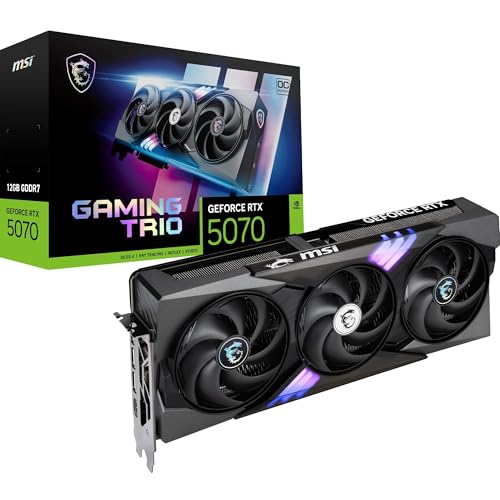
Disclosure: As an Amazon Associate, ilcastellomenu.com earns from qualifying purchases. Links on this page are affiliate links; they cost you nothing extra. Prices and availability change often, so check the current Amazon listing before you buy.
Your graphics card has a speed it advertises, a speed it reaches, and a speed it settles at, and the distance between those numbers is usually power. Gpu underclocking due to power is the quiet, constant negotiation every modern card conducts with its own power budget: when the budget is spent, the card lowers its clocks and voltage, gracefully, by design, and the owner experiences it as a frame rate a few percent below the reviews, or a benchmark that never quite repeats its first cold run. Nothing is broken, which is what makes this subject slippery: the same behaviour that is healthy engineering in one machine is the symptom of an undersized supply, a loose connector or a mis-set limit in another. This guide teaches you to tell the two apart. You will learn how the power limit works, how to read the evidence in monitoring software, which causes are configuration and which are hardware asking for help, and the legitimate levers, from undervolting to supply choice, that give a power-limited card its headroom back.
Gpu Underclocking Due To Power: The Budget Every Card Lives On
A modern graphics processor does not run at a fixed speed. It runs at whatever speed its several budgets allow, recalculated many times per second: a temperature budget, a current budget, and above all a power budget, the card’s power limit, derived from its TDP class and enforced by its firmware. Within the budget, the card boosts eagerly, raising clocks and voltage together because higher speeds demand higher voltage and power rises faster than performance. At the budget’s edge, the card trims: a step less voltage, a step less clock, and it settles at the fastest speed the watts allow. This is underclocking due to power in its healthy form, and it is universal: every card in every review is doing it, and the differences between models are largely differences in how generous their budgets and coolers are. The framework is laid out from the thermal side in how TDP sets a card power budget, and the processor world runs a recognisably similar system, described in CPU power limit throttling explained and how boost clocks work on CPUs; the graphics version is distinguished by how completely the power budget, rather than temperature, is usually the binding one.
The practical consequence is that a card’s clock speed is a reading, not a specification. Two owners of the same model will report different sustained clocks because their cases, rooms, power limits and silicon differ, and both are telling the truth. The number to watch is not the peak the card touches in a menu but the speed it holds in the tenth minute of a demanding game, and the gap between that and what reviews of the model achieve is the size of your machine’s power story.
In this guide
Reading the Evidence: PerfCap and the Power Percentage
Monitoring tools expose the negotiation if you know where to look. The headline figures are power draw as a percentage of the limit, and the clock and voltage curves across a session. A card riding at or near one hundred percent of its power limit while its temperature sits comfortably below its own limit is power-limited by definition: it has thermal headroom it is not allowed to spend. Many tools go further and report the performance-cap reason directly, a flag that names power, temperature or voltage reliability as the current constraint, and that flag is the single most informative pixel in this entire subject. Learn to log it through a session. A card whose cap reason says power from the first minute, in a cool case, has a configuration or supply story. A card whose cap flips to temperature as the session warms has a cooling story wearing power’s clothes, and its fix lives in overheating symptoms and fixes. A card whose clocks and power both sag in sudden steps, accompanied by instability, has left the territory of budgets entirely and entered the territory of delivery faults, where when a power connector works loose and the supply itself are the suspects.
The Causes, From Settings to Silicon
- The limit as shipped. The commonest cause is no cause at all: the maker set the budget where they set it, and the card obeys. Models with higher factory limits exist precisely because this is a product decision.
- A limit lowered by software. Tuning utilities, and occasionally a profile loaded at startup, can set the power limit below stock. Audit your own tools before suspecting hardware; the number of owners running a forgotten eighty-percent limit is not small.
- A negotiated ceiling from the cable. On cards fed by the modern high-power connector, the sense pins tell the card what the cable may carry, and a wrong or partial connection lowers the ceiling, one of the quiet mechanisms in the types of GPU power connector.
- An undersized or ageing supply. A supply that cannot hold its voltages under the card’s transients forces the card to live defensively. The fix is a supply matched to the card by the method in choosing a power supply for a high-end GPU.
- Heat in disguise. Memory or power-stage temperatures, which the headline sensor does not show, can pull clocks down through protections that present as power behaviour. Log every temperature the card offers.
- The workload itself. Some workloads, dense compute-style rendering, ray tracing at full tilt, draw power out of proportion to their frame rate and will pin any card at its limit. A card power-limited in one game and free in another may simply be reporting the menu honestly.
Work the list from the top, because it descends from free to expensive and from common to rare. The diagnostic habit that serves all of it is the comparison against the model’s known behaviour: reviews publish sustained clocks and power figures for your exact card, and your machine’s deviation from them, measured in the same workload, is the size of the thing you are hunting.
The Legitimate Levers: Getting Headroom Back
Four levers exist, and they are not equal. The first is undervolting, the connoisseur’s answer: because power rises faster than performance near the top of the voltage curve, trimming voltage lets the same budget buy more clock, so a well-tested undervolt can make a power-limited card faster, cooler and quieter simultaneously. It costs an evening of careful stability testing and it is the only lever that improves every variable at once. The second is raising the power limit itself, where the card and its cooling allow: most models permit a modest increase through their tuning software, flagship models more, and the increase is honest provided temperatures and the supply have the headroom, which the earlier sections exist to verify. The third is cooling, not because temperature is the cap but because a cooler card leaks less power at the same voltage, a small but real effect, and because raising the limit without cooling merely changes which budget binds first. The fourth is the supply, which is a lever only when the old one was genuinely failing to deliver; a healthy supply of adequate rating replaced by a larger healthy supply changes nothing, because the card’s limit is set by its own firmware, not by the size of the reservoir behind it. That last point is the most misunderstood in the subject, so it bears restating: a bigger power supply does not raise a card’s power limit. It ensures the limit the card already has can be spent safely.
When Power Behaviour Is a Warning, Not a Personality
Healthy power limiting is smooth, stable and boring: clocks settle, frame rates are consistent, and the machine can do it all day. The warning signs are the departures from smooth. Sudden clock collapses under load, especially with crashes or black screens, are delivery faults until proven innocent. A power reading that will not rise to the card’s known draw in any workload suggests a negotiated ceiling or a software limit holding the card down. Clocks that degrade across weeks at the same settings suggest a supply ageing out of its ability to hold the line. Each of these has a home in the companion guides, and none of them is fixed by raising limits or undervolting; tuning a fault only hides it at a higher speed. Diagnose the rude behaviours first, tune the polite ones after, and never confuse the two populations.
The Voltage-Frequency Curve: The Shape Underneath Everything
Every graphics processor lives on a curve that pairs each clock speed with the minimum voltage it needs to run there reliably. The curve rises gently through the efficient middle speeds and then steepens sharply at the top, because the last increments of frequency demand disproportionate voltage, and power follows voltage upward with enthusiasm. This single shape explains nearly every phenomenon in this guide. It explains why the factory power limit binds where it does: the card boosts up the curve until the watts run out, which happens on the steep part, where a small clock sacrifice refunds a large power saving, making power limiting a graceful degradation rather than a cliff. It explains why undervolting works its apparent magic: trimming voltage at a given clock moves the operating point under the curve’s price, so the same watts purchase a higher step. And it explains why the final factory overclock on premium models costs so much power for so little speed: those models are sold further up the steep section, where the exchange rate is at its worst. Owners who internalise the curve stop asking why their card will not simply go faster, because they can see the price list it is reading from, and they start tuning like economists instead of gamblers.
Silicon variation writes a personal copy of the curve into every individual card, which is why one owner’s undervolt is another owner’s crash and why all tuning advice must be re-earned on your own hardware. The curve also drifts with temperature, since hot silicon needs more voltage for the same speed, which is the physical thread connecting this guide’s subject to the cooling guides: a cooler card is, watt for watt, a slightly faster card, even when power is the budget that binds.
A Logging Session, Annotated: What a Healthy Power Story Looks Like
Run a demanding game for fifteen minutes with a monitoring overlay logging once a second, and a healthy card tells a tidy story. In the first minute, clocks peak as the cold card spends freely. Power percentage climbs to the high nineties and stays there, pinned at the budget, while temperature climbs its slower curve toward equilibrium. Clocks step down in small increments as the power limit asserts itself against the rising temperature’s voltage demands, then settle, and for the remaining minutes the three lines, clock, power, temperature, run nearly flat, with frame rate steady on top of them. The cap reason reads power throughout, with perhaps a flicker of temperature at the warmest moments. That flat, boring tail is the portrait of a system in balance, and any owner whose log looks like it should close the case and go back to playing. The pathologies are all departures from the portrait: a clock line that saw-tooths wildly suggests a limit oscillating against an unstable delivery; a power line that plateaus far below the limit while clocks disappoint suggests a ceiling negotiated somewhere in cabling or software; a temperature line that never flattens suggests a case still heat-soaking at the session’s end. Learn the healthy portrait once and you can read any machine’s power story at a glance thereafter, which is the real skill this guide exists to transfer.
Power Limits Across a Card’s Life and Across the Market
The limit a card ships with is a positioning decision as much as an engineering one, and reading it tells you where the maker placed the model. Two cards on the same processor may differ mainly in their budgets: the premium model granted more watts, a bigger cooler to spend them in, and a price for both. This is why the same silicon can review at measurably different speeds in different wrappers, and why the power limit belongs on the shortlist of specifications a buyer compares, alongside the cooler’s size, since the two are a matched pair. Across a card’s life, the effective limit does not change, but the machine’s ability to live at it does: dust raises temperatures, temperatures raise voltage demands, and a card that once settled at one clock settles a step lower in its third summer, reporting through its clocks the maintenance it is owed. Owners who log a baseline when the card is new own the comparison that makes this visible early, while it is still a cleaning job rather than a mystery.
The Ethics and Warranty of Tuning, Briefly
A short, necessary note on the levers’ standing. Raising a power limit within the range the manufacturer’s own software offers, and undervolting through the same tools, are ordinary owner tuning, reversible in seconds and far inside the hardware’s design envelope; they are the levers this guide recommends without anxiety. The territory beyond, modified firmware with limits the maker never offered, is a different country, where warranties end and the card’s protections may be edited by the same hand that needs them. Nothing in a home gaming machine requires that country. The performance it offers is the steepest, most expensive part of the curve, and the risks are borne entirely by the owner. Tune within the fences, log what you did, and keep the ability to return to stock in one click; that discipline is what separates the tuner from the cautionary tale.
Power Limit, Temperature Limit, Voltage Limit: Telling the Three Governors Apart
The card’s behaviour is governed by three limits that take turns, and most owner confusion comes from attributing one governor’s work to another. The power governor, this guide’s subject, binds when the wattage budget is spent, and its signature is a card at its power percentage ceiling with temperatures in hand. The temperature governor binds when the silicon reaches its thermal limit, and its signature is the reverse: power percentage below its ceiling, temperature at its cap, clocks falling as the room warms. The voltage governor is the subtlest, a reliability ceiling on the voltage the card may request, which binds at the top of the boost curve in cool, well-fed cards and explains why some machines will not hold their highest step regardless of power or temperature generosity. The diagnostic value of separating them is that each has its own remedy and its own non-remedies: raising the power limit does nothing for a temperature-governed card except arrive at its real governor sooner, and adding cooling does nothing for a power-governed card except make it a colder prisoner of the same budget. The monitoring flag that names the current governor, described in the main guide, exists precisely to prevent those wasted remedies, and learning to read it is the difference between tuning and superstition.
A Practical Undervolting Session, Narrated
Because undervolting is this guide’s favoured lever, it deserves a narration rather than a slogan. Begin by logging the stock behaviour in your most demanding game: the clock the card settles at, the voltage it holds there, the power it draws and the temperature it reaches, across a full heat-soaked session. That log is the baseline the undervolt must beat and the evidence it will be judged by. Then, in the tuning tool’s curve editor, choose a target: the stock settled clock, held at a voltage a step or two below the stock figure for that clock, applied as a flattened curve beyond that point so the card cannot wander back up the expensive part of its range. Test in the same game, in the same scenes, watching first for stability, then for the new settled figures. The expected result, when the silicon cooperates, is the same clock at less power and less temperature, or, where the power limit was binding, a higher settled clock at the same power, which is the same victory read from the other side. If instability appears, a crash, a driver reset, visual errors, retreat one voltage step and test again; the curve is a negotiation with your individual chip, and its final terms are private. Record the finished curve and keep the stock profile saved, because the ability to return in one click is what makes the whole exercise a tuning session rather than a commitment.
The Resale and Warranty Footnote to Power Tuning
Owners who tune should know how their tuning reads to the two audiences who will later judge the card. To a warranty assessor, software tuning within the manufacturer’s own tools, power limits inside the offered range and voltage curves set in the driver’s editor, is ordinary use, reversible and undetectable in any way that matters, provided the card is returned to stock before it is returned at all. To a second-hand buyer, a card’s tuning history is unknowable and therefore worth nothing in either direction, which is why the used market judges cards by their stock behaviour in a test session rather than by sellers’ tuning stories. The practical residue for the tuner is hygiene: keep the stock profile, restore it before any claim or sale, and never let a tuning experiment, however successful, be the configuration in which the card meets a stranger. Power tuning is a private arrangement between you and your silicon, and it should leave no forwarding address.
Seasonal and Situational Power Behaviour: Summer Clocks and Small Cases
Power behaviour has a calendar and a geography, like every other thermal story in this series. In summer, a card whose governor was power in spring can become a card whose governor is temperature by August, because the rising room temperature raises the voltage its silicon needs and the heat its cooler must shed, until the thermal budget binds first and the power percentage falls below its ceiling for the first time in months. Owners who log seasonally watch the governorship change hands and are not confused by it. In small cases the same handover is architectural rather than seasonal: the card lives in pre-warmed air permanently, and its tuning should be done in that reality, with the undervolt valued doubly because it spends less of both budgets at once. The general lesson is that a card’s power story is a property of a system in a place, and any tuning performed in a cool room on an open bench must be re-verified in the machine’s actual home and season before it is called finished.
The Multi-Card and Compute Corner: Power as a Shared Budget
In machines with two cards, and in compute service where a card runs at its ceiling for days, power stops being a per-card personality and becomes the machine’s central budget, with the supply, the circuit it plugs into and the room’s cooling all enrolled. Cards in such service are commonly run at deliberately reduced power limits, not as a concession but as an optimisation: the steep top of the voltage-frequency curve means the last increment of power buys the least performance, so a fleet run a step below its ceiling delivers nearly the same work for markedly less electricity, heat and noise. That professional practice is the strongest available testimony for this guide’s central claim, that the power limit is a dial with an economics, not a defect with a cure. The home tuner who lowers a limit to fit a small case or a quiet room is using the same dial for the same reason, and should do so without the guilt the word underclocking sometimes carries. The card is not being cheated; it is being managed, which is what its designers built the dial for.
The Governor’s Report as a Purchase Document
Everything this guide teaches about reading a card’s governor doubles as the sharpest available instrument for evaluating a card before purchase, and buyers should use it on the evidence reviews provide. A review that logs clocks, limits and the governor’s reason across its test suite is reporting the card’s character: how much of its advertised boost survives contact with its own power budget, in its own cooler, at its maker’s chosen limit. Two cards with identical paper clocks can have entirely different characters, one holding its boost like a promise and the other visiting it like a tourist, and the governor’s report is where the difference is written. The buyer who reads for character rather than for peaks will choose the honest card, and will also know, before the card arrives, whether their case and supply suit its appetite. Reviewers who publish the logs are this market’s auditors; readers who learn to read them stop needing anyone’s summary, including this guide’s.
Power Behaviour Across a Card’s Lifetime
Close with the long view, because a card’s power behaviour is not fixed at purchase but drifts with its biography, and the drift is legible to the owner who logs. Ageing interface material raises temperatures, which raises the voltage the silicon needs, which brings the power governor into play in workloads that once ran beneath it; a card can therefore become more power-limited across its life without anything being broken, the budgets simply renegotiating around aged materials. The restoration that the thermal guides prescribe resets the negotiation. Dust writes the same story in the case’s dialect. Even the supply participates, its own ageing narrowing the delivery the card can draw on. The owner who keeps the occasional log, the same standardised session each season, watches these drifts as trends with causes, and intervenes at the maintenance rungs while they are cheap. The governor, read across years, is the card’s diary; this guide’s final advice is simply to keep reading it.
The Governor and the Game’s Own Settings: A Negotiation
A power-limited card negotiates with the game’s settings menu in ways the owner can exploit deliberately, because not all settings cost power equally. The heavy citizens of the power budget are the ones that multiply the silicon’s work per frame, resolution first of all, then the effects that shade every pixel with expensive arithmetic; the light citizens, many of the visibility and interface settings a competitive player cares about, cost almost nothing in watts. A card living at its power ceiling should therefore be tuned with the budget in mind: spend the watts on the settings that win rounds or sell the scene’s beauty, and reclaim them from the settings whose cost is high and whose contribution is a screenshot’s. Upscaling belongs in this negotiation as the exchange rate itself, trading rendering watts for display pixels at a rate the owner should set by the moving image’s evidence. The frame-time log referees the negotiation as always. Owners who tune this way discover that a power limit, properly negotiated with, costs far less performance than its reputation, because the watts were never all buying the same amount of game.
Power Behaviour as the Card’s Confession: A Diagnostic Summary
Gather the guide’s diagnostic threads into the summary its readers can act on. A card whose clocks fall while its power percentage pins at the ceiling is confessing its governor, and the confession is health, not illness. A card whose clocks fall with power and temperature both innocent is pointing at the delivery, the supply and its connections, or at a software hand on the limit, and the audit moves there. A card whose power draw itself sags under load, with the machine’s stability sagging beside it, is indicting the supply’s honesty. A card whose behaviour changed across a season is reporting its materials’ age or its case’s climate. Each pattern is a sentence in a language of four variables, clock, power, temperature and the governor’s stated reason, and the owner who logs those four owns the language. That is the whole ambition of this guide: not to make the card faster, but to make its behaviour legible, because a legible machine can be tuned, trusted and, when its day comes, replaced for the right reasons.
The Governor’s Testimony in the Buying Week
One more application of the governor’s literacy deserves its place, in the first week of a new card’s life, when its character can still be returned with the box. The new card should be introduced to the standardised session and its four variables logged, clock, power, temperature and the governor’s reason, against the expectations the reviews set for it. A card that lives at its power ceiling in the owner’s case while its reviewed twin breathed freely is reporting the case’s climate or the supply’s delivery, and the week to discover that is the first one, while every remedy, including the remedy of choosing a different card, is still cheap. A card whose governor’s testimony matches its reviews has been verified in the only laboratory that matters, and its biography can begin. The ritual takes one session and four numbers, and it is the power system’s equivalent of the temperature baseline this series prescribes for every new machine. Begin every card’s life with its testimony on file, and no later behaviour will ever be a mystery without a reference.
The Dial, Handed On: Teaching Power Literacy
The last service a guide can perform is to make its subject teachable, and the power dial’s lesson fits in one demonstration that any owner can give the next builder in five minutes. Open the overlay in a demanding scene; show the four numbers holding their pattern; lower the limit by a deliberate step and let the room watch the clocks, the temperatures and the fan’s voice renegotiate in real time, while the frame times, the only witnesses that matter, barely stir. Then restore the limit and explain what was just demonstrated: that the card’s speed is a policy, that the policy has an economics, and that the owner, not the marketing, is entitled to set it. A builder who has seen the dial move once will never again read a clock figure innocently, which is the precise definition of literacy in this subject. Teach it at the next build you attend, the way the slot count is taught with the hands in the neighbouring guide. The series’ knowledge compounds socially or not at all.
Power Literacy in the Age of the Efficient Flagship
The industry’s direction gives this guide’s subject a future worth a closing forecast. Each generation promises performance per watt as its headline virtue, which is the governor’s economics promoted to the product’s identity, and the flagship’s appetite, long assumed to grow forever, has begun to be marketed as a discipline rather than as a boast. The consequences for owners are pleasant and specific: cards whose stock behaviour already lives near the curve’s efficient country, limits that bind less theatrically, and a tuning culture shifting from rescue to refinement. The literacy this guide teaches appreciates in exactly that world, because efficiency claims are governor claims, and reading them requires precisely the four variables and the frame-time referee the reader now owns. Marketing will continue to print the peak; the log will continue to report the policy; and the distance between the two, which this guide exists to close, will be the educated buyer’s permanent advantage. The dial is becoming the product. Learn to read it, and the next decade of cards arrives pre-translated.
The Governor’s Oath: A Closing Statement of Method
End with the oath the subject deserves, in the series’ manner. I will read the governor’s testimony before I indict the silicon. I will change one variable and let the log judge it. I will treat the limit as a policy I am entitled to set, neither as a defect to mourn nor as a dare to defeat. I will remember that watts buy frames at a rate that worsens at the top of the curve, and spend accordingly. And I will file the card’s testimony in its first week, so that its fifth year can be compared against evidence rather than against nostalgia. Five clauses, one for each finger of the hand that reaches for the slider. The reader who keeps them owns the subject entire, because the subject was never the card’s behaviour; it was the owner’s. Cards will boost and govern under whatever names the next generation gives their policies. The oath will still be standing at the top of the ladder, telling the hand where to go first.
The Power File: The Governor’s Testimony, Filed
The card’s papers should include the power file, and its contents are the governor’s biography in five entries. The commissioning testimony, the four variables from the standardised session in the first week. The chosen policy, the limit and any undervolt as set, with the measurements that justified them. The seasonal entries, one line each, noting any change in the governorship between power and temperature as the machine and the room age together. The supply’s identity and the power path’s census reference, since the governor’s testimony is partly the delivery’s. And the verdict for the successor, what this card’s behaviour taught about the appetite the next card should bring into this case and this supply. Five entries, and power behaviour becomes a managed quantity with a history, instead of a series of surprises separated by forums. When the card is replaced, the file is its reference letter to its successor’s tuning session, and the new card’s first week begins from evidence. File the testimony. Governors change; the habit of reading them should not.
The Governor in the Fifth Year: A Reunion
Return, in the card’s fifth year, to the testimony of its first week, because the comparison is the power file’s whole purpose and its most instructive page. Run the standardised session and set the four variables beside their younger selves. The governorship may have changed hands, power yielding to temperature as the materials aged, or the clocks may sit a step lower at the same testimony, the silicon’s honest ageing written in its voltage requests. Neither finding is an alarm; both are the biography this series teaches its readers to keep, and each has its appointed response, the interface renewal for the thermal drift, the policy’s adjustment for the electrical one, or the calm verdict that the card, at five years, is performing its age with dignity and owes its owner nothing. What the reunion prevents is the fifth year’s characteristic error, judging an old card by a young card’s review and indicting it for the crime of having lived. Cards age. Files remember. Owners who keep both in view make the replacement decision, when it comes, from evidence rather than from embarrassment, which is the governor’s final gift to the hand that learned to read it.
Standing Orders for the Power Household
The power household deserves standing orders in their final form, agreed at the first governed card and applied to every successor. First, every new card’s testimony is taken in its commissioning week, four variables in the standardised session, and filed before the card is called settled. Second, the policy is set deliberately, limit and curve chosen against the case, the supply and the room, and recorded with the measurements that justified them, so the setting is a decision rather than an accident of defaults. Third, one variable changes at a time, and the frame-time log, not the clock readout, delivers the verdict, because frames are what the watts were buying. Fourth, the seasonal reunion is kept, the testimony re-taken against its younger self, and drift is answered at the maintenance rungs before it is answered at the shop. Fifth, the file travels with the card, policy and testimony together, so the next owner inherits a governed machine rather than a mysterious one. Five orders, and the dial that marketing treats as a footnote becomes the household’s most deliberately managed setting, which is correct, since it governs the machine’s heat, voice and appetite in a single number.
The Dial’s Manifesto: Sovereignty Over the Curve
End with the manifesto the subject has earned. A graphics card’s boost curve is a manufacturer’s opinion about how its silicon should live, formed for an average case, an average room and an average owner, and there is no average owner. The power limit is the point where the owner’s sovereignty enters the design, the one dial whose whole purpose is to let the machine’s actual circumstances, its small case, its quiet room, its summer, its supply, outvote the average. Exercising that sovereignty is not underclocking in the hobby’s pejorative sense; it is the completion of the product, the final calibration that only the machine’s home can perform. The reader who has absorbed this guide will never again apologise for a limit they set, nor boast about one they raised, because both are the same act, a policy chosen with evidence. Cards will arrive with their opinions pre-installed forever. Owners, properly literate, will keep respectfully amending them, and the amendment, logged and filed, is the signature of a machine that is truly owned rather than merely possessed.
Standing Orders, Restated for the Fridge Door
The household that keeps its procedures visible deserves this guide’s orders in their shortest public form, the last of the power set. New card: take its testimony in the first week, four numbers, one session, filed. Policy: set the limit deliberately for this case, this supply, this room, and write down why. Changes: one variable at a time, the frame-time log judging, never the clock readout. Seasons: re-take the testimony, answer drift at the maintenance rungs first. Handover: the file travels with the card, policy and testimony together. Five lines, and the dial becomes the household’s most deliberately governed setting. The long version exists to earn the lines their authority, the curve’s economics, the governor’s grammar, the fleet’s professional example. The lines exist for the evening the fans change their note in a new game and the household must decide, quickly and correctly, whether the card is confessing its policy or indicting its supply. Print them. Sovereignty, like every other virtue in this library, survives best in shorthand, on the door, where the decisions are actually made.
A Last Exercise: Three Cards, Three Policies
Close the guide with the exercise that tests its whole teaching at once, the setting of policy for three cards the reader is likely to meet. The first is the flagship in the small case, whose policy is written by its room: a limit stepped down with the log’s blessing, an undervolt flattening the curve’s expensive country, the frame times audited in the heaviest title until the settlement is proven rather than hoped. The second is the midrange card in the generous tower, whose policy is written by its innocence: stock, verified in the commissioning week, its testimony filed, its governor left to the maker’s judgement because the case and the supply have already voted for abundance. The third is the ageing card in the family machine, whose policy is written by its biography: the testimony re-taken against its younger self, the drift answered at the maintenance rungs, the limit adjusted, if at all, as an act of care rather than of conquest. Three policies, one sovereignty: the limit read as a decision, the log read as the referee, the file kept as the memory. A reader who can set all three without reopening the guide owns the subject, and owns with it the dial’s deepest lesson, which was never about watts. It is about the difference between a machine that happens to its owner and a machine whose terms its owner has read, understood and, where the evidence invited it, respectfully amended.
One More Testimony: The Reader’s Next Card, Heard in Advance
A guide should end by handing its instrument to the reader in advance, against a card that exists so far only as a review embargo and a savings goal. When the next card’s behaviour is first published, perform the hearing this guide taught before the desire hardens into a preorder: the governor’s testimony sought in the reviews that publish it, clocks against limits against reasons, the card’s character read from its conduct under load rather than from its conduct in a headline. The hearing takes twenty minutes and a sceptical eye, and it converts the launch from a theatre of peaks into a judgement about policy, which is what the card will actually live by in the household’s case and the household’s summers. Hear early, in writing. The card, when it comes, will be testified in its first week against a hearing conducted in a calm week, and the two together, prediction and measurement, are the complete form of the knowledge this guide has been building toward since its first pinned percentage. The dial will be there, as it always is. So, now, will the reader who knows how to read it.
The File’s Last Blank Line
A last line for the power file, left deliberately blank, offered as the guide’s farewell to the governor it has spent its length teaching its readers to hear. The blank line stands beneath the last seasonal entry for the testimony not yet taken, of the card not yet installed, whose four variables will one day be entered in the same plain figures as their predecessors’. Files that expect their own continuation are the ones that get continued, because the blank line is an appointment the future self cannot miss, where a closed record invites only admiration. Leave the line. When the next card’s first week arrives, the household will not need a new philosophy, only the old session, run in the standardised conditions, entered in the space that was reserved for it by an owner who understood that policies, like machines, are governed across years or not at all. That continuity is the dial’s final lesson. The governors will keep testifying, in whatever vocabulary the next generation prefers. The line is where the next testimony goes, and its blankness, kept, is the file’s success.
Frequently Asked Questions
Is it bad for my card to run at its power limit constantly?
No. The limit is a designed operating point, not a red line, and cards are built to ride it for their whole service life. The card is managing itself exactly as engineered. Concern belongs to the rude behaviours, instability, collapses, degradation over time, not to the polite fact of a budget being spent.
Why is my clock speed lower than the advertised boost?
Because advertised boost is a capability under ideal budgets, and your sustained clock is what your power limit, temperatures and silicon settle at in your case, in your room, in that game. A modest gap is the universal condition. A large gap against reviews of the same model is a finding, and this guide’s cause list is the order in which to hunt it.
Will a bigger power supply make my card faster?
Not by itself. The card’s power limit is set in its own firmware. A bigger supply helps only when the old one was failing to deliver cleanly, through sagging voltages or protective behaviour, in which case the gain is the removal of a fault, not an upgrade. Buy supplies for capacity, quality and the card’s connector needs, not for imagined clock speed.
Should I raise the power limit slider to maximum?
Only with the headroom verified: temperatures logged and comfortable, the supply adequate and healthy, and the understanding that the last watts buy the least performance of any in the budget, at the most heat and noise. A modest raise, tested, is reasonable tuning; a maximum raise on faith is how a power story becomes a temperature story.
What is undervolting and is it safe?
Undervolting runs the card at a lower voltage for a given clock, cutting power draw so the budget buys more speed. Done gradually and stability-tested honestly, it is safe and reversible, and it is the standard technique for power-limited cards. Its only cost is your testing time, and its only risk is an unstable setting, which announces itself and can be withdrawn.
My power percentage never reaches 100. Is something wrong?
Probably not. In workloads that are limited by something else, the display’s refresh, the processor feeding the card, a frame-rate cap, the card simply does not need its whole budget. Power headroom in a capped or light workload is health, not failure. Judge the card in a demanding, uncapped workload before concluding anything.
The Bottom Line
A graphics card is a budget spent in real time, and its clocks are the exchange rate. Read the cap reason, compare your sustained speeds with your model’s known behaviour, work the causes from free to expensive, and reach for undervolting before hardware. Do that, and power stops being the invisible hand on your frame rate and becomes what it should be: a number you chose, on purpose, with your eyes open.