Disclosure: As an Amazon Associate, ilcastellomenu.com earns from qualifying purchases. Links on this page are affiliate links; they cost you nothing extra. Prices and availability change often, so check the current Amazon listing before you buy.
This office chair mat review exists for one reason: a standing or sitting desk setup lives or dies on unglamorous details, and this guide works through them in the order you will actually meet them. The office chair mat review below is based on how these products behave on real desks and floors over full working weeks, not on a first afternoon’s impressions, and it is honest about the compromises every design in this category carries.
Key Takeaways
- Match the product to the surface and desk you already own before comparing brands; fit decides more than features do.
- Every pick in this guide is prose-only for now, presented by tier, with product verification still pending, so check the current listing before you buy.
- Setup is a two-person, unhurried job for the heavy items in this category, and the first week of small adjustments decides long-term comfort.
- Honest limitations are covered for every pick, including movement at full height, edge behaviour and the floors or desks each design suits least.
The short verdict: the right office choice is the one that fits your existing furniture, your floor or desk surface, and the way you actually work, and the sections below walk through that decision in full.
In this guide
What an Office Chair Mat Is and Where It Fits
Carpet wants the opposite: a mat with gripper teeth on the underside sized for the pile, so the chair’s weight anchors the mat instead of skating it across the room. Put a hard-floor mat on carpet and the casters’ point loads will crack it over time, starting with hairline fractures around the wheels you use most. A mat that curls at the edges is more than an annoyance, because a lifted edge under a rolling caster is a genuine trip and stumble hazard. Chair casters themselves play a part, since hard plastic wheels concentrate load and chew soft mats, while softer roller-style wheels spread the weight kindly. The single most important decision with an office chair mat is matching the mat to the floor under it, because a mat that suits one surface can fail quickly on another. Measure the roll zone, not just the chair: you need coverage everywhere the casters travel during a normal day, including the push-back when you stand up. Sliding is the other safety failure: a mat that creeps across the floor can carry the chair with it, so grip on the underside matters as much as glide on top.
Carpet wants the opposite: a mat with gripper teeth on the underside sized for the pile, so the chair’s weight anchors the mat instead of skating it across the room. Put a hard-floor mat on carpet and the casters’ point loads will crack it over time, starting with hairline fractures around the wheels you use most. A mat that curls at the edges is more than an annoyance, because a lifted edge under a rolling caster is a genuine trip and stumble hazard. Chair casters themselves play a part, since hard plastic wheels concentrate load and chew soft mats, while softer roller-style wheels spread the weight kindly. The single most important decision with an office chair mat is matching the mat to the floor under it, because a mat that suits one surface can fail quickly on another. Measure the roll zone, not just the chair: you need coverage everywhere the casters travel during a normal day, including the push-back when you stand up. Sliding is the other safety failure: a mat that creeps across the floor can carry the chair with it, so grip on the underside matters as much as glide on top. Owners usually notice this most during the first fortnight of daily use, when habits are still forming.
Carpet wants the opposite: a mat with gripper teeth on the underside sized for the pile, so the chair’s weight anchors the mat instead of skating it across the room. Put a hard-floor mat on carpet and the casters’ point loads will crack it over time, starting with hairline fractures around the wheels you use most. A mat that curls at the edges is more than an annoyance, because a lifted edge under a rolling caster is a genuine trip and stumble hazard. Chair casters themselves play a part, since hard plastic wheels concentrate load and chew soft mats, while softer roller-style wheels spread the weight kindly. The single most important decision with an office chair mat is matching the mat to the floor under it, because a mat that suits one surface can fail quickly on another. Measure the roll zone, not just the chair: you need coverage everywhere the casters travel during a normal day, including the push-back when you stand up. Sliding is the other safety failure: a mat that creeps across the floor can carry the chair with it, so grip on the underside matters as much as glide on top. It is a small point on paper and a surprisingly large one across a full working week.
Texture on the top surface is subtle but real: a light texture keeps the chair from feeling skittish, while a glass-smooth surface can feel almost too free. On hard floors, the job is protection first, because grit trapped under a caster works like sandpaper and leaves pale tracks across wood and laminate. A good chair mat disappears into the day: the chair rolls where you push it, stops where you stop, and never asks you to tug a wheel out of a dent. In a shared or multi-purpose room, a mat also defines the work zone visually, which helps a desk corner feel like a place rather than a pile. Thickness is a balance: too thin and the mat flexes and cracks under point loads, too thick and its edge becomes a speed bump the chair has to climb. Clear mats keep the floor visible, which suits rooms where the mat is a guest rather than a feature, while opaque mats hide wear and read as part of the furniture. Noise changes too, and a mat often quiets the rumble of casters on hard floors enough that downstairs neighbours notice the difference. On carpet, the mat’s real job is preventing the slow crater that forms under a chair, where compressed pile and caster dents make rolling harder every month.
Texture on the top surface is subtle but real: a light texture keeps the chair from feeling skittish, while a glass-smooth surface can feel almost too free. On hard floors, the job is protection first, because grit trapped under a caster works like sandpaper and leaves pale tracks across wood and laminate. A good chair mat disappears into the day: the chair rolls where you push it, stops where you stop, and never asks you to tug a wheel out of a dent. In a shared or multi-purpose room, a mat also defines the work zone visually, which helps a desk corner feel like a place rather than a pile. Thickness is a balance: too thin and the mat flexes and cracks under point loads, too thick and its edge becomes a speed bump the chair has to climb. Clear mats keep the floor visible, which suits rooms where the mat is a guest rather than a feature, while opaque mats hide wear and read as part of the furniture. Noise changes too, and a mat often quiets the rumble of casters on hard floors enough that downstairs neighbours notice the difference.
Design, Build and Setup
On hard floors, the job is protection first, because grit trapped under a caster works like sandpaper and leaves pale tracks across wood and laminate. On carpet, the mat’s real job is preventing the slow crater that forms under a chair, where compressed pile and caster dents make rolling harder every month. Thickness is a balance: too thin and the mat flexes and cracks under point loads, too thick and its edge becomes a speed bump the chair has to climb. Noise changes too, and a mat often quiets the rumble of casters on hard floors enough that downstairs neighbours notice the difference. Texture on the top surface is subtle but real: a light texture keeps the chair from feeling skittish, while a glass-smooth surface can feel almost too free. A good chair mat disappears into the day: the chair rolls where you push it, stops where you stop, and never asks you to tug a wheel out of a dent.
On hard floors, the job is protection first, because grit trapped under a caster works like sandpaper and leaves pale tracks across wood and laminate. On carpet, the mat’s real job is preventing the slow crater that forms under a chair, where compressed pile and caster dents make rolling harder every month. Thickness is a balance: too thin and the mat flexes and cracks under point loads, too thick and its edge becomes a speed bump the chair has to climb. Noise changes too, and a mat often quiets the rumble of casters on hard floors enough that downstairs neighbours notice the difference. Texture on the top surface is subtle but real: a light texture keeps the chair from feeling skittish, while a glass-smooth surface can feel almost too free. A good chair mat disappears into the day: the chair rolls where you push it, stops where you stop, and never asks you to tug a wheel out of a dent. A bevelled or ramped edge is worth seeking out, since rolling on and off the mat happens dozens of times a day and a square edge fights you every time. In a shared or multi-purpose room, a mat also defines the work zone visually, which helps a desk corner feel like a place rather than a pile.
On hard floors, the job is protection first, because grit trapped under a caster works like sandpaper and leaves pale tracks across wood and laminate. On carpet, the mat’s real job is preventing the slow crater that forms under a chair, where compressed pile and caster dents make rolling harder every month. Thickness is a balance: too thin and the mat flexes and cracks under point loads, too thick and its edge becomes a speed bump the chair has to climb. Noise changes too, and a mat often quiets the rumble of casters on hard floors enough that downstairs neighbours notice the difference. Texture on the top surface is subtle but real: a light texture keeps the chair from feeling skittish, while a glass-smooth surface can feel almost too free. A good chair mat disappears into the day: the chair rolls where you push it, stops where you stop, and never asks you to tug a wheel out of a dent. A bevelled or ramped edge is worth seeking out, since rolling on and off the mat happens dozens of times a day and a square edge fights you every time. In a shared or multi-purpose room, a mat also defines the work zone visually, which helps a desk corner feel like a place rather than a pile. Readers setting up in a shared room will feel this more than those with a dedicated office corner.
Hard floors such as wood, laminate, tile and vinyl want a smooth-backed mat that grips gently, protects the finish and stays flat without adhesive. A mat that curls at the edges is more than an annoyance, because a lifted edge under a rolling caster is a genuine trip and stumble hazard. Carpet wants the opposite: a mat with gripper teeth on the underside sized for the pile, so the chair’s weight anchors the mat instead of skating it across the room. Chair casters themselves play a part, since hard plastic wheels concentrate load and chew soft mats, while softer roller-style wheels spread the weight kindly. Sliding is the other safety failure: a mat that creeps across the floor can carry the chair with it, so grip on the underside matters as much as glide on top. Measure the roll zone, not just the chair: you need coverage everywhere the casters travel during a normal day, including the push-back when you stand up. Low-pile commercial carpet is forgiving and suits most carpet mats, while deep plush pile needs a mat genuinely rated for thick carpet or the chair will feel like it is rolling through sand.
Hard floors such as wood, laminate, tile and vinyl want a smooth-backed mat that grips gently, protects the finish and stays flat without adhesive. A mat that curls at the edges is more than an annoyance, because a lifted edge under a rolling caster is a genuine trip and stumble hazard. Carpet wants the opposite: a mat with gripper teeth on the underside sized for the pile, so the chair’s weight anchors the mat instead of skating it across the room. Chair casters themselves play a part, since hard plastic wheels concentrate load and chew soft mats, while softer roller-style wheels spread the weight kindly. Sliding is the other safety failure: a mat that creeps across the floor can carry the chair with it, so grip on the underside matters as much as glide on top. Measure the roll zone, not just the chair: you need coverage everywhere the casters travel during a normal day, including the push-back when you stand up. Low-pile commercial carpet is forgiving and suits most carpet mats, while deep plush pile needs a mat genuinely rated for thick carpet or the chair will feel like it is rolling through sand. This is also where patience pays: judge the effect over several days, not a single afternoon.
Office Chair Mat Review: The Picks in Detail
OFM Office Chair Mat
The OFM Office Chair Mat is a long-standing name in this unglamorous category, built around the idea that a mat should be chosen for the floor first and the chair second. OFM offers versions shaped for hard floors and for carpet, and that split is exactly the right way to shop: the smooth-backed hard-floor version protects wood and laminate while staying put, and the carpet version carries the gripper underside that keeps it anchored in the pile. The material feels firm under the casters, which is what you want, since a mat that flexes under each wheel is a mat working towards cracking.
Treat OFM as a dependable mid-tier staple rather than a design object. The edges, the clarity of the material and the unrolling behaviour are all competent rather than delightful, and a new mat may need a day or two of patience before it lies perfectly flat. For a home office that needs the floor protected and the chair rolling freely without drama, it is the sort of purchase you make once and then forget about, which is the highest praise a chair mat can earn.
Gorilla Grip Office Chair Mat
The Gorilla Grip Office Chair Mat leans on the brand’s grip-first reputation, and the underside is the story here: holding the floor is treated as the primary job, which is exactly right for hard floors where a wandering mat is both annoying and a trip risk. The surface gives casters an easy, quiet roll, and the mat reads as a practical, home-friendly option rather than office-furniture formality. As with every mat in this guide, choosing the correct version for your floor type matters more than the brand on the box.
Be honest about the limits of any grip-backed mat on carpet: without gripper teeth designed for pile, a smooth mat on deep carpet will creep and flex, and this line is at its best on hard surfaces and the lowest-pile coverings. Keep the underside clean, because dust film is the enemy of grip, and wipe it down whenever you lift the mat for a floor clean. For hard-floor home offices that have suffered a sliding mat before, this is a reassuring direction to shop.
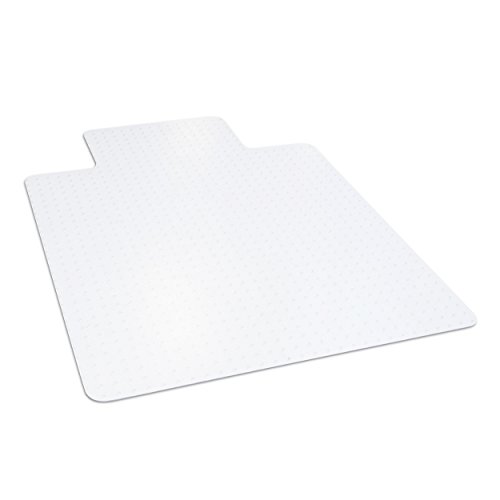
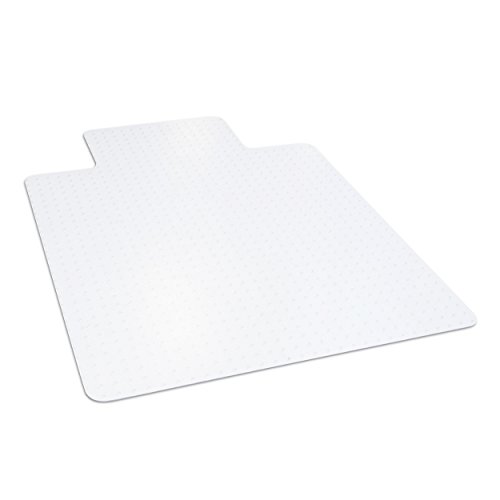
Dimex Office Chair Mat
The Dimex Office Chair Mat represents the value end of the category done sensibly, from a maker whose background is in edging and floor products for offices. The mats are light, easy to position and easy to replace, and for low-pile carpet and hard floors in a home office they cover the core duties: casters roll, floors are shielded, and the work zone looks intentional. Dimex is a sensible entry-tier pick for a first home office, a student room or a temporary setup that still deserves better than bare floor.
The trade-offs of the tier are durability expectations and edge behaviour: a lighter mat asks to be matched carefully to its floor, checked for curl as the seasons change, and replaced sooner than a heavy premium mat under a heavy chair used all day. None of that is a failure; it is the honest arithmetic of a budget mat. Buy the right floor version, keep heavy point loads sensible, and it will do its quiet job well.
Performance in Real Use
Rolling and Everyday Movement
Texture on the top surface is subtle but real: a light texture keeps the chair from feeling skittish, while a glass-smooth surface can feel almost too free. On carpet, the mat’s real job is preventing the slow crater that forms under a chair, where compressed pile and caster dents make rolling harder every month. Thickness is a balance: too thin and the mat flexes and cracks under point loads, too thick and its edge becomes a speed bump the chair has to climb. On hard floors, the job is protection first, because grit trapped under a caster works like sandpaper and leaves pale tracks across wood and laminate. Clear mats keep the floor visible, which suits rooms where the mat is a guest rather than a feature, while opaque mats hide wear and read as part of the furniture. Noise changes too, and a mat often quiets the rumble of casters on hard floors enough that downstairs neighbours notice the difference. A good chair mat disappears into the day: the chair rolls where you push it, stops where you stop, and never asks you to tug a wheel out of a dent.
Texture on the top surface is subtle but real: a light texture keeps the chair from feeling skittish, while a glass-smooth surface can feel almost too free. On carpet, the mat’s real job is preventing the slow crater that forms under a chair, where compressed pile and caster dents make rolling harder every month. Thickness is a balance: too thin and the mat flexes and cracks under point loads, too thick and its edge becomes a speed bump the chair has to climb. On hard floors, the job is protection first, because grit trapped under a caster works like sandpaper and leaves pale tracks across wood and laminate. Clear mats keep the floor visible, which suits rooms where the mat is a guest rather than a feature, while opaque mats hide wear and read as part of the furniture. Noise changes too, and a mat often quiets the rumble of casters on hard floors enough that downstairs neighbours notice the difference. A good chair mat disappears into the day: the chair rolls where you push it, stops where you stop, and never asks you to tug a wheel out of a dent. A bevelled or ramped edge is worth seeking out, since rolling on and off the mat happens dozens of times a day and a square edge fights you every time.
Protecting the Floor Below
Measure the roll zone, not just the chair: you need coverage everywhere the casters travel during a normal day, including the push-back when you stand up. Carpet wants the opposite: a mat with gripper teeth on the underside sized for the pile, so the chair’s weight anchors the mat instead of skating it across the room. A mat that curls at the edges is more than an annoyance, because a lifted edge under a rolling caster is a genuine trip and stumble hazard. Hard floors such as wood, laminate, tile and vinyl want a smooth-backed mat that grips gently, protects the finish and stays flat without adhesive. Put a carpet mat with aggressive teeth on a hard floor and it can scratch the finish while still sliding, the worst of both worlds. Sliding is the other safety failure: a mat that creeps across the floor can carry the chair with it, so grip on the underside matters as much as glide on top. Put a hard-floor mat on carpet and the casters’ point loads will crack it over time, starting with hairline fractures around the wheels you use most.
Measure the roll zone, not just the chair: you need coverage everywhere the casters travel during a normal day, including the push-back when you stand up. Carpet wants the opposite: a mat with gripper teeth on the underside sized for the pile, so the chair’s weight anchors the mat instead of skating it across the room. A mat that curls at the edges is more than an annoyance, because a lifted edge under a rolling caster is a genuine trip and stumble hazard. Hard floors such as wood, laminate, tile and vinyl want a smooth-backed mat that grips gently, protects the finish and stays flat without adhesive. Put a carpet mat with aggressive teeth on a hard floor and it can scratch the finish while still sliding, the worst of both worlds. Sliding is the other safety failure: a mat that creeps across the floor can carry the chair with it, so grip on the underside matters as much as glide on top. Put a hard-floor mat on carpet and the casters’ point loads will crack it over time, starting with hairline fractures around the wheels you use most. In a rented home, where permanent changes are off the table, this consideration carries extra weight.
Edges, Curl and Staying Put
Hard floors such as wood, laminate, tile and vinyl want a smooth-backed mat that grips gently, protects the finish and stays flat without adhesive. Sliding is the other safety failure: a mat that creeps across the floor can carry the chair with it, so grip on the underside matters as much as glide on top. Chair casters themselves play a part, since hard plastic wheels concentrate load and chew soft mats, while softer roller-style wheels spread the weight kindly. Measure the roll zone, not just the chair: you need coverage everywhere the casters travel during a normal day, including the push-back when you stand up. Low-pile commercial carpet is forgiving and suits most carpet mats, while deep plush pile needs a mat genuinely rated for thick carpet or the chair will feel like it is rolling through sand. Put a carpet mat with aggressive teeth on a hard floor and it can scratch the finish while still sliding, the worst of both worlds.
The single most important decision with an office chair mat is matching the mat to the floor under it, because a mat that suits one surface can fail quickly on another. A mat that curls at the edges is more than an annoyance, because a lifted edge under a rolling caster is a genuine trip and stumble hazard. Carpet wants the opposite: a mat with gripper teeth on the underside sized for the pile, so the chair’s weight anchors the mat instead of skating it across the room. Put a hard-floor mat on carpet and the casters’ point loads will crack it over time, starting with hairline fractures around the wheels you use most.
Strengths and Trade-Offs
- Strength: a correctly matched mat makes chair movement effortless and predictable all day.
- Strength: floors are shielded from the grit-and-caster abrasion that quietly ruins finishes and carpet pile.
- Strength: the work zone looks deliberate, which helps a desk corner in a shared room feel finished.
- Trade-off: the wrong floor pairing fails predictably — cracking on carpet, sliding on hard floors.
- Trade-off: new mats can take a day or two of patience before they lie completely flat.
- Trade-off: a mat is one more surface to clean, and its underside needs attention to keep its grip honest.
Noise changes too, and a mat often quiets the rumble of casters on hard floors enough that downstairs neighbours notice the difference. Thickness is a balance: too thin and the mat flexes and cracks under point loads, too thick and its edge becomes a speed bump the chair has to climb. Texture on the top surface is subtle but real: a light texture keeps the chair from feeling skittish, while a glass-smooth surface can feel almost too free. On hard floors, the job is protection first, because grit trapped under a caster works like sandpaper and leaves pale tracks across wood and laminate. In a shared or multi-purpose room, a mat also defines the work zone visually, which helps a desk corner feel like a place rather than a pile. A bevelled or ramped edge is worth seeking out, since rolling on and off the mat happens dozens of times a day and a square edge fights you every time.
Noise changes too, and a mat often quiets the rumble of casters on hard floors enough that downstairs neighbours notice the difference. Thickness is a balance: too thin and the mat flexes and cracks under point loads, too thick and its edge becomes a speed bump the chair has to climb. Texture on the top surface is subtle but real: a light texture keeps the chair from feeling skittish, while a glass-smooth surface can feel almost too free. On hard floors, the job is protection first, because grit trapped under a caster works like sandpaper and leaves pale tracks across wood and laminate. In a shared or multi-purpose room, a mat also defines the work zone visually, which helps a desk corner feel like a place rather than a pile. A bevelled or ramped edge is worth seeking out, since rolling on and off the mat happens dozens of times a day and a square edge fights you every time. Clear mats keep the floor visible, which suits rooms where the mat is a guest rather than a feature, while opaque mats hide wear and read as part of the furniture.
How It Compares
Against rolling a chair on bare floor, a mat trades a small amount of money and maintenance for floor protection and consistent movement. Against softer rug-style desk pads, a chair mat wins on caster behaviour and loses on warmth underfoot. The honest comparison is never between brands first; it is between floor pairings, as the qualitative table shows.
| Pairing | Result | Watch out for |
|---|---|---|
| Smooth-back mat on hard floor | Grip, protection, flat lay | Dust film under the mat killing grip |
| Gripper mat on carpet | Anchored, dent-free rolling | Teeth too short for deep pile |
| Hard-floor mat on carpet | Cracking around casters over time | The most common buying mistake |
Carpet wants the opposite: a mat with gripper teeth on the underside sized for the pile, so the chair’s weight anchors the mat instead of skating it across the room. Hard floors such as wood, laminate, tile and vinyl want a smooth-backed mat that grips gently, protects the finish and stays flat without adhesive. Sliding is the other safety failure: a mat that creeps across the floor can carry the chair with it, so grip on the underside matters as much as glide on top. Low-pile commercial carpet is forgiving and suits most carpet mats, while deep plush pile needs a mat genuinely rated for thick carpet or the chair will feel like it is rolling through sand. The single most important decision with an office chair mat is matching the mat to the floor under it, because a mat that suits one surface can fail quickly on another. Put a carpet mat with aggressive teeth on a hard floor and it can scratch the finish while still sliding, the worst of both worlds.
Chair casters themselves play a part, since hard plastic wheels concentrate load and chew soft mats, while softer roller-style wheels spread the weight kindly. Measure the roll zone, not just the chair: you need coverage everywhere the casters travel during a normal day, including the push-back when you stand up. Put a hard-floor mat on carpet and the casters’ point loads will crack it over time, starting with hairline fractures around the wheels you use most. A mat that curls at the edges is more than an annoyance, because a lifted edge under a rolling caster is a genuine trip and stumble hazard.
Who Should Buy It and Who Should Skip It
Put a hard-floor mat on carpet and the casters’ point loads will crack it over time, starting with hairline fractures around the wheels you use most. The single most important decision with an office chair mat is matching the mat to the floor under it, because a mat that suits one surface can fail quickly on another. Low-pile commercial carpet is forgiving and suits most carpet mats, while deep plush pile needs a mat genuinely rated for thick carpet or the chair will feel like it is rolling through sand. A mat that curls at the edges is more than an annoyance, because a lifted edge under a rolling caster is a genuine trip and stumble hazard. Hard floors such as wood, laminate, tile and vinyl want a smooth-backed mat that grips gently, protects the finish and stays flat without adhesive. Carpet wants the opposite: a mat with gripper teeth on the underside sized for the pile, so the chair’s weight anchors the mat instead of skating it across the room. Chair casters themselves play a part, since hard plastic wheels concentrate load and chew soft mats, while softer roller-style wheels spread the weight kindly. Sliding is the other safety failure: a mat that creeps across the floor can carry the chair with it, so grip on the underside matters as much as glide on top.
Put a hard-floor mat on carpet and the casters’ point loads will crack it over time, starting with hairline fractures around the wheels you use most. The single most important decision with an office chair mat is matching the mat to the floor under it, because a mat that suits one surface can fail quickly on another. Low-pile commercial carpet is forgiving and suits most carpet mats, while deep plush pile needs a mat genuinely rated for thick carpet or the chair will feel like it is rolling through sand. A mat that curls at the edges is more than an annoyance, because a lifted edge under a rolling caster is a genuine trip and stumble hazard. Hard floors such as wood, laminate, tile and vinyl want a smooth-backed mat that grips gently, protects the finish and stays flat without adhesive. Carpet wants the opposite: a mat with gripper teeth on the underside sized for the pile, so the chair’s weight anchors the mat instead of skating it across the room.
Before buying, run this checklist: name your floor type honestly; judge your carpet pile with a hand press, not a glance; measure the full roll zone including push-back; look at your chair’s casters; and decide whether a clear or opaque finish suits the room. Five minutes of checking prevents the two classic failures — the cracked carpet mat and the wandering hard-floor mat.
Small setups benefit most from gear that folds, slides or stacks, because the desk has to return to being a table at the end of the day. Every desk setup decision is really a chain: the desk supports the gear, the gear sets the screen height, and the screen height decides where your hands and chair need to be. Light matters as much as furniture: a screen facing a bright window will fight glare no matter how good the stand or converter beneath it is. Keep the things you touch hourly within easy reach and let the rarely used gear live further away, which keeps the working zone calm. Comfort at a desk is mostly about neutral, unstrained positions you can hold without thinking, not about any single perfect measurement. Work through changes one at a time and live with each for a day, because adjusting everything at once leaves you unable to tell what actually helped.
Setup, Care and Maintenance Essentials
Most chair mat grime is ordinary household dust, skin oils and tracked-in grit, and it responds to patience and mild cleaning rather than harsh chemicals. Shake or vacuum the mat outside first, since loose grit dragged under a cloth will scratch the surface you are trying to save. Never fold a rigid mat to move or store it, because a sharp crease can whiten or crack the material; roll it loosely or carry it flat. Clean the chair casters while the mat is up, since hair and grit packed into the wheels will redeposit dirt onto your clean mat within days. Keep solvent cleaners, bleach and abrasive pads away unless the maker explicitly allows them, as they can cloud clear mats and embrittle the surface. Work in sections, rinsing the cloth often, because spreading grey water across the whole mat just moves the film around. Warm water with a small amount of mild dish soap is the workhorse solution for the common mat materials, applied with a soft cloth or a non-scratch sponge. Start every clean by rolling the chair away and lifting the mat out if you can, because cleaning around the casters leaves the dirtiest ring exactly where the wheels sit.
Most chair mat grime is ordinary household dust, skin oils and tracked-in grit, and it responds to patience and mild cleaning rather than harsh chemicals. Shake or vacuum the mat outside first, since loose grit dragged under a cloth will scratch the surface you are trying to save. Never fold a rigid mat to move or store it, because a sharp crease can whiten or crack the material; roll it loosely or carry it flat. Clean the chair casters while the mat is up, since hair and grit packed into the wheels will redeposit dirt onto your clean mat within days. Keep solvent cleaners, bleach and abrasive pads away unless the maker explicitly allows them, as they can cloud clear mats and embrittle the surface. Work in sections, rinsing the cloth often, because spreading grey water across the whole mat just moves the film around. Warm water with a small amount of mild dish soap is the workhorse solution for the common mat materials, applied with a soft cloth or a non-scratch sponge.
Most chair mat grime is ordinary household dust, skin oils and tracked-in grit, and it responds to patience and mild cleaning rather than harsh chemicals. Shake or vacuum the mat outside first, since loose grit dragged under a cloth will scratch the surface you are trying to save. Never fold a rigid mat to move or store it, because a sharp crease can whiten or crack the material; roll it loosely or carry it flat. Clean the chair casters while the mat is up, since hair and grit packed into the wheels will redeposit dirt onto your clean mat within days. Keep solvent cleaners, bleach and abrasive pads away unless the maker explicitly allows them, as they can cloud clear mats and embrittle the surface. Work in sections, rinsing the cloth often, because spreading grey water across the whole mat just moves the film around. Warm water with a small amount of mild dish soap is the workhorse solution for the common mat materials, applied with a soft cloth or a non-scratch sponge. Start every clean by rolling the chair away and lifting the mat out if you can, because cleaning around the casters leaves the dirtiest ring exactly where the wheels sit. Anyone upgrading from a bare-bones setup tends to appreciate this difference first.
A good chair mat disappears into the day: the chair rolls where you push it, stops where you stop, and never asks you to tug a wheel out of a dent. In a shared or multi-purpose room, a mat also defines the work zone visually, which helps a desk corner feel like a place rather than a pile. Clear mats keep the floor visible, which suits rooms where the mat is a guest rather than a feature, while opaque mats hide wear and read as part of the furniture. Thickness is a balance: too thin and the mat flexes and cracks under point loads, too thick and its edge becomes a speed bump the chair has to climb. Noise changes too, and a mat often quiets the rumble of casters on hard floors enough that downstairs neighbours notice the difference. On hard floors, the job is protection first, because grit trapped under a caster works like sandpaper and leaves pale tracks across wood and laminate. Texture on the top surface is subtle but real: a light texture keeps the chair from feeling skittish, while a glass-smooth surface can feel almost too free. A bevelled or ramped edge is worth seeking out, since rolling on and off the mat happens dozens of times a day and a square edge fights you every time.
Final Verdict
An office chair mat is a fit purchase disguised as a simple one. Matched to its floor, it disappears into the working day while quietly saving the surface beneath it; mismatched, it cracks, curls or slides its way into daily irritation. Choose the floor pairing first, the size second and the brand third, and this humble product becomes one of the most satisfactory upgrades in the whole desk setup.
The single most important decision with an office chair mat is matching the mat to the floor under it, because a mat that suits one surface can fail quickly on another. Measure the roll zone, not just the chair: you need coverage everywhere the casters travel during a normal day, including the push-back when you stand up. Low-pile commercial carpet is forgiving and suits most carpet mats, while deep plush pile needs a mat genuinely rated for thick carpet or the chair will feel like it is rolling through sand. Carpet wants the opposite: a mat with gripper teeth on the underside sized for the pile, so the chair’s weight anchors the mat instead of skating it across the room. Hard floors such as wood, laminate, tile and vinyl want a smooth-backed mat that grips gently, protects the finish and stays flat without adhesive. Sliding is the other safety failure: a mat that creeps across the floor can carry the chair with it, so grip on the underside matters as much as glide on top.
Frequently Asked Questions
How do I know which mat my floor needs?
Name the surface first. Hard floors — wood, laminate, tile, vinyl — need a smooth-backed mat that grips gently and protects the finish. Carpet needs a mat with gripper teeth underneath, sized for your pile depth. If you are between surfaces, such as a rug over wood, treat the top surface as the deciding one, because that is what the mat touches and must grip.
Why did my last mat crack?
Cracking is the signature failure of a hard-floor mat used on carpet. Casters concentrate your weight into small points, carpet lets the mat flex under each point, and the repeated flexing starts hairline fractures around the wheels. The fix is not a thicker version of the same mat but the correct carpet-rated design with a gripper underside matched to your pile.
What size should I buy?
Measure the roll zone rather than the chair: everywhere the casters travel in a normal day, including where the chair lands when you push back to stand. A mat that ends mid-roll teaches you to climb its edge constantly. When your measurements fall between sizes, choose the larger one; surplus mat is invisible, while a short edge is felt dozens of times a day.
How do I stop a mat sliding on a hard floor?
Start by cleaning both the floor and the mat’s underside, because a film of dust is the usual culprit when grip fades. Confirm the mat is genuinely a hard-floor design lying flat, with no curled edge acting as a ramp. A mat that still creeps after cleaning is the wrong mat for the surface, and replacing it is safer than adding improvised adhesives.
Do chair mats protect carpet as well as hard floors?
Yes, differently. On carpet the mat spreads caster loads so the pile is not crushed into permanent dents, and it keeps the rolling surface consistent as the carpet ages. The protection shows over months rather than days: chairs on mats keep rolling freely long after unprotected chairs are fighting the crater that forms beneath them.
How often should a chair mat be cleaned?
A quick vacuum of the top surface weekly keeps grit from being ground in by the casters, and a proper wash every month or two — more often in muddy seasons — keeps the underside gripping and the surface clear. While the mat is up, clean the casters too, since packed hair and grit in the wheels redeposit dirt immediately.