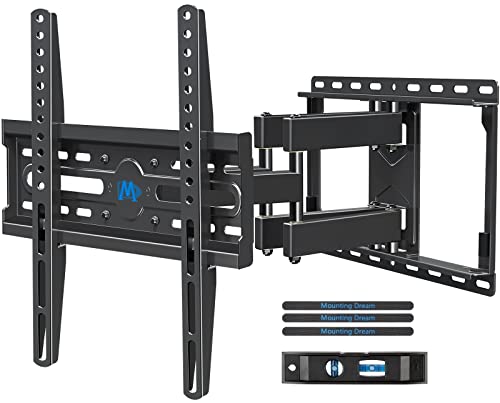
Disclosure: As an Amazon Associate, ilcastellomenu.com earns from qualifying purchases. Links on this page are affiliate links; they cost you nothing extra. Prices and availability change often, so check the current Amazon listing before you buy.
Ask is a tv wall mount worth it in a room full of owners and you will start an argument, because the honest answer depends on things no product page can know: your wall, your lease, your children’s ages, your room’s next rearrangement. This article refuses the universal verdict and offers a better tool — a way to price what a mount actually returns, in space, safety and daily calm, against what it actually costs, in work, commitment and money beyond the bracket. Worth it if your layout is settled, your wall is sound and known, and your screen’s furniture is earning nothing. Not worth it if you rent under a strict lease, rearrange for pleasure, or face a wall nobody can identify. Between those poles sits most of humanity, and the sections below walk the middle honestly, profile by profile, until the decision checklist at the end can do its work in under a minute.
Key Takeaways: Is a TV Wall Mount Worth It?
- Worth it when the room is settled: a stable layout lets you collect the space, safety and position benefits for years against a single afternoon of installation
- Not worth it when life is in flux: rentals with drilling bans, imminent renovations and restless rearrangers pay the commitment cost without time to earn it back
- The mount is the cheap part: cable solutions, possible tools and possible professional help decide the real budget — count them before judging value
- Safety can settle it alone: for households with climbing toddlers, the tip-over argument outweighs every other line in this article
- The wall holds a veto: a wall that cannot offer structural fixings turns the answer to no, whatever the room wants
In this guide
What You Actually Get
Strip the marketing away and a mount returns four concrete things. First, floor space: the screen’s footprint and usually its cabinet’s reason to exist, returned to the room permanently. Second, position: the screen centred on your seats at your eye level, or angled from a corner or a height no furniture could offer. Third, stability: a screen fixed to structure, immune to bumps, ball games and climbing toddlers. Fourth, order: cables with a planned route, a wall that looks designed, a room that cleans easily. Notice what is not on the list — a better picture. Mounting does not improve your television; it improves the room around your television, every day, in ways that compound quietly. Households that expect a cinematic transformation are disappointed; households that wanted their room back are delighted for years. Calibrating that expectation is the first step to judging worth honestly.
Small rooms are where mounting earns its reputation. A television on a stand claims a cabinet, the cabinet claims floor area, and in a compact living room or a bedroom that floor area is the difference between a room that breathes and one that feels like storage. Lifting the screen onto the wall returns the whole footprint: a slimmer console, a chair where the cabinet stood, or simply visible floor, which changes how large a room feels more than any paint colour. Corner mounting with a full-motion arm is the small-room specialist move — the screen tucks into dead space most furniture cannot use and angles out toward the seating when needed. The cautions scale down with the room, though: viewing distances are short, so height and angle errors are felt more, and a large screen on a short wall can dominate in a way the template rehearsal will reveal honestly. Measure the room’s real life — doors opening, walkways, the vacuum’s route — and let the mount solve the space problem without creating a head-height obstacle on a path people walk in the dark.
Viewing height is the decision people most often get wrong, usually by hanging the television where a picture would go instead of where eyes actually rest. The comfortable reference is simple: when you are seated, the centre of the screen should sit roughly at your eye level, so your neck stays neutral through a long film or match. Mounting higher is sometimes unavoidable — a fireplace, a tall sideboard, a bedroom where you watch propped on pillows — and in those rooms a tilting mount earns its keep by angling the screen down toward you. Before drilling anything, rehearse the height with a paper or cardboard template taped to the wall at the proposed position, then sit in every real seat in the room and live with it for an evening. Check the view from the seat nobody wants as well as from the best chair; a screen that works only from one cushion is a compromise the whole household will feel. The template costs nothing and an evening, and it has saved more living rooms than any tool in the box.
The Real Costs Beyond Money
The bracket’s price is the smallest cost and the only one printed anywhere. The real ledger runs longer. Time: measuring, rehearsing with a template, drilling, lifting, cabling — a careful half-day for a first-timer, and an evening of planning before it. Commitment: a fixed position and holes that future rearrangements must respect or repair. Ancillaries: a stud finder worth trusting, a rated in-wall cable kit or an electrician’s outlet if you want hidden power, perhaps a soundbar bracket, perhaps filler and paint. Risk: a small but real chance of discovering your wall is not what you believed — metal studs, crumbly masonry, a pipe exactly where the plate belongs — and having to rethink mid-project. And for some households, the opportunity cost of the stand’s storage: cabinets hold consoles, films and clutter that must live somewhere. None of these costs is unreasonable. All of them belong in the worth-it calculation, because a mount judged only on its shelf price will always look cheaper than it is.
Cable management deserves a plan before the drill comes out, because the neatest mount in the world looks unfinished with a bundle of leads dangling beneath it. Start with the rule that is not negotiable: an ordinary power cord must never be run inside a wall cavity. It is not rated for that job, it breaches electrical codes in most places, and it creates a hidden hazard. The legitimate ways to hide power are an in-wall cable kit specifically rated and listed for the purpose — the kind that uses proper in-wall cable between two fitted outlets — or having an electrician add an outlet directly behind the television. Signal cables are a separate question: HDMI and similar leads should be in-wall rated versions if they pass through the cavity, and they deserve gentle bends and a little slack rather than being pulled tight. If your walls or your lease rule out in-wall work entirely, a surface raceway painted to match the wall hides everything honestly and can look surprisingly tidy. Whatever route you choose, leave enough slack to pull a full-motion mount out and to reach the ports without a fight.
Before any bracket goes on a wall, the wall itself has to pass an honest inspection. Knock along the surface and listen for the difference between hollow plasterboard, the duller note over a stud, and the dead solidity of masonry. Look for clues about what the wall is: its thickness at door openings, the material around existing fixings, the age and construction of the building. Check for what runs inside it, too — electrical cables tend to run vertically and horizontally from outlets and switches, and pipes gather near radiators, kitchens and bathrooms; a detector that senses both studs and services earns its place in the toolkit. Existing cracks, crumbly plaster, damp patches or a wall that flexes under hand pressure are all reasons to pause and reassess rather than proceed hopefully. A television mount concentrates a serious load onto a small area, and it applies that load every hour of every day, not just on installation day. The ten minutes spent interrogating the wall before drilling is the cheapest insurance in the whole project, and skipping it is the root cause behind almost every mounting failure story.
Who It Pays Off For
The Settled Family in the Tip-Over Years
In homes with small children, mounting stops being purely an aesthetic choice and becomes part of the safety furniture conversation. A television on a low stand is a climbable, pullable object at exactly toddler height, and tip-over accidents with furniture and screens are a recognised household hazard. A properly installed wall mount removes that particular risk entirely — the screen is out of reach, fixed to structure, and cannot be rocked or pulled down by a determined small person. The emphasis belongs on properly installed: a mount fixed only into plasterboard is not a safety device, it is the hazard relocated. Mounting also tidies the trailing cables that attract small hands, especially when they are routed through a raceway or an in-wall kit rather than dangling. None of this makes a room child-proof on its own — the cabinet below still needs its own thinking — but for many parents the safety argument, honestly weighed, is the deciding vote for the wall over the stand, ahead of looks, ahead of floor space, ahead of everything else on the list.
The Small-Room Household
If your living room or bedroom measures its free floor in single digits, the mount’s space return is not cosmetic — it is the difference between a room that functions and one that stores. A screen on the wall can also sit higher or in a corner that furniture cannot use, effectively adding a seat’s worth of breathing room. For this household the worth-it question usually answers itself at the template stage: tape the outline up, take the cabinet’s measure away mentally, and feel the room change.
The Open-Plan and Multi-Seat Household
Where one screen serves a sofa, a kitchen and a dining table, a full-motion mount pays for itself in included viewers — every seat gets a real picture instead of an angled apology. The value here grows with use, which is rare in consumer hardware. Our TV wall mount reviews roundup documents how strongly this profile rates its mounts after a year, and the buying guide’s use-case priorities shows which designs serve it best.
Who Should Skip It
The Renter Under a Strict Lease
Renters face the mount question with an extra clause in the contract: every hole must eventually be answered for. That does not automatically rule mounting out — many landlords accept small, well-filled holes, and a conversation before drilling is always cheaper than a deduction afterwards — but it changes the ranking of options. A tilting or fixed mount that fixes into studs with a handful of bolts leaves a modest, fillable footprint; a large full-motion installation is a bigger commitment to reverse. The alternative, a good stand, asks nothing of the wall at all, and modern stand designs with wide, stable feet suit most rented rooms perfectly well. If you do mount in a rental, photograph the wall first, keep the removed screws and the filler matched to the paint, and keep the original stand and its screws in a labelled bag — future you, handing the keys back, will be grateful. And read the lease before the drill comes out: where the contract forbids drilling outright, the decision has already been made, and the stand comparison later in this cluster becomes the article that matters.
The Rearranger and the Renovator
Some households treat rooms as drafts, and for them a mount’s permanence is not a neutral trait — it is a recurring tax on every new idea. If your furniture migrates seasonally, or if a renovation within a couple of years will move walls, doors or the seating itself, the mount’s benefits have too short a runway to repay its commitment. A good stand, by contrast, appreciates in exactly that life: it moves in minutes and asks nothing. Skip the mount now, and revisit the question in the settled room that follows the renovation — the answer often flips, and the holes only ever need drilling once, in the right wall.
The Household Whose Wall Says No
Metal stud walls, common in newer apartments and offices, change the fixing conversation completely. The studs are thin folded steel rather than solid timber, so the lag bolts designed for wood have nothing meaningful to bite into. The correct approaches are fixings made for the material — toggle-style anchors that spread load behind the plasterboard, or screws driven into the metal stud itself where the mount’s maker explicitly approves that method — and a more conservative view of load, especially with full-motion arms whose leverage multiplies at full extension. Many professionals respond to a metal-stud wall and a large screen by adding a plywood backing panel that spreads the load across several studs, and that belt-and-braces instinct is worth copying. If your building is new enough that you do not know the wall construction, find out before ordering anything: the mount that suits a timber wall may be the wrong purchase entirely for a steel-framed one. This is also the scenario where an installer’s experience is worth the most, because they have usually seen your exact wall before and already know which fixing survives in it.
Add to this profile the mystery wall: the one nobody can identify, behind which anything might run. A mount’s worth collapses when its fixings cannot be trusted, and no space saving justifies a screen held by hope. Either resolve the wall — an installer can, quickly — or let the stand win by default.
Strengths and Trade-Offs of Owning One
Strengths of Ownership
- Daily space dividend: the reclaimed footprint is enjoyed every hour, not just noticed on installation day.
- Position permanence: the screen is always exactly where viewing is best; there is nothing to nudge, bump or re-level.
- Household safety: a structurally fixed screen removes tip-over from the list of parental worries.
Trade-Offs of Ownership
- Flexibility surrendered: the room’s layout gains a fixed point that all future plans must orbit.
- Maintenance of the decision: cable changes and new consoles are slightly more deliberate behind a mounted screen.
- Exit cost: moving house or changing rooms means filler, paint and possibly new fixings elsewhere.
Light is the invisible specification nobody lists on the box. A screen hung opposite a bright window can be technically perfect — level, secure, at the right height — and still be miserable to watch every sunny afternoon. Before fixing a position, sit in the room at the times you actually watch and study where reflections fall on the wall; a glossy screen will mirror whatever bright surface faces it. Tilting mounts help a little by angling reflections downward, and full-motion mounts help more by letting you swing the screen a few degrees away from a window, but the real fixes are positional: a different wall, a screen angled toward the seating rather than square to the room, or curtains and blinds doing honest work. Matte screens forgive more than glossy ones, and bias lighting behind the set can ease the contrast between a bright picture and a dark room. None of this appears in a product listing, which is why the paper-template rehearsal matters so much: tape the outline up, sit down at viewing time, and let the room itself tell you whether the plan works.
Sound deserves a sentence in the mounting plan, because lifting the television changes the acoustics of the room and often strands the audio gear. Many households add a soundbar under the screen, and the tidy solutions are a soundbar bracket that attaches to the same mount so the bar moves with the TV, or a slim shelf fixed to the wall beneath it. If the bar stays on a cabinet while the screen rises, check that the cabinet still earns its footprint — sometimes the honest outcome is that the furniture shrinks or leaves, which is rather the point of mounting. Centre speakers and games consoles need homes too, and a mount that frees the floor can strand equipment on a surface that no longer suits it. Plan the whole wall as one composition: screen position, bar position, where the remote’s signal reaches, where the subwoofer’s cable runs. Households that sketch this on paper before drilling end up with walls that look designed; households that improvise end up with a beautiful screen floating above a spaghetti of compromises that everyone sees and nobody mentions.
Alternatives to Consider
The strongest alternative is the one the television arrived with: a modern stand on a low, wide cabinet, which costs nothing, moves freely and stores the household’s equipment — argued at full strength in TV wall mount vs TV stand. A second alternative is the furniture-mounted hybrid: stands that rise from a cabinet on a mounting column, giving a floating look and some height adjustment with no wall holes at all, at the price of the cabinet’s footprint. A third is doing nothing yet — living with the stand through one rearrangement or one season, and letting the room itself demonstrate whether it has settled. At desk scale the same alternatives play out in miniature, and whether a monitor wall mount is worth it runs the identical calculation for a screen you sit closer to. Each alternative is respectable; the mount must beat them on your room’s facts, not on a showroom’s lighting.
How to Get the Most Value If You Buy
Value in this category is manufactured during planning. Rehearse the position with a paper template for a full evening and the mount will sit right for a decade. Buy the simplest family that solves your geometry — unused motion is value burned. Verify pattern and weight from the television’s manual and fixings from the wall’s interrogation, and the installation becomes procedure instead of adventure. Plan cables, including the power rule, before drilling. Keep the original stand, the spare fixings and both manuals in one labelled place, so the mount’s exit cost stays near zero whenever life changes. And if a professional installs it, watch and learn: the next screen, in the next room, becomes a job you can price with your eyes open. The selection method is in how to choose a TV wall mount, the work itself in how to install a TV wall mount.
A mounted television is not quite a fit-and-forget appliance. In the first weeks, glance at the installation with fresh eyes: is the screen still level, does a full-motion arm still hold the position you set, do the cables still have their slack at full extension? Fixings settle, arms drift if their joints need a touch more tension, and a five-minute check with a level and a gentle hand catches all of it early. After that, a seasonal once-over suffices — dust the vents the screen can finally reach, confirm the bracket feels rigid when you press a corner of the bezel gently, and re-check any cable that gets moved by cleaning or by children. Keep the mount’s instructions and the spare fixings in a labelled bag; if you ever move house or change televisions, that bag is gold. And keep the original stand. Televisions outlive their wall positions, rooms get rearranged, and the household that stored the stand can adapt in an afternoon, while the household that threw it away starts a very annoying shopping trip.
A thought for the long term: televisions are replaced more often than walls are rebuilt, so a mount is really a small piece of household infrastructure. Choosing a bracket whose plate covers a generous range of hole patterns, and whose load rating has headroom above today’s screen, means the next television — probably larger, possibly lighter — can reuse the same fixings and the same holes. That is worth real money and real plaster over a decade. It also argues for fixing positions that are about the room rather than about one specific set: centred on the seating, at a height that suits the furniture, with cable routes that any successor screen can use. When you eventually sell or hand over a home, neat, well-placed mounting points with the holes properly filled are invisible; a scatter of exploratory holes from three abandoned positions tells its own story to every viewer. Infrastructure thinking feels grand for a bracket, but the households that mount once and mount well are the ones that never have to think about the subject again — which is, in the end, the entire point.
The Decision Checklist
Answer honestly, yes or no. Is your room’s layout settled for the next few years? Do you know what your wall is made of, and can it offer structural fixings where the screen belongs? Are you allowed to drill — by lease, by household, by conscience? Would the reclaimed floor space or the safety gain genuinely change daily life? Can two people be present for the lift, and a half-day protected for the work? Is the television staying in this room long enough to repay the effort? Five or more yeses: the mount is worth it, and the rest of this cluster will help you do it well. Three or fewer: keep the stand with a clear conscience — you have not dodged a purchase, you have made the right one. Four is the interesting score: read the full pros and cons ledger and let the strongest single item on either side cast the deciding vote.
The Five-Year View: How the Value Compounds
Worth-it calculations usually stop at the first month, which is exactly when a mount looks its worst: money spent, a half-day gone, benefits barely begun. Extend the horizon and the arithmetic inverts. The installation cost is paid once and never recurs; the space dividend is collected every day the room is used; the safety dividend is collected every day a toddler does not climb; the position dividend is collected every film, match and gaming session watched at the right height. Against that, the recurring costs are trivial — an annual check of the fixings, an occasional cable rearrangement. Even the commitment cost fades as the room’s layout proves itself, which most layouts do within a year. This is why owner surveys in this category skew so positive among households that installed carefully, and why the dissatisfied minority clusters almost entirely among the mismatched: wrong family, wrong wall, wrong room timing. The mount is a long asset with a short payback argument, provided the match was right — and the match, as every section of this cluster insists, is knowable before you spend anything.
The Worth-It Question in Specific Rooms
The kitchen: a small screen mounted under a cabinet line or on a spare wall earns its keep daily, keeps counters clear and stays safe from spills and steam paths when sensibly placed — worth it, at the small end, more often than any other room. The child’s bedroom: safety and the dresser-top dividend argue yes, with the screen’s height set for a growing viewer and revisited as they grow. The spare room: the honest answer is usually not yet — an occasionally used screen on a stand loses nothing, and the mount’s runway is too short. The home office that doubles as a guest room: a tilting mount lets one screen serve a desk chair and a bed, a genuine two-for-one that stands cannot match. The hallway or landing screen for art and photographs: mounting is the entire aesthetic, and a fixed slim design is worth it on looks alone. Room by room, the pattern holds — where the screen has a settled job and a settled audience, the mount pays; where either is provisional, it waits.
What Owners Say a Year Later
The most useful evidence in the worth-it debate is not specifications but retrospection. Owners who mounted carefully report, with striking consistency, three things: they would not go back, they notice the mount less than they expected, and their only regret is a detail of execution — a position a few centimetres off, a cable route they would plan differently. Owners who regret mounting report a different trio: the room changed, the wall surprised them, or the family of mount was wrong for their seats. Notice that neither list is about brands. A year of ownership converts the worth-it question from a shopping question into a planning question, which is why this article has spent its length on rooms, walls and leases rather than products. Answer the planning questions well and the shopping answers itself; the checklist above is the whole method, compressed.
The Opportunity Cost Round: What the Money and Weekend Else Do
A fair worth-it test must ask what else the same money and the same half-day could buy the room. The alternatives are real: a better soundbar, a pair of lamps that fix the glare problem at its source, a low cabinet that hides everything and stores more, blackout curtains that transform daytime viewing, or simply a saved weekend. Set against those, the mount wins when the room’s binding problem is the screen’s position, footprint or safety — and loses when the binding problem is actually sound, light or storage wearing a mounting costume. This is the most common worth-it error the article can warn against: buying a mount to solve a problem it does not address, then judging it harshly for failing. Diagnose the room’s true complaint first — sit in it at viewing time and name the single thing that most annoys you — and let that diagnosis, not the product category’s momentum, decide whether this purchase is the one that pays.
Worth It, Priced in Evenings
Try the arithmetic owners actually use once the receipt is forgotten. A mount’s full true cost — bracket, cable solution, a tool or two, perhaps an installer — divided by the evenings it will serve across its life produces a figure so small it embarrasses the debate, provided the installation serves for years. The proviso is the entire article: provided. A mount abandoned at the next rearrangement, or fitted to a wall that fails, or matched to the wrong family and replaced within the year, never reaches the denominator that makes it cheap. Worth in this category is therefore not bought but scheduled — it accrues to households whose rooms stay settled long enough to collect it. That is why the decision checklist weights time and stability so heavily, and why the honest answer for a household in motion is to wait: the same purchase, made in the settled room two years from now, will be worth several times what it is worth today, at the same price.
The Counterfactual Room: Imagining the Stand Kept
Before deciding, run the experiment nobody runs: imagine, in detail, the next three years with the stand kept. The cabinet stays, and with it the room’s current compromises — the screen a little low, the floor a little fuller, the toddler supervised a little closer. Some evenings that picture is honestly fine, and if it is, the mount’s worth collapses to a preference, and preferences should be bought cheaply or not at all. But many households find the imagined years quietly accumulating the same small frictions — the blocked walkway, the angled seat nobody chooses, the cabinet that exists for no other reason — until the counterfactual itself makes the case. Worth-it decisions fail when they compare a real purchase against an imaginary frictionless status quo. Compare it against the real status quo, with its real daily texture, and the answer firms up in whichever direction the truth lies.
Worth It as a Safety Purchase, Priced Honestly
For one profile the calculation deserves to be done in the open, without flinching: the household with climbing-age children, where the mount is bought primarily as a safety device. Priced as furniture, it competes with cabinets; priced as safety equipment, it competes with anchoring straps, corner guards and supervision — and it is the only item on that list that removes the hazard rather than reducing it. The honest pricing includes the installation standard: a mount is a safety purchase only when its fixings are structural and verified, which may add an installer’s fee to the ledger for doubtful walls. Even so priced, households in this profile consistently report the purchase as the easiest money in the room — not because the risk was large on any given day, but because it was the kind of risk whose single bad day outweighs a thousand ordinary ones. If that is your household, the checklist’s other questions become secondary, and this article’s answer is simply yes, done properly.
When Worth It Arrives Late: The Delayed Yes
A final pattern worth naming, because it rescues many households from a forced decision: the delayed yes. The room is not settled yet, the renovation is coming, the lease has a year to run — and the correct answer today is the stand, with the mount’s worth postponed rather than denied. The delayed yes has a discipline of its own: keep the stand’s footprint honest rather than buying a grand cabinet that will entrench the interim arrangement, note the wall’s stud positions when any other work exposes them, and let the eventual mount inherit a room whose facts are already known. Households that treat the question as timing rather than verdict avoid both errors — the premature holes and the permanent shrug — and usually end, in the settled room, mounting with more confidence than either camp. Worth it is a question with a date attached; answer it for the date you are actually living in.
The Answer, Restated Without Hedges
After all the profiles and checklists, the unhedged version is short. If your room is settled, your wall is sound and known, and you are allowed to drill, a TV wall mount is worth it — comfortably, and by more the longer you stay. If any one of those three conditions fails, it is not worth it yet, and the word yet is doing honest work: conditions change, rooms settle, leases end, walls get identified. The households that get this purchase wrong are almost never the ones that answered no for a season; they are the ones that answered yes against a failed condition and spent the mount’s life paying for the exception. Respect the three conditions and the question answers itself, in whichever direction your facts point.
And if you take only one sentence from this article to the shop, take this one: worth is a property of the match, not of the mount. The same bracket is a bargain in the settled family room and a waste in the restless rental, and no review, rating or recommendation can move it from one column to the other — only your room can. That is why this cluster keeps returning you to your own walls, seats and lease with a tape measure and a template. The products are ready when you are; the facts decide when that is.
A Note on Borrowed Certainty
One last caution, aimed at the way these decisions actually get made in households: beware borrowed certainty. A brother-in-law’s triumph, a neighbour’s disaster, a colleague’s unshakeable opinion — each is a true story about a different room, a different wall and a different lease, and none of them transfers to yours without the facts that made it true. This article has deliberately offered profiles and checklists instead of a verdict, because the verdict was never the valuable part; the matching was. Collect your own three conditions, run your own counterfactual evening, score your own checklist, and the answer you reach will have the one quality borrowed certainty never has — it will still look right in a year, because it was built from the room it had to serve.
The households that answer this question best share a habit worth copying whatever you decide: they set a review date. Six months after mounting — or after choosing the stand — they ask the room, honestly, whether the decision earned its place. Almost always it has, because it was made from facts. And on the rare occasion it has not, the review date is what turns a lingering mistake into a corrected one, while correction is still cheap.
Decide it once, decide it from the room, and then stop re-deciding it every time a sale advertisement floats past — the question was never really about the mount, and now you have the method that proves it.
Doing the Honest Maths on Use, Lifespan and Alternatives
When waiting is the right answer
Sometimes the correct verdict is not no, but not yet. If your space, routine or budget is about to change — a move, a new job pattern, a renovation — the tv wall mount that suits today’s setup may be wrong for next season’s. Waiting costs nothing and buys information: you learn whether the need survives the change. The exception is when the need is already costing you weekly in time or frustration; then waiting is itself the expensive option, and the analysis earlier in this piece applies with full force. Distinguish a stable recurring need from a temporary itch before deciding.
The one-question shortcut
If the full analysis still leaves you undecided, ask the question that cuts through it: if this tv wall mount disappeared from your home after a month of use, would you replace it immediately, eventually, or not at all? People answer honestly when the purchase is framed as a loss. Immediate replacers should buy with confidence and choose the better model; eventual replacers should buy modestly; the not-at-all group has its answer too. In a home where children, pets and visitors all interact with the setup, that instinct, checked against the use-frequency count, settles the worth-it question more reliably than any feature comparison.
Count the uses, honestly
The worth-it question for a tv wall mount is mostly a frequency question. Estimate how many times a month the product would genuinely be used in your routine — not the enthusiastic first fortnight, but month four, when the novelty has worn off. In a home where children, pets and visitors all interact with the setup, a tv wall mount used weekly almost always justifies itself through saved time, avoided workarounds or better results, while the same product used twice a year is usually an expensive storage obligation. If your honest count is low, borrowing, hiring or using a service is the mathematically sound answer, and there is no shame in it.
The workaround you are already paying for
Most people considering a tv wall mount are already solving the problem somehow — with a slower method, a borrowed tool, a workaround that costs time or produces worse results. Price that workaround in attention and frustration, not just money: how often does it interrupt you, and what does the interruption cost the rest of your day? A purchase is worth it when it retires a recurring annoyance, not when it merely upgrades a process that was already painless. If your current workaround barely bothers you, the honest verdict for you is probably to skip the purchase.
Lifespan changes the whole calculation
A tv wall mount that serves for many years spreads its cost across thousands of uses; one that wears out, dates quickly or loses its supporting ecosystem does not. Judge lifespan by construction, consumable availability and how actively the maker still supports the line, rather than by optimism. This is where the picks discussed earlier differ most meaningfully for value: the model with the longer realistic service life can be the better value even when it is not the cheapest route in, because the cost per year of service is what your household actually pays.
The resale and hand-me-down exit
Value calculations usually assume you keep a tv wall mount forever, but a healthy second-hand market changes the risk. Products in the Monitors category that hold their appeal tend to resell or hand down easily, which means a wrong decision is recoverable rather than total. That exit value argues for buying the respected model over the obscure bargain: if your circumstances change, the known tv wall mount finds a new home quickly. An ultra-cheap alternative with no following is the one that becomes pure sunk cost in a cupboard.
Write the conclusion of that check down before you order, so the decision survives contact with a tempting listing.
That single habit separates owners who stay pleased with their choice from owners who quietly start shopping again within a season.
Treat it as part of the purchase itself, not as homework to do after the box arrives.
None of this requires expertise — only the willingness to check your own routine before trusting a generic recommendation.
Five honest minutes at this stage is worth more than five hours of comparison browsing.
If a candidate fails this check, strike it from the list without regret and let the remaining options compete on merit.
Your future self, mid-task on a busy day, is the person this check is really for.
Keep the notes with the product’s paperwork; they become the baseline every later adjustment is judged against.
Frequently Asked Questions
Is a TV wall mount worth it for a small apartment?
Usually yes — small spaces are where the mount’s return is largest. The reclaimed footprint of a cabinet can be the difference between a living area that fits a real sofa and one organised around a television stand, and a corner or high position that furniture cannot use becomes available. The cautions scale too: check the lease before drilling, rehearse the viewing distance carefully because small rooms sit close, and prefer a tilting or full-motion design if the screen must live above eye level. If the landlord says no, a low stand remains a perfectly good answer — but ask first, because many landlords accept a few well-filled holes.
Is a TV wall mount worth it if I might move house soon?
Probably not, unless the safety argument applies. The mount’s value accrues over years in one room; a move within a year or so truncates the return while the costs — installation time, holes to fill, a bracket that may not suit the next wall — stay full price. The exception is the household with small children, where removing tip-over risk is worth it for even a short stay, provided the lease allows drilling. Otherwise, let the stand travel with you and mount in the home you are settling into, where the position can be chosen once and chosen well.
Does mounting a TV add value to a home?
Not in the estate-agent sense — buyers do not pay more for a bracket, and a mount usually leaves with its owner or is removed and filled. The value is lived, not sold: years of reclaimed space, safer rooms and better viewing positions. Where mounting can subtract is in careless execution — a scatter of abandoned holes and damaged plaster reads as neglect. Done neatly, with holes properly filled at removal, it is value-neutral to the property and strongly positive to the household that lived with it. Judge it as furniture for your life, not as an investment in the walls.
Is a TV wall mount worth it for gaming?
For the dedicated gaming setup, often emphatically yes. A full-motion mount lets the screen pull out and angle to the gaming chair, sit at the lower height gaming seats prefer, and push flat when the room returns to family use — flexibility no stand offers. Cable slack and port access matter more here than anywhere, because consoles multiply and migrate. The worth-it condition is the same as everywhere: a known wall, structural fixings and a settled room. Casual gaming from the sofa gains less; the standard position-and-space benefits still apply, but they rarely justify the arm on their own.
What if I only watch TV occasionally?
Occasional viewing weakens the case in an interesting way: the position and flexibility benefits are collected rarely, while the space and safety benefits are collected constantly. If the screen currently dominates a room it rarely performs in, mounting can actually be worth more to you — the television shrinks into the architecture and the room returns to its other purposes. If, instead, the set lives happily on a stand in a spare room, the honest answer is that there is little problem for a mount to solve. Worth follows the problem, not the product.
Is professional installation worth it?
It is worth it precisely when uncertainty is high: masonry you do not understand, metal studs, a chimney breast, a very large screen, a high or awkward position, or a wall whose construction nobody can name. In those cases the installer’s fee buys certainty about the one thing that must not be approximate — what the fixings are holding. For a straightforward stud wall, a standard position and a confident DIY household with a helper, self-installation following the maker’s instructions is entirely reasonable and the fee buys little. Price the uncertainty, not the drilling.
Related Guides
Keep reading with these guides from the same cluster and the wider site: