Disclosure: As an Amazon Associate, ilcastellomenu.com earns from qualifying purchases. Links on this page are affiliate links; they cost you nothing extra. Prices and availability change often, so check the current Amazon listing before you buy.
Is a monitor wall mount worth it? The short answer: worth it if your workstation is settled, your wall is yours to drill, and your real scarcity is desk space or screen height — because in that situation the mount pays you back every single day, in surface, posture and calm, for a cost that is almost entirely paid once, on installation weekend. Not worth it if you rent without permission, rearrange your rooms for pleasure, work at many heights on a travelling desk, or need your screen in a different place every week — because then you would be buying permanence, and permanence is the one thing your life has no use for. Everything in this article exists to help you find out which of those two households is yours, honestly and in detail.
Worth-it questions are really forecasting questions. The product is simple — a plate on a wall, a plate on a screen, a connection between them — and its value is not in what it is but in how your next several years rub against it. A wall mount that serves a settled desk for five years is among the best-value objects in the home office. The identical mount, installed in a room that changes purpose by spring, is a set of holes and a lesson. So this article will not review steel; it will review futures: what you actually get, what it actually costs beyond money, who it pays off for, who should skip it, what the alternatives do with the same problem, and how to extract full value if you buy. By the end, the verdict should feel less like advice and more like recognition.
Key Takeaways: Is a Monitor Wall Mount Worth It?
- Worth it if: the desk is permanent, the wall is drillable and owned, and space or height is the problem.
- Not worth it if: you rent without permission, move often, or alternate sitting and standing all day.
- The value is daily and compounding — desk space, chosen height, stability — while the costs are concentrated and one-time.
- The hidden costs are real: installation effort, cable planning, reduced port access, and the room’s future flexibility.
- The mount outlives the monitor, which quietly transforms its value across hardware generations.
- A one-day tape rehearsal predicts your verdict more reliably than any review, including this one.
In this guide
What You Actually Get
Start with the tangible return, because it is larger than the product’s simplicity suggests. You get your desk back — all of it. The stand’s footprint, which on most desks is the single most valuable patch of surface, returns to your keyboard, your notebook, your laptop, your hands. On a small desk this is not a marginal gain; it is the difference between a surface that works and a shelf that apologises. On a large desk it is the difference between a workstation and a workspace, because the reclaimed centre-rear zone is where clutter otherwise breeds in the stand’s shadow, and a desk with nowhere for mess to hide stays tidy with almost no effort. Owners consistently report that the tidiness, more than the floating look, is what they would not give back.
You also get your height — chosen, not inherited. Every stand embodies a manufacturer’s guess about your desk, your chair and your spine; a wall mount replaces the guess with your measurement, and a tilting mount adds the angle to match. The return on that is paid in the body’s currency: afternoons without the hunch, a screen that meets your eyes where they are, a workstation that feels built rather than assembled. For bodies at the edges of the standard guess — the tall, the short, the particular chair, the low desk, the high bench — this is not a refinement but the entire point, and no other support grants it as completely: risers offer fixed steps, arms offer a pole’s travel, the wall offers the wall.
And you get stillness. A screen bolted, through proper fixings, into the structure of a building does not tremble when you type, drift when the desk is bumped, or host a cat’s vibrations. That stability reads as quality in a way that is hard to overstate until you have lived with its absence, and it has a safety edge in households with children and large pets: a correctly installed screen cannot be pulled off a desk. Finally, you get the room itself back as a designed object — the floating screen, the clear plane of the desk, cables managed into a single deliberate line. It is the look that sells the category, and unusually for looks, it is also the daily experience.
The Real Costs Beyond Money
Honesty about value requires the full cost ledger, and money is the smallest entry in it. The first real cost is effort, concentrated and non-negotiable: the wall must be investigated, its structure found, its hidden services — electrical cables, water pipes — checked before any drilling; fixings must be matched to the wall material and the load as the mount maker directs; the plate must be levelled; larger screens must be lifted by two people. A confident DIYer pays this in an afternoon. Anyone else pays it in an installer’s fee or in anxiety, and either way it belongs in the worth-it calculation at full size, because a mount bought cheaply and installed badly is the worst value in the entire category.
The second cost is flexibility, paid continuously. The screen’s position becomes a fact of the room: rearranging furniture now negotiates with the wall, a second screen must fit the first screen’s decisions, and the desk’s future orientations are constrained by the one fixed point. The third cost is access: the back of a wall-hung screen is a planned visit rather than a casual reach, and households that swap cables often pay a small toll weekly. The fourth cost is the wall’s other futures — the shelf, the picture, the different room — quietly foreclosed. And the fifth, for renters, can be absolute: a deposit or a lease, which no ergonomic dividend repays. None of these costs is hidden in this article, because a worth-it verdict that hides costs is just an advertisement with better grammar.
Who It Pays Off For
The Settled Home Worker With a Small Desk
This is the profile the product was born for, and the payoff is maximal on every axis at once. The desk is permanent, so the installation cost is paid once against years of daily returns. The desk is small, so the reclaimed footprint is worth the most it can be worth anywhere. The wall is the household’s own, so the flexibility cost is theoretical. If this is you, the worth-it question is barely a question: mount, mount carefully, and enjoy being the person whose reviews of the category sound like the calm ones. Your only real decision is the family — tilting, almost certainly — and the guide in the monitor wall mount buying guide will settle it.
The Multi-Screen and Monitoring User
For builders of screen arrays, the payoff is capability rather than comfort: walls hold multiple displays at exact heights and angles while consuming no counter at all, which no furniture-based system matches. Trading desks, studios, security and dashboard stations all live here. The costs scale too — multiplied installation care, multiplied cable planning — but they scale linearly while the benefit compounds, because every screen added to a wall is a screen that costs the room nothing in surface. Worth it, emphatically, provided the planning is done on paper and tape before it is done in plaster.
The Body the Standard Guess Failed
Some buyers are not optimising; they are correcting. If your height, chair, desk or physical needs sit far from the averages that stands are designed around, the wall mount’s chosen height is not a luxury feature but the difference between a workstation that fits and one that merely functions. For accessibility setups in particular — where a screen must meet a specific recline, a carer must adjust it, a position must be exact and then stay exact — the mount’s value is measured in independence, and against that measure the installation cost is trivial. Worth it, and worth doing at the highest standard, with professional installation a rational part of the purchase.
Who Should Skip It
The Renter Without Written Permission
Skip it, cleanly and without regret. The entire value case rests on permanence compounding over years, and a tenancy you may leave — with a deposit held against holes you made — inverts every term of it. Your correct purchases are the supports that travel: a riser for height and storage, whose case is made in is a monitor riser worth it, or a desk arm for movement. The wall mount will keep. Walls of your own, when they come, are patient, and the mount you buy then will be bought with a clearer head than one bought now in defiance of a lease.
The Rearranger and the Room-Changer
If your furniture migrates seasonally and your rooms change jobs yearly, permanence is not a feature you are buying; it is a tax you are volunteering for. Each rearrangement will negotiate with the wall’s fixed point, and some will lose. Skip the mount and take the arm or the riser, which rearrange as happily as you do. This is not a lesser choice — it is the matching of a support to a temperament, and mismatched temperament, not bad hardware, is what fills the disappointed reviews of every product in this category.
The All-Day Sit-Stand Alternator
Your desk travels and your wall does not, and that single fact decides the question. A wall-mounted screen is correct at one desk height and approximate at every other, so the more faithfully you alternate, the more faithfully the mount disappoints. Your product is the desk arm that rides the desktop, compared head-to-head with the wall option in monitor wall mount vs monitor arm. Skip the mount now; if your working pattern settles later, the wall will still be there, and so will this article’s verdict, unchanged.
Strengths and Trade-Offs of Owning One
Strengths
- Daily, compounding returns: space, height and stability, felt at every sitting, for years.
- One-time costs: the installation weekend discharges nearly the whole price of admission.
- Infrastructure lifespan: the mount serves successive screens and successive rooms’ purposes.
Trade-offs
- Flexibility surrendered: the room’s future arrangements negotiate with a fixed point.
- Access reduced: ports and cables become planned operations rather than casual reaches.
- Wall dependence: the whole value case collapses if the wall cannot be drilled or cannot be verified.
Alternatives to Consider
The desk monitor arm is the closest alternative and the right answer for movers, alternators and the drill-forbidden: it floats the screen, adjusts it daily, and leaves with the furniture. Its costs are a clamp’s worth of desk edge, some wobble a wall would never permit, and a price of admission that buys engineering you must actually use. The monitor riser is the simplest alternative — a platform that lifts the screen a fixed step and stores beneath it — and for the single complaint “my screen sits a little low,” it is frequently the whole answer at a fraction of the effort; the monitor riser buying guide treats it properly, and monitor arm vs monitor riser stages the two alternatives against each other directly. The third alternative is the one nobody lists: a larger or better-placed desk, which sometimes solves the space problem at its root and makes the mounting question evaporate. Price that possibility honestly before drilling — occasionally the wall is innocent and the furniture is guilty.
VIVO Single Monitor Wall Mount — The Value Archetype
If the verdict is yes, this is the shape the yes usually takes: a tilting mount with a detachable plate, mainstream in tier, balanced in every attribute that matters. Best for: the settled home worker. Not suited for: multi-seat rooms. Its value case is the category’s value case in miniature — modest outlay, one careful weekend, years of unconsidered service.

WALI Monitor Wall Mount Bracket — The Minimum Viable Yes
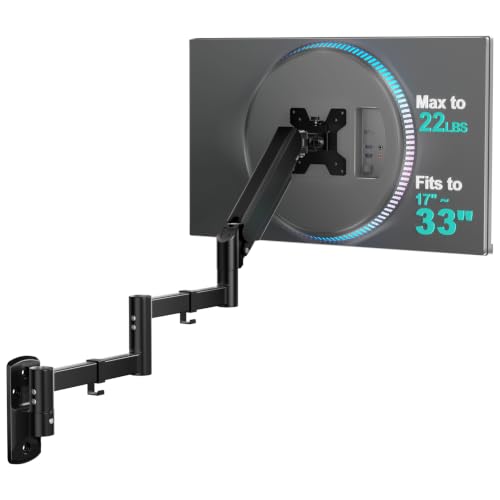
For a lighter secondary screen, the entry-tier bracket tests the worth-it question at the smallest possible stake: if a simple fixed mount transforms the spare room’s desk, the category has proven itself to you cheaply. Best for: secondary screens and first installs. Not suited for: large displays. Its condition is installation care — entry tier forgives nothing about fixing and levelling.
Ergotron LX Wall Monitor Arm — The Professional’s Yes
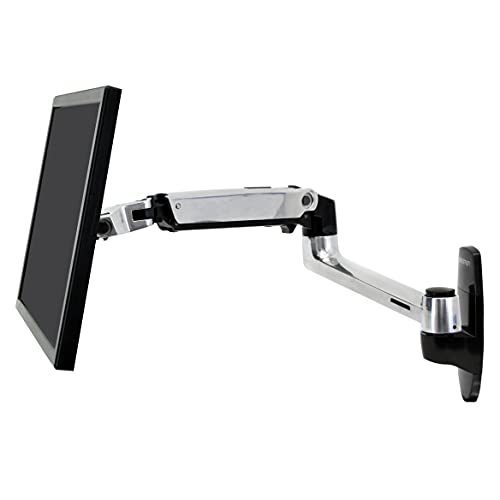
At the premium end, worth-it becomes a calculation about time: if the screen moves daily and the mount serves for years across successive displays, the premium tier amortises into sense. Best for: constant repositioners and accessibility setups. Not suited for: static desks. Buy it as a tool and it will feel inexpensive; buy it as an ornament and it will feel extravagant forever.
How to Get the Most Value If You Buy
Value in this category is manufactured at installation and harvested for years, so the harvesting advice is really installation advice wearing a future tense. Rehearse the position with tape through a full working day, because a position chosen by evidence rather than arithmetic is the one your body will thank you for in year three. Invest in the unglamorous components — the correct anchors for your wall, the raceway, the cables measured to the routed distance with slack to spare — because they are the difference between a floating screen and a floating screen with a waterfall. Put a hub at desk level so daily connections never require the screen’s back. Photograph the open installation and file the paperwork, so every future change starts from knowledge. And keep the monitor’s original stand, labelled, because the mount’s value includes the freedom it gives the screen’s next chapter.
Then use the mount like infrastructure, not like a gadget. When the screen is upgraded, verify the new display against the mount maker’s pattern and weight guidance and re-hang on the same plate. When the room changes purpose, ask the plate what it can hold for the room’s new life before buying anything new. When a second screen becomes plausible, return to the wall with the same model and the original measurements in hand. Owners who treat the mount this way report the category’s signature experience: a purchase that keeps quietly paying, long after the memory of paying for it has faded — which is, in the end, the only definition of “worth it” that survives contact with real households.
The Five-Year Account: Three Households, Audited
Household One: The Study That Never Moved
Consider the commonest case in full. A home worker with a modest desk against an owned wall installs a tilting mount one Saturday — investigation in the morning, tape rehearsal already done during the week, hang completed with a partner by lunch. The costs land exactly as this article predicts: an afternoon, a raceway, a pair of longer cables, a small bag of correct anchors. Then the account turns one-directional. The desk’s centre is free every morning for five years. The screen sits at the height chosen for the worker’s actual chair, and the afternoon hunch that prompted the purchase simply stops being a feature of the day. In year three the monitor is upgraded; the new screen is verified against the mount’s guidance and hangs on the same plate in twenty minutes, stand retired to a labelled box. In year five a second screen joins it, on a twin of the same mount, aligned against the original measurements. Audited honestly, the household paid one weekend and received roughly eighteen hundred improved working days. That is what “worth it” looks like when it is true, and it is not a close-run thing.
Household Two: The Flat That Changed Every Year
Now the same purchase in a different life. A renter — permission obtained, to keep the story fair — installs the same mount in a flat’s spare room. For eight months the account runs exactly as Household One’s: space, height, calm. Then the room becomes a nursery, the desk moves to a corridor alcove with no suitable wall, and the mount comes down: holes filled, deposit safe, but the screen returns to its stand in a space too tight for it, and the mount goes into a cupboard. The following year brings a new flat and a new wall, but the new desk floats mid-room and the mount stays cupboarded. Audited honestly, the household paid the same weekend and received eight good months — not nothing, but a fraction of the value the identical effort buys a settled household, and less than a good desk arm would have returned across the same years, because the arm would have travelled. The product did not change. The forecast did. Worth-it verdicts are verdicts about futures, and this future was knowable in advance.
Household Three: The Screen That Serves Everyone
The third household’s screen is a citizen of a family room: homework in the afternoon, a parent’s work in the evening, a film on Friday. Here the fixed mount would have failed the worth-it test — not on installation, but on service, because no single position serves a child, an adult and a sofa. The household instead pays the premium version of the cost: a full-motion mount, anchored with the strictest discipline in the category, cables slack through the whole swing, safety fixings engaged at every repositioning. The account then runs rich for years, because the mount is used as it was designed to be used — moved daily, by everyone, without friction. The audit’s lesson is that “worth it” has a usage term as well as a time term: the same money buys a triumph at daily movement and a monument at none. Forecast both terms — how long, and how often — and the verdict computes itself.
What “Worth It” Leaves Out of Most Reviews
Most worth-it coverage of this category argues about the bracket: its tier, its motion, its finish. Almost none of it argues about the two assets the decision actually commits — the wall and the room’s future — which is why so many confident purchases disappoint. A wall is not a consumable; it is the longest-lived component of the workstation, and committing a patch of it deserves the deliberation you would give any structural choice in a home, scaled down to size. The deliberation is not heavy. It is the tape on the wall for a day, the stud finder run twice, the honest conversation about whether this room is finished becoming what it will be. Buyers who grant the decision that much respect almost never regret it in either direction: the ones who mount, mount well; the ones who abstain, abstain knowingly, and buy the travelling support that fits the life they actually lead.
There is a second omission: the household’s other members. A mount’s value is collected by everyone who uses the room, while its costs are paid by whoever installs and whoever’s plans for the wall are displaced. Worth-it arithmetic done by one person, for a shared room, miscounts both sides. The fix is procedural and pleasant — decide at the tape stage, together, with the chair in place and the doorway view considered — and it converts the mount from one person’s project into the household’s infrastructure, which is the status under which these products quietly thrive for a decade.
The Opportunity Cost Audit: What the Same Effort Buys Elsewhere
A rigorous worth-it test compares the mount not against doing nothing, but against the other things the same money and weekend could buy. The same budget, in most households, could buy the desk arm outright — which returns adjustability instead of space, and suits the unsettled. It could buy a genuinely better chair component, a larger secondhand desk, or the riser and a cable-management overhaul together. It could also buy nothing at all and wait, which is the correct purchase more often than commerce admits: if the tape rehearsal does not move you, the status quo has won the audit fairly. The mount’s claim against these rivals is specific, and it is worth stating in its strongest form: no rival returns the whole stand footprint, grants exact chosen height, and holds the screen with structural stillness, simultaneously, for years, at this tier of cost. Where all three of those are wanted, the mount has no competitor. Where only one or two are wanted, a rival usually wins on simplicity — and a worth-it article that cannot say so is not auditing, it is selling.
The weekend deserves the same audit as the money. An installation Saturday is a Saturday not spent on the garden, the family or the hundred other claims a home makes. For the settled household that trade is trivially good, because the return is measured in years of mornings. For the household in motion, the same Saturday spent on almost anything else outearns it. This is why this article keeps returning to tenancy and temperament rather than to hardware: in the worth-it equation, the household is the variable and the mount is the constant, and audits should spend their time on the variable.
Moving Day, Resale and the End of the Story
Value questions should follow a product to the end of its story, so let us. On moving day, the wall mount’s account closes gracefully: unbolt, fill, sand, paint — the wall returns to innocence in under an hour, and the mount itself travels in a small box to whatever wall is next. The screen, meanwhile, freestands on the stand you kept, which is why keeping it is repeated throughout this cluster like a refrain. In the new home the mount’s second life begins with the same fundamentals — verify the screen, investigate the wall, rehearse the position — and owners report the second installation taking half the time of the first, because the skills and the paperwork travelled too.
Resale plays a smaller but real part. A monitor sold with its stand intact is a complete product; a monitor sold standless is a negotiation. A home sold with a soundly installed mount and a photograph of what is behind the wall plate is, to the right buyer, a feature — a workstation wall, ready. None of this is large money, but worth-it arithmetic is the sum of small honesties, and the mount’s end-of-story is unusually tidy for a product that begins with a drill. Compare the arm, which also travels well, and the riser, which travels best of all, and the pattern holds: in this category, portability and permanence trade against each other at every stage of life, from the first Saturday to the last. Choose the stage-weighting that matches your household, and the verdict — the real one, the one you will still agree with in five years — follows.
Signals From Your Current Setup: A Diagnostic
If the audits above still leave you uncertain, interrogate your present workstation, because it has been keeping records. Look at the zone under and behind your screen: if it is a sediment of cables, notes, drives and dust, your desk is telling you that its centre is being wasted by the stand — the strongest single signal that a wall mount will pay. Look at whatever is stacked under your monitor, if anything is: books, boxes and improvised platforms are a household confessing, in objects, that its screen height is wrong and it has been compensating. Look at your chair and your posture at the end of a working day, honestly: the hunch is data. And look at the wall itself — bare, suitable, yours — which in many homes has been waiting, unconsulted, to do the one job it is best at in the whole room.
Then interrogate the counter-signals with equal honesty. Count the things plugged into your screen this week: a high count predicts the port-access toll will be paid often. Count the times the furniture moved this year: a high count predicts the commitment cost will recur. Ask when the room last changed purpose, and when it plausibly will again. Ask who else has plans for that wall. The diagnostic’s virtue is that none of its questions requires expertise — only the willingness to treat your own household as evidence rather than as an audience for a sales pitch. Households that run it reach verdicts they do not revisit, which is the entire ambition of this article: not to sell a mount, but to retire a question.
One signal deserves its own paragraph because it is so often misread: envy of other people’s setups. The floating screens in photographs are real, and the calm they project is real, but the photograph does not show the household’s tenancy, temperament or wall — the variables that decide whether the same hardware would pay in your home. Let envy prompt the diagnostic, never replace it. If the diagnostic says your life is settled, envious afternoons are about to become ordinary ones. If it says your life is in motion, the correct response to the photographs is appreciation, not imitation — and a desk arm that will look nearly as good and travel considerably better.
The Verdict, Stated Three Ways
For the settled household, the verdict is yes — stated plainly, without the qualifications doing any real work. The mount’s costs are a weekend and a wall’s small patch; its returns are space, posture and stillness, collected daily for as long as the household stays, which by the premise of the question is years. Few purchases in the home office offer that ratio, and none of the alternatives offer all three returns at once. If you recognise your household in this paragraph, stop auditing and start measuring: the rest of this cluster — the monitor wall mount review for the hardware, the buying guide for the shortlist, the installation guide for the Saturday — exists to serve a decision that has already been made correctly.
For the unsettled household, the verdict is no — stated just as plainly, and with respect. Renting without permission, moving within the year, rearranging for joy, alternating heights all day: each of these makes permanence a liability, and together they make the mount the rare product whose excellence is irrelevant to you. Your yes lives elsewhere — in the arm that travels, the riser that lifts and stores, the desk that solves the problem at its root. Buying the mount anyway, because the photographs are beautiful, is how good products earn bad reviews; the most valuable sentence in this article may be the permission it gives you not to.
For the household between — owned wall, mostly settled, one nagging doubt — the verdict is procedural: run the tape rehearsal and the diagnostic, and let evidence break the tie. The doubt is usually one of three specific things wearing a general disguise: uncertainty about the wall, which investigation or an installer retires; uncertainty about the position, which the tape retires; or uncertainty about the future, which only the household can retire, by deciding how settled it intends to be. Name the doubt, apply its specific remedy, and the between-household becomes one of the other two — which is all a worth-it article can honestly do for anyone.
A closing observation about the question itself. “Is it worth it?” is usually asked about money, but with durable household infrastructure it is really asked about fit — between a product’s nature and a household’s nature. The wall mount’s nature is permanence in exchange for daily grace. Households whose nature is settled find that exchange generous; households whose nature is motion find it absurd; and both are right, which is why this article has spent its length on futures, temperaments and diagnostics rather than on steel and specifications. Answer for your household’s nature, and the money question — the smallest part of the ledger all along — answers itself in passing.
If you finish the checklist below with a yes, treat the purchase as the beginning of the value rather than the end of the decision: the rehearsal, the investigation and the careful Saturday are where the worth is actually created, and they are entirely within your control. That controllability is the last item in the mount’s favour, and in a way the most reassuring — unlike most products, whose worth is fixed at the factory, this one’s worth is substantially up to you.
There is one more household this article should salute before closing: the one that has already mounted, years ago, and forgotten the decision entirely. That forgetting is the product’s final report card. Nobody forgets a purchase that nags, creaks, droops or blocks a needed rearrangement every month; the wall mount’s destiny, when the forecast was right, is to vanish into the room’s furniture of the mind — noticed only when a visitor asks how the screen floats. If your household’s future points toward that kind of forgetting, the audit is over and the answer was yes all along.
And for the household still reading at this depth, a gentle nudge: the length of your deliberation is itself diagnostic. Buyers who were always going to mount use articles like this one to plan; buyers who were never going to mount use them to postpone. If the checklist below comes out yes, believe it the first time, order the mount, book the helper and put the Saturday in the diary — because in this category, the difference between worth it and not is rarely the product, and almost always the decisiveness of the household holding the drill.
Decisiveness, in this one small corner of domestic life, is a form of kindness to your future self — the self who will either enjoy a floating screen every morning or enjoy an un-drilled wall and a support that travels, and who will be grateful, either way, that the decision was made cleanly rather than drifted into.
The Decision Checklist
- Do I own this wall, or hold written permission to drill it? If no — stop; the answer is no.
- Can the wall’s structure be identified, and the drill path checked for cables and pipes? If no — pause until it can.
- Will this workstation stay in this room, in roughly this arrangement, for years? If no — favour the arm or the riser.
- Is my scarcity space or height, rather than adjustability? If no — the arm probably serves you better.
- Do I work mostly at one desk height? If no — reconsider, unless one posture truly dominates.
- Did the tape rehearsal feel like an improvement for a full working day? If no — believe the tape.
- Am I willing to install at full standard — stud or masonry, correct fixings, two people for the hang? If no — hire it or skip it.
The rule for reading your answers: a single no on the first two questions ends the matter. Nos further down do not end it, but they accumulate — two or more, and the alternatives deserve to win. All yeses, and the remaining work is choosing the family in how to choose a monitor wall mount and installing it by how to install a monitor wall mount.
Read the checklist aloud, ideally with the other members of the household in earshot, and notice which questions produce instant answers and which produce discussion. The instant answers are your household’s nature speaking; the discussions are its future being negotiated, which is exactly the negotiation this purchase deserves. However the answers fall, you will finish the exercise knowing something true about how your home works — and that knowledge, unlike a bracket, is useful in every room you will ever arrange.
That, in the end, is the most this article can offer any reader: not a verdict imported from someone else’s household, but a method for reaching your own and trusting it. The mount will do its part — steel is reliable that way. The household’s part is the forecast, and the forecast, done honestly, is the whole of the law in worth-it questions.
Run the forecast this week, while the questions are fresh and the tape is still in the drawer waiting to become an outline. A settled answer by the weekend — in either direction — is the real product this article has been selling all along, and it is the one purchase in the entire category that nobody has ever returned.
The questions below are the ones readers actually ask after the verdict, and their answers assume the forecast has been run. If it has not, they will still inform — but the checklist above is the instrument that turns information into a decision, and it deserves the first word and the last.
Answer them for your room, not for the room in the photograph, and the pattern of your answers will be the verdict wearing its working clothes.
Trust that pattern. It knows your household better than any reviewer, and it has no bracket to sell you.
Only the decision, which was yours from the first paragraph to this one.
Make it once, make it honestly, and let the wall — or the arm, or the riser — do the rest.
That is the whole assignment, and it is enough.
A Month Later: How to Tell Whether a Monitor Wall Mount Was Worth It
Compare it honestly with the workaround you use now, describing that workaround in the same detail, because vague dissatisfaction makes almost any purchase look worthwhile. Notice the small sounds, lights and movements during normal use, because those everyday details decide whether a monitor wall mount feels settled or constantly demands attention. Treat any accessory bundled in the box as a starting point, and check whether it suits your setup before assuming the maker has solved that part for you. Prefer a setup you can explain to another person in a minute, because simple arrangements are easier to troubleshoot, share and repeat than fragile clever ones.
As a concrete listing check, take the VIVO Single Monitor Wall Mount and the WALI Monitor Wall Mount Bracket named earlier in this article and confirm, line by line, that each variant offered matches the size, connection and contents described for it here. Test in the order you actually work: power on, connect, adjust, run a real task, then tidy up, rather than judging the monitor wall mount on a single impressive first impression. Ask whether the benefit you want survives your least favourite conditions, such as low light, a crowded desk, a warm room or a rushed start to the day. Leave a little headroom in every direction that matters, whether that means physical space, connection capacity, adjustment range or simply time to do a task properly. Add up the hidden costs of ownership in time and attention, including setup, cleaning, storage and the accessories you will inevitably want, before deciding it earns its keep.
Allow a short settling period for your own habits to adapt, but set a firm date to decide, well inside the return window, whether this monitor wall mount has earned its place. Consider who else will use, move or clean around this monitor wall mount, because a choice that only works for one careful owner often frustrates everyone else in the household or team. When something behaves oddly, return to the basics first: power, connection, position, cleanliness and the last setting you changed, in that order, before assuming a fault. Avoid forcing a connector, bracket or moving part that resists you, because resistance is usually information about alignment or fit rather than an invitation to push harder.
Revisit the decision after the novelty fades: the right monitor wall mount should feel almost boring in use, doing its job without negotiation every single time. Give a new monitor wall mount a fair trial in the position it was bought for before improvising workarounds, since many early complaints disappear once placement is corrected. If the benefit depends on a habit you do not yet have, be sceptical, since products rarely create routines on their own and often end up waiting in a drawer or corner. Keep the area underneath and behind the monitor wall mount reachable for cleaning, since the spots you cannot reach become the spots where dust and lost small parts collect. Keep liquids, loose papers and anything that sheds dust or fibres at a sensible distance, unless the monitor wall mount was clearly designed to work right beside them.
Think about the longest session you realistically run, not the average one, since heat, noise, clutter and small annoyances all grow more noticeable over time. Take a quick photo of the working setup before you change anything, so cable routes, positions and settings can be restored exactly if the new arrangement disappoints. When a specification is stated in unfamiliar terms, translate it into your own routine: how long, how often, how far, how loud in practice, before letting it sway you.
If the monitor wall mount will be shared, agree on one home position and one simple reset routine, so each person does not undo the previous person’s adjustments. Set a review date a month after buying, and judge the monitor wall mount by whether you would choose it again knowing exactly how your routine actually uses it. Run one deliberately awkward task early on, the kind you usually avoid, and see whether this monitor wall mount handles your edge cases or only your easiest work. Plan where the cables or materials connected to this monitor wall mount will run when the room is tidy, not just while you are testing on an empty surface. Ask what you would do on the day this monitor wall mount stops working as expected, and whether you could swap, reset, clean or return it without dismantling half your setup.
Look for the failure you would notice first if you chose badly: a port you cannot reach, a part that will not fit, a control you cannot see, or a routine that becomes slower instead of easier. Keep a short note of what worked, what annoyed you and what you adjusted, because that note is more useful than memory when you later replace or add another monitor wall mount. Check the underside, back or hidden face of the monitor wall mount as part of your inspection, because labels, vents, switches and fasteners often live where first impressions never look. A monitor wall mount is worth it when it removes a recurring frustration completely, and much harder to justify when it only makes an occasional minor annoyance slightly smaller.
Clean and inspect the area around a monitor wall mount on a simple schedule, since dust, loose fasteners and tangled leads cause many problems that get blamed on the product itself.
Frequently Asked Questions
Is a monitor wall mount worth it for a small desk?
It is the strongest case in the category. A small desk feels the stand’s footprint most, so reclaiming it entirely — not partially, as a riser or arm does — changes the room’s working character, and a settled small-desk workstation pays the one-time installation cost back in daily space for years. Provided the wall is yours and sound, a small desk is not a hesitation; it is the argument.
Is it worth it if I might move in a year or two?
Usually not, with one exception. The value case compounds over years, and a short horizon truncates it while the flexibility cost arrives in full at moving time. The exception is the household that will certainly re-mount in the next home: the mount travels, the holes fill in minutes, and the habit is established. If re-mounting is a hope rather than a plan, let the year decide and buy the travelling supports meanwhile.
Does a wall mount really help posture?
It helps the part of posture that is about screen position, which is a real part: a screen at your chosen height and angle removes the hunch that a low stand imposes and the craning that a high one does. It does not fix chair height, desk height or sitting habits, and it should not be sold as doing so. Treat it as the screen-position component of an ergonomic setup, alongside the guidance in ergonomic monitor setups.
Is a cheap wall mount worth it, or should I save for a better one?
For a fixed, lighter screen, a correctly matched entry-tier bracket installed properly is genuinely worth it — the category’s essentials do not require a premium badge. Save for the better mount when movement enters the picture: joints are where money turns into longevity, and a full-motion arm that droops within a year is the worst value on this page. Spend first on installation quality, second on the family, third on the tier.
What if I only want the screen a little higher?
Then the honest answer is probably a riser, and this article will not pretend otherwise. A wall mount is a large intervention whose signature benefits are space and exact height; a small height correction is a small problem, and small problems deserve proportionate tools. Read the riser’s worth-it analysis linked above, and if the small tool answers the whole complaint, buy it with a clear conscience and keep your walls un-drilled.
How long does a wall mount take to pay for itself?
In the only currency it deals in — daily use — immediately, and then continuously. There is no break-even date to calculate because the return is not financial; it is space at every sitting, height at every glance, stillness at every keystroke. Owners tend to report that the installation weekend feels repaid within the first week of mornings, and everything after that is dividend. If that sounds like your household’s arithmetic, the verdict has already happened.
Related Reading
monitor wall mount pros and cons · the monitor wall mount review · our monitor wall mount reviews · the monitor riser review · desk setups worth modelling