ilcastellomenu.com is reader-supported. When you buy through links on our site, we may earn an affiliate commission.
Where to Buy
The search says ‘fortravel’, and the meaning is clear enough: travel bloggers who need one camera to carry both halves of the job — the photograph and the video, the still that stops the scroll and the footage that fills the episode. The best cameras for photo and video for travel bloggers are therefore hybrid cameras in the truest sense, judged not on either craft alone but on the seam between them: how fast the camera crosses from stills to filming, how honestly it serves both masters inside one bag, one battery budget, and one pair of hands that is also holding the itinerary, the tickets, and the coffee.
Travel blogging imposes a working pattern no studio test reproduces. The day is a walk of twelve hours through light that changes by the neighbourhood; the subjects refuse scheduling — the market at dawn, the train window at noon, the old town at the blue hour; and the production office is a café table with one socket. A camera for this life must be light enough to be carried all day without negotiation, quick enough to be ready before the moment’s visa expires, and frugal enough with power and cards to survive until the evening’s upload.
The audience’s contract deserves stating, because it shapes the specification: travel followers come for authority with intimacy — the place known well and shown personally. The camera must therefore do two kinds of work that pull against each other: the polished establishing shot that proves the production’s quality, and the immediate, presenter-led piece to camera that proves its humanity. The six picks below are labelled by where they sit on that spectrum, from pocket immediacy to full production polish.
Weight is the specification that governs all the others, and this guide treats it as a first-class citizen rather than a footnote. Every gram in a travel kit is carried up the old town’s stairs, through the airport’s geography, and around the neck for the day’s twelve hours. The best travel blogging camera is not the best camera that travels; it is the best camera that is still being carried, willingly, on day nine.
Key Takeaways
- Travel blogging is a hybrid craft: judge cameras on the seam between stills and video, not on either alone.
- Immediacy belongs to the DJI Osmo Pocket 3 — gimbal video and usable stills from a coat pocket.
- Balanced bloggers should start with the Sony ZV-E10 II: real stills, serious video, lenses for both.
- The Fujifilm X100VI is the stills poet of the kit — fixed lens, beloved colour, video as a supporting act.
- Carry weight decides day nine: the kit you still carry beats the kit you left at the hotel, every trip.
In this guide
Quick Picks
| Camera | Badge | Its place in the travel kit |
|---|---|---|
| DJI Osmo Pocket 3 | Best for video-led blogs | Gimbal-smooth walkthroughs and presentable stills, ready in seconds, carried without thought. |
| Sony ZV-E10 II | Best hybrid all-rounder | Interchangeable lenses, strong stills and video, and creator manners in a travel-sized body. |
| Canon PowerShot G7 X Mark III | Best compact hybrid | A bright-lens compact that photographs like a camera and films like a creator tool. |
| Fujifilm X100VI | Best for stills-led blogs | The fixed-lens classic: photographs with soul, film-emulating colour, and discreet presence. |
| GoPro HERO13 Black | Best for adventure segments | The waterproof, mountable camera for the parts of the trip that get wet, fast, or airborne. |
| Sony RX100 VII | Best zoom pocket camera | A real zoom in a pocket body — the reach the fixed-lens picks cannot offer, everywhere you go. |
How We Chose These Picks
We evaluated these cameras on a simulated blogger’s day rather than in a studio: out before dawn for the market, stills and video alternating without a bag change, a piece to camera against the light, a walk-and-talk through a crowded street, interiors at lunch, the blue hour worked until the battery or the light gave out. Cameras were scored on the crossings — how invisibly they moved between stills and video, how the same battery and card budget served both, how the day’s files looked as one body of work rather than two crafts stapled together.
Carry was measured in hours, not grams alone: a camera’s neck-and-shoulder truth at hour eight, its pocketability in the café, its discretion in the place of worship and the market where a large rig changes the room. Travel photography’s ethics and aesthetics both run through discretion — the unposed place is the true one — and the picks favour cameras that can be present without becoming the event.
Video was judged as blogging, not cinema: stabilisation for the walking piece to camera, autofocus that holds a presenter against a moving street, audio arrangements that survive a breeze, and vertical framing fluency for the platforms where travel content now lives first. Stills were judged as blogging too — the hero shot for the post, the detail for the guide, the night street for the story — with colour that publishes without an evening of correction.
Finally, the kit around each camera was costed as luggage: the charger situation, the spare battery count, the lens or two that complete the system inside a carry-on’s discipline. A travel camera is a logistics decision wearing a lens, and this guide refuses to pretend otherwise.
Why Is the Hybrid Seam Where Travel Cameras Succeed or Fail?
Because the travel day does not announce which craft a moment belongs to. The fisherman hauling the net is a photograph; the same fisherman, laughing at the camera’s question, is the episode’s best thirty seconds of video — and the interval between those two realisations is about four seconds, which is exactly the time a clumsy camera needs to change modes, miss focus, and return a file of neither. The hybrid seam — the mode switch, the shared settings, the focus that survives the crossing — is where the day’s best material is won or lost.
Battery and card are the seam’s hidden half. Video spends both at rates stills photographers find alarming, and the blogger who shoots the morning’s stills extravagantly may meet the evening’s blue hour with a camera that is a paperweight with a viewfinder. Hybrid discipline — power budgeted across the day, cards treated as film stock with a known shot count — is a professional skill the equipment can ease (USB charging from the same bank as the phone, honest battery gauges) but never replace.
Colour is the seam’s aesthetic half. A blog whose stills glow in one palette and whose video speaks in another looks like two productions sharing a title. Cameras whose stills and video colour are family — the same science, the same profiles — publish as one voice, and the audience feels the coherence without naming it. This is a large part of why certain cameras dominate travel blogging’s visible output: their two crafts agree with each other.
And the seam has a human side: the blogger is presenter, photographer, director, and porter in one body, usually tired by the hour the light gets good. Controls that fall to hand, menus that do not require a café and a manual, a camera that forgives the hasty setting — these decide the evening’s yield more than any sensor figure. The picks below were chosen by that standard, and labelled by the balance of crafts each strikes.
What Does a Year of Travel Blogging Do to a Photographer?
The first change is geographical honesty. A year of publishing places teaches the blogger the difference between visiting and knowing: the first trip’s greatest hits give way to the second visit’s side streets, the adopted café, the neighbourhood whose names the audience now knows. The camera kit shrinks as the knowledge grows — an inverse relationship every veteran recognises — because the blogger who knows where the light will be needs less insurance against not knowing.
The second change is editorial. The year’s archive reveals which photographs the audience actually kept — rarely the famous view, often the small true thing: the hands, the weather, the ordinary morning in the extraordinary place. Bloggers who read their own analytics with a photographer’s eye start travelling toward those frames deliberately, and their work acquires the quality readers describe as ‘real’, which is the archive’s word for specific.
Endurance becomes a creative skill. The tenth city teaches what the first could not: how to pace a shooting day, when to leave the camera in the room and be a person, how to return from the rest day with the eye rinsed. The kits in this guide serve endurance by weight and simplicity; the blogger serves it by rhythm — and the year’s later trips are visibly better photographed than its earlier ones, on identical equipment, which is the year’s most encouraging datum.
The business of the blog matures in the same direction: the stills become a book, a print shop, a licensing trickle; the footage becomes the course, the stock, the collaboration. A hybrid camera bought for a feed turns out to have been capital equipment for a small media company, and its files — organised, backed up, findable — are the company’s balance sheet. Bloggers who treated the archive as an asset from month one own that company; the others own a hard drive.
There is a humility the year teaches about places: the camera is a guest, and the blog’s authority is borrowed from the hospitality of strangers. The bloggers who last are the ones whose conduct — asking, crediting, returning, spending locally — matches their captions. No camera in this guide can supply that conduct, but the discreet ones make it easier to practise, which is a design virtue with an ethical shadow worth naming in a buying guide.
The year ends with the kit at its smallest and the work at its best, and the blogger understands the equation this guide opened with: the camera was never the project. The place was, the people were, the returning was. The equipment’s whole duty — discharged by every pick here when honestly matched — is to be light enough to come along and good enough to be worthy of what it is shown.
Which of the Best Cameras for Photo and Video for Travel Bloggers Fits Your Blog?

DJI Osmo Pocket 3 — Best for video-led blogs
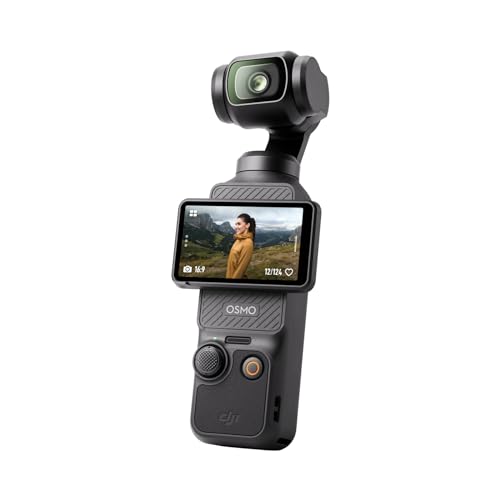
The Pocket 3 is the travel camera for the blog that leads with video: a gimbal-stabilised camera that walks through a market like a dolly, talks to its presenter with a rotating screen and subject tracking, and starts in the time a thought takes. Its stills are honest supporting players — entirely presentable for posts and social frames — and its whole manner serves the walking, talking, discovering rhythm that travel video is made of.
Its luggage footprint is the revolution: the primary camera of a working travel production, smaller than the lens cap collection of a traditional kit, charging from the same USB ecosystem as everything else in the bag. Bloggers whose trips are measured in miles walked and moments caught — rather than in setups built — will find this the most liberating instrument in the guide.
The Pocket 3’s stills deserve a fairer hearing than specialists give them: a gimbal-stabilised camera can hand-hold exposures at dusk that a conventional camera needs a tripod for, and its panoramic and motion modes produce the wide, breathing frames travel posts love. The blogger who learns its stills menu owns a second camera hiding inside the first — which, in a kit audited by the gram, is the highest praise available.
- Video: gimbal-stabilised, tracking presenter modes
- Stills: presentable, post-and-social grade
- Screen: rotating, vertical fluent
- Size: pocket — the lightest primary camera here
- Best at: walkthroughs, pieces to camera, discovery footage
Strengths
- Video polish with zero rig
- Carried all day without a thought
- Starts before the moment cools
Trade-offs
- Stills are support, not the headline act
- Internal battery plans the day
- Fixed lens — feet do the zooming
Its low-light manners keep the evening programme alive: the night market, the lantern street, the restaurant’s glow render with a steadiness phone footage cannot match, and the travel day’s most atmospheric hours stop being the camera’s excuse. Many a channel’s signature episode is a night walk; this is the night walk’s camera.
Protect the gimbal as the price of the magic — the case habit, the pocket discipline — and it will survive trips that retire lesser instruments. Small and precious beats large and precious in a travel bag, because small gets carried into the places where the stories are.
Best for: video-led travel bloggers and walking tours. Not suited for: stills-first photographers wanting print files

Sony ZV-E10 II — Best hybrid all-rounder
The ZV-E10 II is the balanced answer: a real system camera whose stills stand up as photography and whose video carries a channel, in a body sized for a day bag. Its autofocus serves both crafts — eyes for the presenter piece, subjects for the street — its lens shelf lets the kit be exactly as ambitious as the trip, and its creator manners (flip screen, product-style focus for the market find held to camera) were designed by people who watch travel blogs.
Choose it when the blog’s stills matter as much as its episodes — the guide post with real photography, the print for the wall at home — and when the trip’s ambitions vary enough to want a lens choice. It is the camera a travel blog grows on for years, because its ceiling rises with the blogger’s.
The ZV-E10 II’s video colour and its stills colour deserve the seam argument made concrete: shoot the market in the morning as stills, return for the evening episode, and the two bodies of work grade as one memory. Audiences experience that coherence as professionalism without being able to name it — the blog looks expensive in a way that has nothing to do with any single frame’s quality.
- Sensor: APS-C with strong stills and video
- Lenses: interchangeable Sony E shelf
- Screen: vari-angle, presenter fluent
- Autofocus: face, subject, and showcase modes
- Best at: balanced photo-video productions
Strengths
- Both crafts served seriously in one body
- Lens choice per trip and per story
- Creator design throughout
Trade-offs
- Needs a tripod or care for the smoothest walks
- Lens kit adds the weight back if unchecked
- No in-body stabilisation
Build its travel kit with a monk’s discipline: one versatile zoom for the day, one fast prime for the evenings, and the argument ends. The bloggers who suffer are the ones carrying four lenses ‘for options’; the ones who thrive decided at the hotel which story today is, and carried its lens. The camera supports either philosophy; the back votes for the monk.
Its stills deserve emphasis against the video-led rivals: this is the pick whose photographs can carry a written guide, a gallery, a book — the long-form assets that outlive the algorithm’s week. A travel blog is an archive pretending to be a feed, and archives are built of stills.
Best for: balanced travel bloggers growing a serious channel. Not suited for: ultra-light packers wanting one pocket device

Canon PowerShot G7 X Mark III — Best compact hybrid
The G7 X Mark III is the hybrid in a coat pocket: a bright lens and a one-inch sensor that photograph with genuine quality, video manners inherited from the creator world — including the microphone input that travel audio quietly requires — and a zoom range that covers the day from the café table to the viewpoint. For the blogger who wants one real camera, no lens decisions, and a bag that closes, it remains the compact benchmark.
Its parish is the trip where photography shares the day with travelling itself — the train journeys, the long lunches, the places where a system camera’s ceremony would change the experience. The files will carry the blog; the camera will never carry the day. That ratio is, for many bloggers, the entire point of going.
The G7 X Mark III’s microphone input is a travel feature in disguise: the windmuffed lapel microphone on a boat, in a market, on a mountain bus is what separates the episode that gets finished from the one that gets apologised for. Travel audio fails more productions than travel light ever has, and a compact that accepts a real microphone understands the assignment at a level its size conceals.
- Sensor: 1-inch type, bright fixed zoom
- Video: creator-grade, microphone input
- Body: pocketable, no lens decisions
- Stills: quality well beyond phone class
- Best at: one-camera trips and mixed days
Strengths
- Real hybrid quality, zero kit decisions
- Microphone input for travel audio
- The camera never dominates the trip
Trade-offs
- Fixed lens caps the ambitions
- Battery life wants a spare
- Not sealed for the storm day
Its low-light lens earns the evenings: the taverna, the night train’s dining car, the old town’s lamps — the hours when travel is most itself and phone files go to watercolour. A fast lens in a pocket is a superpower this guide will never stop recommending for travellers.
Buy the spare battery and the wrist strap in the same order, and develop the pocket habit — camera out at the café, in the hand at the viewpoint, never buried under the day’s shopping. Presence is this camera’s whole design brief; the owner’s habits complete it.
Best for: one-camera travellers and mixed photo-video days. Not suited for: bloggers needing lens reach or weather sealing

Fujifilm X100VI — Best for stills-led blogs
The X100VI is the stills poet of this guide: a fixed-lens camera whose photographs carry a signature — Fujifilm’s film-emulating colour, a lens with character, a leaf-shutter quietness and discretion that let a place stay itself while it is photographed. For the blog led by photography, whose video is the supporting act of pieces to camera and atmospheric clips, it offers something no system camera quite does: a way of seeing, built in.
Its constraints are its philosophy. One focal length means the blogger composes with feet and attention, and travel photographs made that way have a coherence audiences recognise as a voice. Its video is capable and stabilised enough for the blog’s needs, its built-in teleconverter crops serve in a pinch, and its whole presence — retro, quiet, unthreatening — opens doors that a production rig closes.
The X100VI’s built-in neutral-density filter and leaf shutter give it a daylight party trick with travel written all over it: flash-filled portraits at noon in the plaza, motion-blurred waterfalls without a filter kit, all from a camera that looks like a souvenir of the era it photographs. Bloggers who master those two features own a look competitors with bigger kits rent filters to imitate.
- Lens: fixed wide-normal, characterful
- Colour: film simulations, finished in-camera
- Body: compact, discreet, leaf-shutter quiet
- Video: capable, stabilised supporting act
- Best at: photography-led blogs and street work
Strengths
- Photographs with a recognisable voice
- Discretion that keeps places honest
- Colour that publishes without editing
Trade-offs
- One focal length is a real commitment
- Video is support, not the headline
- Demand has made it scarce and premium
Its parish is the unposed world: the café’s morning regulars, the workshop’s hands, the street that does not perform for cameras. Bloggers whose authority is intimacy — the place known slowly, the people met properly — will find this camera is less a tool than a letter of introduction, and its photographs have the grain of acquaintance rather than tourism.
Accept its discipline as the blog’s style guide: if the fixed lens cannot reach it, the blog walks closer or writes about it instead. Constraints, honestly kept, become the signature readers subscribe to.
Best for: photography-led travel bloggers and street storytellers. Not suited for: video-first creators or zoom-dependent shooters

GoPro HERO13 Black — Best for adventure segments
Every travel blog has its wet, fast, airborne chapter — the boat day, the canyon, the ski descent, the festival’s colour run — and the HERO13 is that chapter’s camera: waterproof, mountable to anything the adventure provides, stabilised against its violence, and tough enough to be handed to the guide, the driver, or the fellow traveller filming your own plunge. Its stills serve the post; its video is the segment the audience shares.
No travel kit built around the other picks survives those days intact, which is why the GoPro so often rides as the second camera in a serious blogger’s bag — a few hundred grams of insurance that the trip’s most kinetic stories come home. Judged as a primary stills camera it is a compromise; judged as the adventure department of a hybrid production, it is indispensable.
The HERO13’s time-lapse parish extends to the journey itself — the train window’s compressed geography, the ferry’s crossing, the road unspooling — the transitional poetry that tells the audience the blog has moved. Set it at the journey’s start, forget it, and the episode gains its connective tissue for the price of a mount and a battery. Travel is mostly transit; the camera that films transit beautifully films the truth.
- Body: waterproof, mountable everywhere
- Stabilisation: benchmark for action
- Stills: wide, honest, post-ready
- Modes: slow motion and time-lapse for segments
- Best at: water, wheels, altitude, festivals
Strengths
- The adventure chapter, covered
- Lends itself to guides and companions
- Survives what ends other cameras’ trips
Trade-offs
- Wide fixed look for everyday stills
- Low light is not its parish
- A specialist in a generalist’s bag
Its time-lapse and night-lapse manners deserve a blogger’s attention: the harbour’s evening compressed, the star field over the desert camp, the market assembling at dawn — set-and-forget sequences that give an episode its breathing spaces and a post its hero frame, filmed while the blogger was legitimately asleep or at breakfast. Delegation is a production skill; this camera accepts delegation gracefully.
Carry the mounts the trip actually offers — the boat’s rail, the bike’s bar, the helmet — chosen at the itinerary stage, not the airport. Adventure filming is logistics wearing a wetsuit.
Best for: adventure segments within a hybrid travel production. Not suited for: primary stills or low-light city work

Sony RX100 VII — Best zoom pocket camera
The RX100 VII answers the fixed-lens picks’ one silence: reach. Its pocketable zoom spans the day from the wide plaza to the distant detail — the tower’s clock, the musician across the square, the wildlife at the viewpoint’s rail — with autofocus (eye detection included) that behaves like a system camera’s and a pop-up viewfinder for the glare days. For the blogger whose stories need the telephoto sentence as well as the wide one, it is the pocket camera that never says no.
Its video is a strong supporting craft — stabilised, sharp, presenter-capable with its tilting screen — and its stills print respectably at the blog’s sizes. The compromises are the zoom’s dimming long end at dusk and an unsealed body; the return is a whole focal range in a jacket pocket, which on a walking day is a trade thousands of travellers make gladly.
The RX100 VII’s burst and tracking have a festival application: the dance, the procession, the sport in the square — moments where the pocket camera’s speed and reach outproduce the system camera still being assembled in its bag. Festivals are travel’s least schedulable subjects, and the camera that is ready wins them as a class.
- Lens: built-in zoom, wide to real telephoto
- Sensor: 1-inch type, fast readout
- Autofocus: eye detection, tracking
- Viewfinder: pop-up, for bright days
- Best at: reach in a pocket, mixed travel days
Strengths
- The telephoto reach no rival pocket offers
- System-camera focus manners
- Present everywhere the day goes
Trade-offs
- Long end dims as light falls
- Unsealed — mind the weather
- Small battery for video-heavy days
Its parish is the viewpoint and the square: the places where the story is happening at three distances at once and the blogger has ninety seconds of light left. Zoom, focus, frame, publish — the RX100’s fluency at that drill is why it remains the professional’s pocket camera years after its launch.
For bloggers graduating from a phone, it is also the gentlest real-camera education: same pocket, same spontaneity, but a viewfinder, a zoom with intent, and files that reward the evening’s edit. Many system-camera kits in this guide began as this camera’s owner discovering what they actually photographed — reach, it turned out, at golden hour, from wherever they happened to be standing.
Best for: travellers needing reach without a lens bag. Not suited for: dusk specialists or storm-day shooters
How Do You Pack a Hybrid Travel Kit That Survives Day Nine?
Budget the bag by the day, not by the spec sheet. List what a shooting day actually spends — batteries by the hour of video, cards by the episode, the charger’s demand on the evening’s single socket — and pack to that ledger with one day’s grace. The kit that fails on day nine fails arithmetically, in a spreadsheet the blogger could have made in January; the kit that survives was packed by arithmetic and carried by habit.
Standardise the power. Cameras that charge by USB from the same bank and cable family as the phone collapse the charger’s corner of the bag into a pocket — and a pocket saved is a lens carried, or a day extended. Where a pick demands its own charger, count that charger as a lens’s weight in every comparison, because the bag does.
Build the two-tier carry: the day kit on the body, the reserve in the room. The day kit is the camera, one battery’s grace, one card’s grace, a cloth, and nothing else — light enough that the twelve-hour walk stays a pleasure. The reserve — chargers, spares, the second lens, the laptop — works the evening shift at the hotel. Bloggers who carry the reserve all day are porters; bloggers who carry the day kit are photographers.
End every day with the same fifteen minutes: files copied twice, batteries on charge, cards formatted only after the copies verify, tomorrow’s first location checked against the dawn. Travel production is a rhythm before it is a talent, and the rhythm is what day nine feels like from inside — calm, provisioned, and already looking forward to the light.
Which Kind of Travel Blog Is Yours?
The walking narrator — city guides, food tours, the presenter-led discovery — lives on the Pocket 3’s gimbal and the ZV-E10 II’s presenter manners. Their blog is a companionship; the camera must walk, talk, and never make the audience seasick or the host self-conscious.
The photographic essayist — slow travel, written guides, galleries — lives on the X100VI’s voice and the ZV-E10 II’s stills, with video as the essay’s moving illustrations. Their camera must disappear into places and return with photographs that hold a wall as well as a feed.
The adventure chronicler — expeditions, sports, the wet and vertical world — builds around the GoPro’s survival and a hybrid main camera for the camp and the town. Their kit is judged at the trip’s roughest hour, and everything in it has been dropped at least once by design or by honest accident.
The family and slow-life blogger — the long stay, the adopted neighbourhood, the seasons of one place — needs the G7 X’s unobtrusive completeness or the RX100’s pocket reach: cameras that fit inside a life being lived rather than a production being run, because their blog’s authority is residence, not arrival.
Visas, voltages, and the unphotogenic logistics deserve their paragraph in any honest travel guide: the camera kit crosses borders as electronics, batteries fly in hand luggage by regulation, and drones — notably absent from this guide’s picks — face a patchwork of local law that has ended more travel productions than weather ever has. The hybrid camera kit’s quiet virtue is that it is legal, carryable, and insurable almost everywhere a blogger can buy a ticket to.
Insurance for the working traveller is a camera decision too: the kit’s replacement value, its coverage away from home, the excess that decides whether a theft is a disaster or an anecdote. Bloggers earning from the road should hold the paperwork conversation in the same month as the purchase, and keep the serial numbers in the cloud they back up to nightly. The archive is insured by ritual; the hardware, by policy.
Language is the travel photographer’s oldest accessory, and a phrasebook’s worth of the local tongue — the greeting, the request, the thanks — opens more doors than any lens in this guide. Cameras that wait politely while their owner attempts the language come home with portraits; cameras that arrive first come home with scenery. The blog’s intimacy is earned in the vernacular, then recorded.
Seasons write the itinerary for photographers who let them: the same route in blossom and in snow is two blogs, and the audience that followed the first will follow the second for the comparison. Hybrid kits serve the return trip best — light enough that returning is a pleasure, consistent enough that the two seasons grade as one body of work. Travel twice, publish once, is bad arithmetic; travel twice, publish twice, is a career.
Finally, the homecoming deserves its sentence: the trip’s last photograph, traditionally the front door, the dog, the kettle — the frame that tells the audience the traveller is a person with a life the travels depart from. Blogs that keep the ritual keep their humanity in the archive, and their audiences stay for the person as much as the places. The camera that took the waterfall takes the kettle with the same fidelity. That is the hybrid promise, kept at home.
The audience’s geography deserves a strategist’s paragraph: a travel blog is read in two places — the armchair of the person dreaming, and the phone of the person already there, searching for what to do tomorrow. The second reader is the blog’s commercial engine, and they need the practical frames: the menu, the sign, the room as it truly is. Bloggers who shoot the useful photographs alongside the beautiful ones build the archive that search engines and travellers both reward, and every camera here shoots both kinds without being asked twice.
Collaborations with places — the hotel, the tour, the festival — are the blog’s economy, and the hybrid camera is their unit of account: the deliverable is always both crafts, stills for their walls and footage for their feeds, from one visit and one pair of hands. A blogger whose kit crosses the seam invisibly can promise that deliverable with a straight face and a light bag, which is to say they can be hired. Professionalism, in travel media, is mostly this: both crafts, one visit, no drama.
Rest is a production value the itinerary hides: the blogger who schedules nothing for one day in seven returns with the eye that made the blog worth following, while the one who shoots every hour produces a fortnight of competent exhaustion. The cameras will wait in the room without complaint. Build the rest day into the route the way you build in the backup — as infrastructure, not indulgence — and day nine, the day this guide keeps invoking, becomes a pleasure instead of an audit.
And a closing word on the souvenir that matters: of everything a travel blogger brings home, the audience keeps the stories and the blogger keeps the archive — the raw, organised, backed-up truth of the places, against which every future book, film, and memory will be checked. Choose the camera that makes that archive richest for the weight your shoulders forgive, and the trips will take care of the rest.
Pack light, charge nightly, back up twice, and walk out before the light is finished with the town. The blog is the souvenir the audience gets; the archive is yours; the trip — if the kit was chosen honestly — belongs to both.
There is one more traveller’s discipline worth the ink: the photograph you take for the person who helped you — the guide, the host, the fisherman — printed or sent before the blog publishes anything. It costs a file and a minute; it buys the reputation that opens the next village. Travel media runs on such courtesies the way it runs on batteries, and the bloggers who last are remembered in the places they film, fondly and by name.
And when the plane banks over home and the trip becomes a folder, resist ranking the cameras by the frames they took. Rank the trip by the frames it gave you — the dawn you would have slept through, the street you would have hurried past, the person you would never have spoken to if the camera had not introduced you. That is the hybrid camera’s final accounting, and every pick in this guide, honestly matched, is rich in it.
The next trip is already a rumour in the calendar. Pack for it the way this guide taught: by the day, by the gram, by the story — and let the camera be the lightest true thing you carry.
Go where the light is going, arrive before it does, and bring back both halves of the evidence — the still and the motion, the place and the proof you were in it.
The world, obligingly, keeps being photogenic in motion. All the blogger has to do is be there, charged, with the right camera already in hand.
That readiness — not the resolution, not the badge on the strap — is what the audience has been subscribing to all along.
So choose the camera your shoulders forgive and your stories deserve, give it a fortnight at home to become a habit, and then take it somewhere it has never been. It has been waiting for the itinerary as patiently as you have.
The road, the rail, and the red-eye all agree on one thing: they reward the traveller who travels light and publishes honestly. Be that traveller, and let the camera keep the receipts.
Bon voyage — and may your day nine be as photogenic as your day one, which is to say, may you still be carrying the camera when it is.
The carrying, in the end, is the craft’s first half; the seeing is the second; and the publishing — the still and the film, side by side, telling one true story — is merely the proof that both halves happened.
Make it happen somewhere with a view, a market, and a train worth catching. The camera is ready when you are — see that you are.
And if the choice still feels large, shrink it to the only question that has ever decided a travel kit: which of these will you still be carrying, gladly, on the last morning of the trip? Buy that one. The blog will follow it anywhere.
The last morning always comes. Meet it with a charged battery, an empty card, and the camera that never once felt like luggage.
That is the whole test, and every camera in this guide passes it for somebody. Find your somebody — it is you, at an airport, at dawn, smiling at the weight of your own bag.
Smiling, charged, and already framing the terminal’s first light — that is the travel blogger’s natural state, and the right camera is simply the one that never interrupts it.
The itinerary will change — it always does, somewhere around the second city, for reasons involving a person, a festival, or a train that no longer exists. The light kit adapts; the heavy kit litigates. Travel rewards the adaptable with its best material, and adaptability, in a camera bag, is spelled in grams saved and decisions pre-made.
Pack for the change, then, and let the trip surprise you — it has a better imagination than the itinerary ever will.
How Do the Six Travel Blogging Cameras Compare?
| Camera | Stills | Video | Carry | Best blog style |
|---|---|---|---|---|
| DJI Osmo Pocket 3 | Presentable | Outstanding, gimbal | Video-led walking blogs | |
| Sony ZV-E10 II | Excellent | Excellent | Day bag | Balanced hybrid channels |
| Canon PowerShot G7 X Mark III | Very good | Very good | One-camera mixed trips | |
| Fujifilm X100VI | Outstanding, voiced | Capable | Shoulder, discreet | Photography-led essays |
| GoPro HERO13 Black | Honest, wide | Excellent action | Pocket plus mounts | Adventure segments |
| Sony RX100 VII | Very good | Very good | Reach-heavy travel days |
What Mistakes Strand Travel Bloggers With the Wrong Kit?
Packing for the portfolio instead of the day. The kit assembled from dream assignments — every lens, every contingency — spends the trip in the hotel safe, while the day’s actual blog is shot on the phone it was meant to replace. Pack for the itinerary you have, the transport you’ll take, and the person you’ll be at hour nine; the dream assignment, when it comes, rents its own equipment.
Letting video eat the stills’ day. The episode’s appetite is bottomless — one more take, one more angle — and the blog’s photographic archive quietly starves, until the guide post has nothing to illustrate and the year’s book has holes where the best days were. Hybrid discipline means the stills get their hour by right, scheduled like a ferry: the dawn market is photographed first, and filmed with what remains.
Publishing files that disagree with each other. Stills in one colour world, video in another, phone shots in a third — the blog reads as three productions in a trench coat. Choose cameras whose crafts agree, set one colour discipline for the whole kit including the phone, and the audience will feel the blog’s authority without ever knowing why.
Neglecting the backup until the card teaches the lesson. Travel files are unrepeatable by definition — the festival ends, the light moves on, the boat does not return — and a single copy on a single card in a single bag is a risk no professional in this guide’s reading would take twice. The two-copy evening ritual costs fifteen minutes and one small drive; the alternative costs the trip.
Buying the new camera at the airport of the big trip. A camera needs a fortnight of home use before it earns a passport — its menus in the fingers, its battery truth known, its failure modes met in friendly conditions. The bloggers in this guide’s reading who ignore the rule have all written the same post eventually, and it is not about the destination.
Final Recommendation
Choose by the blog you actually publish. Video-led walkers should start with the DJI Osmo Pocket 3 and never look back; balanced hybrid channels belong on the Sony ZV-E10 II, with the Canon PowerShot G7 X Mark III as the one-camera, no-decisions alternative. Photography-led bloggers will find their voice in the Fujifilm X100VI, reach-hungry travellers in the Sony RX100 VII, and every serious kit should find a corner for the GoPro HERO13 Black before the trip that gets wet. Pack by the day’s ledger, standardise the charging, carry the light tier, and back up every evening like the trip depends on it — because the blog does. The world is photogenic and in motion at the same time. These are the cameras that can keep up with both.
Related guides
- Best Cameras to Get for Travel: One-Body Buying Decisions Matched to Your Trip
- Best Cameras for Travel and Backpacking: One-Lens Systems Your Shoulders Will Thank You For
- Best Cameras for Travel Blogging and Vlogging: Pocket Studios for a One-Person Channel
Frequently Asked Questions
Can one camera really do both photos and video well for a travel blog?
Yes — that is precisely the current generation’s achievement, and every pick here was chosen at the seam. The honest differences are of emphasis: the Pocket 3 leads with video, the X100VI with stills, the ZV-E10 II balances both with interchangeable lenses. What none of them asks any longer is the old sacrifice — a blog no longer needs two bodies to publish two crafts at professional quality. It needs one camera whose balance matches the blog’s own.
How important is stabilisation for travel video?
For the walking piece to camera and the moving tour — the genre’s core shots — it is close to decisive, because travel video is filmed in motion, in crowds, without rigs. Gimbal stabilisation (the Pocket) is the gold standard; good electronic stabilisation serves the static and slow work. Judge a camera’s stabilisation by the walk-and-talk test in a real street, not by a spec line, and remember that no stabilisation rescues a presenter the audience cannot hear — audio remains the senior partner.
Should my travel camera have interchangeable lenses?
Only if your blog’s ambitions use them. Lens choice serves range, low light, and the deliberate production; it costs weight, decisions, and money at every airport. The fixed-lens and compact picks here cover the majority of travel blogging completely. Buy the system camera when you can name the photographs your current camera cannot take — that list, honestly written, is the true specification for any upgrade.
What about just using my phone for the whole blog?
Many successful travel blogs began exactly there, and the phone remains the backup and the second angle in every kit in this guide. The dedicated camera earns its place when the blog’s production values become its brand: the low-light episodes, the printed guides, the stabilised walks, the photographs that hold a wall. The crossover point is commercial as much as photographic — when the blog earns, its audience can see where the earnings went, and they reward it.
How many batteries and cards should a travel blogger carry?
By the day’s ledger: enough battery for your heaviest filming day plus one spare in rotation, charged nightly without exception, and cards sufficient for two days at your shooting rate, so a missed evening’s offload is an inconvenience rather than a crisis. USB-chargeable kits shrink the battery count honestly; video-led days inflate it. Know your own numbers from a practice weekend before the trip — the ledger must be measured, not guessed.
Is a fixed-lens camera too limiting for travel?
It is limiting the way a sonnet is limiting: the constraint composes. The X100VI’s single focal length has produced a recognisable school of travel photography — intimate, consistent, close — precisely because its owners walk to their frames and see in one grammar. It is the wrong tool for wildlife reach and the deliberate production; for the street, the café, and the adopted neighbourhood, its limitation is the style readers subscribe to. Choose it as a voice, not as a compromise.
Related Guides
Travel creators rounding out the kit usually read next about our vlogging camera guide for presenters and walkers our guide to cameras for outdoor pictures on the road our action camera guide for adventure travel segments


