ilcastellomenu.com is reader-supported. When you buy through links on our site, we may earn an affiliate commission.
Where to Buy
The search for the best csc cameras under 500 deserves an honest first paragraph, so here it is: CSC means compact system camera — a mirrorless body with interchangeable lenses — and the current generation of those bodies, bought new, mostly lives above the $500 line this keyword draws. Any guide that lines up today’s mirrorless bodies and calmly labels them all “under 500” is hoping you will not check. This guide takes the other road, and labels every pick for exactly what it is.
Four picks below are verified current bodies, linked, and each is flagged in plain language as a step-up: the closest honest routes past the line, for buyers who can stretch and want new equipment with a warranty. Two picks are prose-only routes that genuinely respect the frame — the used market in previous-generation mirrorless bodies, and manufacturer-refurbished kits — because at this budget those routes are not a compromise version of the answer; for many buyers they are the answer, delivering a real system camera, a lens mount with a future, and money left over for the lens that actually makes the pictures.
Hold the frame itself up to the light before spending anything. Five hundred is the budget for a system, not a body: a camera without a lens is a paperweight with a sensor, and memory, a bag and a second battery all queue behind it. The routes below are judged as systems — body plus a way to take a photograph on the first day — and that discipline, more than any single model choice, is what separates a bargain from a false start.
Key Takeaways
- Current mirrorless bodies bought new mostly sit above this budget — the step-ups are labelled.
- Used previous-generation bodies are the honest in-frame route to a real system.
- Manufacturer refurbished kits split the difference: near-new, warrantied, gentler prices.
- Budget for the system — lens first, then card, bag and spare battery.
- The lens mount you choose matters more than the body you start with, every single time.
- A step-up bought knowingly beats an in-frame body bought on a false promise.
In this guide
Quick Picks
| Camera or route | Badge | Why it earns its place |
|---|---|---|
| Canon EOS R50 | Step-up — the closest current body | The nearest new route past the line: a friendly, capable APS-C mirrorless body on Canon’s RF mount. |
| Nikon Z30 | Step-up — the creator-leaning body | A compact Z-mount body built around video and vlogging, stepping up for its screen and simplicity. |
| Sony ZV-E10 II | Step-up — the video-first body | Sony’s creator body on the deep E-mount lens shelf, stepping up for its autofocus and video craft. |
| Canon EOS R10 | Step-up — the enthusiast’s body | A viewfinder, proper controls and room to grow, for buyers stretching furthest with intent. |
| Used Previous-Generation Mirrorless Body | The in-frame route, in prose | Yesterday’s capable bodies, bought carefully, put a real system inside the budget. |
| Manufacturer-Refurbished Mirrorless Kit | The warrantied middle road, in prose | Maker-checked bodies and kits that narrow the gap between used prices and new confidence. |
How Did We Handle a Budget the Current Bodies Mostly Exceed?
By refusing to lie with labels. Each linked body below was checked against the verified pool for this site, and each is presented as what it is: a step-up beyond the keyword’s frame, included because buyers researching this budget deserve to see the nearest new alternatives with their eyes open, not because a headline needed filling. Where a body’s kit configuration or a seasonal sale might move it closer to the line, this guide says “closer” — a word with a meaning — and never prints a price it cannot guarantee at the moment you read it.
The in-frame routes were judged with the same seriousness as the bodies. A used or refurbished recommendation is not a shrug toward the classifieds; it is a route with its own craft — what to inspect, what to ask, which wear matters and which is cosmetic — and it is written up below with the same detail as any linked pick. A route that delivers a working system inside the budget, honestly described, outranks a new body described dishonestly at any price.
System thinking governed everything. A body is a down payment on a lens collection, so each pick is assessed partly on the mount it commits you to: the depth of its lens shelf, the availability of affordable glass, and the upgrade path when the starter body is eventually replaced. At this end of the market, the mount decision outlives the body decision by a decade, and the guide weighs it accordingly.
Finally, total cost was kept in view throughout. A step-up body bought without a lens is not a camera yet, and an in-frame used body with a good kit lens included can be the most complete purchase on the page. The comparisons below always ask the same unfashionable question: what does it cost to take a photograph on Saturday?
What Does CSC Mean, and Why Do Photographers Choose One?
Compact system camera is the older, descriptive name for what most people now call mirrorless: a camera body with no mirror box, an electronic viewfinder or rear screen for composing, and — the defining trait — interchangeable lenses on a mount shared across a family of bodies. The “system” in the name is the point. You are not buying a camera; you are joining a lens ecosystem at its entry gate.
Photographers choose this class for three durable reasons. The sensor is far larger than a phone’s or a compact’s, gathering light and detail in another league. The lenses can change with the work — a wide for interiors, a portrait prime, a telephoto for the school match — while the body stays. And the controls teach photography properly: aperture, shutter and sensitivity as physical decisions, the craft itself rather than a simulation of it.
Against that, the honest costs: bulk beyond a pocket camera’s, a learning curve a phone never asks for, and the open-ended spending gravity of a lens shelf. A CSC is the right answer for a buyer who wants to grow; it is an expensive ornament for a buyer who wanted a better snapshot. This guide assumes the grower, because the keyword does.
Why Has the New-Body Market Drifted Above This Budget?
Because the entry level moved. The cheapest mirrorless bodies of a few generations ago were built down to a price; today’s starter bodies are built up to a standard — better autofocus, serious video, weather-aware construction, screens and viewfinders that no longer feel like apologies — and the whole class’s floor rose with its ambitions. Meanwhile the phone absorbed the casual buyer who once sustained the truly cheap camera, and makers stopped chasing a customer who had left.
The result is a market with a gap exactly where this keyword stands, and gaps in markets are filled by the secondhand flow. Mirrorless bodies from the previous two generations — themselves excellent, modern cameras — circulate in large numbers as their owners upgrade, and their prices settle where the new market refuses to go. That circulation is not a failure of the system; it is the system working, and the smart money at this budget has always known where to stand in the flow.
None of this makes the step-up bodies bad value. Judged as cameras rather than as budget entries, the four linked bodies below are strong machines whose prices buy years of service. The guide’s objection is only ever to the label, never to the cameras — a distinction worth keeping, because a buyer who stretches knowingly to a current body has made a good decision, while a buyer promised one “under 500” that is not has been robbed of the chance to make it.
Which Are the Best CSC Cameras Under 500 — and Which Routes Actually Fit the Frame?
The map, plainly: two routes live inside the frame — used previous-generation bodies, and refurbished kits when the right one surfaces — and four current bodies step past it at different heights, each flagged. Read the step-ups as the price of newness and warranty; read the routes as the price of patience and inspection. Both currencies are respectable.

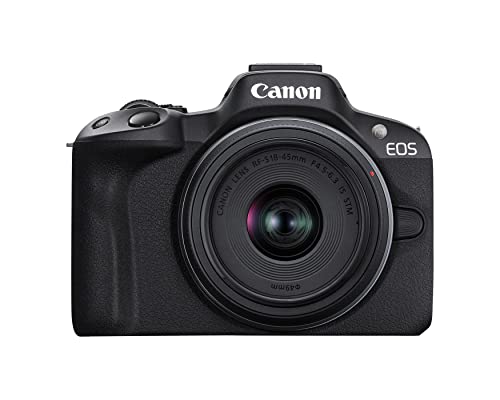
Canon EOS R50 — Step-up: the closest current body
Label first, as promised: the EOS R50 is a step-up pick. It is a current APS-C mirrorless body whose new price lives beyond this guide’s frame, and it is included because it is the nearest shore on the other side — the body a buyer stretching modestly past the budget most often lands on, and lands well. Nothing in this section will call it an under-$500 camera, because it is not one; what it is, is the smallest honest step from the frame to a new, warrantied, current system.
As a camera, its case is friendliness with depth underneath. The R50 is built for people arriving from phones: guidance that explains rather than patronises, autofocus that finds faces and eyes without being asked twice, and video that flatters beginners while they learn. Underneath the welcome mat sits a proper RF-mount system body — the same mount as Canon’s professional line — so the lenses bought for it remain citizens when the photographer outgrows the body, which the body is designed to help them do.
- Format: APS-C mirrorless, Canon RF mount
- Budget status: STEP-UP — new price beyond the $500 frame
- Character: guided, beginner-welcoming, quietly capable
- Video: a genuine strength, not an afterthought
- Role: the nearest new body for a modest stretch
Strengths
- Learning curve as gentle as the class offers
- Autofocus that makes early success likely
- RF mount gives the lenses a permanent home
Trade-offs
- It steps past the frame — the stretch must be real money
- Kit-lens thinking still applies: body alone takes no photographs
- Keen growers may reach its ceiling sooner than the R10’s
Who should make this particular stretch? The buyer whose budget is firm in spirit but has one notch of give, who values a warranty and a current model, and whose alternative was a used body they feel unqualified to inspect. That buyer is not breaking the budget’s rule; they are amending it, knowingly, for peace of mind — and peace of mind is a legitimate feature, priced like any other.
Buy it as a kit if a kit is offered, because the frame’s arithmetic punishes the body-only route: the lens bought separately afterwards is where step-up budgets go to become step-up-and-a-half budgets. A body-and-lens combination, checked as a single total against your true ceiling, is the honest way to price this pick.
Best for: beginners who can stretch one notch for a new, guided, warrantied start in a lasting system. Not suited for: budgets with no give at all — the used route below serves those better

Nikon Z30 — Step-up: the creator-leaning body
The Z30 also steps past the frame, and its reason for existing is narrower and more specific than the Canon’s: it is Nikon’s compact body designed around the creator who talks to the camera. There is no viewfinder — a decision that startles stills photographers and delights vloggers, because the budget and the bulk went instead into the screen, the microphones’ welcome, and a body small enough to live on a mini tripod at arm’s length.
Judge it as the specialist it is. For the talking-head video maker, the cooking channel, the musician filming practice and progress, the Z30’s priorities are correctly ordered: it faces its user, it hears them kindly, and it keeps the whole apparatus light enough that filming stays a habit rather than an event. Nikon’s Z mount behind it is a serious system shelf, so the creator who grows into stills, or into a second body, is not rebuilding from zero.
- Format: APS-C-class DX mirrorless, Nikon Z mount
- Budget status: STEP-UP — new price beyond the $500 frame
- Character: video-first, screen-centric, deliberately viewfinder-free
- Size: among the smallest bodies in this guide
- Role: the step-up for creators who film themselves
Strengths
- Purpose-built for self-filmed video work
- Compact enough to encourage daily use
- Z mount opens a deep, growing lens shelf
Trade-offs
- No viewfinder — stills purists should look elsewhere here
- Steps past the frame like every new body in this guide
- Its specialism is wasted on photographers who never film
The buyer’s question for this pick is unusually easy to ask: when you picture using the camera, are you in front of it? If the honest answer is yes, most days, the Z30’s compromises are not compromises at all, and its step past the frame buys a tool shaped like your actual work. If you are behind it, composing through a finder with the world in front of you, the same money steps better toward the R10 or across to the used route’s viewfinder bodies.
Creators should also price the audio honestly. A body this video-minded deserves the microphone conversation early — its built-in arrangement is a starting point, and the budget that stretches to the body should reserve its small remainder for the sound, because audiences forgive soft pictures far sooner than hard listening.
Best for: vloggers and self-filming creators who can stretch past the frame for a purpose-built tool. Not suited for: viewfinder photographers, or any budget with zero give

Sony ZV-E10 II — Step-up: the video-first body
Sony’s entry in this guide steps past the frame too, and says so on its badge. The ZV-E10 II is the second generation of Sony’s creator body: an APS-C mirrorless camera whose design meetings clearly began with the words “video first”, carrying Sony’s formidable subject-detecting autofocus, a deep well of picture customisation, and the E-mount — the most populated lens shelf in the mirrorless world, fed by Sony and by a crowd of independent lens makers at every price level a growing photographer could ask for.
That lens shelf is this pick’s long argument. A body is replaced in a few years; a mount is a decade’s address, and E-mount’s address book is enormous — affordable primes, specialist video glass, and a used market deep enough that the in-frame habits this guide teaches for bodies apply to its lenses too. A buyer stepping up to this body is partly buying the shelf it stands in front of, and the shelf justifies a share of the stretch.
- Format: APS-C mirrorless, Sony E mount
- Budget status: STEP-UP — new price beyond the $500 frame
- Character: video-led creator body, autofocus-rich
- Lens shelf: the deepest in this guide, new and used
- Role: the step-up for video makers planning to grow
Strengths
- Autofocus that serves solo creators superbly
- E-mount lens choice at every future budget
- Video features arranged by people who shoot video
Trade-offs
- A clear step past the frame, not a near miss
- Menus reward learning; casual users may never explore them
- Stills-first photographers pay for video craft they may not use
Hybrid shooters get particular value here — especially photographers who also film. The ZV-E10 II stills are entirely respectable, and the creator who begins with video and discovers stills, or the reverse, finds one body fluent in both dialects. In a guide organised by an unforgiving budget, versatility is a financial quality: the body that serves two ambitions postpones the second body by years.
Price the stretch as a system again. This body’s natural companions — a bright prime for low-light filming, a small microphone — are where its owners’ next spending goes, and the honest total is body plus those intentions. A buyer who stretches to the body and starves the sound has climbed the wrong half of the mountain.
Best for: video-first and hybrid creators who value autofocus and the E-mount shelf enough to step up. Not suited for: firm budgets, or stills-only photographers who would fund features they never touch

Canon EOS R10 — Step-up: the enthusiast’s body
The R10 is the tallest step in this guide and wears the label without flinching: a current enthusiast APS-C body, priced clearly beyond the frame, included for the buyer who reads the whole page, feels the used route’s uncertainties, and decides to buy once, properly, at the level they intend to grow into. That is a legitimate decision — arguably the classic photographer’s decision — and this guide’s job is to make sure it is taken with the step’s height in full view.
What the height buys is the complete photographer’s layout: an electronic viewfinder for composing in bright light the way photographers have always composed, fuller physical controls that stop sending you into menus, fast and confident subject-tracking autofocus, and a body whose ceiling sits years further away than the starter bodies’. Where the R50 welcomes the beginner, the R10 respects the apprentice — the shooter a year in, hungry, and tired of equipment that says “not yet” to their ideas.
- Format: APS-C mirrorless, Canon RF mount
- Budget status: STEP-UP — the clearest step beyond the frame here
- Character: viewfinder, direct controls, enthusiast intent
- Focus: subject detection for people, animals and vehicles
- Role: buy-once body for growers who refuse the starter rung
Strengths
- Viewfinder and controls serve serious stills craft
- Headroom measured in years, not months
- Same RF mount as the R50 — lenses stay in the family
Trade-offs
- The step is the largest in this guide — budget honesty essential
- Body-only pricing tempts; the lens still has to be funded
- More camera than a casual user will ever wake up
Set this pick beside the first one and the Canon fork becomes clear: R50 for the guided start, R10 for the committed apprentice, same mount beneath both so that neither choice orphans a lens. A household can even walk the fork in sequence — start on one, hand it down, step to the other — which is how camera systems quietly become family infrastructure.
The warning that belongs uniquely to this pick is about sequence. Stretching to the R10 by abandoning the lens budget produces a magnificent body photographing through the cheapest glass available, a combination whose results will undersell both. If the total — body, a decent lens, the essentials — breaks the true ceiling, the R50 or the used route is not a defeat; it is the same plan with the numbers in the right order.
Best for: committed learners who can fund body and lens properly and want years of headroom. Not suited for: anyone whose stretch would consume the lens budget to do it
Used Previous-Generation Mirrorless Body — The in-frame route, in prose
Now the route that actually lives inside the budget, described in prose because no single verified product can stand for a market. One or two generations back, every major mount fielded starter and enthusiast mirrorless bodies that were — and remain — genuinely good cameras: large sensors, real controls, mature autofocus, video that embarrassed the phones of their day. Their owners have upgraded; the bodies circulate through reputable used dealers and marketplaces at prices the current catalogue refuses to touch, frequently with a kit lens in the box and room left in the frame for the essentials.
Buying used is a craft with rules, and they are learnable in an afternoon. Buy from sellers who grade honestly and accept returns. Ask the shutter count and compare it with a life measured in the hundreds of thousands for enthusiast bodies. Inspect, in person or by detailed photographs: sensor spots at small apertures, mount wear, dial function, screen and viewfinder clarity, battery health. Test every dial and button in the return window, shoot a plain wall to find sensor marks, and update the firmware like a new owner should.
- Source: reputable used dealers first, marketplaces with care
- Checks: shutter count, sensor, mount, dials, battery
- Often included: kit lens — the system’s first day solved
- Savings: the frame’s remainder funds lens, card and bag
- Role: the budget’s honest centre of gravity
Strengths
- A real system camera genuinely inside the frame
- Previous flagships’ features at starter prices
- Money remains for the lens that matters more
Trade-offs
- No manufacturer warranty in most cases
- Inspection is your job now — budget the attention
- Batteries and chargers vary; confirm what is in the box
Choose the generation with your head, not your nostalgia. The sweet spot is usually the body that was the sensible recommendation two product cycles ago: new enough for modern autofocus and connectivity, old enough for the upgrade wave to have priced it kindly. Bodies older than that can be wonderful and can also be archaeology; the difference is research, and an evening of it is the used route’s true admission fee.
Notice what this route does to the system’s future. The money the frame saves on the body is the money that buys the fast prime or the longer zoom in year one instead of year three — and lenses, as every photographer eventually testifies, are where pictures come from. A used body with a good lens is not the budget version of the dream. Photographically, it frequently is the dream, arrived early.
Best for: careful buyers happy to inspect, wanting a complete system inside the frame. Not suited for: buyers who need a warranty’s certainty or dislike secondhand anything
Manufacturer-Refurbished Mirrorless Kit — The warrantied middle road, in prose
Between the new shelf and the used market runs a quieter road: bodies and kits refurbished by their own makers or authorised programmes, inspected, restored where needed, and sold with a warranty standing behind them. The stock is irregular — that is the route’s defining trait — but when a starter kit surfaces through it, the arithmetic can be the best on this page: near-new equipment, maker confidence, and a total that can land inside or near the frame that new prices have abandoned.
Treat availability as weather. Refurbished shelves fill unpredictably, good kits leave quickly, and the buyer who has decided their mount and their model in advance can move the day the right box appears, while the undecided buyer watches it go. Set the maker’s outlet and the authorised dealers as bookmarks, check them the way anglers check a river, and hold your budget ready rather than your hopes vague.
- Source: manufacturer outlets and authorised refurb programmes
- Condition: inspected and restored by the maker or its agents
- Warranty: included — read its length and terms
- Availability: irregular; decided buyers move first
- Role: the middle road between used prices and new confidence
Strengths
- Maker inspection removes the used route’s guesswork
- Warranty restores the safety net
- Kits solve the lens on day one
Trade-offs
- Stock cannot be summoned on your schedule
- Savings vary — some listings sit close to new prices
- Popular mounts and models vanish fastest
Verify the programme, not just the product. Genuine maker refurbishment carries the maker’s warranty and the maker’s grading; third-party “refurbished” labels range from excellent to decorative, and the word alone guarantees nothing. The seller’s identity is the specification here — buy the programme’s reputation along with the camera, and let anonymous refurbishments compete for somebody else’s money.
Where does this route sit in a plan? As the patient buyer’s first choice and everyone’s plan B: decide the mount by the linked bodies above, watch the refurbished shelves for that mount’s starter kit, and give the used route a deadline — if the refurbished box has not surfaced by the date the photography needs to start, buy used with the inspection craft this guide described, and start making pictures instead of watching shelves.
Best for: patient buyers wanting warranty-backed value near or inside the frame. Not suited for: anyone who must buy this week, or who hates uncertain stock
How Do the Six Routes Compare on One Page?
| Pick | Budget status | Warranty | Best first lens story |
|---|---|---|---|
| Canon EOS R50 | Step-up past the frame | New, full | Kit lens, then an RF prime |
| Nikon Z30 | Step-up past the frame | New, full | Kit zoom sized for creators |
| Sony ZV-E10 II | Step-up past the frame | New, full | Kit zoom, then the deep used E-mount shelf |
| Canon EOS R10 | Step-up, furthest | New, full | Kit lens funded properly, no starving |
| Used Previous-Generation Mirrorless Body | Inside the frame | Seller-dependent | Often included — check the box |
| Manufacturer-Refurbished Mirrorless Kit | Inside or near the frame | Maker-backed | Kit by design |
One table, one message: the frame is served by patience, and the step past it is served by honesty. Either is a respectable way to become a system photographer.
How Should the Rest of the Budget Be Spent After the Body?
In order of photographic consequence. First, the lens the body will actually wear: a kit zoom for range, or a fast prime for low light and portraits, chosen by the subjects you named before shopping — a body with the wrong lens is a down payment on frustration. Second, memory: a card fast enough for the body’s video and bursts, bought from a reputable source, because counterfeit cards are the used market’s ugliest corner and they fail mid-wedding.
Third, power. A second battery is not an accessory in mirrorless life; it is the difference between a camera and a countdown, and it belongs in the first purchase, not the first emergency. Fourth, carriage: a bag or strap that makes the camera present in your life, because the system camera left at home for its bulk takes no photographs at all, whatever it cost.
Everything after that — filters, cages, the second lens, the tripod upgrade — belongs to later months and later evidence. The discipline of the in-frame routes is precisely that they leave this list fundable; a budget consumed entirely by a body has not bought a system, only its most expensive component.
Which Mount Should a Budget Buyer Commit To?
The mount is the marriage; the body is the wedding. Judge mounts by the lens shelf you will actually shop from over the next several years: the affordable primes and zooms in the maker’s own line, the independent makers serving that mount, and the depth of its used market — because a budget buyer will shop used glass even after buying a new body, and some mounts’ secondhand shelves are libraries while others are pamphlets.
All four mounts represented by this guide’s linked bodies are living systems with futures, which is why the guide can recommend stepping up in any of four directions without anxiety. The differences that matter are personal: the handling you prefer, the colours you like from the files, the video craft you need, and the local dealer or friend group whose shelf you can borrow from. Borrowability is an underrated specification — a friend group shooting one mount is a lending library no budget can buy.
Commit without superstition. Photographers agonise over mounts as if switching were ruinous, yet the used market that this guide celebrates makes switching a transaction rather than a tragedy: sell the shelf, buy the other shelf, lose a little, learn a lot. Choose the mount that serves this year’s photography and next year’s probable subjects, and let the decade take care of itself.
How Do You Inspect a Used Mirrorless Body Like a Dealer Would?
Begin with the sensor, because it is the one component whose flaws print on every frame. Photograph a plain, evenly lit surface at a small aperture and examine the result enlarged: dust is cleanable and forgivable, scratches and fungus are neither. Then work the mount — a lens should seat with a clean, certain motion — and the dials, each of which should click through its positions without grit, slack or ghosts.
Run the shutter through its paces, bursts included, and listen for the tired irregularity that precedes failure; check the stated shutter count against the body’s cosmetic story, because a low count in a battered shell is a narrative that needs explaining. Test the screen’s hinge, the viewfinder’s clarity, every port’s cover, and the battery’s honesty across an hour of shooting rather than a minute of menus.
Finally, buy the return window and use it like a professional: a weekend of real photography, in your light, on your subjects, inside which any fault is the seller’s problem. A seller who fears that weekend is telling you the body’s biography in advance. A seller who encourages it is the used market at its best — and there is a great deal of that best, which is why this route anchors the guide.
How Far Does a Starter System Actually Take a Growing Photographer?
Further than the marketing of newer bodies wants you to believe. The previous-generation body on the used route, or the starter body stepped up to, shares its sensor class and its mount with equipment that professionals used to produce published, printed, paid work only a few years ago — work that has not become worse because a successor exists. Technique is the binding constraint on almost every beginner’s photographs for their first several thousand frames, and technique is free.
The honest ceiling, when it arrives, announces itself specifically: autofocus that loses a running child in poor light, video that lacks a feature a client now expects, a viewfinder that tires your eye on long days. Those are upgrade reasons with names, and a photographer who can name theirs buys the next body once, correctly. The photographer who upgrades on a feeling buys three bodies in the time the first photographer buys one — and the feeling, examined, was usually a lens they needed wearing a body’s clothes.
Plan the system’s growth the way the mount section advised: body to learn on, kit lens to discover your distances, one fast prime bought with evidence, then the specialist lens your subjects keep requesting. That sequence, walked over two or three years, produces a kit that professionals nod at — assembled, in its first chapter, inside or near a frame that the new catalogue said was impossible.
Why Do Kit Bundles Deserve a Harder Look Than Bodies Alone?
Because the bundle is where this budget is won or lost. A kit pairs the body with the lens the maker intends it to start with, usually at a gentler combined total than the two bought apart, and it solves the first-day problem completely: open box, charge battery, take photographs. For a frame-bound buyer, that completeness is not a convenience but the entire proposition — the body-only “bargain” that requires a second transaction is a loan taken against next month.
Read bundles with a sceptic’s eye for padding, though. The kit lens is the bundle’s honest core; the accessories wrapped around it in some listings — the filters of mysterious quality, the bag shaped like a camera rather than for one, the card of no stated speed — are worth approximately what they cost to include, and a bundle priced on their supposed value is a body and lens wearing a costume. Compare bundles by body plus lens, and treat everything else in the box as packing material with ambitions.
Refurbished kits deserve the same reading with the polarity reversed: there, the bundle is usually the maker’s own pairing, unpadded, and its appearance on the outlet shelf is the event this guide told you to watch for. Decided buyers who know their mount can judge such a listing in a minute, because every question except the price has been answered in advance.
How Should a First-Time Buyer Divide Attention Between Stills and Video?
By the evidence of their phone. The photographs and clips a buyer already makes, in the proportions they already make them, predict the camera’s working life more reliably than any aspiration stated in a shop. A buyer whose phone gallery is ninety percent stills should buy a stills-led body and let video be its bonus; the creator whose gallery is a filmography in waiting should start at the video-led picks and never apologise for it.
The trap is buying for the artist one intends to become in some indefinite season. Intentions are real, but equipment bought for them ages in cupboards while the actual photography goes unmade, and a camera matched to today’s habits gets carried, used and learned from — which is, not coincidentally, how photographers become the artists they intended to be. Growth is a thing cameras witness, not a thing they cause.
Hybrid buyers, the genuine both-and minority, are served by every pick in this guide to an honest degree, and should choose by mount and handling rather than by chasing the perfect compromise. The modern system camera’s founding achievement is precisely that stills and video now live in one body without either being a rumour — at this budget, that achievement is fully present, in every route, and it is worth pausing to appreciate.
What Does Ownership Cost Across the First Year?
Less than feared, if the first purchase was complete, and more than promised if it was not. The predictable year’s costs are small and noble: a second card when the first fills with a project, a sensor clean when the spots accumulate, perhaps a repair fund contribution against the day a dial tires. The unpredictable costs are nearly all consequences of the incomplete start — the lens borrowed money could not buy, the battery bought at airport prices, the bag replaced because the first one was a costume.
Insurance deserves a line in the year’s arithmetic for any system that travels. A camera and two lenses represent a household asset of real value, carried into weather and crowds, and many owners find their household policy can note it or a specialist can cover it for less than anxiety costs. The used-route buyer should photograph and record serial numbers on day one; documentation is the premium that costs nothing.
Hold the year’s total against the step-up question one final time and the guide’s whole argument comes into focus. A system bought inside the frame, complete, insured and shooting, will cost less across its first year than a stretched body bought incomplete — and it will produce, in that year, exactly the photographs the stretched body was still saving up to take.
How Do You Choose Between Two Bodies When the Numbers Look Identical?
Put them in your hands — or, failing that, put your subjects on paper. Rival starter bodies are separated less by their specification sheets, which read like translations of one another, than by the feel of their grips, the logic of their menus, the position of the dial your thumb will live on, and the colours their files wear before editing. A body that fits your hand gets carried; a body that fits your spreadsheet gets admired, and the carried camera wins every comparison that matters by the only method that matters, which is being present.
Subject evidence breaks the remaining ties. The photographer of toddlers in dim living rooms should weight autofocus and low-light grace; the landscape walker should weight the viewfinder and the weather manners; the creator should weight the screen’s articulation and the microphone’s welcome. Each pick in this guide has its centre of gravity stated in its own section — match the centre to your subjects and the identical numbers resolve themselves.
And if, after all of it, the choice remains a coin toss, choose by the mount’s used shelf in your country and the dealer you would rather telephone with a problem. Cameras are bought from ecosystems and supported by people, and at the moment of difficulty — which comes for every system eventually — those are the specifications that answer.
What Mistakes Do Budget System Buyers Keep Making?
Believing a headline that calls a current body “under 500” without checking is the founding error this whole guide exists to prevent, and its close cousin is buying the body alone because the body alone fit — arriving home with a sensor, no lens, and a second purchase already overdue. The frame is a system budget; every route here was judged that way, and every buyer should be too.
Skipping the inspection on a used body is the second classic, usually dressed as trust. The third is mount panic: paralysing the purchase for months over a lens-shelf decision that the used market makes reversible, while the photography that justified everything waits unmade. Fourth comes starving the essentials — the step-up body with no second battery and a bargain-bin card — a system assembled like a headline instead of like a tool.
The last mistake is shame, and it is groundless. There is no hierarchy of photographers by purchase route; there are only photographs, and the used body in practised hands outshoots the flagship in a cupboard every day of the year. Buy the route your budget and temperament honestly support, and spend the savings on the only upgrade that always works: going out and shooting.
How Should You Time the Purchase Across the Year?
Camera pricing breathes with the calendar, and a buyer whose photography can start in any month holds a small, real advantage. New bodies are announced in waves, and each announcement loosens the prices of the generation it succeeds — which is the used and refurbished routes’ harvest season, arriving on a schedule the decided buyer can anticipate. Seasonal sales pull step-up kits toward the frame at predictable moments too, and the buyer’s whole task is to be decided before the moment, not during it.
Decided means the mount chosen, the model named, the total ceiling written down, and the inspection checklist ready for a used example. With those four things settled, timing becomes a servant: watch the shelves, let the calendar work, and buy the week the numbers and the stock agree. Without them, every sale is a new research project conducted at the speed of a countdown timer, which is the retailer’s favourite kind of research.
Set the outer deadline by the photography, as the refurbished section advised: a trip, a season, a child’s school year — the event the camera exists for. A bargain caught after its purpose has passed is not a bargain at any figure, and the frame’s money is best understood as buying photographs, with the camera merely their instrument.
Final Recommendation
If the frame is firm, walk the in-frame routes with confidence: watch the manufacturer-refurbished shelves for your chosen mount’s starter kit, and buy a carefully inspected previous-generation body if the shelves stay empty — either way, keep the remainder for a lens, a second battery and a real card, and start the system properly. If the budget has one honest notch of give and a warranty matters to you, the Canon EOS R50 is the gentlest step past the line; creators filming themselves should weigh the Nikon Z30 and the Sony ZV-E10 II by which side of the camera they live on, and the committed apprentice who can fund body and lens together earns the Canon EOS R10’s years of headroom.
What no buyer should do is purchase a current body under the impression that it sits inside a frame it has stepped past. The cameras are good; the step is survivable; the only failure available here is the uninformed one — and after this page, that failure is optional.
One closing thought for the buyer still standing at the fork, calculator in hand. Every route on this page has produced photographers whose work nobody would guess began inside a strict budget — because budgets constrain purchases, not pictures. Choose the route, complete the system, and go and spend the difference on petrol, train fares and early alarms. That is where the photographs were always hiding, and no body at any price has ever contained one.
Related guides
- Best Discount Sites for Cameras: Refurbished Stores, Authorised Sales and Graded Used Channels
- Best Digital Cameras Under 200s: Used Kits, Refurbished Value and Labelled Step-Ups
Frequently Asked Questions
What does CSC actually stand for?
Compact system camera — the descriptive name for mirrorless interchangeable-lens cameras. The “system” is the operative word: a body plus a mount shared with a family of lenses, which is why this guide keeps judging purchases as systems rather than as bodies alone.
Can I really get a good mirrorless camera inside this budget?
Yes — by the routes, not by the current catalogue. A previous-generation body bought used with care, or a manufacturer-refurbished kit caught when it surfaces, is a genuinely good camera by any photographic standard: large sensor, real controls, lenses that matter. What the budget will not honestly buy new is the current generation, and this guide labels that fact rather than laundering it.
Is a kit lens worth having, or should I buy a prime first?
For a first system, the kit zoom’s range teaches you which focal lengths your photography actually uses — knowledge worth more than the small quality gap — and the fast prime then buys itself with evidence a few months later. Exceptions exist for buyers who already know their subjects intimately; everyone else should let the kit lens do its teaching.
How much shutter count is too much on a used body?
Enthusiast bodies are commonly rated for lives in the hundreds of thousands of actuations, so a count in the low tens of thousands describes a young camera, while a count approaching the rating deserves a price that admits it. Treat the count as one chapter of the inspection — alongside sensor, mount and dials — not as the whole biography.
Should I wait for a sale on a step-up body instead?
Waiting is a legitimate strategy when your photography can wait with you: seasonal sales and kit promotions do move step-up bodies closer to the frame, and a decided buyer with alerts set can catch one. Set the wait a deadline, though — a season of photographs not taken is also a price, and it is the one currency this guide refuses to spend carelessly.
What if I only shoot video — does the answer change?
It sharpens. Video-first buyers should weight the creator bodies — the Z30 and the ZV-E10 II — and the used route’s video-capable generations more heavily, budget for sound earlier than stills buyers must, and judge viewfinders as optional in a way stills photographers cannot. The budget honesty stays identical; only the priorities rotate.
Related Guides
Continue with choosing your first mirrorless lens by subject, compare approaches in buying used camera bodies with a dealer’s eye, or read mirrorless accessories that earn their place in the bag before the second purchase tempts you. Each takes one decision this page could only introduce — the lens, the inspection, the bag — and walks it to the depth a first system deserves, so the money you saved by buying honestly gets spent with the same care.


