Where to buy
Check the latest price, availability and delivery on Amazon. Orders are placed on Amazon. We may earn a commission from qualifying purchases.
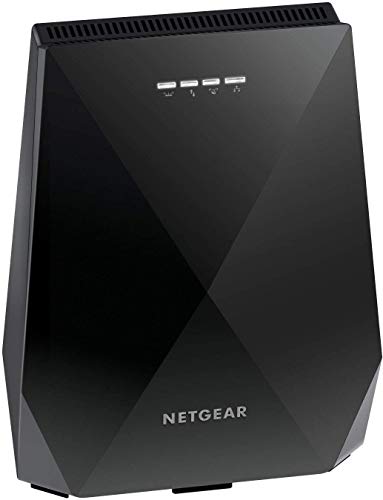
- Best streaming backhaul: NETGEAR Nighthawk X6 EX7700 AC2200 Tri-Band Mesh Extender — Check on Amazon
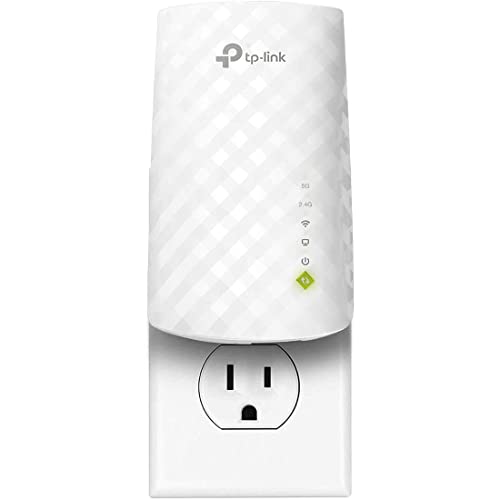
- TP-Link AX5400 Tri-Band WiFi 6 Range Extender (RE815X) — Check on Amazon
- NETGEAR Nighthawk EAX80 AX6000 WiFi 6 Mesh Extender — Check on Amazon
- TP-Link AX3000 WiFi 6 Range Extender (RE715X) — Check on Amazon
See 2 more options
- Linksys RE7310 WiFi 6 Range Extender — Check on Amazon
- NETGEAR WiFi 6 Mesh Range Extender (EAX15) — Check on Amazon
Read the full guide ↓
Disclosure: As an Amazon Associate, ilcastellomenu.com earns from qualifying purchases. Links to Amazon on this page are affiliate links; they cost you nothing extra. Listing details such as price and availability change often, so check the current Amazon listing before you buy.
Choosing the best wifi extenders for streaming is choosing for the least forgiving traffic on your network. Web pages forgive a weak signal; email forgives anything; a 4K stream forgives nothing — it needs sustained throughput, low jitter and a connection that does not renegotiate mid-scene, delivered to the room in the house where the router’s signal is usually weakest, because that is where the comfortable TV room always seems to be. This guide’s six picks were chosen for streaming’s actual demands: backhaul architecture first, because a stream through an extender crosses the network twice, and raw radio class second, because a stream needs a steady twenty-five megabits far more than it needs a theoretical gigabit.
The single most useful streaming fact in this article is also the simplest: wire what you can. Every pick below with a gigabit port can take the TV, the streaming box or the console off WiFi entirely, feeding it through the extender’s wired port at full local speed while the extender’s radios serve the room’s phones and tablets. Streaming households that adopt that one habit — extender midway, short Ethernet cable to the screen — routinely fix problems that two extender upgrades could not. The reviews that follow are ordered with that philosophy in mind: backhaul strength and wired options first, headline speed last.
In this guide
Quick Picks
Short on time, or comparing several options at once? Each row below names a buyer type and the extender that suits it, with a link to the listing where one is verified.
| Buyer type | Pick | Why it stands out | Link |
|---|---|---|---|
| Best streaming backhaul | NETGEAR Nighthawk X6 EX7700 AC2200 Tri-Band Mesh Extender | FastLane3 dedicates a 5 GHz band to the router link — streams stop competing with backhaul | Check on Amazon |
| Best WiFi 6 streaming | TP-Link AX5400 Tri-Band WiFi 6 Range Extender (RE815X) | Tri-band AX5400 with a spare 5 GHz band and 160 MHz channels for 4K households | Check on Amazon |
| Best wired streaming hub | NETGEAR Nighthawk EAX80 AX6000 WiFi 6 Mesh Extender | Four gigabit ports wire the TV, streamer and console so WiFi only carries the rest | Check on Amazon |
| Best all-round streamer | TP-Link AX3000 WiFi 6 Range Extender (RE715X) | AX3000 plus a gigabit port — stream wirelessly or wire the TV and be done | Check on Amazon |
| Best for one streaming room | Linksys RE7310 WiFi 6 Range Extender | AX1800 with Spot Finder placement for the bedroom TV that buffers | Check on Amazon |
| Best simple streaming plug | NETGEAR WiFi 6 Mesh Range Extender (EAX15) | One network name, WiFi 6 and a gigabit port in NETGEAR’s tidy wall-plug | Check on Amazon |
How These Picks Were Chosen
Every pick in this guide had to clear the same bar before its lens was even considered: it is a real, current product from a networking maker that publishes full specifications — radio class, per-band speeds, coverage figure, ports and modes — and its identity could be verified against a live listing record during research. Extenders that hide behind invented coverage figures, unnamed chipsets and specifications copied from other products were excluded however cheap they looked, because an extender is infrastructure: the wrong one does not merely underperform, it destabilizes the network you already had. Where a pick carries an Amazon link in this guide, its ASIN was corroborated against listing or tracker records naming the exact model; where a pick is discussed without a link, the article says so and explains why.
We did not plug these units in ourselves. We read manufacturer specification pages and listing records, cross-checked the numbers that decide real performance — radio class and band layout, whether a band can be dedicated to backhaul, Ethernet port speed, mesh ecosystem behavior, and the maker’s own coverage and device figures — and favored products whose makers state those numbers plainly. Marketing language was discounted throughout: a ‘booster’ is a repeater, a coverage figure is a best-case open-plan number, and a headline speed is the sum of every radio’s theoretical maximum rather than anything a single device will ever see. Every specification printed in the reviews below traces to a source recorded in this article’s source notes.
One structural truth governed the shortlist, and it is worth stating before the reviews: an extender can only repeat the signal it receives. Placement — midway, elevated, in the open — routinely matters more than the badge on the box, which is why this guide weighs placement tooling (signal indicators, app guidance, aimable antennas) as a first-class feature rather than a footnote. Picks that help you place them well beat stronger radios placed badly, in this category, every single time.
The streaming filter ranked picks by sustained-throughput architecture rather than peak specification: dedicated-backhaul tri-band designs lead, gigabit wired ports scored heavily because wiring the screen is the category’s most reliable fix, and dual-band units were included only where their radios and placement tooling suit a single streaming room honestly. Claims about streaming quality are framed throughout as headroom and stability, never as guaranteed picture quality — the stream’s source and the home’s internet plan set their own ceilings, and the article says so.
The 6 Best WiFi Extenders for Streaming
NETGEAR Nighthawk X6 EX7700 AC2200 Tri-Band Mesh Extender
Who it suits: Best streaming backhaul — WiFi 5 households that stream heavily through the extender and need a dedicated backhaul more than a new radio generation.
The EX7700 is a WiFi 5-era design that still earns its place in a WiFi 6 world, because its tri-band architecture attacks the extender problem at its root. Three radios — 400 Mbps on 2.4 GHz and two 866 Mbps 5 GHz bands — let NETGEAR’s FastLane3 technology dedicate one 5 GHz band entirely to the link back to your router, so client traffic never competes with backhaul traffic for the same airtime. The Amazon listing rates it for up to 2,300 square feet and up to 45 devices, with Smart Roaming keeping one network name across router and extender and MU-MIMO serving several devices simultaneously. For a household whose router and devices are mostly WiFi 5 — which is still a great many households — that dedicated backhaul delivers more real extended throughput than a dual-band WiFi 6 unit repeating on shared radios.
Living with the EX7700 means accepting a big plug: it is one of the larger wall units in this guide and it wants the outlet to itself. In exchange you get a wired option for stationary devices and an extender that behaves like mesh — one name, guided roaming, no manual network switching as you move through the house. Setup runs through the Nighthawk app or WPS. The generation gap shows in two places: there is no WiFi 6 efficiency (OFDMA) for crowds of small smart-home devices, and no WPA3. Buyers building new around WiFi 6 or 7 should take the newer picks in this guide; buyers extending a strong WiFi 5 router who care about sustained speed at the far end of the house will find the EX7700’s dedicated backhaul is the feature that actually matters.
- FastLane3 dedicates a whole 5 GHz band to backhaul — no shared-radio slowdown.
- One network name with Smart Roaming and MU-MIMO for up to 45 devices.
- Ideal match for the huge installed base of WiFi 5 routers and clients.
Honest limitation: A WiFi 5 design with no OFDMA or WPA3, in one of the largest plug-in bodies in this guide.
Choose it if your network is WiFi 5 and sustained extended speed matters more than radio generation. Skip it if you are building new around WiFi 6 or WiFi 7 — match the generation instead.
TP-Link AX5400 Tri-Band WiFi 6 Range Extender (RE815X)
Who it suits: Best WiFi 6 streaming — large or busy homes where a dual-band repeater’s shared-radio slowdown is the actual problem to solve.
The RE815X is what happens when TP-Link builds an extender the way it builds its flagship routers. It is a tri-band AX5400 unit — two 5 GHz radios at up to 2,402 Mbps each plus a 574 Mbps 2.4 GHz band — and the third radio is the point: one 5 GHz band can be reserved as the dedicated link back to your router while the other serves your devices, which removes the classic extender penalty where the same radio has to receive and re-send every packet. TP-Link rates it for up to 2,800 square feet and up to 96 devices, with 160 MHz channels, MU-MIMO and four adjustable external antennas. A gigabit Ethernet port and access point mode round out a specification that reads like a small router, because functionally it nearly is one.
This is the extender for the jobs the smaller units genuinely cannot do: a big house with one router, a home office that runs video calls all day at the far end of the building, or a gaming and streaming household that wants extended coverage without the throughput collapse of a cheap repeater. Setup is through Tether, and OneMesh/EasyMesh support means a compatible TP-Link router can fold it into a single-name network. The costs of all this capability are literal size — with four antennas up it is the largest wall-plug in this guide and will own its outlet completely — and the simple fact that most apartments would never use half of it. Match the tool to the house: if your dead zone is one bedroom, this is overkill; if your dead zone is a wing, it is the answer.
- Tri-band design with a dedicatable 5 GHz backhaul removes the classic repeater slowdown.
- Highest client capacity in this guide — rated for up to 96 devices across 2,800 sq. ft.
- 160 MHz channels and a gigabit port keep wired and wireless clients fed.
Honest limitation: Four-antenna bulk dominates any outlet it touches, and its capacity is wasted on small homes with a single dead room.
Choose it if your house is big, your users are many, or your extender must carry gaming and streaming without the repeater penalty. Skip it if your dead zone is a single bedroom in a flat — its capacity will never be used.
NETGEAR Nighthawk EAX80 AX6000 WiFi 6 Mesh Extender
Who it suits: Best wired streaming hub — power households that want router-class radios and a bank of wired ports at the far end of the house.
The EAX80 is NETGEAR’s flagship extender and it does not pretend to be a wall-plug accessory: it is a desktop, router-class box with an AX6000 8-stream WiFi 6 radio system, rated to add up to 2,500 square feet of coverage for 30 or more devices. Eight streams means it can hold several high-bandwidth conversations at once — the 4K stream in one room, the game download in another, the video call in a third — without the extended network collapsing into a queue. Around the back sit four gigabit Ethernet ports and a USB 3.0 port, a wired complement no wall-plug in this guide can match, which turns the EAX80 into a genuine media-bridge: place it with the entertainment center or the desk cluster and wire everything that has a port.
As a mesh extender it keeps your existing network name and applies NETGEAR’s Smart Roaming, so phones and laptops move between router and extender without clinging to a dying signal — and it does this with any brand of router, not just NETGEAR’s own. The Nighthawk app handles setup and management. The honest costs are footprint and tier: this is a piece of furniture-adjacent hardware that wants a shelf and a power brick, priced in spirit with routers rather than plug-ins, and for a single dead bedroom it is spectacular overkill. Its buyer is the household whose network is infrastructure — multiple heavy users, a wired cluster at the far end of the house, no appetite for compromise — and for that buyer the EAX80 is less an extender than a second router that happens to speak extender.
- Router-class AX6000 8-stream radios hold many heavy clients at once.
- Four gigabit Ethernet ports plus USB 3.0 make it a true wired media bridge.
- Single network name with Smart Roaming, works with any router brand.
Honest limitation: Desktop size, a power brick and a flagship tier make it unjustifiable for a single small dead zone.
Choose it if you want to wire a desk or media cluster at the far end of the home and roam under one name. Skip it if you need a discreet plug for one small room — this is a shelf appliance.
TP-Link AX3000 WiFi 6 Range Extender (RE715X)
Who it suits: Best all-round streamer — households that want the balanced WiFi 6 answer — strong radios, a wired port and mesh options — without flagship bulk or pricing logic.
The RE715X is the extender TP-Link built to be the default answer for a WiFi 6 home, and its specification sheet shows why it keeps landing in that role. It is an AX3000 dual-band unit — up to 2,402 Mbps on 5 GHz and 574 Mbps on 2.4 GHz — with a 160 MHz channel width on the fast band, two adjustable external antennas and four high-performance amplifiers behind them. TP-Link rates the coverage at up to 2,400 square feet and the client capacity at up to 64 devices, and in a category full of optimistic numbers those two are at least internally consistent: this is a mid-size home extender, not a toy for one room and not a pretend mesh system for a mansion. The single gigabit Ethernet port matters more than it looks, because it lets the extender moonlight as a wired bridge for a TV, console or desktop, or flip into access point mode when an Ethernet run is available.
Setup runs through the TP-Link Tether app, which walks the placement with an intelligent signal indicator — you want the spot where the extender still hears the router strongly, not the dead room itself. The RE715X speaks both OneMesh and EasyMesh, so paired with a compatible TP-Link router it collapses the usual second network name into one SSID with guided roaming; paired with any other brand’s router it behaves as a conventional extender with its own extended network name. Two honest physical notes: the body is bulky for a wall-plug unit and will usually claim the whole outlet, and the antennas that make it perform also make it the least discreet box in this guide. Neither stops it being the balanced pick it is — strong radios, a real Ethernet port, modern mesh options and an app that treats placement as part of the product.
- WiFi 6 AX3000 radios with 160 MHz channels carry busy households without wheezing.
- Gigabit Ethernet port doubles as a wired bridge or an access point feed.
- OneMesh and EasyMesh support gives a genuine single-name roaming option.
Honest limitation: The bulky body and external antennas typically monopolize a double outlet, and dual-band repeating still shares one radio path between router and clients.
Choose it if you want the extender equivalent of the sensible family car — WiFi 6 speed, a gigabit port, mesh options — sized for a real house. Skip it if your home is large enough to need tri-band backhaul, or so small that the RE600X or RE315 covers it for less commitment.
Linksys RE7310 WiFi 6 Range Extender
Who it suits: Best for one streaming room — buyers who fear the placement mistake more than any spec gap, and want setup that grades the spot for them.
The RE7310 is Linksys’s AX1800 WiFi 6 extender, rated for up to 2,000 square feet of added coverage, and its signature feature addresses the number-one reason extenders disappoint: placement. Linksys’s Spot Finder technology, run through the setup flow, grades where you have put the extender relative to the router and tells you plainly whether the spot is too far, too close or right — turning the most consequential decision in the whole installation into a guided one. Behind that sits a sensible dual-band WiFi 6 wall-plug with MU-MIMO, internal antennas for a clean look, and compatibility with any brand of router, including the gateway your ISP handed you.
Linksys positions the RE7310 for streaming and everyday whole-home coverage rather than for benchmark chasing, and that positioning is honest: AX1800 dual-band repeating will carry 4K streams and video calls into the rooms the router cannot reach, while a household of simultaneous heavy users should look at the tri-band picks in this guide. The internal-antenna design keeps hallways tidy but gives up the aim-it-yourself adjustment the external-antenna models offer — Spot Finder’s guidance is the compensation, and for most buyers it is the better trade, because a well-placed internal-antenna extender beats a badly placed adjustable one every time. Setup is app-guided or WPS. For a buyer who wants the Linksys ecosystem, a clean wall-plug and a product that actively prevents the classic installation mistake, the RE7310 is the considered choice.
- Spot Finder grades your placement during setup — the mistake-proofing most extenders lack.
- AX1800 WiFi 6 coverage rated to 2,000 sq. ft. in a clean internal-antenna body.
- Works with any router, including ISP gateways.
Honest limitation: Internal antennas cannot be aimed, and dual-band AX1800 repeating is a streaming-class tool, not a heavy-multi-user one.
Choose it if you want the setup itself to tell you whether the placement is right. Skip it if you need tri-band backhaul or aimable antennas for a difficult floor plan.
NETGEAR WiFi 6 Mesh Range Extender (EAX15)
Who it suits: Best simple streaming plug — NETGEAR-friendly homes that want one network name, WiFi 6 and zero drama in a wall-plug.
The EAX15 is NETGEAR’s mesh extender for normal-sized problems: an AX1800 4-stream WiFi 6 wall-plug rated to add up to 1,500 square feet of coverage and serve up to 20 devices, keeping your existing network name so the extended coverage behaves like one network rather than a second one your phone refuses to join. That single-name behavior is its headline difference from the budget tier — devices roam to whichever signal is stronger instead of clinging to the router from the far bedroom. It carries WPA3 security, a gigabit Ethernet port for wiring a TV, console or desktop into the extended network, and setup through the Nighthawk app or a browser.
In the NETGEAR line the EAX15 sits in the sensible middle: far more capable than the older AC wall-plugs, far less hardware than the EAX80 desktop flagship. Its natural home is the apartment or mid-size house where the router lives at one end and life happens at the other — the office that drops calls, the bedroom that buffers. Twenty devices is a realistic ceiling for that job; a smart home with sixty bulbs, plugs and cameras all leaning on the extender should look at the higher-capacity picks in this guide. Within its brief, though, the EAX15 does the mesh-extender job cleanly: one name, modern security, a wired port when you need it, and no antennas to aim or furniture to rearrange.
- True single-name mesh behavior with any router — no separate _EXT network.
- WiFi 6 AX1800 with WPA3 and a gigabit port in a tidy wall-plug.
- Nighthawk app setup suits buyers who do not want to touch router settings.
Honest limitation: A 20-device capacity figure is modest for a dense smart home, and there are no external antennas to aim at a stubborn dead zone.
Choose it if you want mesh behavior — one name, guided roaming — in the simplest WiFi 6 plug NETGEAR makes. Skip it if your smart home will lean dozens of devices on the extender, or you need external antennas to aim.
Comparison Table
| Product | Type | Key specifications | Link |
|---|---|---|---|
| NETGEAR Nighthawk X6 EX7700 AC2200 Tri-Band Mesh Extender | WiFi 5 · AC2200 tri-band | AC2200 tri-band (866 + 866 + 400 Mbps) · up to 2,300 sq. ft. · up to 45 devices · FastLane3 dedicated backhaul · Smart Roaming · MU-MIMO | Check on Amazon |
| TP-Link AX5400 Tri-Band WiFi 6 Range Extender (RE815X) | WiFi 6 · AX5400 tri-band | AX5400 tri-band (2,402 + 2,402 Mbps 5 GHz + 574 Mbps 2.4 GHz) · up to 2,800 sq. ft. · up to 96 devices · 160 MHz · 1 gigabit Ethernet port · OneMesh/EasyMesh | Check on Amazon |
| NETGEAR Nighthawk EAX80 AX6000 WiFi 6 Mesh Extender | WiFi 6 · AX6000 dual-band | AX6000 8-stream dual-band · up to 2,500 sq. ft. · 30+ devices · Smart Roaming · 4 gigabit Ethernet ports · USB 3.0 port · desktop form factor | Check on Amazon |
| TP-Link AX3000 WiFi 6 Range Extender (RE715X) | WiFi 6 · AX3000 dual-band | AX3000 (2,402 Mbps 5 GHz + 574 Mbps 2.4 GHz) · up to 2,400 sq. ft. · up to 64 devices · 1 gigabit Ethernet port · AP mode · EasyMesh/OneMesh | Check on Amazon |
| Linksys RE7310 WiFi 6 Range Extender | WiFi 6 · AX1800 dual-band | AX1800 dual-band · up to 2,000 sq. ft. coverage · Spot Finder placement technology · MU-MIMO · works with any router | Check on Amazon |
| NETGEAR WiFi 6 Mesh Range Extender (EAX15) | WiFi 6 · AX1800 dual-band | AX1800 4-stream dual-band · up to 1,500 sq. ft. · up to 20 devices · WPA3 · one network name · 1 gigabit Ethernet port | Check on Amazon |
Why Streams Buffer Through Extenders — and the Three Fixes That Work
A stream through a repeating extender crosses the air twice on the same radios: router to extender, extender to TV. On a dual-band unit those crossings share capacity with everything else the extender serves, and the stream’s bitrate — spiky by nature, with 4K scenes demanding bursts well above their average — collides with the backhaul carrying it. The result is the familiar pattern: fine at 8 p.m., buffering at 9 when the household’s phones come home. Fix one is architectural: a tri-band extender dedicates a band to the backhaul, so the stream’s two crossings use different radios and stop competing. Fix two is the wired port: plug the TV into the extender and the second crossing disappears entirely. Fix three is placement: a midway extender with a strong router link spends its capacity on your stream instead of on error correction for a weak feed.
Bandwidth arithmetic keeps expectations honest. A 4K stream needs roughly 15–25 Mbps sustained; HD needs a third of that. Even a modest extender delivers those numbers when its backhaul is healthy — which is why buffering is almost never a ‘not enough extender’ problem and almost always a backhaul, placement or congestion problem. Households streaming one screen can buy modestly and place carefully; households streaming three screens in three far rooms should buy the tri-band or wired architecture at the top of this list and stop negotiating with physics. The stream does not care what the box cost; it cares what arrives, steadily, for two hours.
Placement: The Half of Extending That Decides Everything
Every extender disappointment in history shares the same root cause, and it is not the extender. A repeater can only rebroadcast the signal it receives, so an extender placed inside the dead zone — the instinctive spot, the room with no signal — has nothing to repeat: it takes a whisper and shouts it, faithfully reproducing a bad connection at higher volume. The correct position is almost always midway between the router and the dead zone, at the edge of the router’s strong coverage, where the extender still hears the router clearly and can throw that clean signal the rest of the way. This is why the better picks in this guide build placement feedback into the product itself — signal indicator lights, app-based grading, Spot Finder-style guidance — and why using that feedback for ten unhurried minutes beats any specification on the box.
Height and openness come next. WiFi radiates outward and slightly downward from most antennas, absorbs into masonry, metal, water and human bodies, and reflects off hard surfaces in ways that make small moves matter: an extender on a hallway outlet at chest height routinely outperforms the same unit behind a sofa at ankle height, and moving a unit two metres along a wall can matter more than upgrading it. External antennas should stand vertical for same-floor coverage — devices on the same plane talk best with matched orientation — and the antenna section of this guide goes deeper where the picks allow aiming. Treat placement as a short experiment with a feedback light in your hand, not as a guess you make once and live with.
A Note on Prices and Listings in This Category
Extender pricing moves constantly — the same model is a different number in a sale week, a bundle or a renewed listing — so this guide prints no product prices and sends you to the live listing for the current figure. A printed price would be wrong more often than right, and a wrong price helps no one. When you check a listing, confirm the full model code (a single letter decides band layout and mesh ecosystem in several lines in this guide), confirm you are looking at the current hardware revision rather than a clearance listing for its predecessor, and confirm whether the box is the retail unit or a renewed one, because warranty terms differ.
How to Choose WiFi Extenders for Streaming
- Count the bands before the megabits. Dual-band extenders share radios between receiving and re-sending, which costs throughput. Tri-band models can dedicate a band to the backhaul and largely erase that cost. For one browsing room, dual-band is fine; for gaming, 4K streaming or a home office living permanently behind the extender, tri-band (or a wired access point) is the honest answer.
- Read coverage figures as open-plan ceilings. A square-foot figure assumes few walls and no masonry. Brick, concrete, foil-backed insulation and tiled wet rooms each tax the real figure heavily. Size for your construction, not your floor area: the same extender covers a timber-frame house and half a concrete apartment.
- Check the Ethernet port’s speed, not just its existence. A gigabit port turns an extender into a full-speed wired bridge for a console, TV or desktop, and enables access point mode. A 100 Mbps port still rescues a printer or a smart TV but caps anything faster. The port is the most under-read line on the specification sheet.
- Prefer placement tooling over headline power. Signal indicator lights, app-based placement grading and aimable antennas decide real-world results more than a few hundred theoretical megabits. An extender that tells you where it wants to live will outperform a stronger one installed blind.
- Count devices the way your house actually behaves. Makers’ device figures assume a realistic mix. A smart home leaning fifty bulbs, plugs, cameras and sensors on one extender wants the high-capacity picks (60-plus figures); a family of phones and laptops does not. Cameras in particular are permanent, chattering clients — count them twice.
- Plan the second outlet, not just the first. Bulky extenders with external antennas routinely claim both sockets in an outlet pair. Check dimensions against the hallway socket you actually intend to use, and prefer pass-through or slim designs where that socket also feeds a vacuum, a lamp or a charger.
- Keep the firmware path in mind. Established brands ship security updates for years; anonymous boxes rarely ship one. An extender is an always-on network citizen with your traffic passing through it — buy from a maker with a published update history and a support page that exists.
- Know when the answer is not an extender. Three or more dead zones, a very large or masonry-heavy home, or a router older than the devices it serves all argue for a mesh kit or a router upgrade instead. An extender fixes a gap in a basically sound network; it cannot substitute for the network.
- Match the radio generation to your router. A WiFi 6 extender behind a WiFi 5 router extends WiFi 5; a WiFi 5 extender behind a WiFi 6 router caps every client that roams onto it. Buy the extender that matches the router you own — or the one you are genuinely about to buy — and treat generation-mismatched ‘deals’ as the false economy they are.
Common Mistakes
- Believing coverage figures measured in open-plan best cases, then blaming the unit for a concrete wall it was never going to cross.
- Buying a WiFi generation that matches neither the router nor the clients, then wondering why nothing improved.
- Daisy-chaining two extenders together, compounding the repeater penalty until the far room is slower than the original dead zone felt.
- Hiding the unit behind a television, inside a cabinet or beside a radiator, then reviewing its ‘range’ as disappointing.
- Forgetting that the extended network needs its own moment of setup care — same password discipline, updated firmware, sensible band settings.
- Wiring a gigabit-hungry console into a 100 Mbps extender port and blaming the internet plan for the ceiling.
- Expecting an extender to fix a slow internet plan: it extends coverage, never bandwidth that the connection itself does not have.
- Leaving the router’s own placement untouched — a router in a basement corner makes every extender downstream of it work uphill.
Living With an Extender: The First Month
The first month with an extender follows a pattern worth knowing in advance. Week one is placement refinement: the spot that looked right during setup meets real life — the door that closes at night, the microwave that runs at lunch, the neighbor’s network that wakes up in the evening — and a one-socket move in either direction often completes the installation properly. This is normal engineering, not failure, and the households that treat setup as a first draft end up with the networks that feel invisible by month two.
Weeks two to four are where the remaining friction shows its true shape, and it is usually about roaming rather than raw signal: a phone clinging to the router from the far bedroom, a laptop that prefers the extender even beside the router. Single-name mesh extenders (the OneMesh, AiMesh, NETGEAR mesh and EasyMesh picks in this guide) exist precisely to erase that friction, steering clients to the better signal automatically; conventional _EXT networks ask you to occasionally toggle WiFi on a stubborn device. Either way, judge the installation at the end of the month, in the rooms that failed before, at the hours that failed before — that is the only benchmark that was ever real.
Extender, Mesh Kit or Access Point: Knowing Which Tool You Bought
Three different tools hide behind the word ‘extender’ in shopping results, and confusing them explains most mismatched purchases. A classic extender repeats your router’s signal wirelessly and, unless it is a mesh model, broadcasts a second network name; it is the cheapest fix for one dead zone and the right tool for most of the articles in this series. A mesh kit replaces the router entirely with coordinated nodes; it costs more, covers whole large homes gracefully, and makes an extender unnecessary — the honest alternative whenever a home has three or more dead zones rather than one. An access point is an extender with the job inverted: it takes a wired Ethernet feed and turns it into fresh, full-speed WiFi, and several picks in this guide double as one.
The practical rule: one dead zone, buy an extender. A dead zone with an Ethernet cable anywhere near it, buy an extender with access point mode and use the cable — a wired backhaul removes the repeater penalty completely and is the single largest performance upgrade available in this category. Dead zones everywhere, in a house you own, price a mesh kit before you stack extenders, because two repeaters daisy-chained together compound the slowdown this guide keeps warning about. Tools matched to problems: that is the entire discipline, and the picks above were chosen to cover each branch of it honestly.
Setup Day: The First Hour With Your Extender
Setup day rewards a specific order of operations, and this guide teaches it identically across the series because it prevents the two classic failures — an extender married to the wrong spot, and an extended network nobody can manage afterward. Start with the extender in the same room as the router for the initial pairing, whatever the maker’s app or WPS button asks for; a first connection made at point-blank range eliminates distance from the troubleshooting equation entirely. Update the firmware in that same room if the app offers it, while the connection is beyond argument. Only then carry the unit to its midway post, watch its signal indicator grade the spot, and walk the house with a phone before declaring victory.
The second half of the hour is administration, and it is the half everyone skips. Name the extended network deliberately (or confirm the mesh single-name behavior has engaged), set the extender’s admin password to something that is not the factory default where the model allows it, and note the maker’s app and support page somewhere future-you will find them — a photo of the label, with its model code and hardware revision, is the professional habit. Then test the network the way the household actually uses it: the far desk’s call, the TV’s stream, the doorbell’s live view, at the hour those things usually happen. An extender installed this way disappears; one installed hastily becomes a recurring character in the household’s complaints, and the difference was never the hardware.
Final Recommendation
- Best streaming backhaul: NETGEAR Nighthawk X6 EX7700 AC2200 Tri-Band Mesh Extender.
- Best WiFi 6 streaming: TP-Link AX5400 Tri-Band WiFi 6 Range Extender (RE815X).
- Best wired streaming hub: NETGEAR Nighthawk EAX80 AX6000 WiFi 6 Mesh Extender.
- Best all-round streamer: TP-Link AX3000 WiFi 6 Range Extender (RE715X).
- Best for one streaming room: Linksys RE7310 WiFi 6 Range Extender.
- Best simple streaming plug: NETGEAR WiFi 6 Mesh Range Extender (EAX15).
Our top two for this search are the NETGEAR Nighthawk X6 EX7700 AC2200 Tri-Band Mesh Extender and the TP-Link AX5400 Tri-Band WiFi 6 Range Extender (RE815X) — between them they cover the two shapes this problem usually takes: maximum capability where the network has to work hardest, and maximum simplicity where it just has to work. Readers whose situation sits nearby should also see Best Wifi Range Extenders For Gaming and Best Antenna Postion For Wifi Range Extenders, which apply the same verified pool to those lenses. Check the live listing before you order, place the unit midway and in the open, and judge it in the room that failed you — that is the whole discipline of this category, and it is enough.
Frequently Asked Questions
What speed do I actually need through an extender for 4K streaming?
Roughly 25 Mbps sustained per 4K stream, with headroom above it for the bitrate spikes dramatic scenes produce — call it a clean 40–50 Mbps of real throughput at the TV for comfortable single-stream 4K, and multiply the sustained figure by simultaneous screens. Almost any extender in this guide delivers that when its backhaul is strong; the failures come from weak router links, shared-radio congestion at peak hours and placement inside the dead zone. Measure success at the TV during the evening peak, not beside the extender at noon.
Is it better to wire my TV to the extender or use its WiFi?
Wire it, whenever the extender sits near the screen — which good midway placement often arranges by accident. A wired connection through the extender’s gigabit port removes the stream’s second wireless hop, the least reliable leg of its journey, and frees the extender’s radios for the room’s other devices. The exception is an extender whose port is 100 Mbps-class: still ample for any single stream, including 4K, but worth knowing before you hang a whole media stack on it. The comparison table in this guide lists each pick’s port situation so the decision takes seconds.
Where exactly should I plug the extender in?
Midway between the router and the dead zone, measured in signal rather than in metres: the spot where your phone still shows strong router signal — roughly two-thirds of full strength — is the far edge of where an extender belongs. Use the extender’s own signal indicator or app grading during setup, elevate the unit, keep it in the open, and test from the chair, desk or bed that motivated the purchase. If the indicator says the spot is too far, believe it and move one room closer; that single decision outweighs every specification difference in this guide.
Can an extender work with my ISP’s gateway?
Yes. Every universal extender in this guide repeats any standard WiFi network, including the gateways supplied by Verizon Fios, Xfinity, Spectrum, Cox, Optimum and Google Fiber — the gateway neither knows nor cares that an extender has joined. The only compatibility that matters is ecosystem behavior: single-name mesh features (OneMesh, AiMesh and friends) engage only with a router from the same ecosystem, while the provider’s own pods and extenders integrate with their gateway’s app and settings. Universal extender plus ISP gateway is the normal, supported configuration for millions of homes.
Is a wired access point mode better than repeating?
Unambiguously, wherever a cable can reach. An extender repeating wirelessly spends radio capacity receiving what it re-sends; the same unit fed by Ethernet in access point mode devotes all of its radios to your devices and delivers close to full router-class speed at the far end of the house. If your home has Ethernet runs, coax that can carry MoCA adapters, or even a powerline path you trust, feeding the far unit by wire is the largest single upgrade available in this category — several picks in this guide exist in the shortlist partly because they offer that mode.
How many extenders can I use?
One is the design case; two is workable if each talks directly to the router rather than chaining through the other; three or more is a signal that the tool is wrong and a mesh kit will serve the house better. Chained repeating compounds the throughput penalty hop by hop. Place multiple extenders as spokes around the router, never as a relay race, and if the floor plan forces a relay, use a tri-band unit with a dedicated backhaul for the chained leg.