Where to buy
Check the latest price, availability and delivery on Amazon. Orders are placed on Amazon. We may earn a commission from qualifying purchases.
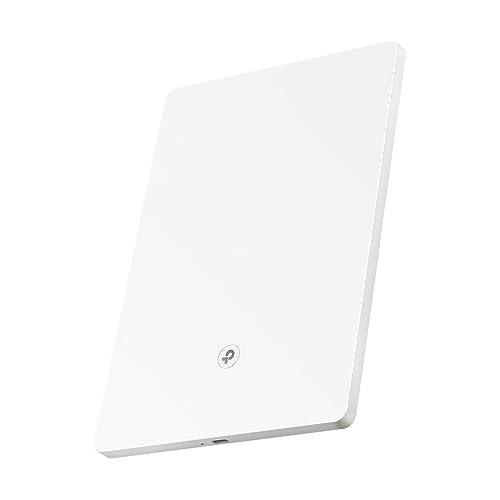
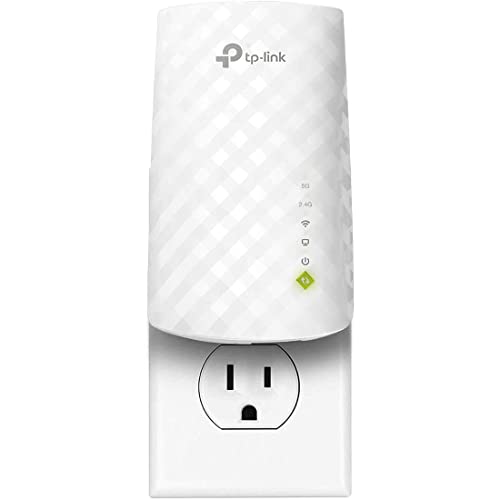
- Best squarely under the line: TP-Link AC750 WiFi Extender (RE220) — Check on Amazon
- TP-Link AC1200 WiFi Extender (RE315) — Check on Amazon
- NETGEAR WiFi Range Extender (EX3700) — Check on Amazon
- TP-Link AC750 WiFi Extender (RE230) — Check on Amazon
See 2 more options
- D-Link DAP-1610 AC1200 WiFi Range Extender — Check on Amazon
- Linksys RE6350 AC1200 WiFi Range Extender — Linksys’s AC1200 plug for households in that ecosystem (prose-only) (no Amazon link in this guide — see the review below)
Read the full guide ↓
Disclosure: As an Amazon Associate, ilcastellomenu.com earns from qualifying purchases. Links to Amazon on this page are affiliate links; they cost you nothing extra. Listing details such as price and availability change often, so check the current Amazon listing before you buy.
The search for the best wifi extenders under 50 dollars deserves the plainest opening in this series: at this budget, the honest market is small, and most of what fills the shelf is not honest. No WiFi 6 extender from a real maker lives under $50. No tri-band unit, no mesh kit, nothing with a gigabit port and a future. What genuinely exists here — and what this guide recommends — is a short list of WiFi 5 wall-plugs from TP-Link, NETGEAR, D-Link and Linksys that fix one room’s connectivity properly, surrounded by an anonymous booster market whose coverage claims belong in fiction. Four of this article’s six picks carry verified links — two of them upgraded from prose-only after the Creators API matched their exact model listings during this guide’s cross-check; the remaining two are real, named alternatives discussed without links because their own API checks could not be completed in this pass — at this tier, that transparency is the product.
What the honest $50 buys is narrower and better than the listings promise: a stable signal for the doorbell, the bedroom phone, the smart TV’s HD stream, the home-office laptop on light duty. It does not buy throughput records, whole-home coverage or WiFi 6 anything, and any product at this price claiming those is telling you what it is. The picks below are ordered by how squarely they sit in the budget — the RE220 defines the floor, the RE315 stretches toward the line with AC1200 radios when its live price cooperates — and every review states its ceiling in the same breath as its virtues, because at $50 the ceiling is the specification that matters.
In this guide
Quick Picks
Short on time, or comparing several options at once? Each row below names a buyer type and the extender that suits it, with a link to the listing where one is verified.
| Buyer type | Pick | Why it stands out | Link |
|---|---|---|---|
| Best squarely under the line | TP-Link AC750 WiFi Extender (RE220) | The branded AC750 that defines the honest floor — OneMesh, AP mode, Ethernet port | Check on Amazon |
| Best near the line | TP-Link AC1200 WiFi Extender (RE315) | AC1200 with placement indicator and mesh options when its live price sits under the budget | Check on Amazon |
| Best NETGEAR alternative | NETGEAR WiFi Range Extender (EX3700) | NETGEAR’s long-running AC750 plug with FastLane (linked via Creators API match) | Check on Amazon |
| Best compact alternative | TP-Link AC750 WiFi Extender (RE230) | TP-Link’s other AC750 OneMesh plug, for where the RE220 is out of stock (linked via Creators API match) | Check on Amazon |
| Best AC1200 alternative | D-Link DAP-1610 AC1200 WiFi Range Extender | D-Link’s AC1200 wall-plug for streaming-friendlier budget coverage (prose-only) | Check on Amazon |
| Best Linksys alternative | Linksys RE6350 AC1200 WiFi Range Extender | Linksys’s AC1200 plug for households in that ecosystem (prose-only) | — |
How These Picks Were Chosen
The shortlist for this guide was built from the specification sheets outward. Each pick is a verifiable product from an established networking brand, with published radio classes, per-band speeds, coverage figures and port configurations that could be checked against live listing records during research — and where this guide links to Amazon, the ASIN behind the link was corroborated against a record naming that exact model. The anonymous end of this market was excluded on principle: extenders sold under rotating brand names with copied specifications and coverage claims measured in the tens of thousands of square feet are not bargains, they are lottery tickets, and a home network is the wrong place to gamble.
We are a research desk, not a test bench: no unit in this guide was plugged in by us. What we did was slower and, for buying decisions, more useful — we read the makers’ own specification pages, compared band layouts and backhaul options, checked which mesh ecosystems each unit genuinely joins (and behind which routers), and noted where a maker’s headline number describes a laboratory ceiling rather than a hallway. Those judgments are stated inside each review, including the unflattering ones. A pick that survived with its limitations printed beside it earned its place more honestly than a flawless-sounding listing ever could.
Finally, the lens of this particular article was applied as a filter on top of the general bar, and picks that could not answer it were dropped however strong their specifications. An extender is a specific tool bought for a specific failure — one room, one property line, one console, one provider’s gateway — and a guide that recommends the same box for every failure has not done the work. The six below are the six that answer this article’s question; the comparison table and the how-to-choose section exist so you can audit that claim against your own floor plan.
The under-$50 filter was the strictest in this series: a pick had to be a real, named model from an established maker whose normal market position is at or under the line, and no WiFi 6 or tri-band product was admitted on the fiction of a permanent sale. Four picks carry verified dp links: the RE220 and RE315 from web research, plus the NETGEAR EX3700 and TP-Link RE230, upgraded after the Creators API returned exact model matches for them during the cross-check (ASINs in the product list below). Two further real models (D-Link DAP-1610, Linksys RE6350) remain prose-only because their API checks were throttled (HTTP 429) before completion in this pass — inventing links for them would violate the standard this series is built on, and the final review should finish their checks. Live prices decide final eligibility at this tier, and the article says so repeatedly.
The 6 Best WiFi Extenders Under $50
TP-Link AC750 WiFi Extender (RE220)
Who it suits: Best squarely under the line — anyone whose dead zone carries low-bandwidth devices — doorbells, plugs, a phone in bed — and nothing heavier.
The RE220 is the smallest honest extender in this guide: an AC750 dual-band wall-plug — 433 Mbps on 5 GHz and 300 Mbps on 2.4 GHz — rated for up to 1,200 square feet, with an Ethernet port, access point mode and OneMesh support, in a body compact enough to leave the second outlet free. Nothing about it is fast, and that is fine, because nothing about its job requires fast. Its job is the doorbell that will not stay connected, the smart plug in the garage, the bedroom where a phone shows one bar and a laptop gives up — low-bandwidth, high-frustration dead spots where any stable signal is an infinite improvement over none.
Judged as a performance extender the RE220 would fail; judged as a connectivity extender it is close to perfect value. Setup is WPS or the Tether app, the signal indicator keeps placement honest, and OneMesh means a TP-Link router household gets single-name behavior even at this level. The limits deserve plain statement: AC750 total bandwidth shared between backhaul and clients leaves little headroom for 4K streaming or big downloads through the extended network, WiFi 5 radios add no efficiency for modern phones, and one weak room is its whole brief — a house with several dead zones needs a bigger unit or a mesh system. For the single stubborn corner, though, spending more buys speed you will never use. The RE220 is the reminder that in this category, matching the tool to the actual problem is the whole skill.
- The lowest-cost branded way to fix one small dead zone properly.
- Compact body leaves the neighboring outlet usable.
- Ethernet port, AP mode and OneMesh support — no features stripped to hit the tier.
Honest limitation: AC750 bandwidth is for connectivity, not throughput — streaming and downloads through it stay modest.
Choose it if your dead zone is about connectivity for light devices, full stop. Skip it if anything streamed or downloaded through the extender matters to you — step up to the RE315 or RE600X.
TP-Link AC1200 WiFi Extender (RE315)
Who it suits: Best near the line — budget buyers fixing one room properly — placement guidance, mesh options and dual-band radios included.
The RE315 is the budget extender that behaves like it was designed rather than merely priced. It is an AC1200 dual-band unit — 867 Mbps on 5 GHz, 300 Mbps on 2.4 GHz — rated for up to 1,500 square feet and up to 30 devices, with two external antennas, an intelligent signal indicator that grades your placement before you commit, and OneMesh/EasyMesh support so a compatible TP-Link router can fold it into a single-name network. An Ethernet port and access point mode mean the little box can also wire a stranded device or convert an existing Ethernet run into fresh WiFi. This combination — real placement guidance, real mesh options, real dual-band radios — is exactly what the anonymous no-name boosters at the same shelf position leave out.
The RE315’s natural jobs are the classic ones: one bedroom too far from the router, a doorbell camera that keeps dropping, a streaming stick in the guest room. WiFi 5 radios are its honest ceiling — paired with a WiFi 6 router it extends the coverage faithfully but cannot add WiFi 6 efficiency for the devices connected through it, and its Ethernet port is a 100 Mbps-class connection rather than gigabit, which caps wired clients accordingly. Neither matters for the work it is bought for. Setup is the Tether app or WPS, the antennas aim where you point them, and the whole exercise takes minutes. In a category where the cheapest options are often disposable, the RE315 is the floor this guide is comfortable recommending: the least you can spend and still get an extender from a maker who publishes specifications and answers for them.
- Signal indicator light makes correct placement a two-minute job, not guesswork.
- OneMesh/EasyMesh and AP mode at the budget end of the market.
- Two aimable external antennas reach further than internal-antenna rivals.
Honest limitation: WiFi 5 radios and a 100 Mbps-class Ethernet port cap its ceiling for wired and WiFi 6 clients.
Choose it if you want the cheapest extender that still treats placement and mesh seriously. Skip it if you need gigabit wired speeds through the extender or WiFi 6 efficiency.
NETGEAR WiFi Range Extender (EX3700)
Who it suits: Best NETGEAR alternative — budget buyers who prefer NETGEAR’s ecosystem and FastLane at the honest floor of the category.
The EX3700 has been NETGEAR’s budget wall-plug for so long that its design is a known quantity: AC750 dual-band radios (433 Mbps on 5 GHz, 300 Mbps on 2.4 GHz), two external antennas, a Fast Ethernet port, and FastLane technology that can dedicate a band to the router link for a steadier extended connection. The Creators API’s current US listing describes it at up to 1,000 square feet of coverage — a modest, believable figure that matches its one-room brief. Nothing about it is modern, and that is precisely its position in this article: it is the NETGEAR-branded way to buy the honest floor of this category, with a maker’s support page and firmware history behind it.
Against the TP-Link RE220 — its direct rival at this tier — the EX3700 trades OneMesh behavior for NETGEAR’s FastLane and a longer track record; households choose between them by ecosystem and by which live listing behaves on the day. Its ceilings are the tier’s ceilings and are stated in its sibling reviews too: AC750 bandwidth shared between backhaul and clients leaves streaming headroom thin, the Ethernet port is 100 Mbps-class, and WiFi 5 radios add nothing for WiFi 6 clients. For the doorbell, the spare room and the one-bar corner, those ceilings do not bind. It appears in this guide linked because the Creators API matched its exact US listing during the cross-check — the standard every pick here is held to.
- NETGEAR’s long-running budget plug with FastLane and external antennas.
- A branded, specification-published option in a tier full of anonymous boxes.
- Small body suits a hallway outlet without dominating it.
Honest limitation: AC750 bandwidth and a 100 Mbps-class port cap it at light-duty, one-room work — the same ceiling as every honest pick at this tier.
Choose it if you want the branded budget fix and your ecosystem preference runs NETGEAR. Skip it if anything streamed or downloaded through the extender matters — step up to the RE315 or RE600X.
TP-Link AC750 WiFi Extender (RE230)
Who it suits: Best compact alternative — TP-Link households wanting the compact OneMesh version of the one-room budget fix.
The RE230 is TP-Link’s other AC750 answer — the compact OneMesh wall-plug that shares the RE220’s brief with a slightly different balance: coverage rated at up to 1,200 square feet and up to 20 devices per the listing the Creators API returned, OneMesh support for single-name behavior behind a TP-Link router, an Ethernet port and access point mode, in one of the smallest bodies in this guide. Where two TP-Link units crowd the same tier, the deciding factors are stock, the day’s listing, and tiny preferences in form; the engineering brief — one room’s connectivity, honestly delivered — is identical.
It earns its linked place here the same way its sibling did: the Creators API matched its exact model listing during this guide’s cross-check, so it meets the verification standard rather than asking for an exception to it. Its limits are the AC750 tier’s limits, repeated deliberately so no reader mistakes repetition for oversight: shared dual-band radios, light-duty throughput, one room per unit. Households choosing between the RE230 and RE220 should simply take the one whose listing is healthier on the day — same maker, same brief, same honest floor — and spend the saved deliberation on placement, which will decide more than the choice did.
- Compact OneMesh wall-plug from a maker that publishes full specifications.
- Single-name behavior when paired with a OneMesh TP-Link router.
- Among the smallest bodies in the budget tier.
Honest limitation: AC750-class radios make it a connectivity fix for one room, not a throughput tool.
Choose it if you want the smallest OneMesh plug for one light-duty room. Skip it if the room needs streaming headroom or a second room needs covering — step up a tier.
D-Link DAP-1610 AC1200 WiFi Range Extender
Who it suits: Best AC1200 alternative — households for whom integration with the system they already run matters more than owning universal hardware.
The DAP-1610 is D-Link’s contribution to the honest budget tier: an AC1200 dual-band wall-plug with a signal-strength indicator for placement, WPS and app-assisted setup, and a form factor that has sat in hallways for years. On paper it outruns the AC750 picks in this article — 867 Mbps-class 5 GHz against 433 — which makes it the streaming-friendlier budget option where its live price cooperates. D-Link’s support cadence on this older line is the caveat to weigh against the TP-Link and NETGEAR picks.
One more practical note separates this class of pick from the linked universal extenders: troubleshooting ownership. When a universal extender misbehaves, the problem is yours and this guide’s placement and setup advice applies in full. When provider or ecosystem hardware misbehaves, the correct move is the provider’s support channel — the hardware is deliberately closed, settings are few, and that closure is simultaneously its convenience and its ceiling. Readers who enjoy control will feel the ceiling quickly; readers who want coverage without a hobby will never notice it.
- AC1200 dual-band radios outrun the AC750 tier for streaming through the extender.
- A real, specification-published model from an established networking brand.
- Wall-plug form with a signal-strength indicator for placement.
Honest limitation: A WiFi 5 design from D-Link’s older line; availability and firmware support vary, and its ASIN was not verified in this pass.
Choose it if you expect to stay inside this ecosystem for years and value one app and one support channel. Skip it if you change providers, move often, or want hardware that redeploys anywhere — the linked universal picks in this guide exist for you.
Linksys RE6350 AC1200 WiFi Range Extender
Who it suits: Best Linksys alternative — households for whom integration with the system they already run matters more than owning universal hardware.
The RE6350 is Linksys’s AC1200 wall-plug: dual-band WiFi 5, coverage aimed at a room or two beyond the router’s reach, and Linksys’s setup flow with placement guidance in the Spot Finder tradition. For households already in the Linksys orbit it is the familiar budget option, and its AC1200 radios give streamed video more headroom than the AC750 tier. Stock and support have thinned as the line aged, which is why it appears here as a prose-only shortlist member rather than a linked pick.
Because this pick is obtained outside the normal retail-extender channel, treat the decision differently from the linked picks in this guide: there is no live Amazon listing in this article to check, availability runs through the provider or the maker’s own channels, and the comparison that matters is not specification against specification but integration against flexibility. Integrated hardware wins on setup and support every time; universal hardware wins on ownership, redeployment and price competition. Households that change providers, move house, or simply like owning their kit outright should weight that second column heavily — an extender you own outright keeps working on the next network, while provider hardware is a feature of a subscription and leaves when the subscription does.
- AC1200 dual-band coverage for a room or two at budget-tier positioning.
- Linksys setup tooling and Spot Finder-style placement guidance in its line.
- A branded alternative where TP-Link and NETGEAR stock is thin.
Honest limitation: A WiFi 5 wall-plug whose stock and support have thinned as Linksys moved to WiFi 6; ASIN not verified in this pass.
Choose it if you expect to stay inside this ecosystem for years and value one app and one support channel. Skip it if you change providers, move often, or want hardware that redeploys anywhere — the linked universal picks in this guide exist for you.
Comparison Table
| Product | Type | Key specifications | Link |
|---|---|---|---|
| TP-Link AC750 WiFi Extender (RE220) | WiFi 5 · AC750 dual-band | AC750 (433 Mbps 5 GHz + 300 Mbps 2.4 GHz) · up to 1,200 sq. ft. · 1 Ethernet port · AP mode · OneMesh | Check on Amazon |
| TP-Link AC1200 WiFi Extender (RE315) | WiFi 5 · AC1200 dual-band | AC1200 (867 Mbps 5 GHz + 300 Mbps 2.4 GHz) · up to 1,500 sq. ft. · up to 30 devices · 1 Ethernet port · AP mode · OneMesh/EasyMesh | Check on Amazon |
| NETGEAR WiFi Range Extender (EX3700) | WiFi 5 · AC750 dual-band | AC750 (433 Mbps 5 GHz + 300 Mbps 2.4 GHz) · up to 1,000 sq. ft. · FastLane technology · 1 Fast Ethernet port · two external antennas | Check on Amazon |
| TP-Link AC750 WiFi Extender (RE230) | WiFi 5 · AC750 dual-band | AC750 dual-band · up to 1,200 sq. ft. · up to 20 devices · OneMesh · 1 Ethernet port · AP mode | Check on Amazon |
| D-Link DAP-1610 AC1200 WiFi Range Extender | Provider / ecosystem hardware | D-Link’s AC1200 wall-plug extender; a real, long-sold product discussed prose-only because its ASIN was not verified in this research pass. | — |
| Linksys RE6350 AC1200 WiFi Range Extender | Provider / ecosystem hardware | Linksys’s AC1200 wall-plug extender; a real product discussed prose-only because its ASIN was not verified in this research pass. | — |
The Honest $50: What Exists, What Doesn’t, and How to Tell
Spend an hour in this tier’s listings and a pattern emerges that is worth more than any single recommendation. The branded products state a radio class (AC750, AC1200), a coverage figure in the low thousands of square feet, and a maker’s name with a support page. The anonymous products state a coverage figure larger than a farm, a device count in the hundreds, speeds that sum radios the box does not contain, and a brand name that will not exist next year. Both sorts of listing sit under the same $50 line, which is why the line alone cannot shop for you. The branded unit will fix a room modestly and keep receiving firmware attention; the anonymous one gambles your network’s security — it sees all your traffic — on a chipset nobody will ever patch. At this budget the brand is not a luxury tax; it is the entire difference between infrastructure and litter.
Sizing honestly at $50 means matching the tier to light duty and being at peace with it. The AC750 picks carry connectivity — browsing, messaging, smart devices, HD video — into one room; the AC1200 picks add headroom for a 4K stream or a busier room when their live prices sit under the line. What no pick here does is serve as a home’s primary coverage strategy, feed a gaming setup at competitive standard, or extend a WiFi 6 router at its own generation. Households whose dead zone carries real work should read this article as a map of the floor — useful, honest, and explicitly not the ceiling — and step to the under-$100 guide in this series, where the architecture their problem needs actually lives.
Where the Extender Goes: A Short Course in Not Wasting It
The physics of this category can be stated in one sentence: an extender amplifies what it hears, so it must be placed where hearing is still good. In practice that means the hallway socket halfway to the dead room, the landing at the top of the stairs, the outlet on the wall the two spaces share — never the dead room itself, and never directly beside the router, where it adds a hop and subtracts nothing else. Every credible maker in this guide builds a placement signal into the product — an indicator light that grades the router link, an app screen that says too far or just right — because the makers know the return statistics: most ‘broken’ extenders are well-made radios installed in impossible spots.
Once the midway point is found, refine it like a radio engineer, because that is what you briefly are. Raise the unit off the floor. Keep it out from behind televisions, aquariums, radiators and metal shelving, all of which eat or scatter signal. Prefer the outlet that keeps the path to the router through doorways rather than through a bathroom’s tiled, piped walls. Then test the result where life actually happens — the desk chair, the bed, the sofa corner — rather than beside the extender itself, where every network looks heroic. Ten minutes of this turns a mediocre extender into a good network; skipping it turns a good extender into a mediocre review you leave on a listing page.
A Note on Prices and Listings in This Category
Extender pricing moves constantly — the same model is a different number in a sale week, a bundle or a renewed listing — so this guide prints no product prices and sends you to the live listing for the current figure. A printed price would be wrong more often than right, and a wrong price helps no one. When you check a listing, confirm the full model code (a single letter decides band layout and mesh ecosystem in several lines in this guide), confirm you are looking at the current hardware revision rather than a clearance listing for its predecessor, and confirm whether the box is the retail unit or a renewed one, because warranty terms differ.
How to Choose WiFi Extenders Under $50
- Decide whether one network name matters. Mesh-behavior extenders (OneMesh, EasyMesh, AiMesh, NETGEAR’s mesh line) keep a single SSID and steer devices between router and extender. Conventional extenders broadcast a second _EXT name that devices cling to badly. If your household roams room to room with calls and streams running, single-name behavior is worth real money; for a fixed desk in a dead room, it is worth nothing.
- Count the bands before the megabits. Dual-band extenders share radios between receiving and re-sending, which costs throughput. Tri-band models can dedicate a band to the backhaul and largely erase that cost. For one browsing room, dual-band is fine; for gaming, 4K streaming or a home office living permanently behind the extender, tri-band (or a wired access point) is the honest answer.
- Read coverage figures as open-plan ceilings. A square-foot figure assumes few walls and no masonry. Brick, concrete, foil-backed insulation and tiled wet rooms each tax the real figure heavily. Size for your construction, not your floor area: the same extender covers a timber-frame house and half a concrete apartment.
- Check the Ethernet port’s speed, not just its existence. A gigabit port turns an extender into a full-speed wired bridge for a console, TV or desktop, and enables access point mode. A 100 Mbps port still rescues a printer or a smart TV but caps anything faster. The port is the most under-read line on the specification sheet.
- Prefer placement tooling over headline power. Signal indicator lights, app-based placement grading and aimable antennas decide real-world results more than a few hundred theoretical megabits. An extender that tells you where it wants to live will outperform a stronger one installed blind.
- Count devices the way your house actually behaves. Makers’ device figures assume a realistic mix. A smart home leaning fifty bulbs, plugs, cameras and sensors on one extender wants the high-capacity picks (60-plus figures); a family of phones and laptops does not. Cameras in particular are permanent, chattering clients — count them twice.
- Plan the second outlet, not just the first. Bulky extenders with external antennas routinely claim both sockets in an outlet pair. Check dimensions against the hallway socket you actually intend to use, and prefer pass-through or slim designs where that socket also feeds a vacuum, a lamp or a charger.
- Keep the firmware path in mind. Established brands ship security updates for years; anonymous boxes rarely ship one. An extender is an always-on network citizen with your traffic passing through it — buy from a maker with a published update history and a support page that exists.
- Know when the answer is not an extender. Three or more dead zones, a very large or masonry-heavy home, or a router older than the devices it serves all argue for a mesh kit or a router upgrade instead. An extender fixes a gap in a basically sound network; it cannot substitute for the network.
Common Mistakes
- Judging an extender by its headline speed, which sums every radio’s theoretical maximum and describes no real device’s experience.
- Believing coverage figures measured in open-plan best cases, then blaming the unit for a concrete wall it was never going to cross.
- Buying a WiFi generation that matches neither the router nor the clients, then wondering why nothing improved.
- Daisy-chaining two extenders together, compounding the repeater penalty until the far room is slower than the original dead zone felt.
- Hiding the unit behind a television, inside a cabinet or beside a radiator, then reviewing its ‘range’ as disappointing.
- Forgetting that the extended network needs its own moment of setup care — same password discipline, updated firmware, sensible band settings.
- Wiring a gigabit-hungry console into a 100 Mbps extender port and blaming the internet plan for the ceiling.
- Expecting an extender to fix a slow internet plan: it extends coverage, never bandwidth that the connection itself does not have.
Extender, Mesh Kit or Access Point: Knowing Which Tool You Bought
Three different tools hide behind the word ‘extender’ in shopping results, and confusing them explains most mismatched purchases. A classic extender repeats your router’s signal wirelessly and, unless it is a mesh model, broadcasts a second network name; it is the cheapest fix for one dead zone and the right tool for most of the articles in this series. A mesh kit replaces the router entirely with coordinated nodes; it costs more, covers whole large homes gracefully, and makes an extender unnecessary — the honest alternative whenever a home has three or more dead zones rather than one. An access point is an extender with the job inverted: it takes a wired Ethernet feed and turns it into fresh, full-speed WiFi, and several picks in this guide double as one.
The practical rule: one dead zone, buy an extender. A dead zone with an Ethernet cable anywhere near it, buy an extender with access point mode and use the cable — a wired backhaul removes the repeater penalty completely and is the single largest performance upgrade available in this category. Dead zones everywhere, in a house you own, price a mesh kit before you stack extenders, because two repeaters daisy-chained together compound the slowdown this guide keeps warning about. Tools matched to problems: that is the entire discipline, and the picks above were chosen to cover each branch of it honestly.
Living With an Extender: The First Month
The first month with an extender follows a pattern worth knowing in advance. Week one is placement refinement: the spot that looked right during setup meets real life — the door that closes at night, the microwave that runs at lunch, the neighbor’s network that wakes up in the evening — and a one-socket move in either direction often completes the installation properly. This is normal engineering, not failure, and the households that treat setup as a first draft end up with the networks that feel invisible by month two.
Weeks two to four are where the remaining friction shows its true shape, and it is usually about roaming rather than raw signal: a phone clinging to the router from the far bedroom, a laptop that prefers the extender even beside the router. Single-name mesh extenders (the OneMesh, AiMesh, NETGEAR mesh and EasyMesh picks in this guide) exist precisely to erase that friction, steering clients to the better signal automatically; conventional _EXT networks ask you to occasionally toggle WiFi on a stubborn device. Either way, judge the installation at the end of the month, in the rooms that failed before, at the hours that failed before — that is the only benchmark that was ever real.
Setup Day: The First Hour With Your Extender
Setup day rewards a specific order of operations, and this guide teaches it identically across the series because it prevents the two classic failures — an extender married to the wrong spot, and an extended network nobody can manage afterward. Start with the extender in the same room as the router for the initial pairing, whatever the maker’s app or WPS button asks for; a first connection made at point-blank range eliminates distance from the troubleshooting equation entirely. Update the firmware in that same room if the app offers it, while the connection is beyond argument. Only then carry the unit to its midway post, watch its signal indicator grade the spot, and walk the house with a phone before declaring victory.
The second half of the hour is administration, and it is the half everyone skips. Name the extended network deliberately (or confirm the mesh single-name behavior has engaged), set the extender’s admin password to something that is not the factory default where the model allows it, and note the maker’s app and support page somewhere future-you will find them — a photo of the label, with its model code and hardware revision, is the professional habit. Then test the network the way the household actually uses it: the far desk’s call, the TV’s stream, the doorbell’s live view, at the hour those things usually happen. An extender installed this way disappears; one installed hastily becomes a recurring character in the household’s complaints, and the difference was never the hardware.
Final Recommendation
- Best squarely under the line: TP-Link AC750 WiFi Extender (RE220).
- Best near the line: TP-Link AC1200 WiFi Extender (RE315).
- Best NETGEAR alternative: NETGEAR WiFi Range Extender (EX3700).
- Best compact alternative: TP-Link AC750 WiFi Extender (RE230).
- Best AC1200 alternative: D-Link DAP-1610 AC1200 WiFi Range Extender.
- Best Linksys alternative: Linksys RE6350 AC1200 WiFi Range Extender.
Our top two for this search are the TP-Link AC750 WiFi Extender (RE220) and the TP-Link AC1200 WiFi Extender (RE315) — between them they cover the two shapes this problem usually takes: maximum capability where the network has to work hardest, and maximum simplicity where it just has to work. Readers whose situation sits nearby should also see Best Antenna Postion For Wifi Range Extenders and Best Wifi Extenders For Outdoors, which apply the same verified pool to those lenses. Check the live listing before you order, place the unit midway and in the open, and judge it in the room that failed you — that is the whole discipline of this category, and it is enough.
Frequently Asked Questions
Can I really get a decent extender for under $50?
Yes, if decent is defined honestly: a branded AC750 or AC1200 wall-plug that gives one room a stable, usable signal for browsing, smart devices and video. The RE220-class picks in this guide do that job properly, with placement tooling and firmware support, at the tier’s floor. What $50 cannot buy is WiFi 6, tri-band backhaul, gigabit wired speed or whole-home coverage — and the moment a listing at this price claims any of those, it has identified itself as the other kind of product. Buy the modest real thing; it outperforms the miraculous fake one in every week after the first.
Why do some picks in this guide have no Amazon link?
Because this series links only what it has verified. The linked picks’ ASINs were corroborated against listing records during research and cross-checked against the Amazon Creators API — two of them (the EX3700 and RE230) earned their links from exact API matches during that cross-check. The prose-only picks are real models from real makers whose verification could not be completed in this pass, and rather than guess at a link — the cardinal sin of affiliate publishing — the guide names them, describes them, and leaves the search to you. At this tier, where listings churn and revisions multiply, that restraint protects you from the wrong-revision purchase as much as it protects the guide’s standard.
Can an extender work with my ISP’s gateway?
Yes. Every universal extender in this guide repeats any standard WiFi network, including the gateways supplied by Verizon Fios, Xfinity, Spectrum, Cox, Optimum and Google Fiber — the gateway neither knows nor cares that an extender has joined. The only compatibility that matters is ecosystem behavior: single-name mesh features (OneMesh, AiMesh and friends) engage only with a router from the same ecosystem, while the provider’s own pods and extenders integrate with their gateway’s app and settings. Universal extender plus ISP gateway is the normal, supported configuration for millions of homes.
Is a wired access point mode better than repeating?
Unambiguously, wherever a cable can reach. An extender repeating wirelessly spends radio capacity receiving what it re-sends; the same unit fed by Ethernet in access point mode devotes all of its radios to your devices and delivers close to full router-class speed at the far end of the house. If your home has Ethernet runs, coax that can carry MoCA adapters, or even a powerline path you trust, feeding the far unit by wire is the largest single upgrade available in this category — several picks in this guide exist in the shortlist partly because they offer that mode.
How many extenders can I use?
One is the design case; two is workable if each talks directly to the router rather than chaining through the other; three or more is a signal that the tool is wrong and a mesh kit will serve the house better. Chained repeating compounds the throughput penalty hop by hop. Place multiple extenders as spokes around the router, never as a relay race, and if the floor plan forces a relay, use a tri-band unit with a dedicated backhaul for the chained leg.
Will an extender help my smart home devices?
Usually, yes — smart devices are the easiest clients an extender serves: they need little bandwidth but demand a signal that never quite disappears, and 2.4 GHz coverage is exactly what extenders add at the edges of a home. Two cautions: keep the extender’s 2.4 GHz band on the same security settings your devices expect during setup, and remember that every bulb and plug counts against the extender’s device capacity. A camera-heavy or automation-heavy home should size the extender by client count first and speed second.