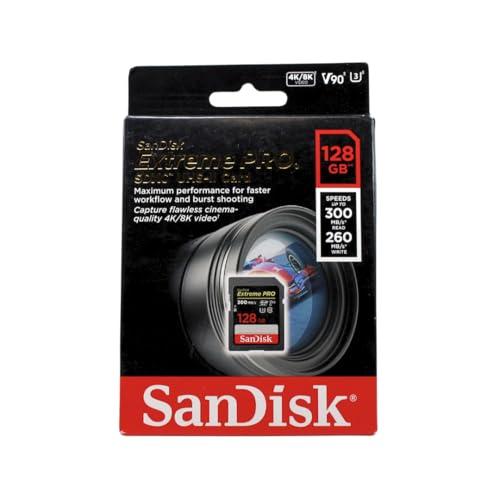
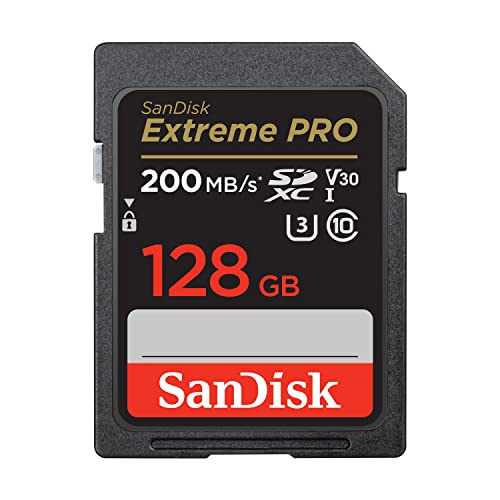
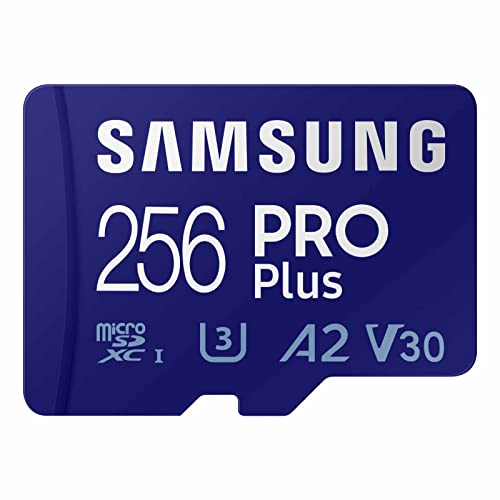
So, what is a V30 SD card? It is a card certified to a minimum sustained sequential write speed of 30 megabytes per second — the ‘V30’ mark is the Video Speed Class, and the number is the guaranteed floor in MB/s, tested under the SD Association’s standardised conditions. That guarantee, not the big ‘up to’ read number on the packet, is what makes V30 the standard recommendation for 4K video: a camera recording at bitrates up to roughly 240 megabits per second (30MB/s) can write to a V30 card continuously without the card ever becoming the bottleneck that stops the recording. This explainer covers how the class is defined, how it relates to the U3 and Class 10 marks you will also see printed on cards, and where V30’s ceiling is — the jobs that genuinely need V60 or V90 instead.
V30 sits in the middle of a family: V6, V10, V30, V60 and V90. Understanding one means understanding the scale, and understanding the scale makes the whole card shelf readable — the skill How to Choose an Sd Card builds on.
Disclosure: As an Amazon Associate, ilcastellomenu.com earns from qualifying purchases. Product examples below link to Amazon, where you can check current availability and specifications; this guide itself lists no fixed prices because pricing and bundles change frequently.
The Definition: A Guaranteed Floor, Not a Peak
Sustained means sustained
Most speed claims in storage are peaks: a burst the device touches briefly under ideal conditions. The Video Speed Class is the opposite kind of number — a minimum the card must maintain while writing continuously, in a standardised worst-case pattern that includes a fragmented, partially-full card. That is why video is the class’s home ground: a camera does not write in flattering bursts, it writes an unbroken stream for minutes or hours, and a card that fades after thirty seconds is a card that ruins takes at minute two. When you test a card yourself using How to Test the Speed of an Sd Card, the sustained-write portion of the test is the one that should be compared against the V number.
Why 30MB/s became the 4K line
Video bitrates are quoted in megabits; divide by eight for megabytes. Mainstream 4K recording modes run from about 100 to 200 megabits per second — 12.5 to 25MB/s — which a V30 card’s 30MB/s floor clears with headroom for the camera’s housekeeping. That arithmetic is why V30 became the default answer for 4K across the camera lists in Best Sd Cards for 4K Video and Best Sd Cards for Video: it is not a marketing tier, it is the class whose guarantee covers the dominant bitrates of the current camera generation.
In this guide
V30 and the Other Marks on the Card
U3 says the same thing in an older language
Cards commonly print several logos at once: a circled 10 (Class 10), a U with a number inside (UHS Speed Class), and the V-class. U3 guarantees the same 30MB/s minimum write as V30 — the U-class tops out at U3, which is why the V-scale was created to extend higher. U1 and Class 10 both guarantee 10MB/s, matching V10. So a card marked U3 but not V30 is, for recording purposes, making the same promise; a card marked V30 has been certified under the newer, more video-focused test regime. Either mark is a valid basis for the 4K decision.
What V30 is not: bus speed and read speed
V30 says nothing about the bus: V30 cards exist on UHS-I and UHS-II, and the in-camera guarantee is identical — the bus affects maximum transfer rates and offload speed, covered in UHS I vs UHS Ii Sd Card. Nor does V30 describe read speed, which is the packet’s big number and matters when emptying the card, not when filling it. Three independent specs — capacity family (SDHC vs SDXC), bus, and V-class — plus the A-rating for app performance, fully describe a card. V30 is the one that protects your recordings.
Where V30 Ends: V60, V90 and Honest Limits
The bitrates that outgrow V30
High-bitrate recording modes — all-intra 4K, high-frame-rate recording, 6K and 8K modes — run at 400 megabits per second and far beyond, past the V30 floor. Cameras offering those modes state V60 or V90 requirements, and they mean it: insert a V30 card and the camera will refuse the mode or stop recordings. This is a ceiling of physics, not upsell. If your camera’s top modes matter to you, the card budget follows the manual — the cinema-leaning lists in Best Sd Cards for Video are built on V60/V90 for this reason.
Fragmentation, heat and old cards
The V guarantee assumes a card in reasonable condition. A card that has lived for years as a cycle of shoot-delete-shoot becomes internally fragmented, and while the certification test accounts for some of that, a periodic in-camera format (How to Format an Sd Card) restores a card to its best behaviour. Heat also throttles sustained writes in extreme environments — a dashboard in summer is the classic case, which is why dash-cam guidance pairs the V-class with endurance design, as in Best Sd Cards for Dash Cam. And a card whose sustained writes have decayed below class with age is telling you it is retiring; the lifespan signs are catalogued in How Long do Sd Cards Last.
Common Misconceptions About V30
'V30 means it writes at exactly 30MB/s'
It means at least 30MB/s, sustained, worst-case. Most quality V30 cards write considerably faster in short bursts and in favourable conditions — which is pleasant, but the guarantee is the floor, and the floor is what you plan recordings around.
'A faster class makes my camera record better video'
The card does not change the video; it either sustains the camera’s chosen bitrate or it does not. A V90 card in a camera whose top mode needs V30 produces identical files, just empties faster into a UHS-II reader. Buy the class your camera’s modes require — plus nothing — and put the savings toward capacity or a second card.
How the Certification Test Works, and Why It Is Strict
The V-class is not a manufacturer’s self-assessment. It is a certification with a defined method, and the method explains the guarantee’s reliability.
Worst-case by design
The Video Speed Class test writes to the card in a standardised pattern that simulates an unfavourable real state — including fragmented free space, the condition a card drifts into after months of deletions — and requires the card to hold the class speed throughout. This is deliberately unlike the fresh, empty, sequential conditions of a marketing benchmark. It is also why a genuine V30 card’s behaviour in a camera is so consistent, and why a counterfeit wearing a printed V30 mark fails so completely under the sustained-write test in How to Test the Speed of an Sd Card: the fraud can print the class, but it cannot pass the class’s defining examination. When you verify a card, you are re-running a small, honest piece of the certification yourself.
The class ladder as a buying language
Learn the ladder once and every card shelf becomes readable: V10 for HD video and light duties, V30 for mainstream 4K, V60 for high-bitrate 4K and 6K-class modes, V90 for 8K and cinema bitrates. Pair it with the bus (the ladder’s upper rungs live on UHS-II) and the family (capacity and file system), and you hold the complete grammar of card selection that How to Choose an Sd Card assembles into a purchase. Standards earn their keep when they compress expertise into a mark a buyer can trust at a glance — V30 is that mark for the current camera generation.
V30 in the Field: Three Shooters, One Card Class
The class earns its ubiquity by fitting very different working lives. These are the patterns behind the recommendation lists.
The event photographer, the hybrid shooter, the drone pilot
The event photographer records little video but leans on write speed for burst clearing between moments; V30 on UHS-I keeps a modern body responsive all day, and the budget saved against V90 buys the second and third cards that rotation discipline wants. The hybrid shooter records interviews and B-roll at 4K alongside stills; V30’s floor clears those bitrates with the headroom that housekeeping requires, and recordings stop when the shooter decides, not when the card gives up. The drone pilot flies a microSD variant of the same class — the certification is size-blind — where the card also endures vibration, cold and a small aircraft’s write patterns. Three crafts, one guarantee doing quiet work in each: that is what a well-set standard looks like, and it is why the video lists in Best Sd Cards for Video begin at V30 rather than below it.
V30 and the Neighbouring Standards: A-Ratings and Speed Classes Revisited
Cards accumulate logos until the front of the packet looks like a pilot’s instrument panel. Placing V30 among its neighbours one final time, from the buyer’s side of the counter.
One card, four promises
Take a typical quality microSD card: it may carry Class 10, U3, V30 and A2 simultaneously — four marks making three distinct promises. Class 10 and U3 are the legacy and UHS forms of the same 10MB/s and 30MB/s write floors; V30 restates the 30MB/s floor under the video-focused certification; A2 promises random-access performance for applications. The redundancy is historical, not deceptive: each era’s buyers look for their era’s mark. The fluent buyer reads the packet as a short paragraph — capacity family from the name, bus from the spec, write floor from the V or U mark, app performance from the A mark — and is done in seconds. That fluency, more than any single product, is what this explainer was for: V30 is one word in the language, and now the language is yours.
When the packet shows no V-mark at all
Older stock and some budget cards predate or skip V-certification while still carrying U3 — the same floor in the older language, as this guide established. Such a card is a legitimate choice for 4K at a fair price, with one caveat: it was certified under the older regime’s assumptions, and for a flagship camera’s demanding modes the current V-certification is the safer document. For mainstream use, U3-only cards from major makers are honest tools. For a card with neither mark — only a Class 10 logo and a heroic read speed — the packet has told you its write floor is 10MB/s, and no adjective in the listing can raise it. Believe the marks, especially the missing ones.
Gear for This Guide
The examples below come from our Creators-API-verified product pool and illustrate the card classes discussed in this guide. They are examples, not a ranked list — use the ratings and checks in this article to judge any card, including newer revisions.
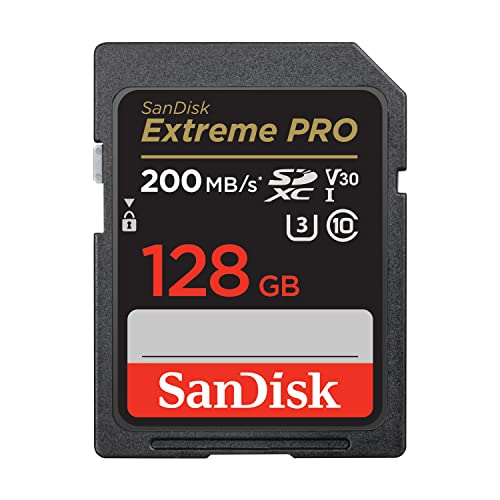
SanDisk 128GB Extreme PRO SD (UHS-I, V30)
A V30 card on the UHS-I bus — the combination inside most working photographers’ cameras, and proof that V30 does not require UHS-II. SanDisk 128GB Extreme PRO SD (UHS-I, V30) — Check on Amazon

SanDisk 128GB Extreme microSD (V30, A2)
The same V30 guarantee in microSD form for drones and action cameras, paired with an A2 rating — two independent certifications on one card, which is exactly how the standards are designed to combine. SanDisk 128GB Extreme microSD (V30, A2) — Check on Amazon

SanDisk 128GB High Endurance microSDXC (V30)
A V30 endurance card for dash cams: the V-class certifies it can sustain 4K-class writes, and the endurance design certifies it can keep doing so under constant overwriting. SanDisk 128GB High Endurance microSDXC (V30) — Check on Amazon
what is a V30 SD card: The Short Version
V30 is a promise: 30MB/s, sustained, worst case. That promise is why it covers most 4K recording, and knowing how to read it — alongside U3, bus and family — makes the entire card shelf legible.
V30 in the Field: Matching the Mark to the Mode, Device by Device
Cameras and their recording menus
The practical skill this guide exists to teach is reading a camera’s mode table against a card’s marks. Every serious camera publishes, per recording mode, the data rate and the card class it requires, and the V30 question is answered mode by mode rather than camera by camera. A body whose 4K modes sit comfortably under the V30 floor makes the mark its natural card; the same body may reserve one or two flagship modes — the highest frame rates, the least compressed codecs — for higher classes, and the honest setup is a V30 fleet for the everyday modes plus one higher-class card reserved for the flagship modes, labelled so it is in the camera when those modes are chosen. Owners who buy the whole fleet at the flagship class pay the premium on every card to serve a mode they use monthly; owners who buy none discover the reservation at the moment they first reach for the mode. The middle arrangement — fleet at V30, one card above it — is how working kits are actually stocked.
Drones, action cameras and the small-device fleet
The small devices cluster almost entirely at or under the V30 line, because their makers design their top modes to the card class their customers can buy anywhere. For these devices the V30 mark functions as the universal donor: one card specification that satisfies the drone, the action camera, the handheld and the recorder, interchangeable across the whole small fleet. That interchangeability has a management consequence worth planning for — standardising the small fleet on V30 microSD cards means any card can rescue any device, spares are pooled, and the registry stays simple. The devices’ ceilings sit below the mark; the mark’s floor sits above their ceilings; and in that overlap, an entire ecosystem runs without a single dropped frame.
The second slot and the backup duty
In dual-slot bodies the backup card’s requirement is set by the camera’s mirroring behaviour, and V30 usually satisfies it with room to spare, because the mirrored write follows the primary’s pace rather than exceeding it. This makes V30 the natural second-slot citizen even in kits whose primary cards wear higher marks: the premium buys nothing in the mirror, while the guarantee buys everything. The exception is simultaneous distinct recording — different codecs to different slots — where each slot’s card must be matched to its own stream’s requirement. Read the body’s dual-slot modes as two separate card questions whenever they record different things, and as one question with a cheaper second answer when they mirror.
How the Guarantee Is Kept: What Makers Do Inside a V30 Card
Understanding why one card holds its floor and another collapses under the same logo requires a look at the engineering the certification rewards. Sustained writing is a choreography problem: the controller must erase ahead, spread writes across the flash, and absorb the housekeeping of wear-levelling without ever pausing the incoming stream longer than the camera’s buffer can forgive. Better cards solve it with more capable controllers, flash with more parallel channels, and firmware tuned to keep the pipeline fed during the card’s own maintenance. Cheaper cards solve it on paper — meeting the test’s pattern while their choreography stumbles on the messier rhythms of real cameras, long takes and nearly full media. This is why the same V30 mark spans cards that behave differently at the edges, and why the field tests in this collection — sustained writes, buffer behaviour, fullness effects — are the buyer’s real specification sheet. The mark certifies the floor exists; the engineering decides how gracefully the card lives on it, and grace under a wedding’s longest take is what the premium tiers of V30 cards are actually selling.
V30 and the Rest of Your Chain: Readers, Buffers and Offload Rhythm
A V30 card’s working life includes the desk as well as the camera, and its read behaviour shapes the evening after the shoot. Cards in this class typically read far above their guaranteed write floor, so offload speed is rarely the complaint — but the chain still deserves one audit. A slow reader or port can make a fast card feel ordinary, and owners have replaced innocent cards for the sins of a bargain reader. Time one full offload end to end, note it in the registry, and you possess the baseline that separates card problems from chain problems forever after. In the camera, the related audit is the buffer: V30 guarantees the drain rate the maker’s modes assume, and a camera that still chokes on bursts with a healthy V30 card is telling you about its own buffer depth, not the card’s failure — a distinction that saves both money and misplaced blame.
Buying V30 Well: The Tier Inside the Mark
Within the mark, buy by the evidence hierarchy this collection has built: provenance first, because the counterfeit economy loves a popular class; then the maker’s position in the range, since flagship V30 lines carry the graceful sustained behaviour the certification alone does not promise; then capacity sized to your longest day with headroom, because a card’s hardest hours are its fullest ones. The ranges gathered in the collection’s guide to best SD cards for cameras are stocked on exactly this logic. One more discipline belongs specifically to this class: because V30 is the default recommendation for so many devices, it accumulates in drawers across years and makers, in subtly different generations of the same mark. Keep the registry honest about which physical card is which — purchase year, maker, line — because when a failure or a recall notice arrives, “the V30 cards” is not an answer; the specific card, with its history, is. The mark is the beginning of a card’s identity, never the whole of it.
The Upgrade Question: When a V30 Owner Should Move Up a Class
Move up when evidence, not appetite, says so. The legitimate triggers are enumerable: a new body whose modes you actually use require the higher floor; a pattern of dropped frames traced to the card by the swap test rather than assumed; a workflow change — longer takes, higher frame rates, simultaneous streams — that moves your real data rates across the line. The illegitimate triggers are equally enumerable: a flagship card on promotion, a forum’s insistence, the feeling that a serious kit should wear serious marks. Cards are consumables in a working system, and the class ladder is a tool for matching guarantees to requirements, not a status staircase. Owners who climb it on evidence spend less across a decade than owners who climb it on anxiety, and their footage is indistinguishable — because the frames a card must never drop are protected by the floor beneath them, and both owners, in the end, are standing on a floor that holds.
V30 for Stills: The Guarantee’s Second Career
Although the mark was born for video, stills shooters benefit from its logic in a way the older speed classes never offered them. A burst photographer’s real requirement is also a sustained write — the buffer drains at the card’s sustained rate, and the camera’s recovery between bursts is set by exactly the figure the V-class certifies and the peak numbers ignore. This is why experienced sports and wildlife shooters quietly shop by video class even when they never record a frame of video: the V30 floor is the most honest published predictor of how a card behaves in the tenth second of a burst, which is where bursts are won and lost. When you evaluate a card for stills, translate its marks accordingly — read the V-class as the drain rate, the bus as the ceiling on that drain, and the peak read figure as the offload promise — and the card’s whole character is legible from its face, in the three numbers that actually govern a working day.
Frequently Asked Questions
What does V30 actually guarantee?
A minimum sustained sequential write speed of 30MB/s, certified under the SD Association’s standardised test, which includes unfavourable conditions like a fragmented card. It is a floor, not a peak — most quality V30 cards write faster in bursts and in favourable conditions, but recordings should be planned against the guaranteed floor.
Is V30 enough for 4K video?
For the 4K modes of most cameras, yes, with headroom: mainstream 4K bitrates run about 100–200 megabits per second, which is 12.5–25MB/s against V30’s 30MB/s floor. The exceptions are high-bitrate modes (all-intra, high-frame-rate, 6K/8K), whose manuals will demand V60 or V90 explicitly. Check your camera’s top mode before assuming — the lists in Best Sd Cards for 4K Video assume V30 as the baseline.
What is the difference between V30 and U3?
Effectively none in the promise: U3, from the older UHS Speed Class scale, also guarantees 30MB/s minimum writes. The U-scale tops out at U3, so the V-scale was created to extend to V60 and V90. A card marked U3 is making the same recording promise as a V30 card; a card marked V30 was certified under the newer video-focused regime.
Does a V30 card need to be UHS-II?
No. V30 exists on both buses, and the guarantee is identical. UHS-II matters for the higher classes (V60/V90 only exist there) and for maximum transfer and offload speeds. The bus comparison is in UHS I vs UHS Ii Sd Card; the class and the bus are independent specifications that happen to be printed on the same card.
Will a V90 card improve my camera's video quality?
No. The card either sustains the camera’s chosen bitrate or it does not; the files are identical either way. A higher class buys access to modes that require it and faster offloads — not better pictures from modes a V30 card already sustains. Buy the class your camera’s modes require, and put the savings toward capacity or a second card.
My V30 card sometimes stops recordings. What is wrong?
Work through the suspects in order: the card is nearly full or heavily fragmented (format it in the camera, per How to Format an Sd Card), it is overheating in an extreme environment, it is a counterfeit that cannot sustain its class (test it per How to Check if Fake an Sd Card), or it is wearing out. A genuine, healthy V30 card does not stop recordings within its bitrate envelope.
Does a V30 card guarantee smooth 4K on every camera?
It guarantees the floor the class certifies, and most cameras’ 4K modes were specified to live on that floor — but “most” is doing work in that sentence. A minority of modes, usually the highest frame rates and least compressed codecs on flagship bodies, are specified above V30, and no V30 card, however excellent, can certify its way across a requirement written higher. The camera’s mode table is the authority: where it asks for V30, the mark guarantees the mode; where it asks for more, believe it. The guarantee is real but it is a floor, and floors support exactly the buildings designed for them.
Why does my V30 card benchmark below its promise in short tests?
Because short tests measure the wrong virtue. A quick benchmark reports bursts and peaks — the card’s sprint — while the V30 promise concerns the marathon: the rate sustained across a long, unbroken write. A card can post a modest sprint and a magnificent marathon, or the reverse, and only the sustained test described in this collection’s testing guide reveals which animal you own. Judge a video card by a long write at high fullness, in a reader that is not the bottleneck, and compare that figure against the class floor. Anything else is timing a marathon runner by their first ten metres.
Can a V30 card be too fast or incompatible with an older camera?
Speed itself never incompatibilities a card — hosts negotiate down gracefully — but generation and capacity can: an older camera may not accept the newer capacity generation at all, and a very old host may cap usable sizes below the card you bought. The V30 mark on a card tells you its video guarantee and nothing about whether a given elderly slot will accept the card carrying it. For legacy devices, check generation and maximum size first, then class; the order matters because a compatible slow card records, while an incompatible fast one does not record at all.
Is V30 enough for high-frame-rate slow motion?
It depends entirely on the mode’s data rate, which the manual states and the frame rate alone does not determine — compression decides how much data each of those frames costs. Many bodies’ slow-motion modes are engineered to fit the V30 floor deliberately, because their makers know the installed card base; others reserve their extreme rates for higher classes. There is no universal answer, which is precisely why this guide teaches the mode-table habit rather than a slogan. Look up your exact mode, match the class it names, and slow motion becomes as un-dramatic to equip as any other mode you shoot.
How long will V30 remain the sensible default?
For as long as camera makers keep specifying their mainstream modes to it — which, given the enormous installed base of bodies and the class’s comfortable fit with today’s codecs, means years rather than months. Standards at the centre of an ecosystem move slowly because every participant’s catalogue depends on them. A higher-resolution future will eventually shift the centre of gravity upward, mode by mode and body by body, and your own mode tables will announce the shift for your kit long before any headline does. Until your table says otherwise, V30 is the floor the industry builds on, and buying to it is buying with the industry rather than against it.
Should I replace older non-V30 cards that still work?
Only where their duty demands the guarantee. A pre-V30 card serving a low-demand device — a trail camera, a music player, a spare for stills at walking pace — is earning its keep honestly, and replacing it buys a certification its work never invokes. Where a card records video or drains bursts, the calculus flips: the guarantee is the job description, and an uncertified card in that slot is a hope rather than a specification. Audit by duty, promote or retire by evidence, and let the registry’s record of each card’s actual service decide. Sentiment is a fine reason to keep a card in the drawer; it is a poor reason to keep one in the camera on a day that matters.
What is the quickest honest test of a V30 card I just bought?
Two stages, both already in this collection’s toolkit. First the capacity test, full write and verify, which acquits the card of fraud. Then a sustained write that mimics your real work: a long continuous recording in your own camera at your most demanding V30 mode, on a card filled past halfway, reviewing the footage for dropped frames and the camera for warnings. A card that passes both has demonstrated the guarantee in the only court that matters — your device, your mode, your conditions. Record the results in the registry with the date, and the card enters service as a verified instrument rather than a labelled hope, which is the entire difference between buying cards and building a fleet.
Do all V30 cards carry the same warranty and endurance?
No — the class certifies a speed floor and is silent about longevity, which is set by the flash grade, the maker’s confidence and the product line’s position. Two cards sharing the mark may carry warranties of very different lengths and endurance expectations a world apart, because they were built for different lives: one for a hobbyist’s weekends, one for a professional’s daily writes. Read the warranty as the maker’s own estimate of the card’s intended service, and match it to your workload with the same care you matched the class to your modes. A long warranty on a working card is not a luxury feature; it is the maker telling you, in enforceable language, how much writing the card was built to survive.
If a mode needs exactly the V30 floor, is there any headroom concern?
A certified card’s floor is a guaranteed minimum under the standard’s conditions, so a mode specified at that floor is designed to run on it — camera makers leave their own margin between a mode’s true appetite and the class they name. The practical cautions are the familiar edge conditions: a nearly full card, extreme temperatures, and a card whose health has declined in service. Keep working headroom in capacity, retire cards on evidence of decline, and a mode at the floor runs as its maker intended. The system of guarantees is engineered end to end — the anxiety it cannot engineer away is the owner’s, and the registry is where that anxiety goes to be replaced by records.
That is the registry’s deepest function, in the end: not bookkeeping for its own sake, but the conversion of every card you own from a claim printed by a stranger into a record written by you.
What should I do when a camera warns that a V30 card is too slow?
Believe it provisionally and diagnose it properly, because the warning has a short list of honest causes. The card may be counterfeit or declined in health, the mode may genuinely sit above the class, or the card may be nearly full and fragmented in a way an in-camera format will cure. Work the list in order: check the mode’s requirement in the manual, format the card in the camera and retest, swap in a second known-genuine V30 card and repeat the mode, and test the suspect card’s sustained write on the computer. The step where the warning vanishes names the cause. What the warning almost never means is that the V30 class itself is inadequate for a mode specified to it — the guarantee system is more reliable than any individual card, which is the whole reason it exists.
Does the V30 mark apply to microSD cards identically?
Identically — the video speed class is a property of the card’s guaranteed sustained write, not of its physical format, and a V30 microSD carries the same floor as a V30 full-size card. Small devices that record serious video, drones above all, lean on exactly this equivalence, specifying V30 in a fingernail-sized card and receiving the certified floor. When such a card visits a full-size slot through an adapter, the guarantee travels with it, provided the adapter is sound. Buy the class your mode requires in whichever format your slot demands, and let the equivalence do the rest; the standards were designed so that the mark means the same thing in every size of card, and in this case the design succeeded completely.
How do I explain V30 to a beginner in one breath?
Try this: “It is a promise, tested and certified, that the card will never write slower than the speed your camera’s video needs — not on the first clip, not on the longest take, not when the card is nearly full.” Every clause of that sentence maps to a section of this guide: the promise is the certification, the floor is the class number, the longest take and the full card are the edge conditions where uncertified cards fail. A beginner who absorbs that sentence can shop the entire category safely, because they now know which number on the card’s face is a guarantee and which are merely weather reports about the card’s best day.
Is there a downside to standardising my whole fleet on V30?
Only the mild economic one: a few devices in every fleet — the music player, the trail camera, the e-reader — ask so little of a card that the certification is wasted on them, and fitting them from the V30 pool spends flagship money on errands. The countervailing benefit is simplicity: one class to buy, test, label and trust, with any card able to serve any device in an emergency. Most owners land on a two-tier answer — V30 as the fleet standard, with a small pool of honest economy cards for the errand devices — and find the simplicity survives intact, because the tiers are divided by duty rather than by hope. Standardise the system, tier the stock, and the mark does the work it was designed for.
Adopt the two tiers at your next purchase, label them plainly in the registry, and your fleet’s class structure will thereafter explain itself to anyone who opens the case.
One final scenario: I shoot both photo and video on one card. Which class rules?
The stricter of your two duties, which is almost always the video. Stills ask the card for a drain rate; video asks for a guaranteed floor held without interruption, and a card certified for the video duty covers the stills duty as a by-product, while the reverse is not assured. So the hybrid shooter’s card is chosen from the video mode table, sized for the combined day’s stills and footage, and the stills inherit whatever buffer behaviour the certified floor delivers — which, as this guide’s stills section explained, is usually better than the card a stills-only reading of the marks would have chosen. One card, two duties, the stricter specification in charge: that is the hybrid rule, and it has never dropped a frame or stalled a burst that mattered.
Apply that rule to the card currently in your camera — identify its strictest duty, check the mark against that duty’s table entry, and either relax with evidence or promote the card’s replacement to the class the duty names.
Where does the registry entry for a V30 card earn its keep most?
At replacement time, two or three years from purchase, when the question is not “which class?” — the mode table answers that — but “which maker, which line, which year’s version served me without a murmur?” The registry holds the answer in the card’s own biography: its test results on arrival, its duties, its clean record. Fleets rebuilt from biographies improve with every generation, because each replacement is chosen from evidence about the last one. Fleets rebuilt from memory repeat their mistakes at retail prices. The V30 mark starts a card’s story at a certified floor; the registry is how the story becomes useful to the card that succeeds it.
Start that biography tonight for the card you shoot most — arrival tests, first duties, first clean season — and every replacement decision in your future inherits a witness instead of a guess.
Do the same for its understudy in the second slot, and for the spare in the case, until every card you trust has a paper trail proportionate to the trust — because a fleet’s reliability is, in the end, nothing more mysterious than the sum of what its owner bothered to write down — a sentence that applies to the guarantee on the card’s face as much as to the registry in the drawer, since both are promises that exist only because someone committed them to a durable form. Trust, in storage as in everything else, is a paperwork achievement before it is a feeling — and the V30 mark, read properly, is the industry’s own paperwork, filed on the card’s face for anyone who learns to read it. You have; the next card you buy will be read, not merely purchased — and filed.
Related Guides
Keep exploring with these guides and roundups from the same SD-card collection: