ilcastellomenu.com is reader-supported. When you buy through links on our site, we may earn an affiliate commission.
Where to Buy
Learning photography at home and around your own city is a gentler, better apprenticeship than any trip, so the best compact digital cameras for beginners are judged here by how kindly they teach an ordinary week: family in the kitchen, a dog in the park, friends at a café table, the neighbourhood showing off at golden hour. No airports, no expeditions — a beginner’s real curriculum is the life already within walking distance, and the right camera is the one that turns that life into practice without punishing a single early mistake.
All six picks are linked from the verified pool for this site, and they divide by ambition. Three are mirrorless cameras with interchangeable lenses — the long road, where a beginner grows for years without replacing the body. Two are fixed-lens compacts that make excellent photographs the day they are unboxed, with nothing to assemble and nothing to misconfigure. One is an instant camera, included because printing a photograph in your own kitchen teaches composition faster than any tutorial: the frame is spent, so the frame gets considered. A separate guide on this site covers beginner compacts chosen for travel; this one deliberately stays home, where learning actually happens.
Key Takeaways
- Automatic modes are a curriculum, not a crutch — choose forgiving ones.
- Eye autofocus lets beginners compose while the camera handles focus.
- Mirrorless bodies grow with you; fixed compacts free you immediately.
- Home and city subjects reward wide lenses and low-light manners.
- A flip screen teaches faster than any manual chapter.
- The best beginner camera is the one still in use by month three.
In this guide
Quick Picks
| Camera | Badge | Why it earns its place |
|---|---|---|
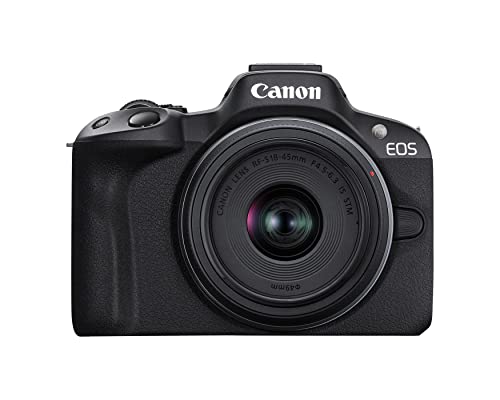
| Canon EOS R50 | The friendliest full curriculum | Guided menus, superb automatic shooting and eye-tracking focus in a small body that teaches manual control when you ask it to. |
| Nikon Z30 | The small-body confidence builder | A compact, finder-free design with a flip screen and Nikon’s calm colour, built for creators learning at home. |
| Sony ZV-E10 II | The video-leaning fast learner | Creator-first controls, strong autofocus and a touchscreen logic that phone graduates understand in an afternoon. |
| Canon PowerShot G7 X Mark III | The no-homework compact | One fixed bright lens, flattering colour and pocket size — photography without a system to manage. |
| Sony ZV-1F | The simplest first step | An ultra-wide fixed lens and one-button background blur for beginners whose first subjects are themselves and their rooms. |
| Fujifilm Instax Mini 12 | The print-it-now teacher | Automatic everything and a physical print in ninety seconds — composition lessons you can hold. |
How Did We Choose Cameras That Teach Rather Than Intimidate?
Each candidate was handed, mentally, to a specific beginner: a parent whose phone gallery is full of almost-good family frames, learning in stolen minutes between obligations. Cameras were scored on the first-hour experience — can a novice make a pleasing photograph of a child in a kitchen within ten minutes of unboxing, using only what the camera volunteers? Guided interfaces, honest automatic modes and focus systems that find eyes without being asked scored heavily; cameras that bury competence behind custom menus scored as they deserved.
The second test was the third month. Beginners do not quit photography because cameras are hard; they quit because cameras are absent — too big to carry to the park, too fiddly to grab when the dog does something wonderful. Size, startup speed and the friction of moving photographs to a phone were weighed as learning features, because a camera that attends daily life teaches daily, and one that attends monthly teaches almost never.
Third came the growth question, asked differently for each family. Mirrorless picks were judged on their lens roads and how gracefully their manual controls reveal themselves; fixed-lens picks on whether their simplicity is a destination or a ceiling; the instant camera on whether its constraints teach transferable seeing. Every pick below passes its own family’s version of the test, and its section states plainly which learner it fits.
Why Is Home the Best Classroom a Beginner Will Ever Have?
Home offers the one resource courses cannot sell: repetition under changing light. The same kitchen window teaches hard noon contrast, soft evening warmth and lamplight’s compromises across a single week, on subjects — your people, your rooms, your street — whose improvement you can actually see because the baseline is familiar. A beginner who photographs one window forty times learns light; a beginner who photographs forty landmarks once learns tourism.
City life completes the syllabus within walking distance. Markets teach candid timing, architecture teaches lines and patience, the local park teaches moving subjects and uncooperative dogs, and the walk to buy bread at golden hour teaches why photographers plan around light instead of complaining about it. None of this requires a lens collection or a holiday — it requires a camera small enough to be in the coat when the lesson walks past.
There is also a mercy in learning at home: the stakes are kind. A missed focus on a stranger’s once-a-year festival is a small grief; a missed focus on Tuesday’s dog is a note for Wednesday. Cameras in this guide were chosen to shrink even those small griefs — eye autofocus, forgiving automatics, fast review — because early confidence compounds exactly like early discouragement, and only one of them keeps a beginner shooting into month three.
Which Are the Best Compact Digital Cameras for Beginners Learning at Home?
Six answers for six kinds of first steps: three systems to grow into, two compacts to simply enjoy, and one instant camera that prints the lesson. Read the badges as personalities — the curriculum, the confidence builder, the fast learner, the no-homework option, the simplest step, and the teacher that prints.

Canon EOS R50 — The friendliest full curriculum
The R50 is the beginner camera Canon designed by watching beginners. Its guided interface explains settings in plain language with visual previews — this is what a wider aperture does to your background, shown rather than described — while its automatic modes are genuinely excellent rather than grudging, so the first month’s photographs succeed while the lessons accumulate underneath. Eye-detection autofocus locks onto family members and pets with a reliability that removes the commonest beginner failure, the sharp background and the soft child, from the learning curve entirely.
When curiosity outgrows guidance, the same body opens into a complete photographer’s instrument: full manual control, an electronic viewfinder for sunny-day composing, a vari-angle screen for odd angles and self-recording, and the RF lens mount beneath it, which means the kit lens of month one can be joined by a fast prime in month six without a new camera entering the story. That continuity is the R50’s deepest beginner feature — nothing learned is ever stranded.
- Format: APS-C mirrorless, RF mount
- Interface: guided menus with visual explanations
- Focus: eye detection for people and animals
- Screen: vari-angle touchscreen; EVF built in
- Role: the long-term learning system
Strengths
- Automatic results good enough to build confidence on
- Teaching interface that explains instead of abbreviating
- A lens road that lasts years beyond the beginner stage
Trade-offs
- Kit lens is a starting point you will outgrow happily
- Small body means a small battery on long days
- Menus reward an evening of exploration to personalise
Its home curriculum writes itself: week one on full automatic at family dinner, week three experimenting with the guided background-blur control on a portrait by the window, month two discovering what shutter speed does to the dog mid-leap in the garden. Each stage uses the same dial, the same files, the same hands — the camera simply stops helping in one more place, at the pace the photographer chooses.
Choose it if you suspect, correctly, that photography might become a real hobby. It is the pick in this guide least likely to be replaced, because it was designed to be graduated from internally rather than traded away.
Best for: beginners who want one camera to learn on for years. Not suited for: buyers wanting zero menus or a camera that fits a jeans pocket

Nikon Z30 — The small-body confidence builder
Nikon built the Z30 by removing the part beginners at home use least — the viewfinder — and spending the savings on the parts they use most: a bright flip screen for framing at arm’s length and filming yourself, a deep comfortable grip for one-handed shooting, and clean, calm colour that makes kitchen light look like a decision rather than an accident. It is a mirrorless system camera wearing the manners of a friendly compact, and for learners whose subjects are rooms, people and the occasional vlog, that trade is intelligently made.
The learning experience is notably unhurried. Controls are few and legible, the automatic modes behave predictably, and the camera’s video manners — it was designed with home creators in mind — mean a beginner can document a birthday, a recipe or a renovation with the same body they are learning stills on. Nikon’s Z mount waits underneath with a growing shelf of compact lenses, including the small primes that turn an APS-C body into a street-and-family instrument of real quality.
- Format: APS-C mirrorless, Z mount
- Finder: none — framing is screen-based by design
- Screen: flips forward for self-recording
- Grip: deep and secure for one-handed use
- Role: the home-and-creator learning body
Strengths
- Smallest, simplest entry into a real lens system
- Screen-first design suits home and video learners
- Colour that flatters indoor light without editing
Trade-offs
- Bright sunlight composing is screen-only work
- No in-body stabilisation; steady hands or support help
- Viewfinder learners should choose the Canon instead
Picture its natural habitat: propped at the end of a kitchen counter recording a first sourdough, then lifted for the still of the crumb, then carried to the park because it weighs nothing in a tote. Beginners keep cameras that join the furniture of daily life, and the Z30 was shaped precisely to be furniture-grade unobtrusive while remaining a genuine system underneath.
Its one structural warning is the missing finder, which matters exactly as much as your climate is sunny. Indoor and evening learners will never miss it; committed outdoor shooters in bright countries should test a screen-only week on their phone before committing, or step to the R50’s finder with this guide’s blessing.
Best for: home creators and indoor-family learners wanting a small system camera. Not suited for: bright-sun outdoor shooters who compose by eye

Sony ZV-E10 II — The video-leaning fast learner
The ZV-E10 II speaks fluent phone, which for many beginners is the native language. Its touchscreen logic, its product-showcase and background-defocus shortcuts, and its creator-first control layout assume the learner arrives from a smartphone and wants a camera to feel like an upgrade rather than a re-education. Sony’s autofocus — the family’s famous eye tracking, now thoroughly mature — removes focus from the beginner’s worry list in both stills and video, which frees attention for the composition lessons that actually make photographs better.
Beneath the friendliness sits the deepest lens ecosystem in this guide. The E-mount catalogue, new and used, is where beginner budgets stretch furthest: the kit zoom now, an affordable fast prime when portraits call, a wide lens when rooms feel tight. The Mark II’s improved battery life answers its predecessor’s loudest complaint, and its stills quality — same APS-C heart as Sony’s photographic bodies — means the video-leaning badge undersells a genuinely capable camera for the family album too.
- Format: APS-C mirrorless, E mount
- Controls: creator shortcuts, touchscreen-first logic
- Focus: mature eye tracking for stills and video
- Battery: improved endurance over the first generation
- Role: the phone graduate’s system camera
Strengths
- Learning curve feels like a phone upgrade, not a course
- Lens ecosystem offers the cheapest growth path here
- Equally serious about video and stills from day one
Trade-offs
- No viewfinder; bright-day framing is by screen
- Menus are powerful but denser than Canon’s guidance
- No in-body stabilisation for handheld video polish
Its ideal beginner films things: a child’s practice sessions, a small business’s products, a room being renovated, themselves explaining any of it. For that learner, the Sony’s shortcuts are not gimmicks but curriculum compression — product mode teaches focus transitions by performing them, defocus mode teaches aperture by showing its result — and the stills education proceeds in parallel on the same files.
Pure stills learners who never intend to record video will find the R50’s guided stills interface the warmer teacher. But the beginner whose life is half moving images — which is to say, most beginners under thirty — will learn fastest on the camera that treats video as a first language.
Best for: video-leaning beginners and phone graduates wanting a growth system. Not suited for: viewfinder traditionalists or menu minimalists

Canon PowerShot G7 X Mark III — The no-homework compact
Some beginners do not want a system, a mount or a curriculum; they want the camera their phone promised to be. The G7 X Mark III is that camera: one bright fixed zoom, Canon’s flattering colour, a pocketable body, and an automatic mode trustworthy enough that the manual can stay in the box until curiosity — not necessity — opens it. There are no lenses to research, no mount decisions to regret, and no wrong way to assemble it, because there is nothing to assemble.
What elevates it above mere convenience is how much photography it quietly teaches. The lens ring and exposure dial put the two creative controls that matter — aperture’s effect and brightness — under the beginner’s fingers as physical objects, and the tilting screen invites low and high angles that phone shooters rarely attempt. Its 1-inch sensor delivers the low-light and background-blur improvements that made the owner leave the phone behind, visibly, in the first evening’s kitchen photographs.
- Sensor: 1-inch, stacked design
- Lens: fixed bright zoom, roughly 24–100mm equivalent
- Controls: lens ring and dials for tactile learning
- Screen: tilts up for self-framing and low angles
- Role: the complete-in-itself beginner compact
Strengths
- Excellent photographs with literally no setup
- Pocket size guarantees daily carrying and daily practice
- Bright lens flatters home light and faces
Trade-offs
- Fixed lens is a ceiling when the hobby deepens
- No viewfinder for bright-day composing
- Autofocus is gentler than the mirrorless picks’
Its learning story is the tortoise’s: no dramatic system mastery, just hundreds of good frames of ordinary life, accumulating into an eye. Many photographers discover, two years in, that the little Canon taught them composition and timing — the transferable ninety percent of photography — while sparing them every gear decision, and that trade looks wiser with every year.
Buy it as a destination, not a stepping stone, and it is superb value. Buy it while secretly intending to shoot birds or sport, and its fixed lens will be a wall you meet within the season; the mirrorless picks above exist for that ambition.
Best for: beginners who want great home and family photos with zero system overhead. Not suited for: future lens collectors or telephoto subjects

Sony ZV-1F — The simplest first step
The ZV-1F reduces the first camera to its absolute minimum of decisions. Its fixed lens is ultra-wide — chosen so that a beginner filming or photographing themselves at arm’s length fits face, room and context without a tripod hunt — and it never zooms optically, never changes, never asks a question. A single prominent button toggles background defocus, teaching the single most-loved photographic effect by pressing rather than by studying. For the beginner whose first subject is their own life, narrated from their own desk, this simplicity is not a limitation but the entire design brief, executed honestly.
Expectations must be set with equal honesty. The fixed wide lens that frames a desk beautifully is wrong for portraits across a room, wildlife across a garden, or any subject that cannot be approached; stills are competent snapshots rather than the G7 X’s craft. What the camera offers instead is the lowest possible activation energy for starting: charge it, hold it, press the obvious button, and a presentable record of your room, your project and your face exists.
- Lens: fixed ultra-wide, 20mm equivalent — no zoom
- Sensor: 1-inch type
- Controls: one-button background defocus
- Audience: self-recording beginners, desk creators
- Role: the minimum viable first camera
Strengths
- Nothing to configure wrongly; confidence is immediate
- Ultra-wide framing suits rooms and arm’s-length video
- Small and light enough to live on a desk permanently
Trade-offs
- Fixed wide lens excludes portraits at distance and details
- Stills ambition quickly outgrows its snapshot brief
- No zoom of any optical kind, ever
Its buyer is specific and real: the student, streamer or small seller whose photography is ninety percent themselves and their immediate surroundings, and whose alternative is a phone on a stack of books. For that person the ZV-1F is not the cheap option but the correct one, and its constraints will take a year to even notice.
General beginners — families, dogs, city walks, birthdays across a room — should step one rung up to the G7 X or the mirrorless trio, where a zoom and a future wait. This guide includes the ZV-1F because matching the camera to the actual first year matters more than matching it to an imagined one.
Best for: desk creators and self-recorders starting from absolute zero. Not suited for: family, travel or any subject beyond arm’s-length-plus

Fujifilm Instax Mini 12 — The print-it-now teacher
The Instax Mini 12 teaches the oldest photographic skill — seeing before spending the frame — by charging tuition per photograph. Film costs money, the print cannot be deleted, and so the beginner with an Instax slows down, walks around the subject, waits for the expression, and composes with a care that unlimited digital frames rarely inspire. Its automatic exposure handles every technical decision, which sounds like the absence of learning until you realise the only subject left to study is the photograph itself: framing, timing, light direction, honesty.
At home, its curriculum is uniquely social. Prints accumulate on fridges and pinboards, and a household watches its own visual history develop — literally — in a way no cloud gallery reproduces. Children learn that photographs are objects; grandparents receive them as gifts on the spot; the beginner learns which of their frames people actually keep, which is the most honest portfolio review in photography.
- Format: instant film, credit-card prints
- Exposure: fully automatic with light sensing
- Modes: close-up and selfie framing aids
- Battery: AA cells, available everywhere
- Role: the composition teacher with zero settings
Strengths
- Cost-per-frame discipline builds deliberate seeing
- Physical prints make progress visible at home
- Impossible to configure wrongly or break via menus
Trade-offs
- No digital file, no editing, no second chances
- Film is a permanent running cost per photograph
- Flash-driven look limits moody light experiments
As a household’s second camera beside a digital pick, it may be the highest-value object in this guide: the digital body teaches craft, the Instax teaches judgement, and the two educations proceed at the same kitchen table. As a sole camera, it suits the beginner who suspects their real interest is people and occasions rather than files and settings — a self-knowledge worth the price of admission.
Its graduates are recognisable: they raise any camera — later, digital ones included — with a pause before the shutter that their phone-trained peers never learned. Ninety seconds per print buys that pause, one frame at a time.
Best for: families, social shooters and anyone learning to see before shooting. Not suited for: digital workflows, editing learners or high-volume shooting
How Do the Six Beginner Compacts Compare Side by Side?
| Camera | Type | Learning style | Grows into |
|---|---|---|---|
| Canon EOS R50 | Mirrorless system | Guided curriculum with a finder | A full RF lens hobby |
| Nikon Z30 | Mirrorless system | Calm, screen-first practice | Z-mount stills and video |
| Sony ZV-E10 II | Mirrorless system | Phone-fluent, video-leaning | The vast E-mount catalogue |
| Canon PowerShot G7 X Mark III | Fixed-lens compact | Tactile, no-homework shooting | An eye, not a system |
| Sony ZV-1F | Fixed-lens compact | One-button self-recording | A creator’s desk setup |
| Fujifilm Instax Mini 12 | Instant | Print-by-print judgement | Deliberate seeing, anywhere |
The grows-into column is the honest divider: system cameras sell a future, compacts sell the present, and the Instax sells a habit. All three currencies are real; spend the one you actually have.
How Should a Beginner Practise During the First Month at Home?
Week one belongs to automatic mode and volume: photograph the household’s ordinary rituals — breakfast light, homework, the dog’s evening patrol — without changing a single setting, and review each evening with one question only: which frame would I print? That selection habit, learned before any technique, is the spine of every later skill.
Week two adds one variable. Aperture is the friendliest: portraits by the window at the widest setting, then the narrowest, comparing backgrounds until the relationship is felt rather than recited. The guided interfaces on the Canon and the defocus button on the Sonys exist precisely for this week; use the training wheels as training wheels, proudly and briefly.
Weeks three and four leave the house on foot. One walk, one constraint: only doorways, only red things, only shadows, only the number three. Constraints are the beginner’s private tutor, converting a familiar neighbourhood into an assignment, and a compact camera — any of these six — is the ideal constraint machine because it removes gear decisions from the exercise entirely. By month’s end the beginner owns fifty kept frames, a notebook of noticed light, and the one asset courses cannot confer: momentum.
What Do Automatic Modes Actually Teach, and When Should You Leave Them?
A good automatic mode is a demonstration, not a hiding place. Modern scene intelligence watches the subject, chooses defensible settings, and — on the teaching cameras here — shows its working: the guided screens explain, the settings display reports what was chosen and why it suits a portrait or a landscape. A beginner who reviews those choices after each session is receiving a silent tutorial calibrated to their own photographs, which no generic course can match.
Leave automatic in stages, not in a leap. Aperture priority is the usual first graduation, because depth of field is the creative control beginners feel most; shutter priority follows for the park, the sports day and the dog. Full manual can wait for the tripod-and-landscape chapter of a photographer’s life, months or years away, and many excellent photographers visit it rarely. The measure of progress is not the mode dial’s position but the intentionality behind it.
One warning belongs here: automatic modes fail instructively at edges — backlit faces, snow, stage lighting — and those failures are curriculum too. When the camera’s choice disappoints, the beginner has found the exact lesson to learn next, with their own photograph as the textbook. Keep the failures. They are the syllabus writing itself.
How Do You Get Photographs From Camera to Phone Without Friction?
The transfer ritual decides whether camera photographs join your life or languish on a card. Every system here offers a companion app and wireless transfer; set it up on day one, at the kitchen table, while patience is high — not at midnight after the birthday party, when it will be abandoned. Configure automatic transfer of finished JPEGs if your model offers it, so the phone gallery quietly fills with camera-quality frames and the camera starts winning the daily comparison that keeps it in use.
Shoot JPEG, or JPEG plus raw, during the learning months. Raw files are a promise to edit later that beginners rarely keep, and unedited raws look flatter than the JPEGs the camera designed — a confidence trap disguised as professionalism. The cameras’ colour, especially Canon’s and Fujifilm’s, is a feature; use it, share from it, and let raw join the workflow when an editing habit genuinely exists to receive it.
Back up monthly to anything boring: a computer folder, a drive, a cloud album. Beginner photographs become family history faster than anyone expects, and the card in the camera is not an archive. The habit takes four minutes a month and is the difference between a first year preserved and a first year described.
How Do You Photograph a Family Gathering Without Becoming Its Photographer?
The beginner’s first assignment usually arrives disguised as a birthday. The trap is role capture: the new camera makes its owner the event’s unpaid staff, watching the party through a screen while it happens to other people. The defence is a shot list small enough to finish — the group, the cake moment, three candids, one portrait of the eldest with the youngest — after which the camera goes down and the photographer rejoins the species. Cameras in this guide serve that discipline well precisely because their automatics make the listed frames quick: eye focus finds the faces, the colour needs no correction, and five planned minutes buy an album’s worth of record.
Candids deserve a technique note: pre-set the camera before the moment. Room light changes little across an afternoon, so a beginner who sets exposure for the room, chooses a forgiving aperture and lets eye autofocus patrol can raise the camera and fire within a heartbeat when laughter peaks. The R50 and ZV-E10 II were practically designed for this ambush style; the G7 X’s bright lens forgives the light; the Instax converts one good candid into a gift before the party ends, which reliably makes its owner the most popular photographer alive for ninety seconds.
Group photographs, the gathering’s formal demand, reward boring competence: the widest lens setting, everyone arranged in two loose rows with the window light in front of faces rather than behind them, three frames fired in a burst because someone always blinks in two of them. Announce the last frame, take one more after the announcement — the relaxed laugh that follows the official portrait is so reliably the keeper that professionals schedule for it.
What Should a Beginner Learn About Light From Their Own Windows?
A home is a lighting laboratory with rent already paid. Its windows demonstrate the whole curriculum: the north-facing softness portraitists prize, the hard noon shaft that carves still lifes out of fruit bowls, the evening collapse when lamps take over and colour turns to amber. The beginner who photographs one chair by one window across a day — dawn, noon, dusk, lamplight — owns a lesson in direction, hardness and colour that no tutorial delivers as durably, because the chair is theirs and the seeing was done with their own eyes.
Direction is the first concept to make physical. Light from behind the subject makes silhouettes and drama; light from behind the camera makes clarity and flatness; light from the side makes texture and mood, which is why side windows are the beginner’s best friend. The cameras here help by showing it live — screens and finders preview the result as you walk around the subject, and that walking, not any setting, is the actual skill being built.
The second concept is that lamps are not the enemy but a different sun. Home evening light is warm, dim and directional — three properties that flatter faces and challenge sensors. This is where the picks separate kindly: the mirrorless bodies’ larger sensors and the G7 X’s bright lens keep evening frames clean at sensitivities the phone has already surrendered, and the beginner learns the genre’s open secret, that most beloved family photographs are lamplight photographs, taken by cameras that refused to panic.
How Do You Photograph Children and Pets Who Refuse to Pose?
Unposeable subjects are the beginner’s true teachers, because they cannot be directed — only anticipated. The method is environmental: place yourself where the action will recur — the garden gate the dog charges, the hallway the toddler commutes — set the camera for that stage, and wait inside it. Continuous autofocus and eye detection, the headline systems on the Canon and Sony picks, convert that patience into keepers; burst mode converts the leap, the pounce and the collision into a sequence from which one honest frame always survives.
Get down to their altitude. A photograph of a child or a pet taken from adult height documents supervision; the same subject at their own eye level becomes a portrait of a person. The flip and tilt screens across this guide exist for exactly this descent, sparing knees and dignity alike, and beginners who adopt the low camera early produce family archives with a distinctive tenderness that standing photographers never quite replicate.
Shutter speed is the technical hero of this genre: motion freezes or blurs by its decree, and the learning is deliciously visible. A dog mid-shake at a slow speed is impressionism; at a fast speed it is a calendar. Let beginners experiment shamelessly here — the failures are funny, the successes are framable, and the concept, once felt in the fingers, transfers to every moving subject they will ever meet, from sports days to street scenes.
When Should a Beginner Buy a Second Lens, a Tripod or Nothing at All?
The correct first purchase after the camera is usually nothing. A month of shooting reveals the photographer’s actual frustrations, and accessories bought before that revelation are guesses wearing receipts. The discipline this guide recommends is a written itch list: every time a photograph fails for a gear reason — too dark, too far, too shaky — note it. After fifty frames of evidence, the list itself names the purchase, and it is almost never the item the beginner would have bought in week one.
When the itch is darkness and backgrounds — portraits that will not blur, kitchens that grain — the answer is the fast prime lens, the classic second purchase for the mirrorless picks, transforming evening and portrait work in one step. When the itch is distance — the sports day, the garden birds — a telephoto zoom is the honest answer, bought with the knowledge that it serves a named subject. When the itch is blur in still scenes, landscapes at dusk or family self-portraits with everyone in them, a modest tripod outperforms any lens, at a fraction of the price, and doubles as the remote-shutter stand for the group frames where the photographer finally appears.
And when the itch is simply newness — the feeling that better photographs live in a shop — the purchase is a photobook, a printed enlargement of your best frame, or a train ticket to a photogenic town an hour away. Beginners underestimate how much of photography’s improvement curve is located in the feet and the eyes. The cameras in this guide were chosen to stay sufficient for a long first chapter; let the chapter be about photographs, and let the itch list, not the catalogue, schedule the sequel.
How Do You Keep a First Camera Charged, Safe and Ready at Home?
A beginner camera dies the household death: not damage, but unavailability — flat battery, full card, missing in a drawer since the holiday. The countermeasure is a home base, a single shelf or basket where the camera lives with its charger plugged in beside it, so readiness becomes geography rather than memory. Charge after every significant outing as part of the download ritual, and the camera is never the reason a moment went unphotographed; leave charging to intention, and intention loses to Tuesday.
Safety at home is mostly about small hands and gravity. A wrist strap used religiously prevents the beginner’s classic drop, which happens not on mountainsides but over kitchen tiles during an enthusiastic handover. Keep the camera out of steamy bathrooms and away from the flour-and-frying zone of active cooking, wipe it after outdoor sessions before it returns to its shelf, and store it with the lens cap or closed lens barrier that each of these designs provides. None of this requires a cabinet of equipment — it requires a routine short enough to survive being tired.
Readiness has a settings chapter too. End each session by returning the camera to a known state — automatic mode or your saved recipe, a charged battery, an empty-ish card — so the next grab is a photograph, not a troubleshooting session conducted while the dog does the thing again. Professionals call this resetting to zero, and it is the least taught, most practised habit in photography. Teach it to yourself in month one and your camera will feel miraculously reliable for years, because reliability was a behaviour all along.
What Should a Beginner Photograph in Their Own City, Season by Season?
Spring assigns renewal: markets refilling with produce, gardens in their brief extravagance, rain-washed streets at evening. The beginner’s exercise is colour itself — one walk devoted to a single hue, hunted through shopfronts and blossom — because colour awareness, once switched on, never switches off. The cameras’ native palettes do the teaching here; shoot the same street in the same light across a fortnight and watch both the city and your seeing change.
Summer assigns people and long light: street festivals, outdoor tables, the park at eight in the evening still golden. This is the season of the gathering skills — candids, groups, movement — with the eye-autofocus systems earning their keep and the beginner learning that photography’s busiest season rewards the camera that was carried, not the camera that was best. Autumn assigns texture and melancholy: low sun raking across brick, leaves doing their famous work, fog in the morning streets for those willing to rise for it, and the first lamplight evenings that teach the low-light lessons the home section promised.
Winter assigns interiors and endurance: windows glowing at four in the afternoon, markets under lights, the household’s indoor life at its most concentrated. It is the Instax season socially and the bright-lens season technically, and it completes the beginner’s first year with the hardest light and the warmest subjects. A photographer who has shot their own city through all four terms owns something no course sells: a home archive with a year’s depth, and proof, in their own frames, of how far a first camera can take someone who simply kept walking out with it.
How Do You Start a Family Photo Habit That Survives Busy Weeks?
Habits survive on triggers, not motivation. Anchor the camera to an existing ritual — the Sunday walk, the Friday dinner, the school run’s golden five minutes — and the photography rides on a schedule that was already happening. Keep the ambition insultingly small: three deliberate frames per outing, one kept photograph per week, printed or shared where the family will actually see it. A habit measured in months of small wins compounds into an archive; a habit launched as a daily project usually dies in its second week and takes the camera’s reputation with it.
Rotate the role to keep it alive. The beginner need not be the family’s permanent photographer — a role this guide has already warned becomes a kind of exile — so pass the camera around deliberately: a child’s week with the Instax, a partner’s walk with the compact, everyone’s frames reviewed together monthly. Shared custody spreads the skill, multiplies the perspectives in the family record, and ensures the beginner appears in their own archive, which is the first thing single-photographer households lose.
What Is the Kindest Way to Share and Print a Beginner’s Photographs?
Share small and finished. A beginner’s five best frames, lightly corrected by the camera’s own colour and sent while the day is still warm, earn the encouragement that keeps the habit alive; a dump of two hundred unreviewed files earns silence. Build the tiny discipline of the evening selection — it takes four minutes with these cameras’ wireless transfer — and let every share be a small portfolio, because audiences, including grandmothers, can tell the difference between being shown photographs and being handed storage.
Print sooner than feels justified. A first enlargement of a first good frame teaches more than a month of screen review: scale exposes softness, honours composition, and turns a file into furniture the household lives with. Instant prints cover the social end of this lesson, but the digital picks deserve their wall moment too — one print per season, framed without ceremony, building the visible proof that the beginner is becoming a photographer. Confidence, in this craft, is largely a display decision.
How Do You Know When You Have Truly Outgrown a First Camera?
The signal is specific frustration, repeated and nameable. Not a vague sense that better photographs exist — they always do — but a sentence you can finish: my frames fail when the light drops below this, my subjects move beyond that lens, my hands know the controls and wait for the camera. When the failure has a name, it has a remedy, and the remedy is sometimes a lens, sometimes a technique course, and only sometimes a new body. Beginners who upgrade on a named frustration almost always buy correctly; beginners who upgrade on a feeling buy twice.
The counter-signal matters equally: if the camera still surprises you — if a setting exists you have never tried, a subject class you have never attempted with it — the outgrowing is not finished, and the cheaper education is exploration. Most first cameras in this guide contain two years of headroom for a home-and-city photographer. Spend the headroom first. The photographer who extracts everything from a beginner camera graduates with the one skill no flagship includes: proof that the limiting factor was never the equipment, which makes every later purchase a choice rather than a hope.
How Do You Learn a Camera’s Menus Without Reading the Whole Manual?
Manuals are references, not novels, and the beginner who reads one cover to cover retains a headache and three facts. Learn the camera instead by missions: one evening devoted to focus — where it lives, how the eye detection behaves, how to move the point — with a cooperative pet as faculty. Another evening belongs to exposure compensation, the single dial that rescues more beginner photographs than any other, practised against a window until brightening and darkening feel like volume control. A third evening covers the playback and delete discipline, the unglamorous machinery of review.
Between missions, let the camera’s own teaching systems work: the Canon’s guided screens, the Sonys’ function menus, the Nikon’s info displays all explain themselves in context, at the moment of need, which is when explanations stick. Keep a phone note of discoveries in your own words — my camera calls it this, it lives there — because a personal index of twelve hard-won facts outperforms a four-hundred-page PDF you will never reopen. By the end of a month of missions, the menus have become a neighbourhood you live in rather than a city you are lost in, and the manual can retire to its proper career as the place you look up the one thing nobody remembers.
What Mistakes Do Beginners Keep Making With a First Camera?
Buying for the photographer they fantasise about, rather than the week they actually live, is the founding error — the telephoto for a safari that exists in a brochure, while the family’s real life goes unphotographed for want of something small and kind in the kitchen. Audit last month’s phone gallery before shopping; it is the truest specification sheet ever written about your subjects.
Abandoning automatic too early runs second, usually from embarrassment rather than need. Manual-everything beginners produce a month of dark, blurred experiments and quietly return to the phone, having learned mainly that photography is hard. It is not hard; it is staged, and the stages exist because each one funds the next with confidence.
Finally, never reviewing. A camera shot for a month without an evening spent looking — really looking, deleting ruthlessly, keeping deliberately — teaches a tenth of what the same month teaches with review. The photographs are the course; the camera is only the pen. Beginners who grasp that sentence early become photographers, whatever they bought.
Final Recommendation
For the beginner most likely to become a photographer, buy the Canon EOS R50: its guided teaching, eye autofocus and lens road make it the complete apprenticeship in one small body. Choose the Nikon Z30 for the calmest screen-first start at home, the Sony ZV-E10 II if your learning will be half video, and the Canon G7 X Mark III if you want superb family photographs with no system attached. The Sony ZV-1F is the right narrow answer for desk-bound self-recorders, and the Instax Mini 12 — alone or alongside anything above — teaches the seeing that all the others merely equip.
Whichever arrives, give it the home curriculum: a month of ordinary life, reviewed honestly, one variable at a time. Beginners do not need a more exotic teacher than their own street at six in the evening — they need a camera kind enough to be there, and every pick in this guide was chosen to be exactly that.
Frequently Asked Questions
Should a beginner buy a mirrorless camera or a fixed-lens compact?
Buy the mirrorless if you enjoy learning how things work and suspect the hobby will grow — the R50, Z30 and ZV-E10 II all let lenses and skills accumulate. Buy the fixed compact if you want the photography without the hobby infrastructure; the G7 X Mark III’s ceiling is real but distant, and many owners happily never reach it.
Is a viewfinder important for a beginner?
Helpful outdoors, optional at home. A finder steadies the camera and shades the frame in bright sun, and the R50 includes one for exactly those park-and-street lessons. Screen-first cameras like the Z30 and ZV-E10 II suit indoor and video learning perfectly well. Match the choice to where your subjects live, not to tradition.
How long before a beginner should shoot in manual mode?
Months, and there is no deadline. Graduate through aperture priority when backgrounds become your interest, shutter priority when motion does, and let manual arrive when a tripod and a patient landscape ask for it. Photographers are judged by their kept frames, never by their mode dial, and the automatic months are an education, not an apology.
Do I need extra lenses right away with a mirrorless beginner camera?
No — the kit zoom is a curriculum in itself, covering wide rooms to portrait distances while you learn which focal lengths your life actually uses. The classic first addition, months later, is a fast prime for low light and blurred backgrounds. Buying lenses before knowing your subjects is the beginner budget error this guide most wants to prevent.
Can a beginner learn on an instant camera alone?
They can learn seeing — framing, timing, light, honesty — which is the majority of photography, and the Mini 12’s cost-per-frame enforces the lesson beautifully. They cannot learn exposure craft, editing or digital workflow from it. As a first camera for a people-and-occasions photographer it is legitimate; as a companion to a digital body it is close to perfect.
Related Guides
Continue with compact cameras for beginners who travel light, compare systems in first mirrorless cameras with room to grow, or read a first month of photo exercises to try at home to start the curriculum tonight.


