ilcastellomenu.com is reader-supported. When you buy through links on our site, we may earn an affiliate commission.
Where to Buy
The first video camera a beginner buys teaches two subjects at once: filmmaking, and whether filmmaking is for them. The best beginner cameras for video are therefore not the most powerful cameras a budget can reach — they are the ones that make the first fifty videos easy enough to finish, because a beginner who finishes fifty videos becomes a filmmaker, while a beginner defeated by menus, overheating and hunting focus by video five becomes an ex-camera-owner with a shelf ornament. This guide is written for the finishing.
Six cameras make the list, all drawn from this site’s verified camera pool and linked accordingly. They span the honest shapes of a first video camera: two interchangeable-lens bodies at the friendly end of their systems, a video-first Nikon built for creators, a fixed-lens compact that forgives everything, a pocket gimbal that removes the very concept of shaky footage, and an action camera for beginners whose videos happen outdoors. What unites them is a beginner’s bill of rights: autofocus that finds a face and keeps it, a screen you can see yourself in, sound that does not embarrass, and colours that look finished without a grading course.
A distinction this guide will maintain against its neighbours on this site: our vlogging value guide judges cameras as a working channel’s tools, whole-rig economics included. This guide judges them as teachers. A teacher’s virtues are patience, clarity and forgiveness — automatic modes that are genuinely good, controls that explain themselves, and footage that rewards the beginner immediately while leaving room to grow. Some cameras appear in both guides and earn different verdicts in each, because a camera can be a fine tool and a poor teacher, or — as with the best here — both at once.
One more framing thought. Beginners consistently over-buy resolution and under-buy everything else: the tripod, the light by the window, the second battery, the willingness to film the same sentence four times. Every camera here shoots video well beyond a beginner’s current ability to use it, which is precisely the point — the camera should be the last thing limiting the first year, so that the year’s lessons are about light, sound and nerve, where they belong.
Key Takeaways
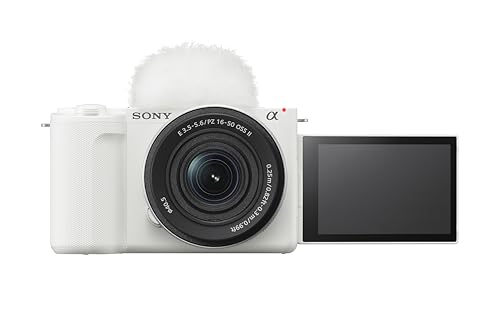
- Sony ZV-E10 II is the best all-round teacher: autofocus that guards the beginner, colours that finish themselves, and a lens system for year two.
- Canon EOS R50 is the friendliest first system camera — menus that explain, colour that flatters, footage that forgives.
- DJI Osmo Pocket 3 removes stabilisation from the syllabus entirely; beginners film smoothly from the first hour.
- Autofocus and audio matter more than resolution for a beginner — every pick here was chosen on those first.
- Sony ZV-1F is the zero-decision start: fixed lens, guided features, nothing to assemble or mis-set.
- GoPro HERO12 teaches outdoor filming by surviving it — the beginner’s mistakes meet armour, not repair bills.
In this guide
Quick Picks
| Pick | Badge | Why it earns its place |
|---|---|---|
| Sony ZV-E10 II | Best overall for beginners | A creator body whose autofocus and finished-looking colour let a beginner concentrate on the filming instead of the camera. |
| Canon EOS R50 | Friendliest first system camera | Canon’s welcoming body: colour that flatters everyone, menus in plain language and autofocus a beginner can trust blindly. |
| Nikon Z30 | Best video-first Nikon for beginners | No viewfinder, no distractions: a compact creator body with long recording stamina and Nikon’s colour, built purely for video. |
| Sony ZV-1F | Best zero-decision start | A fixed ultra-wide lens, guided defocus and face-first autofocus: the camera that cannot really be set up wrong. |
| DJI Osmo Pocket 3 | Best for moving beginners | A pocket gimbal that deletes shaky footage from a beginner’s life and tracks their face like a tiny cameraman. |
| GoPro HERO12 Black | Best for outdoor beginners | Waterproof and armoured tuition: the camera a beginner can drop, dunk and learn on without a single repair bill. |
How We Chose These Picks
Candidates were assessed as teachers, with a beginner’s actual failure modes as the test paper: focus lost mid-sentence, exposure wandering as a cloud crosses, audio ruined by a room’s echo, footage abandoned because the file needed grading before it looked like anything. Cameras passed if their automatic systems prevented those failures invisibly, and if their manual controls — for the month the beginner starts asking why — were laid out to be discovered rather than excavated.
Whole-rig honesty was enforced as in our other guides: a pick had to produce watchable, listenable video with no compulsory accessory, because a beginner’s second purchase should be a choice, not a ransom. Growth was the final criterion — either a lens system to grow inside, or, for the fixed-lens and gimbal picks, a completeness that makes growth optional rather than urgent. The result is a list sequenced as a curriculum: start anywhere, and the next step is always visible from where you stand.

Sony ZV-E10 II — Best overall for beginners
The ZV-E10 II earns the lead by removing the beginner’s two commonest disasters. Its autofocus does not merely find a face; it adopts it — holding an eye through turns, gestures and the walk toward camera that defeats lesser systems — so the beginner’s footage is sharp where it matters while they learn everything else. And its colour, in the standard and creator-tuned looks, emerges from the camera finished: skin that looks like skin, rooms that look like the rooms, no grading course standing between the beginner and a publishable video.
Sony built the rest of the body around the same mercy. The vari-angle screen faces the presenter, the product-showcase mode performs the focus pull to a held-up object that beginners otherwise fumble for a month, the directional microphone respects the viewer’s ears from day one, and the larger battery films a beginner’s whole session — retakes included — without the mid-video anxiety that teaches bad habits. Menus are organised by a maker who has watched creators work, and the touch interface answers the way a phone taught a generation to expect.
The growth story is the deepest in this guide: E-mount’s lens pool means the beginner’s second-year purchases — the fast prime for interviews, the wide for rooms — exist at every price, and the body’s 4K quality and creator features will not be the ceiling when they arrive. Its honest limits are the absence of in-body stabilisation, forgiven here because beginners film mostly still or on the camera’s electronic steady modes, and a menu depth that rewards the quick-start guide’s first ten pages.
Buy it if you want the camera the first year deserves and the third year still respects. It is the teacher who is also, quietly, a professional — and beginners flourish under exactly that combination.
- Sensor: 26MP-class APS-C
- Mount: Sony E — the deepest beginner-to-pro lens pool
- Screen: vari-angle touchscreen
- Autofocus: face/eye tracking with product showcase
- Video: 4K with high-quality colour looks
Strengths
- Autofocus removes the beginner’s first disaster
- Footage looks finished without grading
- Lens system serves the whole journey
Trade-offs
- No in-body stabilisation
- Menus reward a guided first read
- Rolling shutter on fast pans — film gently
Best for: beginners who want one camera to learn on properly and keep for years, filming people, products and rooms.
Not suited for: beginners whose filming is all walking and motion — the Pocket 3’s gimbal is their teacher.

Canon EOS R50 — Friendliest first system camera
If the ZV-E10 II is the best teacher, the R50 is the kindest. Canon’s entry body speaks to beginners in complete sentences — its guided interfaces explain what a setting does while you change it — and its colour science, the product of decades of making faces look like themselves, gives a beginner’s first videos a polish they did not have to earn. For the creator filming family, food, faith, craft or commentary in ordinary rooms, that kindness compounds daily.
The filming fundamentals are thoroughly handled: autofocus that finds eyes and holds them with Canon’s characteristic calm, a vari-angle touchscreen for self-framing, 4K video oversampled into unusual crispness for the class, and a body small enough that a beginner actually carries it to where the filming is. Its stills are excellent, which matters more to video beginners than they expect — thumbnails, community photographs and the family archive all come from the same forgiving box.
Canon’s RF system is the growth path, younger than Sony’s pool but deepening yearly, with the affordable primes a second-year creator wants arriving steadily. The R50’s limits are a beginner tier’s honest ones: the kit lens is a beginning, controls are simplified for the hands that will later want more dials, and the deepest video tools live in Canon’s dearer bodies — by design, since a first camera that contains everything teaches nothing about choosing.
Buy it if the word beginner describes your confidence as much as your experience. The R50’s whole design is an argument that a first camera should make its owner feel capable, and a filmmaker who feels capable films again tomorrow — which is the only curriculum that has ever worked.
- Sensor: 24.2MP APS-C
- Mount: Canon RF
- Screen: vari-angle touchscreen
- Autofocus: eye detection, calm tracking
- Video: 4K oversampled, flattering colour
Strengths
- Menus teach while you film
- Colour flatters faces from day one
- Excellent stills for thumbnails
Trade-offs
- Kit lens is a starting point
- Simplified controls are outgrown in time
- RF pool younger than Sony’s
Best for: confidence-first beginners filming people and rooms who want to grow inside Canon’s system.
Not suited for: beginners needing the deepest lens pool immediately — Sony’s paragraph is theirs.

Nikon Z30 — Best video-first Nikon for beginners
The Z30 is the beginner body designed by subtraction. Nikon removed the viewfinder a video creator rarely uses, shrank the body around the screen and the lens, and spent the savings on the things filming actually consumes: a tally lamp so the beginner knows they are recording, a vari-angle screen, stereo microphones on the top plate, and recording stamina that treats a long take — a lesson, a service, a podcast, a performance — as a normal event rather than a thermal negotiation. For beginners whose video is long-form, that stamina is not a specification. It is permission.
Footage carries Nikon’s colour character, which flatters skin in a slightly cooler, calmer register than its rivals, and the Z-mount lens pool — including the compact primes and the creator kit zoom this body is often bundled with — gives the beginner’s second year a clear, high-quality path. Autofocus is dependable for presenters and products, the body handles like a camera rather than a gadget, and its stills, viewfinder notwithstanding, serve the thumbnail economy perfectly well through the screen.
Its limits are the subtraction’s price: photographers who discover stills seriously will miss an eye-level finder, the lens pool’s creator-priced corner is smaller than Sony’s, and action tracking is a presenter-grade calm rather than a sports-grade hunger. None of that touches its parish of seated, standing and room-based filming, where it may be the most thoughtfully beginner-shaped body in this guide.
Buy it for long takes and calm rooms — teaching, streaming, services, interviews and the channels built on a person talking well. The Z30 teaches by getting out of the way, which is a teaching style some beginners need more than any feature.
- Sensor: 20.9MP-class APS-C
- Mount: Nikon Z
- Design: no viewfinder — screen-centric creator body
- Recording: long-take stamina, tally lamp
- Audio: built-in stereo microphones
Strengths
- Long recordings without drama
- Tally lamp and creator-first layout
- Nikon colour, calm and flattering
Trade-offs
- No viewfinder for stills growth
- Creator lens corner smaller than Sony’s
- Autofocus is presenter-grade, not sports-grade
Best for: beginners filming long-form — lessons, streams, services, interviews — in Nikon’s system.
Not suited for: action and sports beginners, whose subjects move faster than its parish.

Sony ZV-1F — Best zero-decision start
The ZV-1F is the beginner camera for the beginner who does not want a camera course — who wants to film, today, correctly, and learn only what the filming itself teaches. Its fixed ultra-wide lens is the right framing for a presenter at arm’s length, permanently; its autofocus lives on the face; its defocus button blurs a background without pronouncing the word aperture; and its product mode performs the beginner’s hardest focus move — presenter to product and back — at a touch. There is almost nothing to mis-set, and that is a profound design achievement disguised as simplicity.
Sound, the beginner’s usual assassin, is handled with unusual respect: a directional built-in microphone with a windscreen in the box, because Sony knows the first fifty viewers are lost to audio. The camera is small enough to live in a jacket, starts fast enough to catch the unplanned moment, and produces 4K footage whose colour flatters the rooms beginners actually film in. It is, in the best sense, an appliance for beginning.
Its ceilings are the fixed lens’s own: no zoom, no lens to change next year, low light handled competently rather than gloriously. A beginner who catches the filmmaking illness seriously will outgrow it into the ZV-E10 II — and will arrive there having published a hundred videos, which is the finest education the ZV-1F could possibly have provided. Outgrowing a teacher is not the teacher’s failure.
Buy it to start this week. Of every camera here, it asks the least and forgives the most, and for the beginner whose real risk is never starting, that exchange is the whole guide in one small box.
- Lens: fixed ultra-wide, presenter-framed
- Autofocus: face-first with product showcase
- Audio: directional mic, windscreen included
- Video: 4K
- Guidance: defocus button, beginner-first design
Strengths
- Cannot really be set up wrong
- Audio respects the first audience
- Starts instantly, lives in a pocket
Trade-offs
- No zoom and no lens growth
- Low light is competent, not glorious
- Serious growers will graduate — happily
Best for: absolute beginners who want to publish this week without a syllabus.
Not suited for: beginners already sure they want interchangeable lenses — start at the R50 or ZV-E10 II.

DJI Osmo Pocket 3 — Best for moving beginners
Every beginner’s first walking footage is a seasickness documentary, and the Pocket 3 is the camera that skips that chapter. Its three-axis gimbal — real mechanical stabilisation — turns a beginner’s walk into a tracking shot from the first hour, its face tracking keeps the presenter centred while they move, cook, build or tour, and its rotating screen makes vertical video, the format most beginners actually publish, a flick rather than a production. As a teacher it works by deletion: the entire stabilisation syllabus, removed, so the beginner’s attention lands on story and light.
The footage itself flatters a beginner’s subjects: a one-inch-class sensor with strong colour, low-light manners that shame older action cameras, and DJI’s wireless microphone path waiting for the month the channel’s audio ambitions grow. It powers on in a breath, lives in the pocket it is named for, and — a beginner virtue nobody lists — it is not intimidating: filming with it in public feels like holding a gadget, not operating a production, so beginners film more, in more places, with less self-consciousness.
Its limits are a fixed wide lens that will not compress a distant subject, a precision gimbal that prefers not to meet concrete, and weather manners short of the GoPro’s armour. Indoor, seated, talking-head beginners gain less from it than from the bodies above; its parish is the moving life.
Buy it if your beginner videos walk, travel, cook, make or explore. It teaches the most valuable beginner lesson of all — that your footage can look professional immediately — and confidence, in a first year, is the curriculum everything else is written on.
- Sensor: 1-inch class
- Stabilisation: 3-axis mechanical gimbal
- Screen: rotating, vertical-video native
- Tracking: face and subject tracking
- Audio: strong built-ins, wireless mic ecosystem
Strengths
- Deletes shaky footage from day one
- Face tracking is a tiny cameraman
- Pocketable and unintimidating in public
Trade-offs
- Fixed wide lens only
- Gimbal dislikes drops and weather
- Seated talkers gain more from a body
Best for: moving beginners — travel, food, making, walking tours — and vertical-first creators.
Not suited for: seated interview and studio beginners, better served by the bodies above.

GoPro HERO12 Black — Best for outdoor beginners
Some beginners film in kitchens; others film on bikes, boats, beaches and mountainsides, and their first camera must survive the syllabus. The HERO12 is that camera: waterproof without a case, armoured against the drops a learning curve guarantees, and stabilised so thoroughly that a beginner’s mountain-bike footage looks like a professional’s. Its tuition is courage — it teaches outdoor filmmaking by making the camera the least fragile thing in the adventure.
Creator manners have civilised the modern GoPro for beginners: front and rear screens for framing, vertical modes for the platforms beginners publish to, Bluetooth audio for the wireless microphone month, and battery endurance in this generation that covers a day’s intermittent filming without the old anxiety. The footage’s wide, vivid character suits the outdoors it was born in, and time-lapse and night modes give a beginner creative doors to open on the first trip.
Its indoor manners are its limit: the ultra-wide lens flatters landscapes and flattens faces at close range, dim rooms trail the compacts’ low-light grace, and touchscreen fiddling with wet or gloved hands tests patience. A beginner whose videos are mostly a person in a room should buy the Sony or Canon above and never regret it.
Buy it when the filming is the adventure. For the outdoor beginner it is not the rugged alternative to a first camera — it is the first camera, and its survival of the learning year is the most beginner-friendly feature in this entire guide.
- Build: waterproof, ruggedised
- Stabilisation: HyperSmooth
- Screens: front and rear
- Video: 5.3K-class, vertical modes
- Audio: Bluetooth microphone support
Strengths
- Survives the beginner’s whole learning curve
- Stabilisation rivals a gimbal’s
- Front screen for self-framing outdoors
Trade-offs
- Ultra-wide flattens indoor faces
- Low light trails the compacts
- Wet touchscreen handling is fiddly
Best for: outdoor, sport and adventure beginners whose videos happen in weather and motion.
Not suited for: indoor talking-head beginners, whom the Sony and Canon picks teach better.
How Do the Six Beginner Video Cameras Compare Side by Side?
| Pick | Badge | Best for | Not suited for |
|---|---|---|---|
| Sony ZV-E10 II | Best overall for beginners | beginners who want one camera to learn on properly and keep for years, filming people, products and rooms. | beginners whose filming is all walking and motion — the Pocket 3’s gimbal is their teacher. |
| Canon EOS R50 | Friendliest first system camera | confidence-first beginners filming people and rooms who want to grow inside Canon’s system. | beginners needing the deepest lens pool immediately — Sony’s paragraph is theirs. |
| Nikon Z30 | Best video-first Nikon for beginners | beginners filming long-form — lessons, streams, services, interviews — in Nikon’s system. | action and sports beginners, whose subjects move faster than its parish. |
| Sony ZV-1F | Best zero-decision start | absolute beginners who want to publish this week without a syllabus. | beginners already sure they want interchangeable lenses — start at the R50 or ZV-E10 II. |
| DJI Osmo Pocket 3 | Best for moving beginners | moving beginners — travel, food, making, walking tours — and vertical-first creators. | seated interview and studio beginners, better served by the bodies above. |
| GoPro HERO12 Black | Best for outdoor beginners | outdoor, sport and adventure beginners whose videos happen in weather and motion. | indoor talking-head beginners, whom the Sony and Canon picks teach better. |
What Should a Beginner Actually Learn First — and What Can Wait?
First: sound and light, in that order, because audiences forgive a soft picture for years and bad audio for seconds. Every camera here was required to sound acceptable unaided, but the beginner’s craft is placement — filming near the microphone, in the quiet room, away from the humming fridge — and no camera can learn that for them. Light is second: the big window, the shaded doorway, the hour when the room turns kind. A beginner who masters a window will out-film a richer beginner in a cave on any camera in this guide.
Second: the repeatable setup. Same tripod spot, same camera settings, same first sentence — because a beginner improves by changing one variable at a time, and the ritual setup makes every video a controlled experiment in getting better. The cameras here support the ritual with reliable automatics; the beginner’s job is to hold everything else still while their delivery, framing and nerve improve across fifty videos.
What can wait: colour grading, manual exposure theory, lens collecting, 4K delivery, and the entire cinema vocabulary. All of it is real, all of it is coming, and none of it is the first year’s business. The beginner who spends month one on light, sound and finishing videos will need the advanced chapters by month six and fly through them; the beginner who starts with them is usually still starting, beautifully equipped, in month twelve.
How Do You Choose Between a Compact, a Gimbal and a System Camera as a Beginner?
Choose by the filming you will actually do in the next ninety days, not by the filmmaker you hope to be in five years — because the five-year filmmaker is built by the ninety days, and only a camera matched to them survives to meet her. Room-based talking, teaching and making: a system body or the ZV-1F, with the body chosen when lenses are a real intention and the compact when they are a someday. Moving life — travel, food, walking, doing: the Pocket 3, whose gimbal deletes the beginner’s steepest technical hill. Outdoors and impact: the HERO12, whose armour converts mistakes into footage.
The system question deserves its honest framing: an interchangeable-lens camera is a subscription to a lens mount, paid in glass over years, and it is the right subscription only for beginners whose filming ambitions are already lens-shaped — interviews that want glow, products that want closeness, rooms that want width. Beginners whose ambitions are story-shaped should buy completeness now and let a hundred published videos reveal whether lenses are wanted at all. Both paths are honourable; the error is buying the subscription for a story, or the compact for a lens ambition, and spending the first year resenting the mismatch.
And remember the resale mercy: beginner cameras hold their value kindly, and a first camera outgrown is a first camera sold to the next beginner. The cost of starting wrong is a season, not a fortune — which is why starting, on any pick here, beats deliberating, on all of them, every single time.
How Do You Set Up a First Video Camera and Learn on It?
Set the camera up once, properly, and then leave it alone for ten videos. Face autofocus on, the colour look you liked in the shop still on, the screen’s grid enabled, the recording lamp understood. Film the same kind of video until the camera’s operation is reflex — where the record button lives, how the screen flips, what the battery does across a session — because a beginner learning filmmaking and a beginner learning a camera simultaneously learns neither, and the ten-video rule separates the two apprenticeships kindly.
Build the sound habit from video one: thirty seconds of test, listened to on headphones, at your real filming distance, in your real room. Move a metre closer, soften the room with cushions and curtains if it echoes, and note what worked in the notebook that lives with the tripod. That notebook — settings, distances, the window’s good hours — is the beginner’s real textbook, written in their own footage’s evidence, and by video fifty it will be worth more than any guide, including this one.
Review like a kind editor: watch each video once for the audience’s experience, once for one thing to fix, and fix only that one thing next time. Beginners who repair everything repair nothing, and beginners who repair one thing per video are unrecognisable by video thirty. The cameras here were chosen to make that review pleasant — footage that already looks and sounds respectable — because a beginner who enjoys watching their own videos makes more of them, and making more of them is the entire secret the professionals are keeping.
What Mistakes Do Buyers Keep Making?
- Buying resolution and neglecting the tripod. A steady 4K camera on a wobbling stack of books is a still-life about books. The support is part of the camera.
- Filming the first video in the echoing kitchen. Rooms are audio equipment. Choose the soft, small, curtained one and your first audience stays.
- Changing every setting between videos. That is not learning, it is shuffling. One variable per video, noted, is how beginners become good.
- Judging the camera by video one. Video one is the operator’s debut, not the camera’s. The ten-video rule exists because every pick here blooms by video five.
- Skipping the headphone check. The camera’s screen lies about sound by omission. Headphones tell the truth while the truth is still fixable.
- Waiting to feel ready. Readiness is a rumour spread by unwatched footage. Film the imperfect video; the fiftieth is built from its bones.
What Does Progress Actually Look Like Across a Beginner’s First Fifty Videos?
It looks disappointingly gradual and then, in retrospect, absurdly fast. Videos one to ten are the camera’s apprenticeship: framing found, sound tamed, the presenter’s nerve arriving in instalments. Videos ten to thirty are the craft’s: light chosen rather than accepted, sentences finished without fear, the first video the beginner watches with pleasure instead of apology. Somewhere in the thirties, strangers begin commenting on the content rather than the quality, which is the precise moment the camera has finished its teaching and become invisible — the state every pick in this guide was chosen to reach.
The beginner’s part is only to keep the appointments. Cameras do not make filmmakers on shelves, and the fifty-video curriculum cannot be compressed by equipment — only abandoned by it, which is what an intimidating first camera arranges. Choose the teacher whose lessons feel like invitations, keep the weekly appointment through the awkward teens of the count, and the fiftieth video will introduce you to a filmmaker whose existence the first video could not have predicted. That introduction is what a beginner camera is actually for.
The Beginner’s Audio Syllabus, Written in Full Because Nobody Else Will
Week one: distance. A camera’s microphone hears the room in proportion to the presenter’s distance from it, and the single greatest audio improvement available to any beginner, on any camera in this guide, is halving that distance. Film the same sentence at three metres, at one metre and at arm’s length, and listen on headphones: the lesson teaches itself in nine seconds, and every filming decision afterwards — where the tripod stands, when a wireless microphone earns its money, which rooms are hopeless — descends from it.
Week two: the room itself. Hard rooms echo; soft rooms flatter. Curtains, cushions, carpets and a wardrobe of hanging clothes are acoustic treatment wearing domestic clothes, and the beginner who films in the softest room in the house sounds a price class above their camera. Week three: the appliance audit — the fridge’s hum, the boiler’s cycle, the computer’s fan, the aquarium’s pump — each discovered by recording thirty seconds of ‘silence’ and listening to how much of it there is. Professionals call this room tone. Beginners call it the reason their videos sounded cheap, past tense, because week three is when it stops.
None of this requires a purchase, which is why it is so rarely sold to beginners, and all of it outranks every camera upgrade until it is done. The cameras here were chosen to reward the syllabus — their built-in microphones are honest enough that a close, soft, quiet room sounds genuinely good through them — and the beginner who completes it will know, from their own evidence, exactly when a microphone purchase is a need rather than a hope. That knowledge is the difference between a channel’s money spent in the order the audience hears it, and the usual order, which is backwards.
How Should a Beginner Practise Without an Audience Yet?
Film the unglamorous subjects with total seriousness: the making of tea, narrated; the shelf, reviewed; the walk to the shop, presented. Private subjects free the beginner from performance anxiety and aim every lesson at the camera work itself — framing, focus, sound, the nerve to finish a sentence. Ten such films, watched critically and deleted without ceremony, constitute a film school whose fees are a memory card’s wear. The audience that arrives later will meet a presenter already formed, and will never know about the tea, which is exactly how the professionals’ archives are also built.
Practise the recoveries as deliberately as the performances. The sentence that collapses at word nine: pause, breathe, begin it again, and let the edit hide the seam — a skill learned in practice and used in every video forever. The battery that dies mid-take, the neighbour’s drill, the delivery at the door: each is a small production crisis whose calm handling, rehearsed privately, becomes the channel’s professionalism. Beginners imagine professionals do not meet these moments. Professionals merely meet them with a procedure, and procedures are built in practice, on tea, in private.
What About Editing — the Beginner’s Other Half of Filmmaking?
A camera guide that ignores editing sends beginners into the water with one oar. The good news is that the cameras here were chosen partly for the kindness of their files: colours that need no grading, formats every editor opens, sizes a modest computer handles without complaint. The beginner’s editing syllabus mirrors the filming one in its modesty — cut the silences, keep the best take, add the title, publish — and resists, for the first twenty videos, every effect the software offers. Effects are the beginner’s tax on unfinished fundamentals, and the audience can always tell.
Choose the editor the way this guide chose the cameras: the one whose first hour feels like an invitation. Free and capable editors exist on every platform, and the differences between them matter less than the difference between an editor opened weekly and one avoided. By video twenty, the beginner’s hands will know their editor the way they know their camera — reflexively — and the pair of reflexes together are what the word filmmaker actually means at the start. The camera’s job, throughout, is to keep its files simple enough that the editing apprenticeship is about judgement rather than about rescue.
Confidence, Nerves and the Presenter the Camera Creates
No guide to beginner cameras is complete without admitting that the hardest specification is the presenter’s nerve. Talking to a lens is unnatural for exactly one video less than it takes to become natural, and the cameras here help in ways their makers rarely advertise: a screen that shows a friendly face — your own — rather than a black barrel; a tally light that confirms the performance is being kept; a size, in the compact and gimbal picks, that feels like a gadget rather than a judgement. Beginners film more, and sooner, on equipment that does not intimidate them, and filming more is the whole curriculum.
The rituals help where hardware stops. Same chair, same hour, same first sentence until it bores you — boredom, in a ritual, is fluency arriving. The beginner who films the awkward tenth video on schedule is closer to a channel than the beginner waiting to feel ready for a magnificent first one, because audiences are built by accumulation and confidence is built by evidence: fifty finished videos are fifty proofs. Every pick in this guide was chosen to make the proofs easy to collect. Collect them.
When the Beginner Is a Child, a Parent or a Whole Family
Beginner is often a household rather than a person, and the picks divide kindly by household shape. For the young creator filming in a bedroom and a garden, the ZV-1F and Pocket 3 offer the gentlest starts and the least to break — the gimbal’s delicacy being the one caution a parent should weigh honestly. For the parent filming the family itself, the R50’s kindness and stills excellence make it the household camera that also starts a channel. For the family business — the farm shop, the bakery, the band — the ZV-E10 II’s growth path turns a beginner purchase into the firm’s media department, one lens at a time.
What households should avoid is the shared-nothing arrangement: a camera so precious, complex or contested that it lives in one person’s cupboard and films on nobody’s schedule. A beginner camera earns its keep in proportion to its availability, and a household that agrees the camera lives charged, on the shelf, for anyone’s idea, will produce more filmmaking in a year than a household with a finer camera and a permission structure. Buy for the household’s real politics as carefully as for its subjects.
A Realistic First Month, Week by Week
Week one belongs to the room: the camera unboxed, the ten-video rule begun, the sound syllabus’s first lesson — distance — learned in the softest room in the house. The videos are private and the standards are completion. Week two adds light: the window discovered, the filming hour chosen by the sun rather than by the clock, and the first video the beginner watches without wincing. The camera, by now, has stopped being a purchase and become a place — the tripod’s spot — which is the week’s real achievement.
Week three is for nerve: the first video filmed for an actual audience, however small, and the discovery that the audience is kinder than the imagination promised. Week four is for judgement: the month’s footage reviewed in one sitting, one strength named and one weakness chosen for next month’s single repair. A beginner who lives this month on any camera in this guide ends it as something measurably different from its start — a person with a practice. Practices, unlike purchases, compound, and the compounding is the entire return on the camera’s price.
The Question Every Beginner Asks at Month Three
It arrives on schedule: is it the camera? The honest answer, for every pick in this guide, is almost certainly not — it is the light in the new room, the microphone distance that crept back, the subject that needs a different energy, or simply the plateau that precedes every visible improvement in every craft ever learned. Month three is where channels go to be abandoned by owners who mistake a plateau for a verdict, and where they are built by owners who film through it. The camera chosen from this list will still be filming beautifully at month twelve; the only variable ever in doubt was the appointment-keeping, and that was never the camera’s department.
If doubt persists, run the controlled experiment before any purchase: film the same subject, in the good room, at the good hour, with the sound rules obeyed, on the current camera. The footage will settle the question with evidence, and in the rare case that it convicts the camera, it will also specify — precisely, from the frame itself — what the next camera must do differently. Either way the beginner wins, because the experiment costs an afternoon and the alternative costs a body, a lens and a month of relearning. Evidence first is this programme’s oldest rule, and beginners who adopt it early save more money than any guide can save them.
So begin where every filmmaker in history began: with the next video, imperfect and finished. Choose the teacher whose manners suit your subjects — Sony’s guarding focus, Canon’s kindness, Nikon’s calm, the compact’s forgiveness, the gimbal’s smoothness or the GoPro’s armour — set it up once, and spend the year on the only syllabus that has ever produced a filmmaker: light, sound, nerve and repetition. The camera will keep its side of the bargain from the first frame. Keep yours, weekly, and by the fiftieth video the beginner in this guide’s title will be a description of where you started, not of what you are.
Why This Guide Trusts Beginners With Real Cameras
There is a condescension in beginner equipment — the assumption that a learner should start on something lesser and earn the real tool later. This guide rejects it, because video is not piano: a compromised camera does not build character, it builds workarounds, and its failures are indistinguishable to a beginner from their own. Every pick here is a real camera, chosen so that when the footage disappoints, the disappointment is instructive — the light, the distance, the delivery — rather than a suspicion that the box is to blame. A beginner who can trust the tool can finally hear the teaching, and the teaching is the entire point of the first year.
That trust is also why the guide insists on automatics that are genuinely excellent rather than merely present. A beginner’s automatic mode is not a cheat; it is the professional’s own starting point, used daily on real productions, and the cameras here were selected because their automatics deserve that company. Learn on them without apology, override them one at a time as the questions arise, and the manual chapters — when they come — will arrive as answers rather than as obstacles. That is how every filmmaker actually learned, whatever their memoirs claim. The lens does not care who is learning; it cares only that somebody is, regularly, with their whole attention — and it rewards that attention faster than any other art a beginner can take up this year, which is reason enough to start this week rather than next — camera charged, tripod placed, first imperfect video already becoming the past, which is where every filmmaker’s education properly lives — behind them, accumulating, one finished video at a time.
Final Recommendation
Most beginners should start with the Sony ZV-E10 II for its guarding autofocus and finished colour, or the Canon EOS R50 when friendliness matters most — two system cameras that teach gently and grow for years, with Nikon’s Z30 the calm choice for long-form filming in its own system. Beginners who want no decisions at all should take the ZV-1F and publish this week.
Moving beginners belong to the Pocket 3, outdoor beginners to the HERO12, and every beginner to the same closing advice: the camera is the smallest part of the first year. Light, sound, a finished video every week — buy the pick that makes those easiest for the filming you actually do, and let the fiftieth video, not the first, judge the purchase.
Related guides
- Best Cameras for Girls Age 9: First Real Cameras That Survive Real Childhood
- Best Cameras for Home Video: Family Films That Deserve Rewatching
- Best Cameras for First Time Photographers: 6 First Bodies That Teach While They Shoot
- Best Cameras for Bike Selfie: 6 Cameras That Frame You While You Ride
- Best Cameras for Beginner Cinematography: 6 Cameras to Learn Filmmaking On
- Best Cameras for Amateur Photographers: First Serious Cameras That Teach as They Shoot
- Best Camera Video Cameras Under 300: Six Honest Ways to Film Well on a Tight Budget
- Best Cameras for 12 Year Olds: First Real Cameras for Tweens, From Instant Prints to Action Video
Frequently Asked Questions
Do beginners really need a dedicated camera, or is a phone enough?
A phone is enough to discover whether you enjoy making videos, and no purchase should precede that discovery. A dedicated camera earns its place when publishing becomes a habit: autofocus that guards a face, a screen that faces the presenter, microphones and batteries built for filming, and a device whose whole job is the video. Most weekly publishers feel the crossover within a few months, and every pick here is designed to be waiting, kindly, on the other side of it.
Which of these is easiest for a total beginner?
The Sony ZV-1F, by design — a fixed lens that is always the right framing, autofocus that lives on the face, guided features instead of settings, and nothing to assemble. The DJI Osmo Pocket 3 runs it close for moving subjects, deleting stabilisation from the beginner’s worries entirely. Beginners who want to learn camera craft as they go should choose the Canon EOS R50, whose menus teach in plain language while they film.
Is 4K important for a beginner’s videos?
Not yet. Audiences stay for sound, focus and content; they leave muddy audio in seconds and have never once left a clean Full HD video complaining about its pixels. All six picks offer strong 4K for when it matters — cropping room, future-proofing — but a beginner should film in the resolution their computer edits happily and their confidence survives, and spend the saved attention on light and delivery.
What else should a beginner buy with the camera?
A tripod before everything — steadiness is half of looking professional — then a second battery, a card with room to be careless, and nothing else until ten videos have revealed a real need. A small light or a wireless microphone will eventually compete for the title of best second purchase; let your own footage, with its specific rooms and distances, cast the deciding vote rather than any bundle’s arithmetic.
How long before a beginner outgrows these cameras?
The fixed-lens ZV-1F and the gimbal and action picks serve until the filming demands lenses, reach or a different shape of working — for many creators, years or indefinitely. The system bodies invert the question: their lens mounts mean the camera is outgrown last, and both the ZV-E10 II and R50 film professional-looking work long after the beginner title has expired. Outgrowing any of them after a hundred videos is success, not failure.
Can these cameras live-stream and do video calls too?
Yes — the system bodies and compacts here serve as high-quality streaming and call cameras with the makers’ software or a simple capture setup, and the improvement over a laptop’s built-in camera is the kind colleagues comment on. Beginners building a channel and a remote-work life on one purchase should weight this second career heavily; it is daily value that never appears in a video specification.
Related Guides
Go deeper with our guide to the best bang for your buck vlogging cameras, travel with the kit in the best beginning cameras for travel, and add the seaside in the best beach cameras for beginners.


