Disclosure: As an Amazon Associate, ilcastellomenu.com earns from qualifying purchases. Links on this page are affiliate links; they cost you nothing extra. Prices and availability change often, so check the current Amazon listing before you buy.
This liquid cpu cooler buying guide is written backwards from most: it starts with the reasons not to buy one, because a buyer who survives those honestly will choose the right model almost automatically. A sealed liquid cooler is a superb tool for hot processors, sustained workloads and tight cases — and a needless expense, risk and lifespan limit for a great many mainstream builds that a good air cooler serves perfectly. Work through the criteria in order and the shortlist writes itself.
Key Takeaways
- Decide liquid versus air first, on processor heat, workload and case — before comparing any models.
- Case support and radiator position come before radiator size; fit is a physical fact, not a preference.
- Keep the pump below the top of the radiator in whatever position you choose; that rule outranks all others.
- Compare warranties and leak policies as seriously as you compare the coolers themselves.
- Spend on the whole airflow system — a mid-tier cooler in a breathing case beats a flagship in a sealed box.
In this guide
What a Liquid CPU Cooler Does and the Main Types
An all-in-one liquid cooler, usually shortened to AIO, is a sealed loop with four working parts: a cold plate and pump block that sits on the processor, two tubes, a radiator, and fans that push air through that radiator. Coolant carries heat away from the chip far faster than a metal fin stack alone can move it, and the radiator gives that heat a large surface to leave from. Nothing in the loop is user-serviceable by design, which is both the convenience and the compromise at the heart of this whole category.
The physics are friendly but not magical. Liquid is simply a transport medium: the heat still has to leave through a radiator into the air of the room, exactly as it does from an air cooler’s fins. That is why radiator placement, case airflow and room temperature matter as much as the cooler itself, and why two builds with the same AIO can behave quite differently. Treat any cooler, liquid or air, as one part of a whole airflow system rather than a spell you cast on a hot processor.
Sealed All-in-One Coolers
The subject of this guide: a factory-sealed loop with the pump in the block in most designs, sold by radiator size class, installed in an hour and never serviced. It is a finished appliance, and should be bought like one — on reliability, warranty and fit. Everything in this category shares the sealed bargain: convenience and composure in exchange for a finite life and a small leak risk that no maker can honestly reduce to zero.
Custom Open Loops
A custom loop is a kit of separate parts — block, pump, reservoir, radiator, tubing — that you assemble, fill and maintain yourself. It can cool the graphics card too, it can be serviced indefinitely, and it demands skill, time and scheduled fluid care. It is a hobby as much as a component. Buyers cross-shopping it against an AIO should decide which hobby they want: building PCs, or building cooling systems that live inside PCs.
Tower Air Coolers — the Standing Alternative
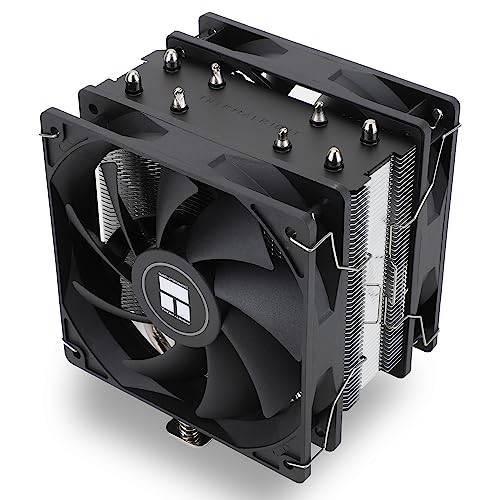
The strongest argument for a good air cooler is that it removes entire categories of worry. There is no coolant to permeate, no pump to wear, no leak scenario to insure against, and a failed fan — the one realistic failure — is cheap and takes minutes to replace. For a processor in the broad middle of the market, a quality tower cooler delivers temperatures and noise that most owners would struggle to distinguish from liquid in daily use. Any honest liquid cooler guide has to say plainly: many readers should buy exactly that, and be done.
Liquid CPU Cooler Buying Guide: Top Picks at a Glance
The picks below are organised by badge and qualitative tier rather than by any ladder of prices, because the right question is which temperament of cooler fits your build. Every one is treated prose-only here, pending final verification, and each receives a fuller mini-review later in this guide.
| Badge | Pick | Tier | Best For |
|---|---|---|---|
| Best Overall | ARCTIC Liquid Freezer III | Value to mid | Cooling the whole socket area, honestly priced ambition |
| Best Ecosystem | Corsair iCUE H150i Elite | Premium | Builds already running one maker’s fans and lighting |
| Best Looking | NZXT Kraken | Premium | Desk-visible builds where the block is part of the furniture |
| Best Case-Matched | Lian Li Galahad II | Upper-mid to premium | Coherent single-maker case and fan builds |
| Best Engineering Heritage | EK Nucleus AIO | Premium | Builders who like custom-loop seriousness, sealed |
| Best Simple Value | DeepCool LS | Entry to mid | First AIOs and mainstream gaming builds |
How Hot Is Your Processor, Honestly?
Different workloads crown different coolers. Gaming loads are spiky and often leave much of the processor waiting on the graphics card, so many gaming machines are perfectly served by modest cooling run quietly. Rendering, compiling, simulation and long exports hold every core at work for extended periods, and that sustained heat is where a large radiator’s extra surface earns its place. Match the cooler to the load you actually run for hours, not the benchmark you ran once, and the purchase will feel right every day rather than impressive once.
Modern processors complicate cooling judgements because they boost opportunistically. Given thermal headroom, a current chip will raise its clocks on its own and simply run warm at higher performance, which means a better cooler may show up as more speed rather than lower temperatures. Comparing coolers by a single temperature reading, without noting the workload, the fan behaviour and the room, misleads more than it informs. Judge a cooler on the combination of temperatures, noise and consistency across long sessions.
Answer with your workload, not your chip’s reputation. A flagship processor that only games lives an easier life than a mid-range chip that renders all day. Sustained all-core heat is the AIO’s home ground; spiky, graphics-bound gaming is where modest cooling — including air — quietly suffices. Be honest about the hours: the workload you run for hours a week decides, not the one you ran once to see the numbers.
Will It Fit Your Case — Really?
Case support is a physical question before it is a shopping question. Measure the mounting space, check clearance against the motherboard, memory and graphics card, and remember that a radiator plus its fans is thicker than the radiator alone. Many cases advertise support that only works with slim memory, a particular fan orientation or the removal of drive cages. The honest test is the case maker’s own compatibility notes and a tape measure, not optimism. A cooler that does not fit is not a bargain at any tier.
Radiator placement follows one rule above all others: the pump should not be the highest point in the loop. Every sealed loop contains a small amount of air, and air rises to the highest point. If that point is the pump, the pump runs partly in air, which makes it noisy, shortens its life and can leave it struggling to move coolant. Mounting the radiator so its top sits above the pump block keeps the air trapped harmlessly in the radiator’s end tank instead.
A front-mounted radiator intakes cool room air, which flatters processor temperatures, but it then exhausts warmed air into the case, where the graphics card has to breathe it. A top-mounted radiator exhausts the processor’s heat straight out of the case, which flatters the graphics card, while itself breathing warmer internal air. Neither arrangement is wrong; they trade a little performance between the two hottest components. Choose based on which component works harder in your machine, and on which position your case genuinely supports well.
How Much Noise Can Your Room Tolerate?
Noise is where liquid cooling earns much of its reputation, and also where it is most oversold. A large radiator lets fans turn slowly while still moving enough air, so a well-tuned AIO is genuinely quiet under moderate loads. But an AIO also adds a pump, and pump noise — a hum or whine that stays constant while fans rise and fall — bothers some ears more than fan whoosh. The quietest system is the one tuned as a system: sensible fan curves, a pump speed that is not needlessly high, and no rattling panels.
Pump behaviour deserves a listen before you judge a finished build. A faint hum at full pump speed is normal in a quiet room; gurgling, rattling or a sound like gravel suggests air in the pump, which usually means the radiator position needs attention rather than the cooler being faulty. Tilting the case gently while the system runs can help an air pocket migrate to the radiator. Persistent noise after repositioning is a warranty conversation, not something to live with or to fix by opening anything.
Fan curves matter more than fan brands. A curve that holds fans near silent until the processor is genuinely working, then ramps smoothly, beats a default profile that surges at every brief background task. Most modern boards and cooler software suites let you shape that curve and tie it to coolant or processor temperature. Spend the twenty unhurried minutes this takes on the first evening and the cooler will feel like a different, calmer product for the whole of its life in your machine.
How Long Do You Keep Components?
An AIO also has a finite life in a way an air cooler does not. Coolant slowly permeates through the tube walls over the years, so the loop gradually loses a little of its fill; the pump, the one moving part an air cooler does not ask you to depend on in the same way, wears as it runs. None of this makes an AIO a short-lived product — a good one serves for many years — but it does mean an air cooler’s near-immortality is a genuine advantage. A tower of fins and a replaceable fan can outlive several processors; a sealed loop eventually retires whole.
Think about the second owner of your build: you, in three years, with a new processor. A cooler bought with a broad socket kit, standard fans and a maker who still sells mounting hardware can move forward with you. One bought narrowly for today’s socket, with proprietary everything, becomes e-waste at the next upgrade. Cooling is one of the few components that can genuinely span builds, and choosing for that span is the quiet way this category rewards patience.
Warranty length and leak-damage policy are part of the product, not fine print. Makers differ in how long they cover the cooler and in what they say about damage to other components in the rare event of a leak. Read those terms before buying, keep your proof of purchase, and register the product if the maker offers it. A slightly plainer cooler from a maker with a long, clear warranty is often the wiser purchase than a flashier one standing behind vague promises.
How to Prioritise by Use Case
For the sustained-workstation builder, prioritise radiator class, warranty length and pump temperament, in that order, and let styling go. For the gaming builder, prioritise fit, quiet tuning and whichever ecosystem the case already runs. For the compact builder, the case decides almost everything — choose case and cooler as one purchase, researched together. For the long-keeper, prioritise socket-kit breadth and standard fans, so the cooler can follow you to a future processor — or take the hint and buy the air cooler whose lifespan matches your habits.
Small cases change the argument in liquid’s favour, with conditions. A compact build may have no room for a tall tower cooler, while a radiator can use a case wall that would otherwise hold only fans. But compact cases also restrict radiator positions, tube routes and airflow, and a badly placed radiator in a tiny box performs worse than a modest air cooler with clean air. In small-form-factor builds the case, the cooler and the graphics card are one decision, and should be researched as one decision, in that order.
Budget honestly across the whole installation. The cooler’s tier is only part of it: a case that fits it properly, perhaps additional case fans to feed it, and the small consumables of a clean install all belong in the same decision. A mid-tier cooler in a well-ventilated case will outperform a premium cooler suffocating in a sealed glass box, reliably and quietly. Spend on the system, in the order the heat experiences it, and the results will follow the money in the right direction.
The Picks in More Detail

ARCTIC Liquid Freezer III
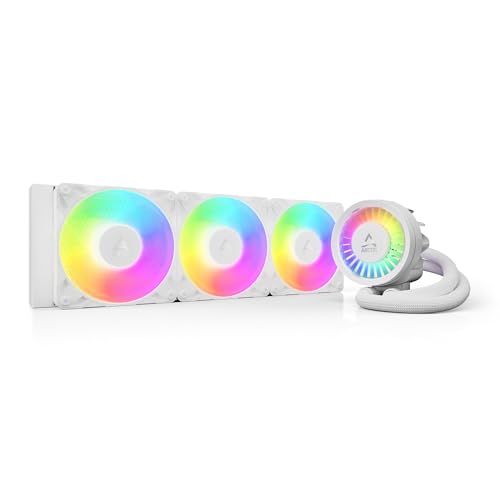
A maker known for plain-spoken engineering and strong value in qualitative terms, with a distinctive touch: a small fan on the pump block that stirs air over the motherboard’s voltage regulation area. That detail sounds like a gimmick until you remember those components rely on incidental airflow that a tower cooler’s fan used to provide, and that an AIO removes. The Liquid Freezer III family sits in the value-to-mid tier by positioning, and it is the pick that treats cooling the whole socket neighbourhood, not just the chip, as the job.
As a buying-guide pick it earns its place on fit, warranty and temperament rather than on any single headline claim. Confirm the socket kit for your processor, confirm the radiator position your case supports, and confirm you are comfortable with its control software or lack of it. On those three checks passed, it is a cooler you can install once, tune once, and then leave alone for years, which is the highest compliment this category honestly offers.

Corsair iCUE H150i Elite
Corsair’s flagship-class AIO line pairs a large radiator with the company’s iCUE software ecosystem, which is the right choice for a builder already running Corsair fans and lighting and the wrong one for someone who hates software suites. The hardware itself is polished, the mounting system is among the friendliest in the category, and the positioning is premium tier. Choose it as a system decision — cooler plus fans plus lighting under one controller — rather than as a standalone part, and it makes the most sense it can make.
As a buying-guide pick it earns its place on fit, warranty and temperament rather than on any single headline claim. Confirm the socket kit for your processor, confirm the radiator position your case supports, and confirm you are comfortable with its control software or lack of it. On those three checks passed, it is a cooler you can install once, tune once, and then leave alone for years, which is the highest compliment this category honestly offers.
NZXT Kraken
The Kraken line is the aesthetics-first face of liquid cooling, famous for pump blocks that can carry a display or tasteful illuminated ring, managed through NZXT’s CAM software. Beneath the presentation it is a conventional, competent sealed loop, and that is exactly the right way to judge it: buy it because the machine sits on your desk and you will enjoy looking at it, having first confirmed it also fits, mounts and is warrantied like any other cooler. It sits in the premium tier, and honesty about why you want it makes it a good purchase.
As a buying-guide pick it earns its place on fit, warranty and temperament rather than on any single headline claim. Confirm the socket kit for your processor, confirm the radiator position your case supports, and confirm you are comfortable with its control software or lack of it. On those three checks passed, it is a cooler you can install once, tune once, and then leave alone for years, which is the highest compliment this category honestly offers.

Lian Li Galahad II
Lian Li brings a case maker’s eye to the Galahad line: clean lines, thoughtful cable presentation and versions aimed at builders who coordinate the cooler with a Lian Li case and fan ecosystem. Performance positioning is in the upper-mid to premium tier, and the appeal is coherence — fans, lighting and controls that were designed to live together. If your build already leans on Lian Li’s ecosystem, the Galahad is the natural radiator to complete it; if not, judge it on fit and warranty like any rival.
As a buying-guide pick it earns its place on fit, warranty and temperament rather than on any single headline claim. Confirm the socket kit for your processor, confirm the radiator position your case supports, and confirm you are comfortable with its control software or lack of it. On those three checks passed, it is a cooler you can install once, tune once, and then leave alone for years, which is the highest compliment this category honestly offers.

EK Nucleus AIO
EK comes to sealed loops from the custom water-cooling world, and the Nucleus line carries that heritage in its fittings, its block design and its restrained, technical styling. It appeals to builders who like the idea of a loop that looks engineered rather than decorated, and who may one day graduate to a custom loop from the same stable. Positioning is premium tier. The same honesty applies as everywhere in this category: it is still a sealed, finite-life unit, however serious its machining looks.
As a buying-guide pick it earns its place on fit, warranty and temperament rather than on any single headline claim. Confirm the socket kit for your processor, confirm the radiator position your case supports, and confirm you are comfortable with its control software or lack of it. On those three checks passed, it is a cooler you can install once, tune once, and then leave alone for years, which is the highest compliment this category honestly offers.
DeepCool LS
DeepCool’s LS line is the straightforward, value-conscious route into liquid cooling: tidy blocks, infinity-mirror style lighting touches on some versions, and none of the ecosystem lock-in of the flagship suites. Positioning runs from entry to mid tier depending on radiator size class. For a first AIO in a mainstream gaming build, that simplicity is a feature — fewer background processes, standard expectations, and money left in the budget for the case airflow that will decide how well any cooler actually works.
As a buying-guide pick it earns its place on fit, warranty and temperament rather than on any single headline claim. Confirm the socket kit for your processor, confirm the radiator position your case supports, and confirm you are comfortable with its control software or lack of it. On those three checks passed, it is a cooler you can install once, tune once, and then leave alone for years, which is the highest compliment this category honestly offers.
First Setup and Care Essentials
Installation safety starts before a single screw turns. Shut the system down properly, switch the power supply off and unplug it from the wall, then press the case power button once to drain residual charge. Work on a clear surface, keep screws organised, and ground yourself by touching the case chassis as you go. Liquid near electronics during an install is not the danger — the cooler is sealed — but a dropped screw, a forced connector or a rushed hand near a live system causes most of the damage attributed to cooler swaps.
Overtightening the cold plate is the classic beginner’s error, and it helps nothing. The block needs even, firm contact with the processor’s heat spreader — snug in a cross pattern, a little at a time on each corner — not maximum human force. Cranking one corner down fully first can tilt the plate, squeeze the paste unevenly and, at the extreme, stress the socket or board. Finger-tight plus a gentle final turn with the tool, following the maker’s sequence, is the standard that protects both temperatures and hardware.
Maintenance for a sealed cooler is blessedly short, and mostly shared with the rest of the PC. Dust is the enemy: it mats on radiator fins exactly as it does on an air cooler’s stack, and a radiator clogged with felt can lose much of its advantage. A gentle brush and short bursts of air, holding fan blades still while you clean, a few times a year keeps the fins breathing. Check that dust filters are in place and clean them too — a filter doing its job is one that needs emptying.
Mistakes to Avoid
The most common buying mistake is choosing the radiator before the case. Shoppers fall for a large cooler, discover their case supports it only in theory, and end up with a compromised mount, a removed drive cage or a return. Reverse the order: confirm the case position, the clearance and the tube route first, then shop within the size class that fits. The second most common mistake is its mirror image — buying a small cooler for a very hot processor because it was the one on offer that week.
Peeling protective film sounds too basic to mention, which is exactly why it keeps happening. Cold plates ship with a protective plastic film, and leaving it in place guarantees terrible temperatures from a perfectly good cooler. The same family of errors includes forgetting to plug in the pump header, connecting the pump to a header set to a mode that starves it, and leaving radiator fans unplugged after a tidy cable-routing session. A calm final checklist — film, paste, pump power, fan power, panel clearance — catches all of them in two minutes.
Chasing the last degree is a mistake of proportion. Builders remount coolers repeatedly, swap pastes and re-route radiators hunting improvements smaller than the variation between two runs of the same test. If temperatures are sensible, noise is pleasant and performance is stable, the cooling system is done, and further fiddling risks the mount you already have. The goal is a machine that works beautifully for years, not a screenshot. Know what good enough looks like for your processor and workload, and let yourself stop there.
Buying Guide Verdict
Buy the cooler your processor’s heat, your case’s geometry and your ownership horizon actually call for — which for a surprising number of readers is a good air cooler, and for the rest is one of the six temperaments above, chosen on fit and warranty rather than on charts. The liquid CPU cooler rewards the buyer who shops for a system: case, airflow, cooler and curves together. Shop in that order and any of these picks will feel, a year from now, like the obvious choice it should have been on day one.
More Detail From the Workbench
Listening is maintenance, too. Once in a while, in a quiet moment, notice your machine. A new rattle, a pump that has grown louder, fans working harder than they used to at the same task — these are early reports, and catching them early is the difference between repositioning a radiator, cleaning a filter or arranging a warranty replacement in good time, and meeting the same issue later as an emergency. You do not need instruments for this; you need familiarity with what your own system normally sounds like.
Monitor temperatures the way you would glance at a dashboard, not obsess over them. Know roughly what your processor runs at idle, in games and under your heaviest real workload, so that a genuine change stands out. Software readouts vary and sensors have their quirks, so trends matter more than any single figure. A slow creep upward over months usually means dust, paste or airflow; a sudden jump after moving the PC usually means a disturbed mount, a disconnected fan or a pump header that came adrift in transit.
Aesthetics are a legitimate reason to choose liquid, provided they are admitted honestly. A pump block with tasteful lighting and a clear view of the motherboard looks sharp, keeps the socket area accessible, and makes memory swaps and cable work easier than reaching around a large tower. None of that cools anything, and it should not be dressed up as performance. But a machine you enjoy looking at, in a room you live in, is a real benefit — just let it be the tiebreaker, not the whole argument.
Weight and transport deserve a mention that spec sheets rarely give them. A large tower cooler hangs a substantial mass from the motherboard, which is fine in a stationary machine and worth thinking about in one that travels to events or moves house often. An AIO moves most of that mass to the case wall, where it is bolted down. Builders who ship or carry their systems often choose liquid for this unglamorous reason alone, and it is a sound one.
Socket compatibility is the first buying check and the least forgiving. The cooler must list your exact socket, and the mounting kit in the box must match it; kits for new sockets sometimes ship separately or arrive in later production runs. Check the maker’s compatibility page for your processor generation rather than trusting a marketplace headline, and keep any spare brackets you do not use — a cooler that survives into your next build only does so if its alternative mounting hardware survives with it in the same box.
Software deserves scrutiny before it becomes your daily companion. Some coolers need a software suite for lighting, pump and fan control; others take their orders from the motherboard and ask for nothing. Suites vary from tidy to intrusive, and a cooler that behaves perfectly with its software closed is worth more than one that sulks without a background process running. Check whether fan and pump headers can be controlled from the board alone, so the machine stays calm and predictable even on a fresh operating system install.
Fan quality shows up in the ownership details: whether the fans use a durable bearing design, whether they can be replaced with standard fans when they age, and whether the cabling reaches your headers without strain or ugly extensions. Proprietary connectors are a small warning sign, because they tie future replacements to one maker’s parts bin. Standard connections keep your options open for the whole life of the cooler, and options, in a component you may own across two builds, are worth real money.
Pump placement within the product varies, and it shapes both noise and mounting freedom. Most designs put the pump in the block on the processor; a few place it in the radiator or inline in a tube. Each layout has honest trade-offs in vibration, headroom and which radiator orientations work best. The maker’s stated orientation guidance exists for a reason — follow it over forum folklore, because the maker knows where the air pocket in their loop is designed to sit.
Radiator construction and fin density influence how a cooler behaves with different fans, but for most buyers these details matter less than fit, warranty and fan quality. Resist the urge to comparison-shop on exotic materials. The mainstream of this market is mature: cold plates are well made, tubes are properly sleeved or reinforced, and the differences that reach your ears and your temperatures are the everyday ones — radiator size class, fan tuning, mounting position and case airflow.
When temperatures disappoint after an install, work the problem in order of likelihood and ease. Confirm the pump is powered and reported as running, confirm the radiator fans spin and respond to load, check the film-and-paste basics if the block has been off, and feel — carefully, on the tubes near the block — whether one tube is noticeably warmer, which tells you coolant is moving. Only after those checks should you suspect the cooler itself. Most bad first days are connection and mounting stories, not defective hardware stories.
A system that starts cool and grows hot over a long session is telling a different story from one that is hot immediately. Gradual heat soak points at airflow: the radiator recycling warmed air, a case that cannot exhaust what it intakes, or filters and fins loaded with dust. Immediate heat points at the mount, the paste or the pump. Reading the shape of the problem before reaching for tools halves the troubleshooting time, and it is a skill worth learning on your own machine rather than a stranger’s forum thread.
Gurgling that appears after moving house, shipping a PC or changing the radiator’s position is almost always the air pocket relocating, and it usually settles once the loop has run with the radiator’s high point above the pump for a while. Gentle tilting of the case while running can encourage the bubble home. What should not be done is shaking the cooler, opening anything, or running the pump dry at the loop’s highest point for days while hoping. Air management is positioning, patience and nothing more violent than that.
Where liquid genuinely separates itself is at the extremes of the brief. The hottest flagship processors under sustained all-core load, builds where the case simply has no tower height, workstations that must hold boost behaviour for hours, and machines whose owners care deeply about the open, accessible socket area — in those places the radiator’s extra surface and flexible placement solve problems air cannot. Knowing which side of that line your build sits on is the entire decision, and it is a decision about your processor and case, not about fashion.
Ownership cost over a long life tilts toward air, and that tilt is worth naming. An air cooler bought today can plausibly cool a processor bought many years from now, with nothing spent in between but a fan. An AIO will likely be replaced as a unit within that span, because its pump and its coolant are aging even while it works perfectly. None of this condemns liquid — many owners happily accept a component lifespan in exchange for what liquid does better — but the exchange should be made knowingly, with eyes open.
Heat moves through the system in stages, and each stage can bottleneck the rest. The chip warms the cold plate through a thin layer of thermal paste, the pump moves warmed coolant to the radiator, the radiator fins hand the heat to moving air, and the case has to exhaust that air instead of recycling it. A weakness at any stage — dried paste, a starved intake, a radiator breathing its own exhaust — shows up as disappointing temperatures no matter how impressive the hardware looked in the box.
Tubes-down versus tubes-up at a front radiator is a debate worth having calmly. What matters most is that the top of the radiator sits higher than the pump, so air collects in the radiator rather than the block. Tubes at the bottom can help keep the air pocket away from the tube ports, but a tubes-up mounting with the radiator’s top edge well above the pump is still far better than any arrangement that leaves the pump at the loop’s summit. Height relative to the pump is the principle; the rest is refinement.
Honesty about risk belongs in any serious discussion of liquid cooling. A sealed AIO can leak — rarely, and far less often than in the early days of the category, but the possibility is real in a way it simply is not with a block of aluminium fins. Fittings, tubes and the cold plate seal are all engineered and tested, and the overwhelming majority of units never lose a drop. Still, the correct mental model is small risk, serious consequence: coolant and live electronics are unhappy neighbours, and a buyer should choose a maker with a clear warranty and a good record of honouring it.
The fair comparison, then, is not liquid good and air bad. A good air cooler matches many AIOs for most processors, runs silently enough for most rooms, costs less in qualitative terms, never leaks, and asks for nothing but dusting. Liquid pulls ahead with very hot processors, sustained all-core workloads, cases where a tall tower cannot fit or where its weight on the board is a concern, and for builders who value the clean look and the freed space around the socket. Both answers are respectable; the mistake is buying either one on fashion alone.
Never open a sealed AIO. There are no user-serviceable parts inside, no fill port intended for owners, and no topping-up ritual that extends its life. Opening the loop voids the warranty, invites leaks and airlocks, and turns a reliable appliance into a science project. If a cooler is old enough that you are thinking about its coolant level, the correct maintenance is replacement planning, not surgery. Custom open loops are a different hobby with different rules; a sealed unit should stay sealed for its entire working life.
Related Guides and Further Reading
Cooling decisions connect to each other, so this guide sits inside a small cluster written together. Start with the companion pieces: liquid cpu cooler review, liquid cpu cooler reviews, liquid cpu cooler pros and cons, and then is a liquid cpu cooler worth it, how to install liquid cpu cooler. Each takes a different angle — evaluation, purchase criteria, honest drawbacks, value and hands-on installation — so together they cover the decision from every side.
The thermal interface underneath the cold plate has its own cluster, because paste choice and application decide more temperatures than most cooler swaps do: thermal paste review, thermal paste reviews, thermal paste buying guide, thermal paste pros and cons, how to choose thermal paste, thermal paste vs liquid metal. Read the comparison of paste against liquid metal before being tempted by exotic interface materials; for almost every build in this guide, ordinary good paste, applied thinly and renewed at every remount, is the correct and sufficient answer.
For the wider build context, our established guides cover the neighbouring decisions: best motherboards for water cooling, best pc cases for custom loops, best cpu coolers for i7 12700k, best cpu coolers for i5 12600k. Case choice, motherboard choice and processor choice all feed back into which cooler fits and how well it can possibly work, and reading them together prevents the classic error of choosing a cooler in isolation and discovering the conflicts at build time.
From Shortlist to Decision: A Hands-On Fit Audit
Start with the space, not the shortlist
Before comparing a single liquid cpu cooler, measure the space it has to live and work in, and write the numbers down. Footprint is only the start: allow for cables, ventilation, doors or lids that swing open, and the room your hands need to load, adjust or clean it. In a home where children, pets and visitors all interact with the setup, a model that fits on paper can still fail in practice because access is blocked or a cable run has nowhere tidy to go. Measuring first turns the CPU Coolers shortlist from a wish list into a filtered list where every remaining option is physically plausible.
Check compatibility against what you already own
A liquid cpu cooler rarely works alone, so list the devices, mounts, media, software or accessories it must cooperate with, and check each pairing against the listing details rather than assuming standards guarantee harmony. Connector versions, physical clearances, supported formats and control apps are the usual friction points. When picks such as Corsair iCUE H150i Elite, NZXT Kraken and Lian Li Galahad II are on your shortlist, run this check against each listing in turn. Where a listing is vague about a pairing you depend on, treat that silence as a risk to resolve before ordering, not a detail to discover afterwards. Compatibility failures are the most common reason a well-reviewed liquid cpu cooler gets returned.
Separate the headline feature from the daily feature
Every CPU Coolers range has one headline feature that dominates the marketing and one unglamorous feature you will use every single day. For a liquid cpu cooler, the daily feature is usually the control you touch most, the consumable you replace most, or the connection you make and break most often. Weight your shortlist by the daily feature first and let the headline feature break ties, because novelty fades within weeks while a clumsy daily interaction stays annoying for the life of the product.
Plan the consumables and spares shelf
Ownership of a liquid cpu cooler usually involves a small ecosystem of consumables, refills, replacement parts or spares, and availability matters as much as the unit itself. Check that the refills your shortlisted models need are standard, stocked by more than one seller, and replaceable without tools you do not own. A model tied to a single obscure consumable becomes a liability the moment that line is discontinued, whereas a liquid cpu cooler built around common refills stays useful for years. Keep one spare of the fastest-wearing part from day one.
Run the two-week test on paper
Imagine the liquid cpu cooler arriving today and simulate the next two weeks of use in detail: where it sits, what you do with it on a normal weekday, what happens on the busiest day, and where it goes when guests arrive or the room is cleaned. This simple rehearsal exposes storage gaps, missing accessories and workflow clashes that specification tables never show. If the simulation produces friction in a home where children, pets and visitors all interact with the setup, adjust the shortlist now, while the fix is a different model rather than a return label and a refund wait.
Decide your return-risk tolerance in advance
Some liquid cpu cooler choices are easy to judge from a listing and some only reveal themselves in the hand, in the room, or in your software. If your shortlist includes a model you are judging on feel, fit or noise, buy from a seller whose returns process you have actually read, and keep the packaging intact until the first full week of use is done. Knowing your exit route in advance lets you choose the bolder option on the shortlist without gambling, and it removes the pressure to keep a liquid cpu cooler that is merely acceptable.
Frequently Asked Questions
Does the radiator go at the front or the top of the case?
Both work, and they trade benefits. A front radiator breathes cool room air, which helps processor temperatures, but exhausts warmed air into the case for the graphics card to breathe. A top radiator exhausts the processor’s heat straight out, helping the graphics card, while breathing warmer case air itself. The non-negotiable rule outranks the choice: keep the top of the radiator above the pump so air collects in the radiator, not in the pump. After that, choose for the component that works hardest in your machine.
Can the pump be the highest point in the loop?
It should not be. Every sealed loop holds a small amount of air, and air collects at the highest point. If that point is the pump, the pump runs partly dry — noisier, harder-working and shorter-lived — and cooling can suffer. Mount the radiator so its highest point sits above the pump block, which is naturally true for a top mount and achievable at the front with the radiator raised. This single positioning decision is the most important one in the whole installation, and it costs nothing but attention.
Do I need to refill or service an AIO?
No. A sealed all-in-one cooler is not designed to be opened, refilled or serviced by its owner, and attempting it voids the warranty and risks the leaks the sealed design exists to prevent. Maintenance means external care only: dust the radiator fins and filters, keep fan and pump cables connected, and listen occasionally for new noises. When a sealed cooler reaches the end of its life — through pump wear or gradual coolant loss over many years — the service is replacement, planned calmly rather than performed surgically.
Is a liquid cooler better than a good air cooler?
For some builds, clearly; for many, not really. A large AIO pulls ahead with very hot processors, sustained all-core workloads, cases without room for a tall tower, and builders who want the socket area open. A good air cooler matches many AIOs for mainstream processors, never leaks, has no pump to wear, and can serve across several builds for the cost of a fan. The better cooler is the one matched to your processor, case and workload — which is why this site argues the case for air so often inside its liquid cooling guides.
What size radiator should I buy?
Buy the size class your case genuinely fits well, matched to your processor’s heat. A modest processor is well served by a smaller radiator run quietly; a flagship chip under sustained load justifies the largest class your case mounts properly. Bigger is not automatically better: an oversized radiator crammed into a poor position, breathing recycled air, loses to a smaller one mounted cleanly. Confirm case support, clearance and tube routing first, then choose the largest sensible class within that honest space — in that order, never the reverse.
Why is my new AIO making a gurgling sound?
Gurgling usually means the loop’s small air pocket has settled in or near the pump, which happens after shipping, moving the PC or mounting the radiator with its top below the pump. Run the system with the radiator’s highest point above the pump, and gently tilt the case while it runs to encourage the bubble to migrate into the radiator, where it belongs. Most gurgling fades within the first day of correct positioning. If rattling or grinding persists after repositioning, contact the maker — that is a warranty matter, not a quirk to live with.