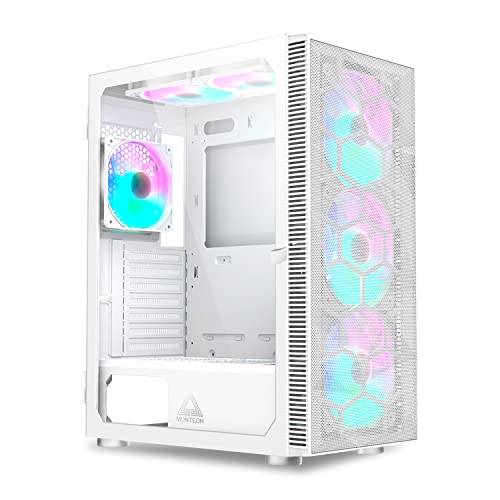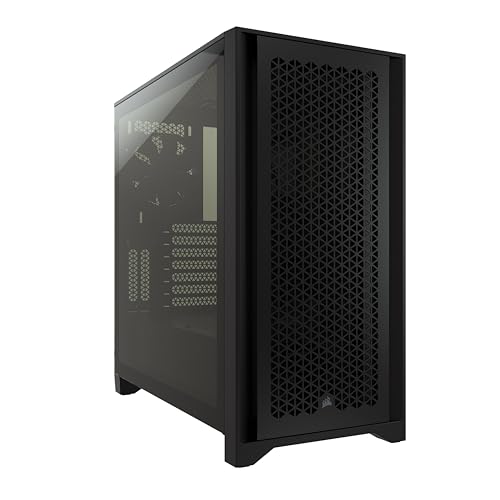
The tempered glass vs mesh case argument is usually framed as looks versus performance, and like most framings it is half true. Tempered glass panels exist to display the build — clean cable work, coordinated lighting, handsome components — while mesh panels exist to let air move. But glass appears on cases with perfectly good side-vented intakes, and mesh appears on cases with no window at all, so the real question is narrower and more useful: what does each panel material do to airflow, noise, maintenance, and your daily experience of the machine?
This comparison separates the panel question from the case question, because choosing well means knowing which of your priorities the front panel actually controls.
Disclosure: As an Amazon Associate, ilcastellomenu.com earns from qualifying purchases. Product examples below link to Amazon, where you can check current availability and specifications; this guide itself lists no fixed prices because pricing and bundles change frequently.
Quick Verdict
Choose mesh at the front if temperatures and low fan speeds are your priority, especially with a powerful graphics card. Choose tempered glass if displaying the build matters to you and the case’s intake design (side vents, bottom intake, or a glass panel offset from the fans) is proven rather than decorative. Remember that the side panel is a separate decision from the front: many cases pair a mesh front with a glass side, which is the combination most builders actually want. The airflow principles at stake are explained in PC Case Airflow Explained.
In this guide
First, Separate the Two Panel Decisions
A case has a front panel and a side panel, and they do different jobs. The front panel sits in front of the intake fans: its material directly throttles or frees the system’s air supply, so this is where the glass-versus-mesh choice has engineering consequences. The side panel mostly covers the components: glass there costs essentially no airflow in a conventional layout, because the side is not a primary intake path.
This is why the market’s most popular compromise — mesh front, glass side — is not a compromise at all but a correct allocation: breathability where air enters, display where eyes look. When this article criticises glass, it means glass at the intake; when it praises display value, it means glass at the side.
Airflow and Temperatures
A solid glass front panel cannot pass air, so a glass-fronted case breathes through whatever vents its designer provided around the panel’s edges — slots at the sides, top, or bottom. Well-designed versions feed their fans adequately for mid-range builds; poorly designed ones, where the glass sits close against the fans with token slits, measurably starve them, and the fans respond with speed and noise. A mesh front removes the question entirely: the panel is the vent.
The practical consequence scales with heat. A modest build’s temperatures barely notice a decent glass front. A flagship graphics card under sustained load notices every restriction in its air supply, and its fans — the loudest in most systems — announce it. If your build runs hot, let the front breathe; the layout you build behind the panel follows How to Set Up Airflow in a PC Case either way.
Noise
Glass is a reasonable sound barrier for the fans directly behind it, and a glass front can take the edge off intake-fan noise at ear level. Mesh passes sound as freely as air. But the system-level result usually inverts the panel-level one: the glass-fronted case’s fans spin faster to achieve the same cooling, generating more noise at source, while the mesh case’s fans loaf. Which is quieter in your room depends on whether your build’s heat forces that trade — the same negotiation analysed in Airflow Case vs Silent Case.
Neither material addresses the noises that escape elsewhere: rear exhaust fans, coil whine through vents, and vibration transmitted to the desk or floor. Panel choice is one instrument in the orchestra, not the conductor.
Looks, Lighting, and the Display Question
Glass exists because builders reasonably want to see their work. A tidy build with coordinated components and lighting is a legitimate pleasure, and for many owners it justifies the entire hobby’s aesthetic side; cases curated for exactly this are gathered in Best PC Cases for Rgb. Glass also imposes a discipline: every cable and component is on show, so a glass build rewards careful routing and punishes the ‘close the panel and forget it’ approach.
Mesh has its own aesthetic — technical, purposeful, often with the fans’ shapes ghosting through the weave — and it hides a multitude of cable sins. It also ages more gracefully in dusty rooms: a glass panel advertises every speck and fingerprint, while mesh merely asks for its filter cleaning, per the routine in How to Clean a PC Case.
Durability and Practical Handling
Tempered glass is strong against scratches and everyday knocks but has a known failure mode: it can shatter if a corner or edge strikes a hard surface, particularly tile or stone floors, during handling. Panels are heaviest when removed for maintenance, which is when accidents happen — handle over a soft surface, always. Glass also adds noticeable weight to the case.
Mesh panels (usually steel or aluminium over a frame) dent rather than shatter, weigh less, and shrug off handling. Their maintenance is different rather than less: fine mesh traps dust in its weave and wants brushing or air, and cheap mesh can resonate if a fan’s vibration finds its frequency.
Side-by-Side Summary
| Criterion | Tempered glass (at the front) | Mesh (at the front) |
|---|---|---|
| Intake airflow | Only via edge vents; design quality decides | Panel is the vent; unrestricted |
| Temperatures with hot hardware | Fans work harder; higher or louder | Coolest and quietest-running |
| Noise character | Muffles fans behind it, but may force higher speeds | Passes sound, but fans can stay slow |
| Display value | Full view of fans and lighting | Fans ghost through; components hidden |
| Maintenance | Fingerprints and dust show; wipe often | Dust in the weave; brush and air |
| Failure mode | Can shatter on an edge strike to hard floors | Dents; very forgiving |
| Weight | Heavier | Lighter |
Tempered Glass vs Mesh Case: Who Should Choose Which
Choose a mesh front if your graphics card is powerful, your room is warm, the PC will work hard for long stretches, or you simply want cooling solved without thinking — the airflow-first designs are collected in Best Gaming PC Cases for Airflow. Choose a glass front if the build is moderate in heat, the case’s vent design is generous and proven, and seeing the machine is part of the point. And for most builders, choose the allocation the market already voted for: mesh where the air enters, glass where the eyes go — a combination that asks you to sacrifice almost nothing. Whichever you pick, the fundamentals in How to Choose a PC Case still govern fit.
Fish-Tank and Panoramic Cases: The Third Style
A newer school of cases wraps glass around the front and side as one continuous corner — the ‘fish tank’ or panoramic style — and relocates its intakes to the side, bottom, and rear. These designs are the strongest evidence for this article’s core argument: their makers moved the intake path off the glass entirely rather than pretending glass could breathe. Judged as display objects they are superb; judged on airflow, they stand or fall on those relocated intakes exactly as a conventional case stands or falls on its front.
If you are drawn to the style, apply the same audit: trace the intake path, check it is filtered, and confirm the fans there are positioned to feed the graphics card. The glass is innocent; the path is the verdict.
Tinted, Frosted, and Perforated Compromises
Between clear glass and full mesh lies a spectrum of hybrids worth knowing. Tinted glass dims the interior view (and hides cable sins) while keeping the showcase effect under lighting. Perforated steel side panels — thousands of small holes — pass meaningful air while reading visually as a solid panel, and several small-form-factor designs depend on them entirely. Mesh side panels over the graphics card area give the card direct access to outside air, a pattern high-performance compact cases use to great effect.
The lesson generalises: panel material is a dial, not a switch, and the right setting depends on which panel, which component sits behind it, and how much heat that component makes. Choose per panel, with the intake front held to the strictest standard.
Cleaning and Living With Each Material
Ownership rhythms differ by material in ways worth picturing before purchase. Glass asks for frequent, light attention: a weekly wipe keeps it invisible, while a monthly wipe means ten minutes of fingerprint archaeology under raking light. It also shows the interior’s dust before the filters do, which some owners value as an early-warning system and others experience as a nagging display of chores.
Mesh asks for rarer, deeper attention: the weave loads with dust gradually and almost invisibly until airflow or a brush reveals it, and its cleaning belongs to the seasonal deep-clean rhythm rather than the weekly wipe. In a dusty household the mesh case’s filters do the visible suffering; in a clean one, both materials are nearly maintenance-free. Match the rhythm to your habits honestly — the case you will actually maintain beats the case that wins arguments.
Children, pets, and other impact events
Household reality deserves one row of its own. A case at floor level in a home with toddlers, large dogs, or robot vacuums meets impacts that a desk-kept case never does, and glass’s edge-strike vulnerability is precisely an impact story. In such homes, mesh or steel panels at floor level are the pragmatic choice, with glass reserved for the side of a desk-raised case if it is wanted at all. Conversely, a case on a desk in an adult study faces no impact worse than a coffee mug, and glass’s risks shrink to the maintenance-handling care described earlier. Context, as everywhere in this comparison, is the deciding variable.
The Cost Ledger Nobody Shows You
Panels carry hidden costs in both directions, and a complete comparison should tally them. Glass’s ledger: the case costs a little more at the same quality level, weighs more to ship and move, demands a replacement panel (a purchasable part on good cases, an impossibility on poor ones) if the worst happens, and taxes you a weekly wipe. Mesh’s ledger: filters behind it load faster in dusty homes, the weave can be damaged by careless brushing into a permanent eyesore, and the aesthetic ceiling is lower — no mesh case has ever been the centrepiece of a showcase build.
Neither ledger is decisive; both are the kind of consideration that separates a comparison written from experience from one written from a spec sheet. Tally your own household’s entries — dust levels, moving frequency, children, display ambitions — and the panel choice often makes itself.
Replacement panels and long-term support
Before buying any glass case, perform one small check that predicts years of ownership: does the maker sell replacement side panels, and are they listed where you can see them? A yes means the maker expects panels to break occasionally and has organised mercy. A no means a shattered panel orphans the case. The same check, applied to filters and front panels on mesh designs, tells you whether the case is a product with a support life or a disposable object with good photography. Buy the supported object; panels are the part of a case most likely to need the maker again.
How to Evaluate a Glass-Front Case's Vents
Since glass-front designs live or die by their venting, here is the audit to apply in a shop or from photographs. Find the intake path with your eyes: follow the front fans backward to the outside air, and measure the vent area honestly — slots down both sides and across the bottom can add up to a respectable opening, while a single decorative slit cannot. Check the gap between glass and fans: a panel floating on spacers with air space behind it breathes far better than glass pressed close. Look for a bottom intake as a second supply, which many glass designs quietly depend on.
Then weight the audit by your hardware, as this article has insisted throughout: a modest build forgives a modest vent area entirely, and a flagship card forgives nothing. The audit takes ninety seconds and converts the glass question from a gamble into a judgement.
Living with the choice you made
Whichever panel you chose, its maintenance rhythm is now part of your PC’s life, so set it up deliberately: glass owners keep a microfibre cloth at the desk and wipe on sight, because ten seconds weekly beats ten minutes monthly; mesh owners add the front panel to the filter-cleaning round, brushing the weave when the filters come out. Owners of glass-front cases with tight vents should also adopt the seasonal habit of checking component temperatures against their own baseline — the design’s margin is thinner, and the baseline is how thin margins announce themselves before they matter.
The Panel Behind the Panel: What the Side Choice Does to the Front’s Job
Buyers compare front panels as if the front worked alone, but the case is a system of openings and the side panel’s material quietly rewrites the front’s assignment. A mesh front paired with a mesh or vented side gives the graphics card two supplies — the front stream and a side draught at its own height — and the card’s fans, which are the build’s hungriest, drink from whichever is nearer. A mesh front behind a glass side concentrates all supply through the front path, which is the classic arrangement and works exactly as the airflow guides describe. A glass front with a mesh side inverts the classic: the side becomes the main intake territory, often feeding the card superbly while the processor’s zone depends on bottom and rear arrangements — a layout that can be excellent and is routinely misjudged by front-panel thinking.
The practical lesson is to shop for the case’s whole ventilation map, not its front’s material. Ask of any candidate: where does air enter, in what proportions, and which component does each entry serve? The makers’ diagrams sometimes show it; the tissue test on a display model or a reviewer’s smoke test shows it honestly. Our airflow setup guide gives the method for arranging whatever map you buy — but the map itself is chosen here, at the panel comparison, and it constrains every later decision.
Heat in the Room: Where Each Panel Sends the Machine’s Warmth
Both designs must ultimately deliver the build’s heat to the room, and they deliver it in different places, which matters more than it first appears. A mesh front exhausts and intakes at the machine’s face, so a mesh case under a desk breathes with the legwell’s air — warming your legs’ neighbourhood across a long session and, if the legwell is enclosed, progressively breathing its own warmed output. A glass-fronted design typically moves its main flows to the top, bottom, and rear, sending the exhaust upward behind the desk or into the room’s open air, which can be the kinder arrangement in a tight desk bay and the worse one in a low-ceilinged alcove where the rising heat pools above the machine and is drawn back in.
The seasonal footnote writes itself: the case that warms your legs in January is a comfort, and the same case in August is a small betrayal, which is why placement advice that ignores the calendar is only half advice. Whichever panel you choose, give the machine an exhaust route that leaves the desk’s microclimate entirely — a gap behind, an open side, a bay that is not a cupboard — because the panel comparison is decided inside the case, but the heat’s story ends in the room, and the room always collects.
The Showcase Question, Taken Seriously
It is easy for performance writing to treat the glass panel’s appeal as vanity, and the dismissal is lazy. A build is an object its owner made, often the most crafted object in the room, and displaying it — the cable work, the colour discipline, the components chosen with care — is a legitimate pleasure of the hobby, no more frivolous than a watch’s exhibition caseback. The honest comparison does not ask whether you may want the showcase; it asks what the showcase costs your specific build, in degrees and decibels, and whether you are paying that price knowingly. For a moderate build in a cool room, the price is small and the pleasure is daily. For a flagship card in a warm room, the price is the card’s own voice and clocks, and the pleasure had better be worth it.
The middle materials have matured into a genuine answer rather than a compromise: perforated steel with fine holes, mesh fine enough to read as a surface, tinted glass that shows the build in silhouette. Each buys some of the showcase and some of the airflow, and the proportions differ enough that the choice deserves the same testing discipline as the main comparison — temperatures at your load, noise at your seat, and a look at the machine in your room’s actual light, where showroom fluorescence has flattered many a panel that home lighting renders dull.
One more consideration belongs to the showcase and is rarely voiced: a glass build must be kept. Dust films the inside of glass visibly, cables that drift announce themselves, and the display standard is a standard of housekeeping as much as of hardware. Owners who love that discipline own the hobby’s most beautiful machines. Owners who know they will not keep it should let the mesh forgive them in advance.
Breakage, Children, Pets, and the Physics of Real Houses
Tempered glass is strong in its plane and vulnerable at its edges, and its failure mode — a sudden shower of blunt granules — is dramatic, memorable, and almost always the result of an edge strike, a overtightened screw point-loading a corner, or a panel handled over a hard floor. The handling rules are simple and worth the sentence: panels travel in two hands, rest on soft surfaces, and are fitted with their screws snugged evenly, never torqued. A household that follows them may never meet the granules; a household with a toddler’s toy hammer in circulation should price the risk honestly, because mesh’s failure mode is a dent, and a dent has never once ruined an evening.
Pets vote in this comparison with their habits. Cats sit on warm cases, and a mesh top is both a warmer perch and a hair intake of remarkable efficiency — the filters will tell the story at the first clean. Dogs shed into floor-level intakes regardless of panel. None of this is decisive, but the household that contains animals should choose the design whose maintenance they will actually perform: glass wipes in seconds and shows everything, mesh hides the evidence and collects it in the filters. The cleaning burden differs; the cleaning, per our case cleaning guide, does not disappear under either flag.
Resale, Trends, and the Second Owner’s Eyes
Cases are sold on, and the two materials age differently in the market’s esteem. Glass dates a case to its fashion moment: the showcase styles of a few years ago read as period pieces quickly, and a scratched or chipped panel — unrepairable, sometimes unreplaceable once the model is discontinued — discounts the whole case severely. Mesh and steel age anonymously; a clean mesh case of a sound design sells as a tool rather than as a look, to a wider pool of buyers who intend to put it under a desk and forget it. If you expect to sell the case on, the steel design is the liquid asset and the glass design is the one to buy for its life with you.
The discontinued-panel problem deserves its own warning for owners of either: spare panels, filters, and front fascias are stocked for a model’s commercial life and not beyond it. If your case is a keeper, the time to buy its spare panel or its extra filter set is while they are listed, cheap, and unneeded — a small insurance that owners of long-lived cases routinely wish they had bought. The mesh case’s spares are filters and fans, universally sized; the glass case’s spare is the panel itself, specific as a fingerprint. Plan accordingly.
Four Builders at the Panel Counter
The competitive player with a hot card and a headset on lives the comparison’s easiest verdict: the card’s temperatures and clocks are the performance they train for, the headset forgives the noise, and the mesh front is a tool chosen without romance. If a glass side joins it for the desk’s look, the build loses nothing it uses. The creator who films their workspace — the desk is a set, the machine is in frame — has a professional reason for glass that outranks a few degrees: the build is part of the channel’s furniture, and its cooling is engineered around the showcase with fan capacity and an air-conditioned room. Both are correct; neither is the other’s fool.
The parent building the family’s machine for the lounge should hear the household’s verdict: glass invites fingerprints at exactly child height and displays a build the family did not ask to curate, while mesh disappears into the room’s furniture and forgives the house’s dust and the children’s curiosity. And the upgrader with a five-year-old build in a new warm flat, watching an ageing card run hotter each summer, should recognise their actual purchase: not a panel but a temperature margin, and mesh is the margin in its cheapest form. The comparison is never really glass versus mesh. It is the build’s heat, the room’s life, and the owner’s pleasures, wearing two materials as their uniforms.
A Decision in One Pass: Heat First, Then Honesty
Settle it in order. First, the heat budget: add up your build’s draw at its real worst load and ask whether it is a moderate machine with degrees to spare or a flagship living near its limits — the nearer the limits, the more the mesh’s margin is worth and the more the glass must be engineered around rather than merely chosen. Second, the room: its temperature across the year, the machine’s placement and exhaust route, the household’s population of small hands and animals. Third, the pleasure, admitted plainly: if the showcase will genuinely be enjoyed and kept, it is a real good and may be bought with real money and real degrees, knowingly.
What the order forbids is the commonest sequence — falling for the photograph first and discovering the heat budget in July. Run the three questions in their order and the panel chooses itself, and either answer, so chosen, tends to stay chosen: the mesh owner does not envy the showcase because they bought temperatures on purpose, and the glass owner does not resent the degrees because they bought the view with their eyes open. The companion case choosing guide, takes the winner and checks it against everything else a case must do.
Weight, Shipping, and the Journey Home
Glass is heavy, and the panel comparison follows you home. A glass-fronted, glass-sided case can outweigh its mesh sibling by a margin your arms will have opinions about — on the stairs, in the car, and at every future house move, where the glass case also travels with a small anxiety the steel one never inspires: it must be packed, padded, and kept from edge contact with the world, ideally in its original box, which the wise owner keeps. The mesh case travels like the folded steel it is, in a blanket, in the boot, without ceremony.
Shipping cuts the same way for online buyers. Glass cases arrive with a small, real chance of a panel casualty in transit — the granule shower discovered at unboxing — and the returns process for a case-sized object is nobody’s favourite afternoon. Mesh’s transit risk is a bent corner, usually cosmetic, often bendable back. None of this should decide the comparison for a build whose heat or whose pleasure points firmly one way; but for the buyer on the fence, the logistics of getting the case home and keeping it whole are a legitimate thumb on the scale, and they rest on the mesh side.
Lighting and the Build as the Room’s Lamp
A glass case with internal lighting is, whether intended or not, a light fixture, and it joins the room’s lighting design. In a media room it can bias-light the wall behind the desk pleasantly; in a bedroom it can be the night light nobody ordered, glowing through sleep hours unless its lighting is genuinely, conveniently switchable — by a button or a schedule the owner will actually use, not by a software suite they will open twice. Mesh cases leak light too, as a pattern of small glows rather than a display, which some owners find atmospheric and others find untidy.
The practical checks belong in the shortlist: can every light in the case be turned fully off, from one place, without opening the machine’s software menagerie? Does the case remember darkness across reboots and power cuts, or does it greet every morning at full carnival? A showcase that cannot be darkened on demand is a guest who will not leave the party, and in a bedroom or a lounge that single behaviour can matter more, across years, than the two degrees that dominate the rest of this comparison.
Sound Through the Panels: The Acoustic Footnote
Panels are also acoustic materials, and their sound behaviour is more interesting than open-versus-closed. A glass side panel is a hard, dense reflector: it contains the build’s internal noise well — better than a perforated panel of the same area — while reflecting the room’s sound back at the room, which is why a glass case can sound quieter at the desk and yet make a small room feel acoustically brighter. A mesh panel leaks the build’s voice in proportion to its openness, but it also absorbs a little of the room’s liveliness and, crucially, lets the fans themselves run slower for the same cooling, attacking the noise at its source rather than at the wall.
The net result, measured at the chair, is why this comparison’s acoustic verdict is never automatic: a mesh case with slow fans routinely measures quieter in a real room than a glass case whose trapped heat has its fans working. Containment and source reduction are rival strategies, and the panel choice picks your strategy before you have heard either. Our airflow versus silent case comparison pursues the same rivalry at the whole-case level, and the two articles’ conclusions rhyme: silence is a system property, and the panel is one instrument in it.
Cleaning the Two Materials: A Minute-by-Minute Account
Ownership’s recurring cost is cleaning, and the materials bill differently. Glass asks little and shows everything: a microfibre cloth and thirty seconds restore it, fingerprints and dust having had the courtesy to be visible. Its interior face is the catch — cleaning inside the glass means removing the panel, and the showcase standard means doing it oftener than a steel owner ever opens their case. Mesh asks nothing visually for months and then presents its account in the filters and in the fine dust that works through perforations too small to see: its cleaning is the filter rhythm and the occasional vacuum of the mesh itself, from the outside, with the machine off.
Neither burden is heavy; they are simply different temperaments of upkeep — the visible and frequent versus the hidden and scheduled. Choose the one that matches the housekeeper you actually are, because the wrong pairing degrades both options: neglected glass is the saddest object in the hobby, and unmaintained mesh quietly becomes the solid panel it replaced, with worse airflow than either.
Gear for This Guide
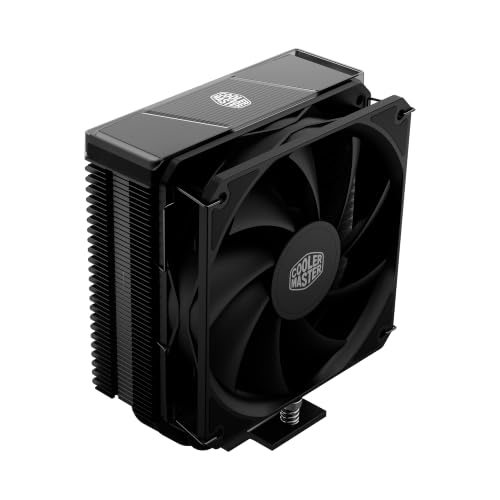
One verified component that builders most often put on display behind glass — a blacked-out tower cooler that looks as deliberate as it cools.

Cooler Master Hyper 212 Black II CPU Air Cooler
An all-black single-tower cooler that suits the glass-side showcase build while remaining a sensible thermal choice for mid-range systems behind either panel type. Cooler Master Hyper 212 Black II CPU Air Cooler — Check on Amazon
Frequently Asked Questions
Does a glass side panel hurt airflow?
In a conventional layout, essentially no: the side is not a primary intake path, so a glass side over the components costs nothing measurable. It is the front panel — in front of the intake fans — where glass restricts air. Judge the two panels separately.
How much hotter does a glass front make a PC?
It depends entirely on the vent design around the glass and on the build’s heat output. Generous side vents with a moderate build: barely noticeable. Tight vents with a flagship graphics card: enough to push fans audibly faster. There is no single number, which is why mesh is the safe default for hot hardware.
Can tempered glass really shatter?
Yes, in a specific way: tempered glass is strong on its faces but vulnerable at its edges and corners, and a corner strike on tile or stone can shatter the panel into granules. It is a handling risk during maintenance, not a spontaneous one — remove panels over a bed, sofa, or carpeted floor.
Is mesh always louder than glass?
Not at system level. Mesh passes fan sound directly, but it lets fans run slower, and fan noise grows quickly with speed. A mesh case cooling an easy build at low fan speeds is typically quieter than a glass case whose fans are working hard against restricted vents.
What if I already own a glass-front case and temperatures are high?
Work the cheap fixes first: clean the filters and vents, confirm fan layout and curves, and check whether the front panel can be spaced or removed for demanding sessions (some designs allow it). If the case’s vents are fundamentally tight and your hardware is hot, the case — not your components — is the bottleneck.
Does a mesh front make a PC noticeably dustier inside?
It makes the filters’ job bigger, which is a different thing. A mesh front passes air freely, and the dust that rides it is stopped at the intake filters — which therefore load faster and must be cleaned on the shorter rhythm our cleaning guide describes for open designs. Run unfiltered, yes, a mesh case dusts its interior faster than a sealed one. Run filtered and maintained, the interior stays comparably clean and the difference lives where it belongs: in the filters, which are washable, rather than in the heatsinks, which are not.
Can I replace a glass front with mesh later if temperatures disappoint?
On some models, yes — a number of makers sell the same chassis in both faces or offer the alternate front as a spare part, and those are the glass cases to buy if your heat budget is uncertain. On most, no: the front is structural to the design’s identity and no mesh variant exists. Ask the question before purchase, while it is a filter on your shortlist rather than a regret, and treat a maker who offers both faces as a maker who understands the comparison you are reading.
Is tempered glass safe around a desk that gets bumped often?
Tempered glass tolerates bumps to its face remarkably well — it is the edges and corners that must be protected, and a fitted panel’s edges are largely sheltered by the frame. The realistic risks are during handling: panels removed for cleaning, carried across rooms, leaned against chair legs. If your desk’s life involves frequent panel removal in a crowded room, the risk calculus shifts toward mesh or toward a ritual — panels travel in two hands to a bed or a sofa, never to the floor. The material is not fragile; it is unforgiving of one specific kind of carelessness.
Which panel is better for a PC that lives on the floor?
Mesh’s openness is wasted at floor level if the intakes sit in the carpet’s dust layer, and glass’s indifference to its surroundings helps nothing if the case’s actual intakes are underneath. Floor placement argues for a case — of either face — whose intakes are high or filtered and whose feet lift it clear of the pile, ideally on a stand or board. Given that, the floor machine’s panel can be chosen on the room’s other terms; the floor itself has already cast the deciding vote about intakes, and it was not about the front’s material.
Does tinted glass run hotter than clear glass?
The tint itself is thermally irrelevant — the panel is a barrier either way, and its colour changes only what you see through it. What can differ between variants of the same case is the venting that accompanies the tint in a particular model’s range, so compare the specific models’ full ventilation maps rather than attributing a temperature to a shade. Buy the tint for the look, which is real, and judge the cooling by the openings, which are the physics.
Can I run a glass case with the front panel removed in summer?
Many owners do exactly this, and it works as the emergency measure it is: the front’s restriction leaves, temperatures fall, and the filters — if the design keeps them on the chassis rather than the panel — still guard the intakes. Treat it as a diagnostic as much as a cure. If removing the panel transforms your temperatures, the case’s front was your bottleneck, and the permanent answers are a mesh replacement panel if the maker offers one, a fan configuration that compensates, or the honest admission that the build has outgrown the case’s design. A panel stored behind the desk for a season is a message; read it before the next summer.
Which panel suits a first build better?
Mesh, on balance, for two forgiving reasons. A first build’s cable work and component choices are provisional, and mesh does not display the apprenticeship; and a first builder’s component temperatures are the likeliest to need the margin mesh provides while they learn fan setup. The glass showcase is a wonderful second build, assembled by hands that already know what they want the room to see.
Does a mesh side panel help as much as a mesh front?
It helps a different component. A mesh front feeds the whole front-to-back path; a mesh or vented side feeds the graphics card at its own height, which is why side venting punches above its area for card temperatures. The two are complements rather than substitutes, and a case offering both gives the builder the most complete map to arrange — though each opening is also a door for dust and sound, which is the comparison’s eternal exchange rate.
Is a mesh case always the cooler choice?
At the front panel, with everything else equal, yes — an open path beats a restricted one. But everything else is rarely equal: a well-designed glass-front case with generous side and bottom intakes can out-cool a careless mesh design whose fans are few or badly placed. Judge the whole ventilation map and the fan complement, not the front’s material alone; the material is the headline, the map is the article.
The Bottom Line
Judge glass and mesh panel by panel: mesh at the front is free cooling and the safe choice for hot hardware; glass at the side is free display value with no thermal cost. The popular mesh-front, glass-side combination is popular because it allocates each material to the job it is good at.
Related Guides
Run the full case checklist and browse airflow-first and looks-first roundups: