Disclosure: As an Amazon Associate, ilcastellomenu.com earns from qualifying purchases. Links on this page are affiliate links; they cost you nothing extra. Prices and availability change often, so check the current Amazon listing before you buy.
Quick Verdict
The thermal paste vs liquid metal question has an unusually honest answer: liquid metal is the better conductor and thermal paste is the better choice — for almost everyone, almost all of the time. If you are a typical builder maintaining a typical machine, choose paste and stop reading at the verdicts; if you are an experienced enthusiast with a nickel-plated or copper cold plate, a steady hand and a clear reason, liquid metal’s narrow performance edge is real and this comparison will show you exactly what it costs. In the thermal paste vs liquid metal debate, the deciding criterion is rarely performance. It is risk, and risk is not close.
- Choose paste if: you want the interface to be safe, forgiving, compatible with every cooler and finished in minutes — which describes nearly every builder and every machine.
- Choose liquid metal if: you are an expert, your cooler is copper or nickel-plated (never aluminium), you will mask and protect the die area properly, and the last increment of thermal headroom is worth ongoing vigilance to you.
- The safety headline: liquid metal is electrically conductive. A spill or squeeze-out can short components. That single fact, more than any benchmark, is what this comparison is about.
In this guide
Thermal Paste vs Liquid Metal: Side by Side
| Criterion | Thermal paste | Liquid metal |
|---|---|---|
| What it is | Filled non-hardening compound, non-conductive | Gallium-based liquid alloy, electrically conductive |
| Peak interface performance | Strong; reputable pastes cluster closely | The highest available from an applied interface material |
| Electrical safety | Non-conductive: squeeze-out is cosmetic | Conductive: a spill can short and kill components |
| Cooler compatibility | Every material, including aluminium | Copper or nickel-plated only; corrodes aluminium |
| Application | Pea, line or film; forgiving of beginners | Expert procedure: masking, protection, precise dosing |
| Bare dies (laptop, GPU) | Viscous pastes serve well and safely | Highest risk setting; migration and shorts are live dangers |
| Ageing and maintenance | Pumps out and dries over years; renewal is easy | Can migrate and stain; renewal is a careful procedure |
| Warranty comfort | The material every maker assumes | Implications vary by maker; check before use |
| Cost character | Trivial per application at every tier | Small quantities, high price per application, plus protection supplies |
The table compresses the argument; the sections below argue it properly, criterion by criterion, with a verdict at the end of each — because a comparison that will not commit per criterion is just two product descriptions sharing a page.
Performance: The Criterion Liquid Metal Wins
Begin with the truth that powers the whole debate: as a pure interface material, liquid metal transfers heat better than any conventional paste. It is a metal, it wets both surfaces intimately, and in expert hands on suitable hardware it buys a margin of thermal headroom that no syringe of compound can match. On a high-end processor under a serious cooler, in a system tuned to spend that margin — sustained overclocks, competitive benchmarking, the hottest chips in small cases — the gain is real and can be the difference between holding a clock and shedding it.
Now the context that keeps the win honest. The margin is an increment, not a transformation, and it shrinks as the rest of the cooling chain weakens: under a modest cooler or in a starved case, the bottleneck sits elsewhere and liquid metal’s advantage evaporates into it. It also presumes expert application; a hurried liquid-metal job can underperform a careful paste job while carrying all of the risk. Performance is liquid metal’s home criterion and it wins it outright — but it wins a smaller prize than its reputation suggests, on a narrower field than its advocates imply. Verdict: liquid metal, clearly — on hardware and in hands that can use it.
Safety: The Criterion That Decides for Most People
Liquid metal conducts electricity. This is not a footnote or a technicality; it is the property around which the entire comparison reorganises itself. Conventional paste can squeeze out, smear and stray with no consequence worse than a messy socket surround, because it is an insulator. Liquid metal that squeezes out, migrates or is spilled during application is a conductive liquid loose among components that carry power, and a bridge between the wrong two points can short a processor, a graphics card or a motherboard in an instant. The application procedure exists to manage exactly this: masking around the die, conformal protection over nearby surface-mount components, meticulous dosing, and a workspace discipline closer to soldering than to pasting.
Nor does the risk retire once the cooler is clamped. Thermal cycling and gravity give the alloy opportunities to migrate over a machine’s life, particularly in laptops and other devices that move, tilt and travel — which is why the bare-die machines that would benefit most from its performance are precisely the machines where its risk is least acceptable to most owners. Paste asks for none of this vigilance. Its safety is not a procedure but a property, present on your worst day as reliably as on your best. Verdict: paste, overwhelmingly — and for most readers, this verdict is the comparison.
Compatibility: Aluminium Is the Trap
Liquid metal’s gallium alloys attack aluminium, corroding and embrittling it; an aluminium cold plate paired with liquid metal is not a suboptimal combination but a destructive one, and the damage is chemical, progressive and irreversible. That single incompatibility excludes a large share of the world’s coolers — aluminium cold plates and aluminium-finned designs are everywhere at the mainstream end — and it makes verifying your cooler’s contact material a mandatory pre-flight check rather than a detail. Copper and nickel-plated copper are the safe partners, and even they will show staining and alloying at the contact surface over time, a cosmetic marriage mark that some owners accept and others resent on expensive hardware.
Paste, by contrast, is compatible with everything: aluminium, copper, nickel plate, direct-heatpipe surfaces, in any combination, forever. There is no version of the paste decision in which the cooler must be interrogated about its metallurgy before the tube is opened. Compatibility sounds like a dull criterion until you price a corroded cold plate. Verdict: paste, without qualification.
Application and Skill: Minutes Versus a Procedure
Applying paste is a five-minute skill taught in a paragraph: clean, dose a pea or a line or spread a film, clamp evenly. Its failure modes are gentle and recoverable — clean it off and do it again. Applying liquid metal is a procedure: the machine fully powered down and unplugged; the die and its surroundings cleaned; the area around the die masked; exposed components near the socket protected with conformal coating or equivalent; the alloy dosed in a tiny quantity and spread with its dedicated applicator until it wets the surface in a mirror film; the cold plate’s contact area treated likewise where the method requires; and the whole assembly closed with the awareness that excess has nowhere safe to go. Each step exists because the material punishes its absence.
The honest way to price this difference is not the clock but the consequence curve. A beginner’s paste mistake costs a re-do. A beginner’s liquid-metal mistake can cost the machine. That asymmetry — not snobbery about skill — is why this site, and every cooler maker whose guidance we have read, treats liquid metal as an advanced-user material and paste as the default. If the procedure described above sounds like an enjoyable Saturday, you may be its audience. If it sounds like a liability waiver, you have your answer. Verdict: paste, for everyone except the genuinely expert.
Longevity and Maintenance: Two Different Kinds of Ageing
Paste ages by pump-out and dry-out over years, and its renewal is the easiest job in this comparison: clean, re-apply, done. Liquid metal ages differently — it can migrate within the interface, dry in appearance as it alloys with the contact surfaces, and stain both die and cold plate permanently; its renewal is the full procedure again, with the added care that removing a conductive material from around a socket is itself a risk-bearing operation. In a desktop that sits still, a well-sealed liquid-metal application can serve for a long period; in anything portable, migration risk grows with every journey. Neither material is fit-and-forget forever, but only one of them makes its maintenance an event. Verdict: paste, on simplicity and safety of renewal.
Warranty and Resale: The Quiet Criteria
Paste is the interface material every manufacturer assumes; using it raises no questions anywhere. Liquid metal’s position varies by maker and by product: some enthusiast brands tolerate or even factory-apply it on specific high-end machines, while elsewhere its use — and especially any damage traced to it — can complicate or void warranty claims, and its staining follows the hardware into the second-hand market, where a buyer reasonably asks what the marks on the cold plate are. None of this forbids the expert’s choice; all of it belongs in the price of making it. Verdict: paste, for anyone who values the warranty they paid for.
Strengths and Trade-Offs of Each Side
Thermal paste — strengths
- Safe by property: electrically non-conductive, so mistakes are cosmetic, not catastrophic.
- Universally compatible: every cooler material, every clamped interface, no metallurgy checks.
- Restorative and cheap: a fresh film returns an ageing machine’s manners for a trivial per-application cost.
Thermal paste — trade-offs
- A performance ceiling: it cannot match liquid metal’s peak interface transfer.
- It ages: pump-out and dry-out make it a consumable with a multi-year fuse.
- Small differences between brands: the premium tiers buy margin and longevity, not transformation.
Liquid metal — strengths
- Peak performance: the best heat transfer an applied interface material offers.
- Real gains on flagship hardware: where the cooler and workload can spend the margin, it shows.
- Thin, wetting contact: it intimately bonds both surfaces at the microscopic level.
Liquid metal — trade-offs
- Conductive: spills and squeeze-out can short components; masking and protection are mandatory.
- Corrodes aluminium: never pair it with an aluminium heatsink or cold plate.
- Expert procedure with live consequences: application, removal and migration all carry risk, and warranty implications vary by maker.
Who Each Option Suits — and Who Should Skip Each
Paste suits: effectively everyone — first-time builders, families maintaining a fleet, laptop and console owners servicing bare dies with a viscous compound, quiet-PC builders, and professionals whose machines must simply work. Skip paste only if you are the narrow expert profile below and have priced its ceiling honestly. Liquid metal suits: experienced enthusiasts running high-end processors under copper or nickel-plated coolers, in stationary desktops, who will mask and protect the die area properly, accept staining, and treat the application as the procedure it is. Skip liquid metal if: your cooler is aluminium anywhere at the contact surface; the machine is a laptop, console or anything that travels; the hardware is under a warranty you care about; your hands are new to this work; or your honest goal is a quiet life — which is a legitimate engineering requirement, and paste meets it completely.
How to Decide: Questions That Branch
- Is your cooler’s contact surface aluminium? Yes → paste. The comparison is over.
- Is the machine portable, or a laptop or console? Yes → paste, viscous branch.
- Is the hardware under a warranty you intend to keep? Yes → paste.
- Would a conductive spill be a financial disaster rather than a lesson? Yes → paste.
- Are you experienced, on copper or nickel, in a stationary high-end desktop, chasing a margin your cooler can actually spend? Yes to all → liquid metal is a legitimate, deliberate choice.
Notice the shape of the tree: liquid metal is reached only through a corridor of yeses, each of which excludes most machines and most owners. That shape is the comparison’s real finding, and it is why our cluster’s other guides — thermal paste buying guide and how to choose thermal paste — treat paste selection as the main event and liquid metal as the special case.
Where Each Side Is Bought: Representative Products
Representative products are presented prose-only here, while listing verification is pending — no links, no figures, just the names each side of the argument actually uses.

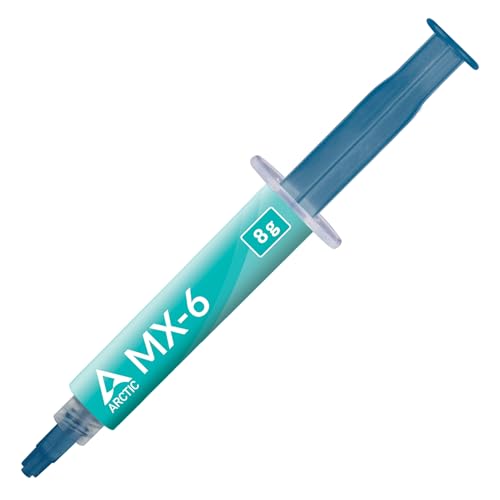
Arctic MX-6 — paste, the default
The balanced all-rounder for the paste side of the tree: forgiving, non-conductive, sized for fleets. Tier: mid.
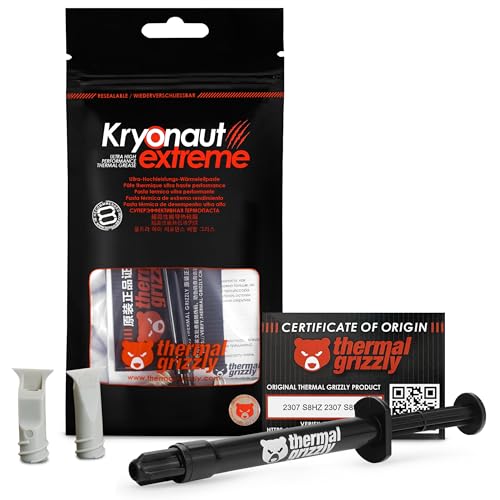
Thermal Grizzly Kryonaut — paste, the high end
The flagship conventional compound — the strongest answer paste gives on performance before the material class changes. Tier: premium.
Thermal Grizzly Conductonaut — liquid metal, the representative
The best-known liquid metal from the same enthusiast stable: a gallium-based alloy for expert application on copper or nickel-plated surfaces only, with masking and protection around the die treated as part of the product, not an accessory to it. It is named here so the comparison is concrete, and recommended only through the corridor of yeses above. Tier: specialist.
For the paste side in full, see thermal paste reviews and thermal paste pros and cons; for the neighbouring material that handles the gaps neither of these should fill, see thermal pad review.
Final Recommendation by Use Case
New build, any level: paste — the all-rounder, applied calmly. Ageing desktop or laptop service: paste — long-service for the desktop, viscous for the laptop, pads checked in the same sitting. High-end stationary desktop, experienced owner, copper or nickel cooler: paste by default; liquid metal only as a deliberate, protected, warranty-aware project. Anything aluminium, portable or warrantied: paste, and close the question. The paste vs liquid metal debate survives because performance is measurable and risk is anecdotal — until it happens to your machine. Weigh both, and for almost every reader the scale settles where this article’s first paragraph put it: liquid metal is the better conductor; paste is the better choice.
The Delidding Detour: Where Liquid Metal’s Legend Was Made
Much of liquid metal’s reputation was earned in a place this comparison has not yet visited: underneath the heatspreader. Some processors bond their die to the cap with a modest internal interface, and enthusiasts discovered that removing the cap — delidding — and replacing that internal material with liquid metal could transform a hot chip’s behaviour. The legend is true, and its conditions are the whole story. The work is performed on a stationary desktop processor, by specialists, with tools made for the purpose, accepting that the processor’s own warranty is spent in the act and that a conductive alloy now lives permanently beside the die’s delicate neighbourhood, sealed under a re-bonded cap. It is, in other words, the corridor of yeses narrowed to a doorway — and even its practitioners treat the external interface, between cap and cooler, as a separate decision where many of them use an excellent conventional paste, because the risk calculus changes when the alloy can migrate across a motherboard rather than staying sealed inside a package.
The detour matters to this comparison for one reason: it explains why performance folklore overstates the case for the ordinary application. Gains measured inside a delidded processor describe a different interface with a different bottleneck. Imported carelessly into the cap-to-cooler decision, they promise a transformation that the physics of that interface cannot deliver. Read liquid-metal advocacy with that filter — ask which interface the claim is about — and most of the debate’s heat dissipates, leaving the two honest positions this article has argued throughout.
Factory Liquid Metal: The Exception That Tests the Rule
A small number of high-end laptops and pre-built systems ship with liquid metal applied at the factory, and their existence is sometimes quoted as proof that the material is ready for everyone. Examine what the factory actually does and the proof inverts. The manufacturer designs a barrier system around the die — dams, gaskets, foam seals and protective coatings engineered as part of the chassis — validates it across the product’s expected motion and tilt, applies the alloy with production tooling, and accepts the warranty exposure as a costed design decision. The home applier has none of that infrastructure: no engineered dam, no validation, no production tooling, and a warranty that points the other way. Factory liquid metal is therefore best understood as a different product category — a sealed subsystem that happens to contain the same alloy — and its success says nothing about the safety of performing the procedure by hand on hardware that was never designed to contain it. If you want liquid metal in a laptop, the honest route is to buy the laptop that was built around it.
The Removal Problem, Described Plainly
Comparisons dwell on application because application is dramatic, but ownership includes the other end of the material’s life, and liquid metal’s removal deserves the same plain language. When the cooler eventually comes off — for an upgrade, a failure, a sale — the alloy must be gathered from both surfaces completely, because residue left behind remains conductive, mobile and chemically active against any aluminium it later meets. The work is done with the machine unplugged, slowly, with the removed material treated as the contaminant it is, and with the constant awareness that a droplet flicked or smeared into the socket area converts a maintenance job into a forensic one. Paste’s removal, by contrast, is the category’s most forgiving act: alcohol, a cloth, and a surface restored to innocence in minutes. Owners deciding between the two materials should picture both removals, not just both applications — the material you choose is the material you will one day clean, under time pressure you cannot yet foresee, and that picture has settled more honest decisions than any benchmark.
Cost, Priced Honestly on Both Sides
Money is the least important criterion in this comparison and still deserves accuracy. Paste’s cost per application is trivial at every tier, including the flagship compounds. Liquid metal’s material cost per application is higher — it is sold in small syringes at specialist prices — but the true ledger adds its entourage: masking materials, conformal protection for the components around the die, applicators, and the value of the considerably longer procedure, repeated at every renewal. Set against that, its benefit is denominated in a margin of thermal headroom that only some systems can spend. The economic verdict mirrors the technical one: liquid metal is not poor value for the expert who uses its margin daily, and it is indefensible arithmetic for everyone else, who would be paying a specialist’s entourage to insure against temperatures their cooler was already handling. As with the rest of this comparison, the numbers do not argue; the circumstances do.
What Happens When Each Material Meets a Mistake
The fairest test of two materials is not their best day but their worst, so walk through the standard accidents. Too much material: paste squeezes out into a grey moustache around the socket, is wiped away with alcohol, and becomes a story told at the pub; liquid metal squeezes out as a conductive liquid seeking the lowest point and the nearest contacts, and becomes an incident — power must stay off, every bead must be found and gathered, and any that reached a component’s legs may already have decided the machine’s fate. A cooler lifted and reseated carelessly: paste forgives with a cleaning and a fresh film; liquid metal smears its hazard across both surfaces and demands the full protective procedure before the second attempt. A machine transported roughly: paste notices nothing; liquid metal’s migration risk rides along in the baggage. A decade of neglect: paste dries into a crust that a patient hour reverses; liquid metal may have alloyed, stained and wandered in ways no hour fully reverses. Tabulate the accidents and the comparison’s emotional centre becomes clear. Builders do not choose paste because they doubt liquid metal’s performance; they choose it because they have imagined their own worst afternoon, honestly, and priced it.
The Middle Path Most Experts Actually Walk
Talk to experienced builders long enough and a pattern emerges that neither camp’s slogans predict: the same person who runs liquid metal inside a delidded flagship processor will reach, without hesitation, for a premium conventional paste at the cap-to-cooler interface of the same machine, and for a viscous paste in every laptop they service. This is not inconsistency; it is the comparison applied per interface, which is the level at which it was always meant to operate. Each interface gets the most aggressive material its containment justifies: sealed and engineered, the alloy; open and serviced by hand, the compound. Readers building their own judgement should steal that pattern rather than either tribe’s loyalty. The question is never “paste or liquid metal” in the abstract — it is “this die, this cooler, this owner, this afternoon,” and four honest answers at that resolution will reproduce the experts’ pattern in your own fleet, including, occasionally, a yes to the alloy where every condition earns it.
Graphics Cards: The Comparison’s Hardest Room
If laptops are liquid metal’s danger zone, graphics cards are its temptation zone, because the GPU die is large, hot and stationary inside a desktop — superficially the alloy’s ideal stage. Look closer and the room darkens. The die is surrounded, at millimetre distance, by memory chips and power components with exposed contacts; the card is regularly removed, tilted, stored on edge and shipped in boxes, giving a conductive liquid every opportunity to travel; and the card is often the single most valuable component in the machine, which prices any accident at the top of the ledger. Manufacturers who factory-fit liquid metal to flagship cards build the containment to match, as the earlier section described. For the home servicer, the verdict of this comparison holds with emphasis: a viscous paste on the core, correct pads on the memory — the service detailed across thermal paste review and the pad guides — and the alloy left to the cards that were born with it. The performance forgone is an increment; the risk declined is the card.
A Note on Evidence, Since This Debate Runs on It
This comparison has deliberately argued in words rather than charts, and the VS format makes that choice worth defending explicitly. Temperature claims in this debate are unusually portable: a result measured on one processor, cooler, mount and workload is quoted as a property of a material, and by the third retelling the conditions have fallen off entirely. What survives honest scrutiny are the structural facts — conductivity of the materials as classes, the alloy’s electrical behaviour, its chemistry with aluminium, the procedural burden, the warranty landscape — because those do not depend on whose bench hosted the test. Verdicts built on structure age well; verdicts built on borrowed charts expire with the next processor generation. If a reader finishes this article able to reproduce its reasoning on hardware that does not exist yet, the comparison has done the only job worth doing. The numbers will change with every new chip. The corridor of yeses will not.
Second-Hand and Resale: Living With the Other Owner’s Choice
The comparison acquires a new reader at the used market: the buyer who inherits someone else’s interface decision. A used machine pasted conventionally is a known quantity — assume the film is aged, service it, and the baseline is yours. A used machine with liquid metal history is a small investigation. Ask where the alloy was used and what contains it; inspect the cold plate for the tell-tale staining and the die surround for residue; be aware that a processor delidded by a stranger carries both the performance and the uncertainty of that operation into your ownership, and price it accordingly. Sellers, symmetrically, owe disclosure: liquid metal in a machine is a material fact about it, like a replaced screen, and the honest listing names it. None of this makes alloyed machines untouchable — the expert community trades them knowingly — but it does mean the comparison follows hardware through its whole life, and a choice that complicates every future owner’s due diligence should be made with that audience in mind. Paste never sends that letter to the future. It is one more quiet entry in its column, and for hardware you may one day sell, it is not a trivial one.
If You Do Choose Liquid Metal: The Minimum Discipline
This article’s verdicts are against the alloy for most readers, but a comparison that only forbids is less useful than one that also instructs, so here is the floor below which no liquid-metal application should fall — stated as conditions, not encouragement. The cooler contact must be verified copper or nickel-plated from the maker’s documentation, never assumed. The machine must be fully powered down and unplugged, and worked on in a clear, unhurried space. The die’s surroundings must be masked, and every exposed component near the interface protected with conformal coating or an equivalent barrier, before the syringe opens. The dose must be minimal — the alloy is spread to a wetting film, never pooled — and any bead that escapes the die area stops the job until it is gathered. The assembly must then live a stationary life, be inspected at any future opening before power is applied, and be disclosed at resale. And the owner must have read their hardware makers’ warranty positions in advance and accepted them with open eyes. A reader unwilling to sign up to every clause has not chosen liquid metal; they have chosen its risks and declined its discipline, which is the one combination this comparison condemns without qualification. The expert’s corridor is narrow because it is built out of exactly these clauses.
The Verdict Restated, Without the Table
Strip the comparison to its skeleton and three sentences remain. Liquid metal transfers heat better than any paste, and that is the whole of its case. Paste is safer by property rather than by procedure, compatible with everything, forgiving of everyone, and close enough in performance that most systems cannot express the difference — and that is the whole of its case. Between those cases stands the reader’s own corridor of conditions: cooler metal, machine mobility, warranty, experience, and the honest price of a worst afternoon. Walk the corridor and the choice makes itself, which is why this article has spent its length building the corridor rather than shouting a winner. For the overwhelming majority who stop at the first closed gate — and the gates are closed for most machines ever built — the answer is a good tube of paste, carefully applied, and a subject closed for years. That is not a consolation prize. It is what a mature technology looks like: the boring option is boring because it works.
Climate, Altitude and the Other Silent Variables
A closing fairness note for both sides: neither material repeals the environment. A machine in a hot room surrenders the same degrees to the weather whichever interface it wears, and a dusty heatsink throttles a liquid-metal flagship exactly as it throttles a pasted budget build. Enthusiast debates sometimes load the interface material with responsibility for outcomes that belong to airflow, ambient temperature and cooler capacity — the three variables that dominate real systems. Keeping that hierarchy straight is the last service this comparison can do its readers. Choose the interface material for the interface’s own merits, as argued above; then spend your remaining effort where the degrees actually live, in the cooler and the case, guided by best CPU coolers for desktops and how to choose a CPU cooler. The builder who understands that ordering will get more cooling from a mid-tier paste in a well-aired case than from liquid metal in a sealed one — and will understand, as this article has argued from its first table, that materials are chosen per interface, per machine and per owner, never by slogan.
How to Talk About This Choice Without Starting a War
A genuinely final section, because this comparison lives in a hobby where materials acquire tribes. The paste loyalist who calls every liquid-metal user reckless has not priced the expert’s corridor honestly; the alloy advocate who calls every paste user timid has not priced a worst afternoon honestly. Both materials have a domain in which they are simply correct, and the domains are separated by conditions that can be listed, checked and agreed upon — which is what the preceding pages have done. If you take one habit from this article into the wider hobby, let it be that: ask about the cooler metal, the machine’s mobility, the warranty and the owner’s experience before offering a verdict on anyone’s interface, including your own past choices. Verdicts that begin with conditions age into wisdom. Verdicts that begin with loyalties age into noise, and the machines, indifferent to both, keep their own counsel in degrees.
One Scenario Each, to Fix the Verdicts in Memory
Abstractions settle better with faces on them, so consider two owners. The first maintains a family’s three ageing machines from a kitchen table, values weekends, and has never delidded anything in their life. Every gate in this comparison closes in front of them, correctly: paste restores all three machines across one calm month of evenings, the alloy never enters the house, and nothing about their computing life is diminished by that outcome — it is improved by it, measurably, in noise and in peace. The second owner benchmarks competitively, runs a flagship processor under a nickel-plated block in a stationary open case, has masked dies before breakfast, and treats a stained cold plate as a service record. Every gate opens for them, also correctly, and the alloy’s margin is spent nightly on the leaderboard they care about. The comparison’s entire argument is that both owners are right — and that each would be wrong with the other’s material. Choose like the owner you actually are, and this most argued-over decision in PC cooling becomes what it should always have been: a short, calm, well-lit corridor with your name on the right door.
The Comparison in One Breath, for the Reader in a Hurry
Paste is an insulating, forgiving, universally compatible compound that cools nearly as well as anything, ages gently over years, renews in minutes and risks nothing; liquid metal is a conductive, aluminium-corroding, expert-only alloy that cools measurably better, demands masking, protection and vigilance for its whole service life, and converts small mistakes into expensive ones. If your cooler is aluminium, your machine moves, your warranty matters or your experience is still growing, the breath ends at paste. If none of those is true and the last margin is your hobby, it may end at the alloy — taken with its full discipline, or not at all. Everyone else can stop here, buy the tube their other guides in this cluster recommend, and spend the saved worry on the cooler and the case, where the large degrees have been waiting all along.
And If the Machine Is Already Running Hot Tonight
Some readers arrive at this comparison not from curiosity but from a symptom: a machine loud and hot right now, and a suspicion that exotic material is the rescue. It almost never is. Work the order this cluster teaches everywhere — airflow and dust first, because they are visible and free; the existing interface second, renewed with a correct conventional paste, because age and pump-out are the commonest hidden cause; the cooler’s seating and capacity third. Only a machine that is healthy in all three respects and still hungry for headroom has earned the liquid-metal conversation, and by the time it has earned it, its owner usually has the experience the conversation requires. Emergencies choose paste, in other words, for the same reason considered decisions do: it is the material whose worst case is a second attempt. Start there tonight, and let the alloy wait for a calmer, richer, more expert day that may never need to come.
That ordering — air, then interface, then capacity — is also the cheapest diagnostic in computing, since each step either fixes the machine or acquits itself and passes the suspicion upward with evidence attached. A builder who follows it will rarely buy anything unnecessary, will never buy anything dangerous in a panic, and will arrive at every future comparison, including this one, with the calm of someone whose machine is already behaving, whose cooler is already adequate, and whose only remaining question — paste or alloy — can finally be heard at its true, modest volume, as a matter of taste and circumstance rather than of rescue. That is the note on which every honest comparison in this category should end: the emergency over, the hierarchy respected, and the final choice returned to the small, well-lit question it always was, in a room where both answers can be heard without either one shouting, grandstanding or pretending the other’s domain does not exist at all, anywhere, for anyone, at any level of this hobby, from first build to final benchmark.
Tie-Breakers: The Scenarios That Actually Decide This Match-Up
Total commitment, not just the unit
Choosing a side in this comparison also chooses an ecosystem: the accessories, consumables, spares and upgrade paths that follow the thermal paste home. One option may look leaner today while quietly committing you to a narrower, pricier ecosystem tomorrow; the other may ask more upfront and reward you with common, interchangeable extras. List what each side obliges you to buy, store and replace over the next two years, in a small rented room where drilling, permanent fixings and bulky extras are off the table, and compare those lists as carefully as the products themselves. Ecosystem regret is slower than product regret, but it lasts longer.
The hybrid answer and when it fails
Faced with a close comparison, many buyers try to split the difference — using each option where it seems strongest. Sometimes that works; often it doubles the clutter, the learning curve and the maintenance while delivering neither side’s full advantage. A hybrid only makes sense when the two use cases are genuinely separate in your week, with their own spaces and their own moments. If both options would live in the same spot serving the same task, commit to one. A decisive single thermal paste setup, well chosen, beats a hesitant double setup in almost every real room.
What would change the verdict
An honest comparison names its own tipping points. If your space grew, your load doubled, your budget for consumables tightened, or another person with different habits joined the setup, the recommendation in this match-up could flip — and it should. Identify which of those variables is most likely to change in your life over the next two years, and choose the thermal paste option that stays right if it does. Buying for the situation you are drifting towards, rather than the snapshot of today, is the difference between a comparison that ages well and one you re-litigate every season.
A five-minute decision drill
If you are still torn, run this drill. Write down the three tasks you will do most with a thermal paste, score each option out of five for each task based on the comparison above, then delete the task you do least often and score again. Most people find the winner changes — or confirms itself — once the rarest task stops distorting the result. Finish by asking which option you would recommend to a friend in a small rented room where drilling, permanent fixings and bulky extras are off the table whose habits match yours. The answer you give for someone else is usually the honest one for yourself.
Start from the task, not the badge
Comparisons between these options collapse into confusion when they start from brand loyalty or headline numbers. Start instead from the task you repeat most: the session length, the load, the space and the other gear involved. In a small rented room where drilling, permanent fixings and bulky extras are off the table, one side of this match-up usually reveals itself as the natural fit within minutes of honest task analysis, because the two designs optimise for different centres of gravity. The loser of this comparison is rarely a bad product; it is a product optimised for somebody else’s routine.
The scenario where the favourite loses
Every head-to-head has a scenario that embarrasses the popular pick, and finding it is the fastest way to test your own leanings. Picture the busiest, messiest version of your week — extra people, extra load, no time to tidy or adjust — and ask which thermal paste option copes with grace and which one needs conditions to be just right. If the favourite only wins on your best days, it is the wrong choice, because purchases have to survive ordinary days. Deliberately stress-testing the comparison this way exposes assumptions that feature tables keep hidden.
Treat it as part of the purchase itself, not as homework to do after the box arrives.
None of this requires expertise — only the willingness to check your own routine before trusting a generic recommendation.
Five honest minutes at this stage is worth more than five hours of comparison browsing.
If a candidate fails this check, strike it from the list without regret and let the remaining options compete on merit.
Your future self, mid-task on a busy day, is the person this check is really for.
Keep the notes with the product’s paperwork; they become the baseline every later adjustment is judged against.
Write the conclusion of that check down before you order, so the decision survives contact with a tempting listing.
That single habit separates owners who stay pleased with their choice from owners who quietly start shopping again within a season.
Treat it as part of the purchase itself, not as homework to do after the box arrives.
None of this requires expertise — only the willingness to check your own routine before trusting a generic recommendation.
Five honest minutes at this stage is worth more than five hours of comparison browsing.
If a candidate fails this check, strike it from the list without regret and let the remaining options compete on merit.
Frequently Asked Questions
Is liquid metal really better than thermal paste?
As a conductor, yes — it offers the highest interface heat transfer of any applied material, and on flagship hardware with an expert application the gain is real. As a choice, it is better only inside a narrow corridor: copper or nickel-plated cooler, stationary desktop, experienced hands, proper masking and protection, and a warranty position you have checked. Outside that corridor, paste’s safety and simplicity outweigh a margin most systems cannot express.
Can liquid metal damage my computer?
Yes, in ways paste cannot. It is electrically conductive, so a spill, squeeze-out or migration can bridge contacts and short components. It corrodes aluminium, destroying an aluminium cold plate chemically over time. And removal is itself delicate, because you are cleaning a conductive liquid from around a socket. These are manageable risks for an expert who follows the full procedure — and unacceptable ones for everyone else.
Can I use liquid metal on my laptop?
You should not. Laptops combine every risk factor: a bare die with densely packed surrounding components, minimal space for masking and protection, and a machine that tilts, travels and vibrates, inviting migration. Some manufacturers factory-fit liquid metal in specific high-end models with engineered barriers; that is a designed system, not a precedent for a home application. A viscous conventional paste is the correct laptop material.
Does liquid metal void my warranty?
It depends on the maker and the product, which is precisely the problem: positions vary, and damage attributed to liquid metal is commonly excluded even where its mere use is tolerated. Paste carries no such ambiguity. If the hardware is under a warranty you value, treat that as a deciding answer rather than a detail to check afterwards.
What cooler materials are safe with liquid metal?
Copper and nickel-plated copper. Aluminium is never safe — the gallium alloy corrodes and embrittles it. Even on copper, expect staining and surface alloying at the contact patch over time. If you cannot confirm your cold plate’s material from the maker’s documentation, that uncertainty is itself an answer: use paste.
If I choose paste, how much performance am I giving up?
Less than the debate implies. On most systems the cooler and airflow saturate long before the interface becomes the bottleneck, so the practical difference is small to invisible; it becomes meaningful mainly on high-end processors under serious coolers at sustained load. What you are buying with that small concession is a non-conductive, universally compatible, five-minute application — a trade most builders should make gladly.