Disclosure: As an Amazon Associate, ilcastellomenu.com earns from qualifying purchases. Links on this page are affiliate links; they cost you nothing extra. Prices and availability change often, so check the current Amazon listing before you buy.
Settling the wifi antenna pros and cons honestly matters because this is a category where both the praise and the disappointment are usually justified: the same antenna that rescues one home’s back bedroom does nothing for the next home’s whole-house problem. This article lays out the genuine advantages and the genuine limitations side by side, each with the reasoning behind it, then translates the balance into use cases, buying discipline and setup habits. If you finish it still wanting an antenna, you will want one for reasons that survive contact with your floor plan.
Key Takeaways
- The core pro: an antenna fixes geometry problems cheaply, passively and reversibly, with no configuration or ongoing cost.
- The core con: it cannot create capacity, coverage or speed that the router and plan do not already contain.
- Every gain is a trade: energy concentrated in one direction or plane is energy withdrawn from another.
- Compatibility friction, especially connector gender, is the category’s most common practical con.
- Outdoor use converts the pros and cons into a safety question, where the cons must be managed professionally or the project should not happen.
Quick verdict: a wifi antenna is worth it for the owner with a working router, a fixed layout and a problem that names a place; it is not worth it for the owner whose problem is everywhere, whose router is ageing, or whose expectations were set by marketing rather than physics. It suits tinkerers who will test positions patiently and households that prefer a small reversible experiment to a system replacement. It does not suit anyone hoping to skip the harder upgrade their network actually needs.
In this guide
Wifi Antenna Pros And Cons: The Pros
Pro: It Solves the Problem It Is Actually For
The deepest pro is precision. Most network upgrades are blunt: a new router changes everything at once, a mesh system rebuilds the network, an extender rearranges it. An antenna intervenes at exactly one variable, the shape and placement of the radiated signal, and when that variable is the binding constraint the improvement is immediate and disproportionate to the cost. The back room steadies, the desktop stops dropping, the garden office joins the household network. Precision also means diagnosis: because an antenna changes one thing, its success or failure tells you something true about your network, which no amount of blind upgrading does.
Pro: It Is Passive, Silent and Free to Run
An antenna has no firmware to update, no account to create, no subscription, no fan, no power draw and no attack surface. In a home filling with devices that demand attention, an upgrade that demands none has a value beyond its signal figures. It cannot be bricked by an update, abandoned by a vendor or slowed by a cloud outage. Owners keep antennas through router generations, moving a good panel or magnetic base from one setup to the next, which spreads a modest purchase across many years of service.
Pro: It Is Reversible and Low-Risk
Few technology purchases can be undone in ninety seconds with no trace. An antenna unscrews, the original goes back on, and the network is exactly as it was, which makes experimentation rational in a way that rewiring a house or committing to a mesh ecosystem is not. This reversibility encourages the testing habit that good wifi depends on: try the panel facing the hallway for a week, try the omni, compare honestly, keep the winner. The category’s low tiers reinforce the point; the cost of being wrong about an entry-tier whip is small, and the information gained is permanent.
Pro: It Can Work at Either End of the Link
Because a wifi conversation is two-way, the antenna’s ability to upgrade the receiving device is a pro with no equivalent in router marketing. The desktop entombed under a desk, the adapter behind a metal case, the older machine with a single stubby antenna: each can be transformed at its own end while the shared household router stays untouched, an important consideration in homes where one person’s experiment is another person’s outage. Receiver-side upgrades also travel: a magnetic-base antenna follows its owner from desk to desk and machine to machine.
Pro: It Respects a Fixed Layout
Many homes cannot move the router: the line enters where it enters, the landlord forbids drilling, the furniture is where life needs it. Antennas are the upgrade class designed for exactly this constraint, reshaping what a fixed source can do and relocating what a fixed receiver can hear. Directional panels in particular convert an immovable corner router from a liability into a aimed asset. Where structural solutions are forbidden or impractical, the antenna is often not the cheap alternative but the only one.
Pro: Outdoor Designs Unlock Real Distance
At the serious end of the category, weather-rated directional antennas make links that no indoor equipment can: house to barn, cottage to workshop, across a yard to a garden office. For rural and semi-rural owners this pro is transformative, bringing outbuildings into the household network without trenching cable. It is listed among the pros with its condition attached, because the distance is earned through proper installation: clear line of sight, sealed connectors, safe mounting and professional support, all of which the cons and safety sections of this article treat in full.
The Cons
Con: It Cannot Create What Is Not There
The fundamental con mirrors the fundamental pro: an antenna redistributes a fixed budget. It cannot raise a plan’s speed, modernise an old router’s wireless standard, quiet a congested band shared with forty neighbouring networks, or give a large masonry house the multiple signal sources it structurally needs. Owners who buy an antenna to avoid those real fixes experience the category’s famous disappointment, and their reviews then mislead the owners for whom an antenna would have been perfect. The con is not in the product; it is in the mismatch, which is why this article insists on stating your problem in one sentence before anything else.
Con: Every Gain Is Paid for Elsewhere
Concentration is subtraction viewed from the other side. A panel that firms up the study thins coverage in the rooms behind it. A tall whip that reaches further across its floor sends less to the floors above and below. A yagi that hears a distant building hears almost nothing off its axis. Households with shifting, everywhere needs discover this con as a whack-a-mole of moving complaints. The honest defence is that the trade is knowable in advance from the pattern; the con bites only when a buyer purchases gain as if it were a free-standing virtue rather than a direction.
Con: Compatibility Is a Minefield of Look-Alikes
The connector that dominates home wifi exists in two mirror-image forms that photograph identically and do not interchange, manufacturers vary ports between generations of the same line, and a meaningful share of modern equipment offers no external port at all. The result is a category ritual of wrong orders, forced fittings that damage centre contacts, and adapter chains that tax the signal they were bought to save. None of this is the buyer’s fault, but all of it is the buyer’s problem, and it is managed only by documentation-first buying: manual, specification sheet, then order, in that order.
Con: Cable Runs Quietly Tax the Signal
Every design that separates the element from the device, magnetic bases and all outdoor antennas, pays for its freedom in cable loss, and thin cable over long runs can hand back much of the benefit the better position earned. The con is insidious because the installation looks right while performing modestly. It is managed by keeping runs short and direct, choosing cable appropriate to the run, and preferring a good-enough position nearby over a theoretically perfect position at the end of a long thin lead, but it can never be eliminated, only budgeted.
Con: Marketing Inflates Expectations Systematically
Antenna listings compete on gain figures stripped of the pattern that produced them, on range language with no building attached, and occasionally on outright promises to multiply speed. The con for the buyer is a corrupted sense of what success looks like, so that a genuinely good result, a stabilised room, reads as failure against an imaginary one. The defence is literacy: gain is a direction, range is a scenario, and any listing that does not describe its pattern, connector and limits in sober terms is disqualifying itself. Our wifi antenna buying guide builds its whole method around that literacy.
Con: Outdoor Installation Carries Real Risk and Cost
The heaviest con belongs to outdoor work. Roofs and masts are unforgiving environments; storms and wet conditions make them dangerous; overhead power lines make some sites absolutely impermissible, because a falling mast must never be able to touch a line; and grounding and lightning protection are specialised work that belongs to professionals, whose cost belongs in the project budget from the start. An owner unwilling to meet those terms does not have a cheaper version of the project; they have a different project, indoors. This con does not cancel the outdoor pro, but it prices it honestly.
What the Trade-Offs Mean for You
For the flat-dweller with a hallway, the pros dominate: one direction, one panel or a taller omni, reversible in minutes, judged over a week. For the desktop owner, the pros dominate even more clearly, because receiver-side geometry is the worst starting point in home networking and the magnetic base fixes it directly. For the large-house owner with everywhere complaints, the cons dominate and the correct purchase is a mesh system or wired access points, with antennas demoted to a supporting role on individual nodes; see mesh routers for large houses for that route. For the rural owner, the pros are transformative and the cons are a professional installation budget; both are true at once, and planning means holding both. For the renter, reversibility is the deciding pro. The pattern across profiles is that the trade-offs are not a verdict on antennas but a sorting tool for households.
Context: Antennas Against Two Alternatives
| Option | Decisive pro | Decisive con | Choose when |
|---|---|---|---|
| Wifi antenna | Cheap, precise, reversible geometry fix | Cannot add capacity or sources | The problem names one place or one device |
| Mesh system | Even coverage from multiple sources | Highest tier of cost and setup | The problem is everywhere in a larger home |
| Wired access point | Best performance and stability | Cable must reach the spot | A cable run is practical and permanence is welcome |
Read the table as a routing device rather than a ranking. Each option’s decisive con is the next option’s reason to exist, and mature home networks often combine them: a wired access point for the heavy floor, a mesh node for the awkward one, and an antenna rescuing the one desktop that still sits in a shadow. The pros and cons in this article describe the antenna’s lane, and staying in it is what makes the purchase feel clever a year later.
How to Buy Smart
Buying smart in this category is a sequence of verifications, not a hunt for a hero product. Verify the problem first: one sentence, one place, tested across the worst evening hour. Verify the port: connector family and gender from documentation, and confirm the device has a port at all. Verify the pattern: omni for everywhere around a point, directional for one target, and be suspicious of any gain claim that does not name its pattern. Verify the band support against the band your struggling devices actually use. Verify the environment rating before anything goes outdoors, and verify the installation plan, including weather sealing and professional mast support, before an outdoor order is placed. Finally verify the seller’s sobriety: listings that explain limits earn the order; listings that promise miracles earn a closed tab. The formal version of this sequence is how to choose a wifi antenna.
Setup and Care That Reduce the Cons
Most cons shrink under good setup. The gain-trade con shrinks when you aim deliberately and test the rooms behind a panel before declaring victory. The cable con shrinks when runs are kept short, direct and loosely coiled. The compatibility con shrinks when connectors are fitted finger-tight, never forced, and re-checked after knocks. The expectation con shrinks when you judge by stability in the worst room at the worst hour rather than by a single flattering speed test. Indoors, keep elements vertical, clear of metal and water, and dusted; hinges should be exercised and checked yearly so a slow droop does not quietly rewrite your pattern.
Outdoors, the care regime is the safety regime. Seal every connector against weather at installation and re-inspect the sealing each season and after severe weather, waiting for dry calm conditions before any inspection at height. Observe proper ladder safety as principle: sound ladder, firm ground, three points of contact, no overreaching, and never any roof or mast work during storms or wet conditions. Keep antennas and coax permanently clear of overhead power lines. Leave the mast, its grounding and its lightning protection to the professional who owns that work, and treat any change to the mounting as a reason to call them back rather than improvise. Followed consistently, these habits convert the outdoor con from a risk into a managed cost.
Bottom Line
The wifi antenna pros and cons resolve into a single sentence: antennas are an excellent answer to a geometry problem and a poor answer to every other kind. The pros, precision, passivity, reversibility, receiver-side rescue and respect for fixed layouts, are real and, for the right household, decisive. The cons, conserved energy, compatibility friction, cable tax, inflated marketing and outdoor installation gravity, are equally real and entirely manageable by an informed buyer. State your problem, verify your connector, choose your pattern, respect the safety rules, and you will land on the pro side of this ledger. For the models that embody the balance best, return to our wifi antenna reviews.
Two More Pros Worth Weighing
Pro: Diagnostic Value That Outlives the Purchase
An antenna experiment is also an investigation. Because it changes one variable, its result, good, bad or indifferent, maps your home’s radio geometry in a way that informs every later decision: where a mesh node would earn its keep, whether a wired run is worth its disruption, which rooms are structurally starved rather than merely underserved. Owners who have run one honest antenna experiment buy their next networking equipment with a knowledge of their own building that no review can give them. Even a returned antenna leaves this dividend behind, which softens the category’s wrong-order problem considerably: the experiment was tuition, and the lesson is permanent.
Pro: Longevity Across Equipment Generations
Routers are replaced on a short cycle of standards and fashion; antennas, being passive and standard-agnostic within their bands and connectors, commonly serve across several of those cycles. A well-bought panel or magnetic base bought for one router is reborn on its successor, and on an adapter, and on a test bench, accumulating value in a way few technology purchases do. This longevity also makes the category forgiving of mid and premium tiers for the right buyer: the cost is amortised over years and devices, not over one router’s lifespan. It is the quiet economic pro underneath the category’s reputation for thrift.
Two More Cons Worth Weighing
Con: Clutter, Appearance and Household Politics
Antennas are visible. Tall whips on a router in a living room, a panel aimed down a hallway, a magnetic base riding a cabinet: each is a small aesthetic negotiation, and in shared households the negotiation sometimes outranks the signal. This con is real enough to plan around: paddles and lower-profile designs exist for visible positions, panels can be surprisingly discreet when wall-mounted, and the receiver-side option often hides the whole upgrade at a desk nobody else uses. But it belongs in an honest ledger, because more than one technically successful antenna installation has been undone by a household vote, and buyers who consider placement aesthetics in advance keep both their signal and their peace.
Con: The Temptation to Tinker Past the Point of Value
Because antennas are cheap, reversible and immediately testable, they invite endless adjustment: another angle, another position, another model, long after the network is good enough for the life being lived on it. The con is not money but attention, and it has a recognisable symptom: testing speed more often than using the connection. The defence is the discipline this article has repeated: a named problem, a baseline, a week of evenings, and a decision recorded. When the named problem is gone, the project is finished, and the remaining tinkering budget is better spent on the placement of the next device or the tidiness of the cable run.
How the Balance Shifts Over Time
The pros and cons of an antenna are not static across its life. In the first week, the expectation con looms largest, as owners compare results against marketing rather than against their old baseline. Across the first season, the mechanical pros and cons declare themselves: hinges hold or slacken, aim proves stable or drifts with the household’s rearrangements, outdoor sealing passes its first storms or begins its slow failure. Across years, the longevity pro compounds and the conservation con fades from memory, because the household has long since routed around the antenna’s limits with placement and habit. Judging the category at any single moment distorts it; the fair judgement is the seasonal one, which is why this article’s verdict is written for owners who will live with the decision, not for shoppers having a weekend.
Models That Illustrate the Balance
Check the current Amazon listing before ordering. The four below were chosen because each one’s strengths and limitations teach a different line of this article’s ledger.

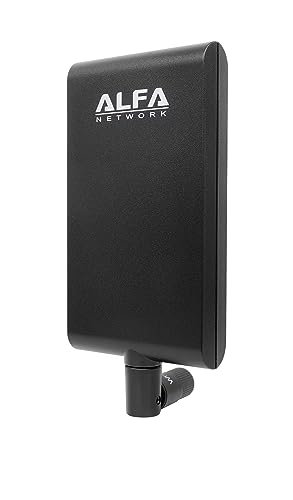
Alfa Network APA-M25: The Pro of Focus, the Con of Focus
The premium-tier dual-band panel is this article’s thesis in physical form. Its pro is the firmest single-direction link in its class; its con is the thinner coverage behind it, and the two are not separable features but the same feature read from two seats. Owners who buy it for a named direction illustrate the pro; owners who buy it as a general upgrade illustrate the con. Best for: one stable target. Not suited for: all-direction service.
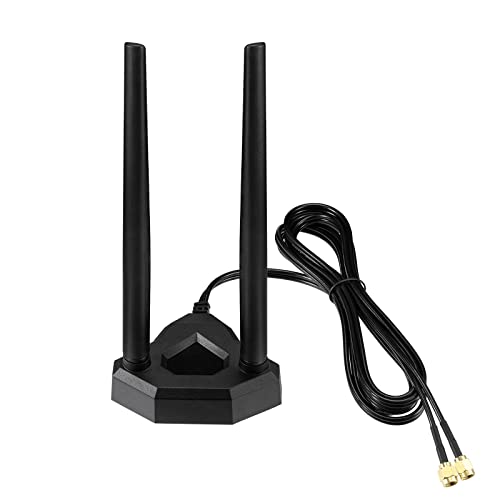
Eightwood Dual Band WiFi Antenna: The Pro of Position
The mid-tier magnetic-base antenna illustrates the receiver-side pro in its purest form: it changes nothing about the network except where one device listens from, and that change is routinely the largest available. Its cons are the cable discipline it asks and its uselessness on portless devices. Best for: desktops in metal shadows. Not suited for: laptops without ports.

TP-Link TL-ANT2408CL: The Pro of Enough
The entry-tier omni whip illustrates the category’s most underrated pro: adequacy, honestly delivered. It will not headline a review, and it quietly resolves the generalist case for a large share of households. Its con is the ceiling of its class, no directional reach, which is only a con when a buyer asks it to be a panel. Best for: modest homes and first experiments. Not suited for: distance.
TP-Link TL-ANT2414A: The Outdoor Ledger in Full
The premium-tier weather-rated panel carries the outdoor pro, genuine distance between buildings, and the outdoor con, a professional installation project, in their fullest forms. It is the right purchase exactly when both sides of that ledger have been read and accepted. Best for: house-to-outbuilding links with professional support. Not suited for: casual installation of any kind. The choosing method behind all four verdicts is set out in how to choose a wifi antenna, and the installation discipline the outdoor model demands is detailed in how to install a wifi antenna.
The Balance by the Numbers That Are Not Numbers
Owners often ask for the ledger quantified, and this article declines, deliberately, because the honest quantities in this category are not percentages but conditions. The pros fire when four conditions hold together: the router is healthy, the problem names a place, the connector matches, and the pattern matches the place. When all four hold, the antenna’s pros are not marginal; they are the difference between a room that works and a room that does not, sustained for years at no running cost. When any one condition fails, the cons take over with equal completeness, and no averaging between the two states describes any real household. This is why pros and cons lists in this category frustrate readers who want a score: the product is a key, and keys are not seventy percent good. They fit the lock or they do not, and the whole craft taught across this cluster of guides is learning to read your own lock before ordering the key.
That conditional structure also explains the category’s strange review distribution, in which the same models collect devotion and dismissal in roughly equal measure with very little in between. The devoted read their locks correctly; the dismissive were sold a key as a crowbar. Neither group is lying, and a pros and cons article serves its reader best by refusing to average them into a lukewarm middle. Instead, this article has tried to hand you the lock-reading skill itself: the one-sentence problem, the documentation check, the pattern map, the two-end audit, the outdoor safety ledger. With that skill, the pros and cons stop being a debate to settle and become a diagnosis to run, on your own home, with your own floor plan as the only evidence that finally counts.
The Ledger in the Wild: Four Households Revisited
The Household the Pros Served Perfectly
A flat, a hallway, a study, a panel: the canonical case, revisited a year later to test this article’s claims against time. The pros all fired as advertised. The panel’s precision solved the named problem in its first week and has not been thought about since, which is the passive pro expressing itself as forgettability. The reversibility pro was never needed, which did not make it worthless; it made the purchase calm. The cons, honestly audited, amount to a kitchen that is slightly quieter than it was, noticed only when this article’s questions forced the audit. This household’s ledger is what the category looks like when the diagnosis precedes the purchase, and it is included here not as a promise but as a control group: the same products, in the households below, wrote very different ledgers from the same shelves.
The Household the Cons Taught a Lesson
A large house, an everywhere complaint, and a premium directional purchase made against this article’s advice by an owner who has kindly allowed the story to be told. The panel performed exactly as physics required: the favoured room improved, two others worsened, and the household spent a season rotating the problem around the compass before accepting that the shortage was structural. The eventual fix, a mesh system, worked in a weekend, and the panel found honourable second life serving a garden office, where its ledger inverted completely. The lesson is not that the owner bought a bad antenna; the antenna was excellent. The lesson is that pros and cons are properties of matches, not of products, and that a mismatched premium purchase teaches the same lesson as a mismatched cheap one, at a higher tuition and, in this case, with a happier ending than most.
The Household That Split the Difference
A family house with one trapped desktop and one soft far bedroom split its response across the ledger with unusual wisdom. The desktop received the receiver-side fix and its problem vanished outright, a pure pro with no compensating con recorded. The bedroom received patience instead of hardware: the router was raised, its antennas reoriented, and the room improved from failing to adequate, which the household accepted because adequate was what the room, used for weekend guests, actually required. This household’s ledger demonstrates the article’s most practical teaching, that the pros and cons should be weighed per problem rather than per house, and that sometimes the correct weight for a marginal problem is no purchase at all. Their total spending was the category’s modest middle, and their satisfaction, by their own report, is total.
The Household That Read the Outdoor Ledger Correctly
A smallholding that needed its barn online read the outdoor section of this ledger before spending anything and structured the whole project around the con: the professional was engaged first, the site was chosen for its clearance from the overhead line as much as for its view of the barn, the sealing was treated as the main event, and the antennas themselves were almost an afterthought in the budget. A year on, their link is infrastructure, maintained on the seasonal rhythm and otherwise forgotten. Their ledger is included because it proves the outdoor con is not a deterrent but a design specification: priced in from the start, it converts the riskiest pro in this article into the most durable one. The households that come to grief outdoors are never the ones who read the con carefully; they are the ones who read only the pro and treated the rest as fine print.
Weighing the Ledger: A Method, Not a Mood
Close the article with a method for weighing, because pros and cons lists fail their readers when they end in a shrug of balance. Take your problem sentence and ask of each pro in this article whether it fires for that sentence; take your floor plan and ask of each con whether it bites in that plan. Pros that fire and cons that do not bite describe your purchase accurately, whatever the general reputation of the category. Then ask the two veto questions, which outrank all weighing: is the problem actually a shortage rather than a shape, in which case the conservation con vetoes the purchase outright; and does any part of the plan go outdoors without its professional and safety terms met, in which case the installation con vetoes that version of the plan outright. A purchase that survives its pros, its cons and both vetoes is as close to a certainty as home technology offers. A purchase vetoed has saved you its price and taught you your network’s true shape, which, as the diagnostic pro in this article observed, is a dividend in itself. The ledger, weighed this way, stops being literature and becomes what it was written to be: a tool.
The Small Print, Read Aloud
Every category has fine print, and this article’s final service is to read the antenna category’s aloud, in the order an owner encounters it. First: specifications describe an antenna in empty space, and your home is not empty space, so every figure in every listing is a promise about a room you do not live in; the pattern is the transferable truth, the numbers are scenery. Second: compatibility is a chain, and it breaks at its least examined link, which is why the connector you did not verify, the band you did not check and the port you assumed existed account for nearly all of the category’s returns. Third: the installation is part of the product, trivially indoors and decisively outdoors, and any price comparison that excludes it, above all the professional’s part in it, is comparing fictions. Fourth: time is a component, the fortnight of testing, the season of sealing checks, and owners who budget the money but not the time own half an antenna. None of this fine print is hidden by honest sellers, and all of it is printed, in effect, across the guides in this cluster; it is gathered here so that the pros and cons in this article can be weighed with the print at full size.
There is a fifth clause, and it is the one this article cares about most: the household is part of the specification. An antenna that serves its buyer’s room by taxing a partner’s, that climbs a mast a family is frightened of, that fills a calm room with a forest of tall whips nobody else consented to, has failed its real specification however beautifully it performs on a test bench. The pros in this article were all, on inspection, household pros: stability a family can feel, money a budget can feel, reversibility a renter can feel. The cons were household cons likewise. Weigh the ledger as a household, therefore, and not as a hobbyist, and the balance this article has been circling will strike itself, in your particular rooms, with your particular people, which is the only place it was ever going to be struck.
If You Read Only One Section Twice
Read the conservation con twice. Everything else in this article is commentary on it. The pros are what conservation permits: precision, because a fixed budget well aimed is powerful; passivity, because reshaping needs no power; reversibility, because a reshaping can be unshaped. The cons are what conservation forbids: no new capacity, no free gain, no escape from the two-way conversation’s quieter end. An owner who has internalised that single law can walk into any listing, any review, any forum argument in this category and sort truth from weather in a paragraph. That is the competence this article was written to transfer, and it transfers it now, with the ledger complete: the antenna is a lens, not a lamp. Buy it to focus the light you have, in the room that needs it, on the connector that fits, with the installation it deserves, and the pros will outnumber the cons in the only count that matters, which is yours.
A coda, because ledgers should end with the entry that balances them. The deepest pro of the wifi antenna is that it respects the owner’s intelligence: it is a tool with legible physics, sold at honest tiers, whose behaviour in a home can be predicted from a floor plan and verified in a fortnight, in a market that increasingly prefers its products opaque, subscribed and beyond appeal. The deepest con is the mirror of that respect: the antenna refuses to flatter, and hands the diagnosis back to the owner whenever the problem is not the one it solves. Households that want to be respected by their tools will find the balance here heavily in credit. Households that want to be relieved of thinking will find it in debit, and should buy the mesh system, which is a fine product that asks less. Both households are right, and an article that ends by saying so has, at last, weighed the ledger honestly.
So the final entry is a person, not a product: you, standing in the room that fails, sentence in hand. If the sentence names a place, the pros are waiting. If it names everywhere, the cons have already voted. The antenna will not decide for you, and that, on reflection, is the most respectable thing about it.
It is worth pausing, before the ledger closes, on how unusual this category’s honesty problem is. Most technology disappoints by decaying: batteries tire, software abandons, standards move on. Antennas disappoint, when they disappoint, on the first evening, for reasons that were knowable before the box was opened, which means the category’s entire disappointment budget is spent on a single preventable cause: the unexamined match. That is, in its way, the most hopeful con in this article, because a disappointment with a knowable cause and a documented method is not a risk to be feared but a step to be taken. Take the step, and the ledger’s remaining entries are the ones this article has weighed all along: a passive, precise, reversible tool, priced in tiers that respect the buyer, waiting for the household whose problem it was shaped to solve.
The households in this article’s closing gallery divided, in the end, not by budget, not by brand and not by luck, but by whether the sentence came before the shopping. Let yours come first, and the pros and cons of wifi antennas will arrange themselves, in your home, in the order this article promised at its start: the advantages genuine, the limitations genuine, and the balance, for once in consumer technology, entirely in the buyer’s hands.
Filed under the last entry, a small one with an outsized weight: the antenna is one of the few purchases left in technology that can be understood completely by its owner, from its physics to its failure modes, in a single sitting. That understandability is a pro this article has circled without naming, and it names it now, at the end, because it explains the affection the category inspires and the disappointment it occasionally earns in equal measure. We forgive opaque products their mysteries; we hold transparent ones to their promises. The antenna’s promises, read carefully, are kept. That is the ledger’s true bottom line, and it balances.
Keep this article with the router’s manual, beside the worksheet from the choosing guide, and let the two documents age together. When the household changes, when the router is replaced, when the room that failed changes its name, the pair will tell the next decision-maker everything this cluster of guides knows: what the problem was, how it was weighed, and why the small shaped object on the router’s back is shaped the way it is. Ledgers, like antennas, earn their keep by being consulted.
And if a single line must carry the whole article into the reader’s next purchase, let it be this one, tested against every household in these pages: buy the shape your problem describes, on the fitting your device declares, at the tier your setting earns, and the pros and cons of wifi antennas will stop being a debate you read and become a result you live with, quietly, in the room that used to fail, on the evenings that used to frustrate, for the years the little passive object will now proceed to serve.
Where the Strengths Stop Helping: Honest Edge Cases
The advantage that depends on your habits
The headline advantage of a wifi antenna is real, but it is not automatic: it only pays out if your habits match it. Used the way it was designed, in a busy shared workspace where several people use the same setup across the day, the strengths described earlier compound quietly — less friction, fewer workarounds, a smoother routine. Used against its grain, the same design choices become the source of the complaints in the cons column. Before deciding, be honest about which user you are on an ordinary tired weekday, not the organised version of yourself you plan to become next month.
Where the drawbacks bite hardest
The disadvantages of a wifi antenna are not evenly distributed across owners. They concentrate in specific situations: tight spaces, shared rooms, heavy daily loads, or workflows that change direction mid-task. If your routine involves any of those, the cons deserve double weight in your decision, because you will meet them weekly rather than rarely. Conversely, an owner whose setup avoids those situations entirely may never encounter the most-criticised weakness at all, which is why verdicts on the same wifi antenna can sound like descriptions of two different products.
The maintenance trade-off nobody advertises
Almost every wifi antenna trades purchase-day simplicity for a small ongoing maintenance obligation: cleaning, recalibrating, replacing a wear part, updating firmware or simply keeping accessories together. The trade is usually worth it, but it is not free, and it scales with how hard you use the product. In a busy shared workspace where several people use the same setup across the day, skipped maintenance shows up first as small annoyances — a control that feels off, a result that drifts, a noise that was not there before — long before it causes a real failure. Budget the minutes, not just the money.
When the alternative is genuinely better
There are owners for whom skipping the wifi antenna altogether is the right call, and naming them is part of an honest pros-and-cons account. If your need is occasional, borrowed or built into something you already own, or if your space cannot give the product the conditions it needs, the alternative route avoids both the cost and the clutter. The pros only outweigh the cons when the problem the wifi antenna solves is a recurring one in your week. A problem you meet twice a year rarely justifies a permanent new resident in the Routers category.
How the balance shifts over a year of ownership
The pros-and-cons ledger of a wifi antenna is not static. In the first month, novelty inflates the pros; by the sixth month, the honest picture is about reliability, running costs and whether the product has earned a permanent place in your routine. Wear parts, consumable availability and the maker’s support responsiveness all matter more at month ten than at day ten. When you read owner feedback, weight the long-term reports accordingly: a complaint about a part that failed after a year tells you more than a first-week rave about unboxing.
The compromise candidate
Many buyers end up choosing neither the strongest nor the cheapest wifi antenna but the one whose weaknesses fall where they personally care least. That is a rational strategy, not a failure of research. List the cons of your final two candidates side by side and ask which set you would rather live with daily in a busy shared workspace where several people use the same setup across the day. The product whose drawbacks sit in your blind spots will feel like the better product for years, even if a comparison table scores the other one higher on paper.
That single habit separates owners who stay pleased with their choice from owners who quietly start shopping again within a season.
Treat it as part of the purchase itself, not as homework to do after the box arrives.
None of this requires expertise — only the willingness to check your own routine before trusting a generic recommendation.
Five honest minutes at this stage is worth more than five hours of comparison browsing.
If a candidate fails this check, strike it from the list without regret and let the remaining options compete on merit.
Frequently Asked Questions
What is the single biggest pro of a wifi antenna?
Precision at a small cost. An antenna changes exactly the variable that is failing in a geometry problem, the shape and placement of the radiated signal, without rebuilding the network, and it does so passively and reversibly. When the diagnosis is right, no other upgrade class delivers so much improvement for so little money, effort and ongoing attention, which is why antennas remain the first experiment recommended for a single stubborn room or a badly placed desktop.
What is the single biggest con?
Conservation. An antenna redistributes a fixed amount of signal, so it cannot cure a network whose problem is shortage: an old router standard, a slow plan, a congested band or a house that needs more signal sources. Bought against those problems, even an excellent antenna disappoints. The con is avoidable by diagnosis, stating your problem in one sentence with a place in it, but it accounts for most negative reviews in the category.
Do high-gain antennas have more pros than standard ones?
They have different pros, aimed at a narrower job. Higher gain means a more concentrated pattern, which is a genuine advantage for one distant target and a genuine disadvantage for general coverage. Owners who buy gain as a generic virtue usually discover the trade the hard way. Owners who buy it as a direction, for a hallway, a yard or an outbuilding, get exactly the pro they paid for. Gain is a shape, not a score.
Are the cons worse for outdoor antennas?
The outdoor class adds a distinct con the indoor classes do not have: installation gravity. Weather sealing, ladder and roof safety, clearance from overhead power lines, and professional grounding and lightning protection turn a purchase into a project. The pros scale too, since outdoor links achieve distances nothing indoors can, but the balance must be struck with the professional costs included. If those costs or disciplines are unacceptable, the honest conclusion is an indoor solution.
Can good setup cancel out the cons?
It can shrink most of them. Careful aim and testing manage the gain trade, short direct cable runs manage the cable tax, documentation-first buying manages compatibility, and judging by worst-hour stability manages expectations. The one con setup cannot shrink is conservation itself: no positioning of any antenna creates capacity the router and plan do not contain. Setup turns a well-matched purchase into a satisfying one; it cannot rescue a mismatched one.
Who should read the cons and walk away?
Owners whose speed tests beside the router are already poor, owners whose complaint is the whole house at once, owners of sealed equipment with no antenna port, and owners planning outdoor work they are not prepared to support professionally. Each of those readers has a better route: a router or plan upgrade, a mesh system or wired access points, placement changes, or a properly supported installation. Walking away from the wrong purchase is the most valuable outcome a pros and cons article can produce.
Related Guides
Keep reading with these companion guides from the same cluster and the wider networking library: the wifi antenna buying guide; how to install a wifi antenna; wifi routers built for distance; where a wifi router should sit.